
When Possessing a Firearm During a Drug Crime Leads to Additional Federal Charges in Colorado
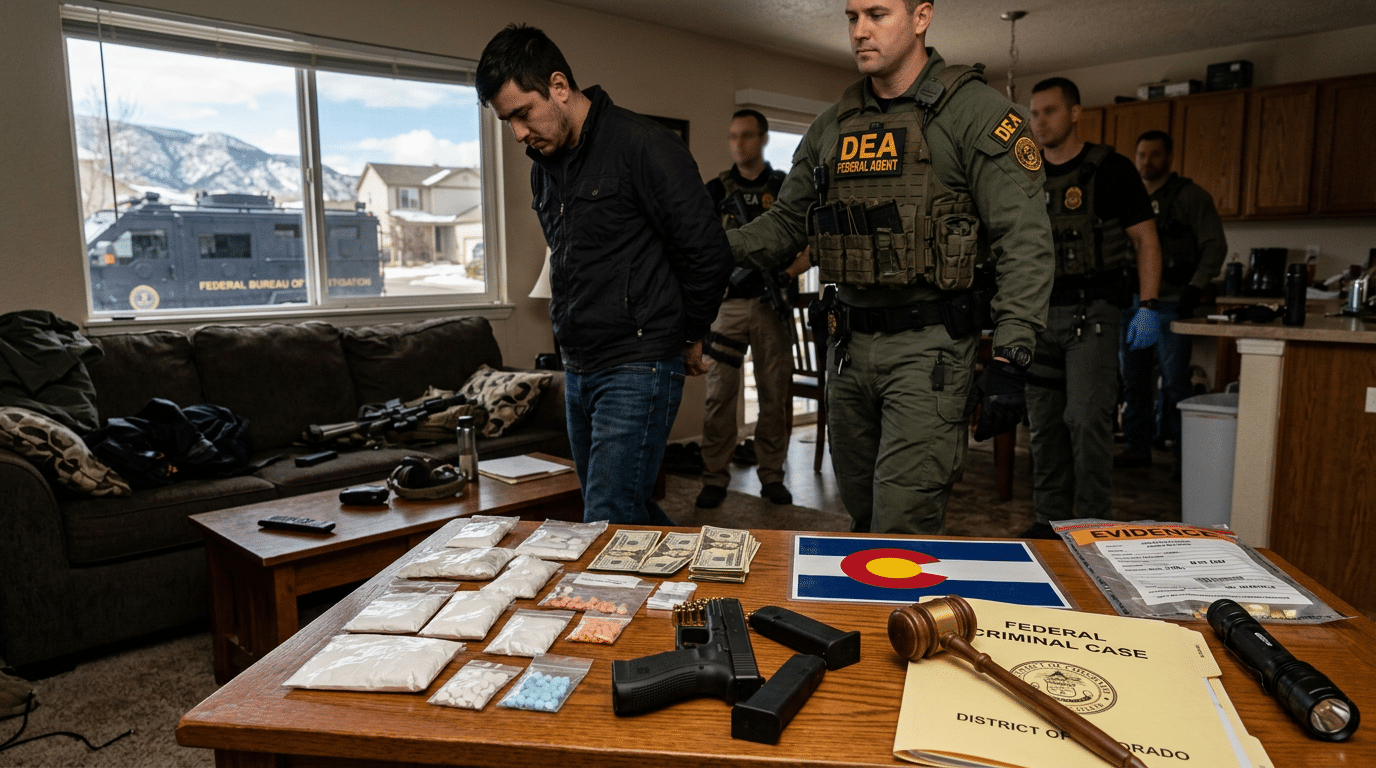
Drug charges can become much more serious if law enforcement finds a firearm during an investigation. In Boulder, having a gun while accused of making, selling, or trafficking drugs can lead to extra state or federal charges. Federal prosecutors might file firearm charges even if the weapon was not fired, shown, or used to threaten anyone. Whether extra penalties apply depends on where the firearm was found and how it relates to the alleged drug crime.
At Watkins Law Firm LLC, we know that federal firearm allegations can change the direction of a criminal case. We review the evidence, challenge unsupported claims, and work to protect our clients from penalties, including mandatory federal prison sentences.
When Does a Drug Crime Involving a Firearm Become a Federal Offense?
Not every drug arrest in Colorado that involves a firearm leads to federal charges. However, federal authorities may get involved if the case is about drug trafficking, distribution networks, activity across state lines, or other violations of federal drug laws.
Under 18 U.S.C. § 924(c)(1)(A), federal prosecutors may bring additional charges against someone who uses or carries a firearm during and in relation to a qualifying drug trafficking crime or possesses a firearm in furtherance of that crime.
It is important to know that just finding a firearm near illegal drugs does not automatically break this federal law. Prosecutors have to show a clear link between the weapon and the drug trafficking crime.
For example, investigators might find a handgun in a car with packaged drugs, cash, and materials for distribution. Prosecutors may claim the gun was meant to protect the drugs or help with their distribution. Deciding if the evidence really shows that connection takes careful review.
Federal Prison Sentences for Firearms Connected to Drug Trafficking
Federal firearm charges often come with strict mandatory prison sentences, which are separate from the penalties for the drug crime itself.
Under 18 U.S.C. § 924(c)(1)(A), the minimum penalties generally include:
- Five years: Possessing a firearm in furtherance of a drug trafficking crime, or using or carrying one during and in relation to that crime.
- Seven years: Brandishing a firearm during and in relation to the offense.
- Ten years: Discharging a firearm during and in relation to the offense.
These penalties usually have to be served one after the other, in addition to the sentence for the drug trafficking crime.
We also look at whether prosecutors can prove what is needed for a longer sentence. The government cannot simply say a firearm was brandished or fired just because it was found during a drug investigation. Additional statutory provisions impose more severe penalties for certain firearm types and qualifying repeat convictions.
How Colorado Drug Laws Affect Firearm-Related Prosecutions
Colorado has its own criminal statutes governing controlled substances and weapons offenses. Under C.R.S. § 18-18-405, knowingly manufacturing, dispensing, selling, distributing, or possessing with intent to manufacture, dispense, sell, or distribute controlled substances can result in felony drug charges. The classification and potential sentence depend on the substance, quantity, conduct, and other statutory factors.
Someone arrested for drug distribution in Boulder can still face Colorado charges, even if federal authorities decide not to prosecute.
Colorado also prohibits certain individuals from possessing firearms. Under C.R.S. § 18-12-108, possession of a weapon by a previous offender may constitute a separate criminal offense when the statutory requirements are satisfied. We check if prosecutors have proven each charge on its own. Finding a firearm during a drug investigation does not always mean trafficking happened, and claims of trafficking do not automatically prove illegal gun possession.
Can Legal Gun Ownership Still Result in Federal Drug Charges?
Colorado residents may lawfully own firearms, but legal ownership does not prevent federal prosecution when a weapon is connected to qualifying drug trafficking activity. Under federal law, the central question may be whether the firearm was possessed in furtherance of the alleged trafficking crime.
Federal courts consider circumstances such as the firearm’s accessibility, proximity to drugs or drug proceeds, whether it was loaded, and evidence suggesting it was intended to protect or advance criminal activity.
We distinguish lawful firearm possession from conduct that satisfies the elements of a federal offense.
For instance, a legally owned hunting rifle stored separately from alleged drug distribution materials presents different evidentiary circumstances from a loaded handgun positioned beside packaged narcotics and substantial cash. The government must establish the required criminal connection rather than rely exclusively on the presence of a weapon.
How Federal Law Treats Drug Possession Differently From Drug Trafficking
An important distinction exists between possessing controlled substances for personal use and participating in drug trafficking. Federal firearm charges under § 924(c) require a qualifying drug trafficking crime or crime of violence. Simple drug possession, standing alone, generally does not satisfy the drug trafficking requirement.
However, prosecutors may allege trafficking when investigators discover evidence of distribution, including packaging materials, transaction records, scales, or substantial quantities of controlled substances.
Under 21 U.S.C. § 841(a)(1), federal law prohibits knowingly or intentionally manufacturing, distributing, dispensing, or possessing controlled substances with intent to manufacture, distribute, or dispense them, except as authorized.
We investigate whether the available evidence actually establishes an intent to distribute. The distinction can significantly affect the charges and potential penalties.
Defending Against Federal Firearm and Drug Charges
A successful defense begins with determining what prosecutors can prove and how investigators obtained their evidence. Under the Fourth Amendment and Article II, Section 7 of the Colorado Constitution, individuals have protections against unreasonable searches and seizures.
We examine whether officers had lawful grounds to stop a vehicle, enter a residence, execute a search warrant, or seize firearms and controlled substances.
We also investigate whether prosecutors can establish knowing possession, ownership, or control of the weapon, and the firearm’s alleged relationship to trafficking activity.
When several individuals occupy a vehicle or residence, determining who knowingly possessed a firearm can become particularly important.
We review police reports, body camera recordings, search warrant affidavits, forensic findings, and witness statements to identify weaknesses in the prosecution’s case.
Why Early Legal Representation Matters
Federal drug and firearm investigations may involve local police, federal agents, and prosecutors working together. Statements made during questioning can influence whether additional charges are pursued.
We encourage individuals facing these allegations to exercise their constitutional rights and obtain legal representation before discussing the accusations with investigators.
Early intervention allows us to preserve evidence, evaluate potential constitutional violations, and begin preparing a defense before critical decisions are made.
Frequently Asked Questions About Federal Firearm Charges During Drug Crimes in Colorado
Can We Face Federal Firearm Charges If the Gun Was Never Used?
Yes. Under 18 U.S.C. § 924(c), prosecutors do not necessarily have to establish that a firearm was fired, displayed, or used to threaten another person.
Possessing a firearm in furtherance of a qualifying drug trafficking crime can independently support federal charges.
We examine whether prosecutors can demonstrate that the weapon actually advanced or facilitated the alleged trafficking activity. The fact that investigators discovered a firearm in the same building or vehicle as controlled substances does not automatically satisfy this requirement.
The weapon’s location, accessibility, and surrounding circumstances can become important evidence.
Can We Face Both Colorado and Federal Charges for the Same Drug Investigation?
Yes. State and federal governments have separate authority to prosecute violations of their respective criminal laws.
An investigation involving alleged drug distribution and firearms may produce charges under Colorado Revised Statutes § 18-18-405 and federal statutes such as 21 U.S.C. § 841 and 18 U.S.C. § 924©.
We evaluate the specific charges, potential penalties, and procedural requirements in each jurisdiction.
Although federal and state prosecutions arising from the same conduct can raise complicated legal questions, the constitutional prohibition against double jeopardy does not categorically prevent separate sovereign governments from prosecuting their own offenses.
Does Colorado Marijuana Legalization Protect Us From Federal Firearm Charges?
No. Marijuana remains a Schedule I controlled substance under federal law unless its federal classification changes through a legally effective process. Conduct permitted under Colorado marijuana laws may still violate federal controlled substance statutes.
Under 18 U.S.C. § 922(g)(3), federal law also restricts firearm possession by unlawful users of, or individuals addicted to, controlled substances. The application and constitutionality of this provision can raise additional legal questions.
We distinguish personal marijuana possession from alleged trafficking activity and examine the specific federal firearm statute prosecutors seek to apply. A Colorado marijuana-related investigation does not automatically establish a federal firearm offense.
What Should We Do If Federal Agents Investigate a Drug Crime Involving a Firearm?
We recommend obtaining criminal defense representation before answering substantive questions about the allegations. Federal investigators may seek statements about firearm ownership, drug transactions, financial records, or other individuals involved in suspected criminal activity.
We advise against consenting to searches or providing explanations without first understanding the legal consequences. Individuals should not destroy evidence, interfere with investigators, or attempt to influence witnesses.
We can assess the circumstances of the investigation, communicate with authorities when appropriate, and determine what legal protections and defense strategies may apply. Early representation can be especially important when mandatory federal sentencing provisions are involved.
Boulder Criminal Defense Lawyers for Drug and Firearm Charges
At Watkins Law Firm LLC, we understand the serious consequences that can follow allegations involving controlled substances and firearms. Drug trafficking investigations can expose individuals to felony convictions, lengthy prison sentences, and additional federal penalties when prosecutors allege that a firearm facilitated criminal activity.
We examine the facts of each case, evaluate the applicable Colorado and federal statutes, and challenge evidence that does not establish the charged offenses. Whether the allegations involve drug possession, possession with intent to distribute, unlawful firearm possession, or related criminal conduct, we work to protect our clients’ constitutional rights and pursue the strongest defense available under the circumstances.
If you are under investigation or facing drug and firearm charges in Boulder or the Denver metropolitan area, contact our Boulder criminal defense attorney by calling our firm at 303-507-1324 for your free consultation. We can review the circumstances of your arrest, explain the charges and potential penalties, and discuss how we may help defend your rights and your future.
