
When Can Police Search Your Home For Drugs In Colorado?
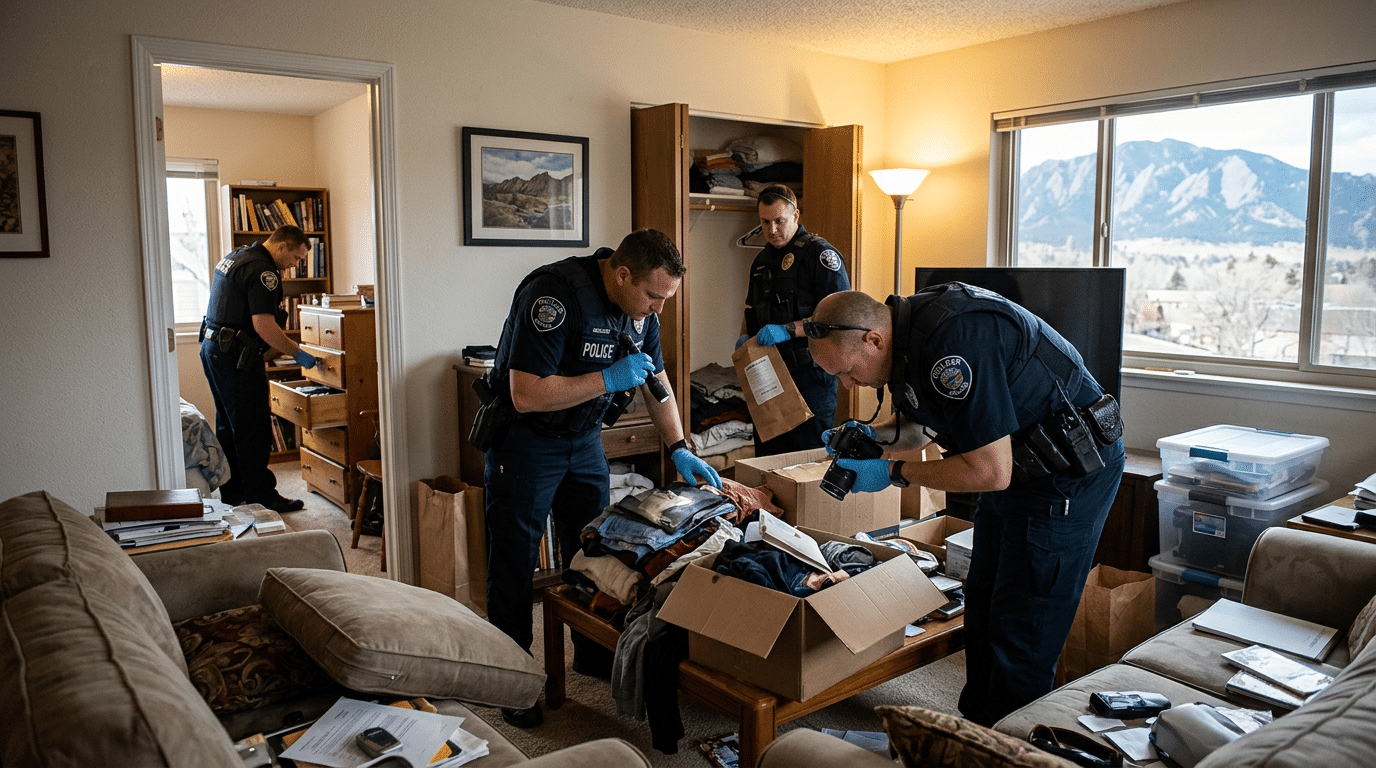
A home is one of the most protected places under Colorado and federal law. When police want to search a home for drugs, they usually need a valid search warrant signed by a judge. That does not mean officers always follow the rules, and it does not mean every warrant is legally sound. A drug search can lead to possession charges, distribution charges, manufacturing allegations, firearm issues, child-related allegations, forfeiture concerns, and serious felony exposure.
We know how frightening it can be when officers enter your home, search your private spaces, and then claim that drugs, money, scales, phones, or other items prove a crime. At Watkins Law Firm LLC, we defend people in Boulder and throughout the Denver area when a home search leads to drug charges or a criminal investigation.
Police Usually Need A Search Warrant To Enter A Home
The general rule is that police need a warrant to search a home for drugs. Colorado’s search warrant statutes are found in Article 3 of Title 16 of the Colorado Revised Statutes. C.R.S. § 16-3-301 addresses when a search warrant may be issued. A warrant may authorize police to search for items connected to a crime, evidence that may be material in a later prosecution, or property that is otherwise subject to seizure under the law.
A judge may issue a search warrant only if there is probable cause. Probable cause means there must be a fair basis to believe evidence of a crime will be found in the place to be searched. In a drug case, that may involve controlled buys, informant statements, surveillance, trash pull evidence, drug residue, intercepted communications, prior investigations, or other facts. The warrant must be specific enough to identify the place to be searched and the things officers are allowed to seize.
What Police Must Show To Get A Drug Search Warrant
Under C.R.S. § 16-3-303, a search warrant application must be supported by facts. Police cannot lawfully search a home based only on a vague suspicion or unsupported rumor. A judge should be given enough information to decide whether probable cause exists. In drug cases, officers may claim that drugs are inside a home because of informant tips, alleged sales, traffic to and from the house, surveillance observations, utility records, package deliveries, phone evidence, prior arrests, or items found in trash.
The defense must review the affidavit carefully. A search warrant can look strong at first but still have legal problems. The information may be stale. The informant may be unreliable. Police may have left out important facts. The affidavit may connect a person to suspected drug activity but fail to connect the home to that activity. That distinction matters. Probable cause to suspect a person is not always probable cause to search every place that person lives or visits.
Consent Searches Inside A Colorado Home
Police may also try to search a home by asking for consent. Consent is one of the most common warrant exceptions. Officers may knock on the door, say they received a complaint, ask to come inside, or ask if they can “look around.” You generally have the right to refuse consent to a search of your home. You can say that you do not consent to a search and want to speak with an attorney.
Consent issues can become complicated when several people live in the home. A roommate, spouse, partner, parent, adult child, landlord, guest, or other person may claim authority to allow officers inside. The law may depend on who had access to the area searched and whether police reasonably believed that person had authority. A person may be able to consent to a shared living room but not another person’s locked bedroom, private safe, phone, or closed container. We look closely at who gave consent, what they were told, what area was searched, and whether officers exceeded the consent given.
Emergency Searches And Exigent Circumstances
There are situations where police may claim they did not need a warrant because of an emergency. These are sometimes called exigent circumstances. Officers may argue that they had to enter to prevent destruction of evidence, protect someone from harm, pursue a fleeing suspect, or respond to an immediate threat.
Courts do not accept emergency claims automatically. Police cannot create an emergency through unlawful conduct and then use that emergency to justify a search. In a drug case, officers may claim they heard movement, smelled drugs, saw someone run, or believed evidence was about to be destroyed. The defense may challenge whether there was truly an emergency, whether police had time to get a warrant, and whether the search went beyond what the emergency allowed.
Protective Sweeps And Arrests At A Home
If police make an arrest in or near a home, they may claim authority to conduct a limited protective sweep. A protective sweep is not supposed to be a full drug search. It is meant to address officer safety by checking spaces where a person may be hiding. If officers use a protective sweep as an excuse to open drawers, search containers, or inspect areas where no person could hide, the search may be unlawful.
A search incident to arrest also has limits. Officers may be able to search the person arrested and certain areas within immediate reach, but that does not automatically allow them to search the whole home. If drugs are found during an arrest-related search, we review whether police stayed within lawful boundaries or turned a limited safety search into a general evidence search.
Drug Charges That Can Follow A Home Search
A home search can lead to several different Colorado drug charges. C.R.S. § 18-18-403.5 addresses unlawful possession of a controlled substance. Depending on the substance, amount, and prior record, possession can be charged at different levels. Prosecutors may also charge unlawful distribution, manufacturing, dispensing, sale, or possession with intent to distribute under C.R.S. § 18-18-405 when they believe there is evidence of more than personal use.
Police often rely on items found in the home to support more serious charges. They may point to scales, packaging materials, cash, firearms, multiple phones, ledgers, text messages, surveillance equipment, or the amount of drugs found. Those items do not always prove distribution. There may be innocent explanations, shared access issues, weak forensic evidence, or problems connecting a specific person to the items. Possession requires proof. Presence in a home is not the same as knowing possession of everything found there.
Challenging A Colorado Home Drug Search
If police searched your home for drugs, the defense may file a motion to suppress. A suppression motion asks the judge to exclude evidence obtained through an unlawful search or seizure. If the court suppresses the drugs or related evidence, the prosecution’s case may be severely weakened.
We examine the warrant, affidavit, inventory, body camera footage, police reports, dispatch records, photographs, search logs, and any statements made during the search. We look at whether the warrant was supported by probable cause, whether it described the home and items with enough detail, whether the information was stale, whether officers searched beyond the warrant’s scope, whether consent was voluntary, and whether any warrant exception truly applied. In drug cases, details matter. A small legal error can affect the entire case.
What To Do If Police Search Your Home
If police arrive with a warrant, you should not physically interfere. Ask to see the warrant. Read it if possible. Pay attention to what areas officers search and what they take. Do not argue about the facts of the case while officers are inside. Do not explain ownership of drugs, money, phones, containers, or rooms. Do not guess. Do not give permission for additional searches if you do not want to consent.
If police ask to search without a warrant, you can clearly state that you do not consent. If officers search anyway, let your attorney challenge it later. The safest words are direct and calm: you do not consent to a search, and you want to speak with a lawyer. After the search, contact a defense attorney immediately. Early legal action can help preserve evidence, request recordings, and challenge unlawful police conduct.
FAQs About Colorado Home Searches For Drugs
Can Police Search My Home For Drugs Without A Warrant?
Sometimes, but warrantless home searches are limited. Police may claim consent, emergency circumstances, a protective sweep, search incident to arrest, or another exception. Still, the home receives strong legal protection. If officers did not have a warrant, the prosecution may have to justify why the search was lawful. We review who gave consent, whether consent was voluntary, whether there was a real emergency, and whether police exceeded the scope of any legal exception.
What Should Be In A Colorado Drug Search Warrant?
A Colorado drug search warrant should identify the place to be searched and the items officers are allowed to seize. The warrant application should be supported by facts showing probable cause. In drug cases, those facts may come from surveillance, controlled buys, informants, trash searches, phone evidence, or officer observations. A vague warrant, stale affidavit, unreliable informant claim, or weak connection between the home and alleged drug activity may create grounds to challenge the search.
Can My Roommate Consent To A Search Of My Room?
Maybe, but not always. A roommate may be able to consent to a search of shared areas, such as a living room or kitchen. That does not automatically give police authority to search your private bedroom, locked closet, safe, backpack, phone, or container. The issue depends on actual or apparent authority. We look at who gave consent, what the police knew, whether the area was private, and whether officers had reason to believe the person had authority to allow the search.
Can Police Search My Whole Home If They Find Drugs In One Room?
Not automatically. The scope of the search depends on the warrant or the legal exception police claim. If officers have a warrant for drugs, the warrant may allow them to search places where drugs could reasonably be found. However, officers cannot use a narrow justification as an excuse to search areas outside the warrant or outside the lawful purpose of the search. If police found drugs in one area and then expanded the search without legal authority, the defense may challenge the evidence.
What If Drugs Were Found In A Shared House?
Shared homes create major proof issues. Prosecutors must prove knowing possession. If multiple people had access to the home, bedroom, vehicle, container, or common area, the government may have trouble proving who possessed the drugs. Police may rely on mail, IDs, fingerprints, DNA, statements, phone evidence, or room assignments to connect a person to the drugs. We examine whether the evidence actually proves possession or whether police are making assumptions based on proximity.
Can Evidence Be Thrown Out After An Illegal Home Search?
Yes. If police violated your rights during a home search, the defense may file a motion to suppress. If the judge grants the motion, evidence from the unlawful search may be excluded. In a drug case, suppression can be critical because the drugs themselves are often the core evidence. The prosecution may still try to proceed with other evidence, but losing the seized drugs can significantly change the case.
Call Watkins Law Firm LLC For Help After A Colorado Drug Search
If police searched your home for drugs, or if you are facing charges after a warrant, consent search, protective sweep, or warrantless entry, Watkins Law Firm LLC can help. We defend clients in Boulder and throughout the Denver area against drug possession, distribution, manufacturing, trafficking, and related criminal charges. We know how to challenge unlawful searches, weak warrants, unreliable informants, and unsupported assumptions about possession. Contact our Boulder drug crime lawyer by calling us 24/7 at (303) 507-1324 for your free consultation.
