
What Is The Difference Between A Federal Complaint And An Indictment?
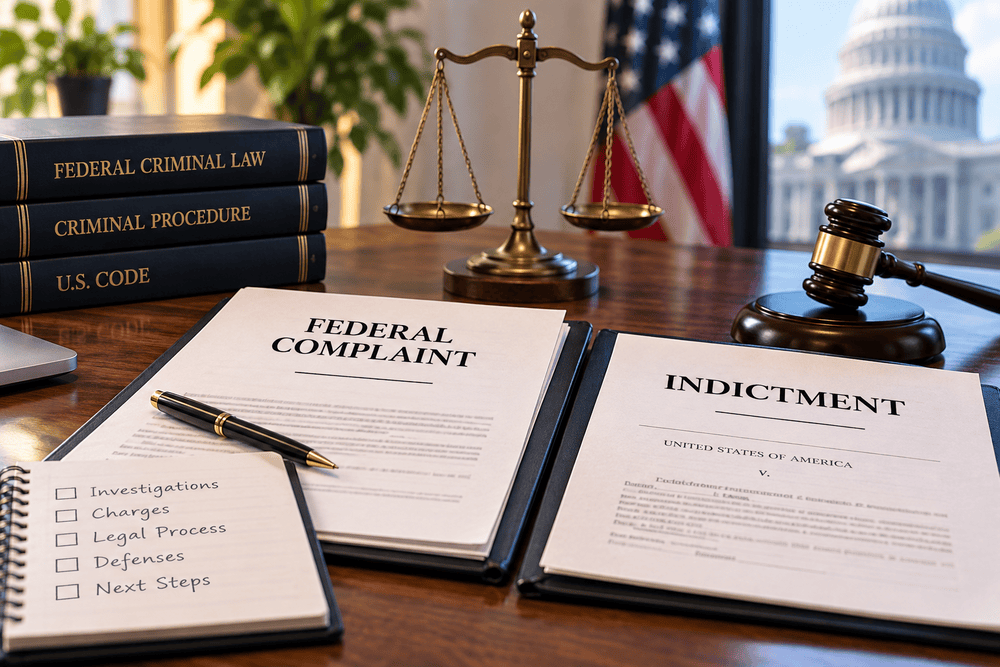
A federal criminal case can begin in different ways, and the paperwork matters. If you or someone you care about is arrested in Boulder on a federal complaint, that does not always mean a grand jury has already returned an indictment. If you receive an indictment, that usually means the case has moved into a more formal stage. Both documents are serious, but they do not serve the same purpose. We help clients understand what the government has filed, what deadlines may follow, and what the filing means for bond, detention, discovery, plea discussions, and trial strategy. At Watkins Law Firm LLC, we defend clients in Boulder and throughout the Denver area against serious federal and Colorado criminal allegations.
What Is A Federal Complaint?
A federal complaint is a written statement of the essential facts showing that an offense has been committed. Under Federal Rule of Criminal Procedure 3, a complaint must be made under oath before a magistrate judge or, if none is reasonably available, before a state or local judicial officer. In practical terms, a federal complaint often allows the government to arrest someone quickly based on probable cause.
A complaint is commonly supported by an affidavit from a federal agent. That affidavit may summarize surveillance, witness statements, controlled buys, recorded calls, financial records, digital evidence, search warrant results, or other investigation details. The affidavit may not include everything the government has. It may present the evidence from the government’s viewpoint, and it may leave out context that helps the defense.
A federal complaint is serious because it can lead to arrest, detention, bond conditions, travel restrictions, and public criminal records. But a complaint is often not the final charging document in a felony case. The government may still need an indictment or information to move the case forward.
What Is A Federal Indictment?
A federal indictment is a formal charging document returned by a grand jury. Federal Rule of Criminal Procedure 7 provides that an offense punishable by more than one year of imprisonment must be prosecuted by indictment unless the defendant waives indictment and proceeds by information. An indictment usually lists the charges, the statutes allegedly violated, the time period involved, and sometimes forfeiture allegations or sentencing-related allegations.
The grand jury process is different from a trial. The defense is generally not present. The accused person usually does not cross-examine witnesses, present a full defense, or argue the case to the grand jury. The standard is probable cause, not proof beyond a reasonable doubt. That means an indictment is not a finding of guilt. It is a formal accusation that allows the case to proceed.
Still, an indictment changes the posture of a case. Once an indictment is filed, the case may move toward arraignment, discovery, motion deadlines, plea negotiations, and trial scheduling. In some cases, the indictment may replace an earlier complaint.
Why Federal Prosecutors May Use A Complaint First
Federal prosecutors may file a complaint when they want to arrest a person before a grand jury has returned an indictment. This often happens when agents believe there is urgency, such as a risk of flight, risk to public safety, ongoing drug activity, alleged possession of contraband, witness concerns, or evidence that may be destroyed.
A complaint may also be used after a search warrant, traffic stop, controlled buy, undercover investigation, or federal task force operation. In Colorado, federal cases may involve drug trafficking, firearms allegations, fraud, cybercrime, sex crimes, child exploitation allegations, immigration offenses, bank robbery, white-collar charges, or federal conspiracy allegations.
The complaint may start the case, but it does not end the analysis. We review whether the complaint actually establishes probable cause, whether the arrest was lawful, whether agents exceeded constitutional limits, and whether any statements, searches, or seizures can be challenged.
What Happens After A Federal Complaint Is Filed?
After an arrest on a federal complaint, the person is usually brought before a magistrate judge for an initial appearance. The court addresses identity, rights, counsel, release, detention, and future proceedings. The government may seek detention, especially in cases involving alleged violence, drug trafficking, firearms, flight risk, obstruction, or serious felony exposure.
Federal Rule of Criminal Procedure 5.1 addresses preliminary hearings in complaint-based cases. A preliminary hearing tests whether there is probable cause to believe an offense was committed and that the defendant committed it. However, a preliminary hearing may not occur if the government obtains an indictment before the hearing date. In many federal cases, prosecutors move quickly to secure a grand jury indictment.
This timing matters. A person may be arrested on a complaint, then indicted days or weeks later. The indictment may include the same charge, fewer charges, more charges, or broader allegations.
How Colorado State Charging Rules Compare
Colorado state cases use different procedures. Under C.R.S. § 16-5-101, a Colorado criminal action may begin by indictment, information, felony complaint, complaint, summons and complaint, or certain other authorized procedures. Under C.R.S. § 16-5-205, Colorado law also addresses informations, indictments, warrants, and summonses.
In Colorado state court, many felony cases begin with a felony complaint in county court, then move through advisement, bond, preliminary hearing issues, and filing of an information in district court. In federal court, the process is different because federal prosecutors use the Federal Rules of Criminal Procedure, federal magistrate judges, federal grand juries, and U.S. District Court procedures.
For clients, the key point is simple: state and federal cases do not move the same way. Federal cases often involve more investigative resources, stricter pretrial conditions, federal sentencing exposure, and a different discovery and motion process.
Does An Indictment Mean The Government Has A Strong Case?
Not necessarily. An indictment means the grand jury found probable cause based on what prosecutors presented. It does not mean the evidence will prove guilt beyond a reasonable doubt. It does not mean the search was lawful. It does not mean statements were voluntary. It does not mean witnesses are reliable. It does not mean the government can prove intent, knowledge, conspiracy, possession, distribution, fraud, or any other required element at trial.
We examine the indictment closely. Sometimes indictments are broad. Sometimes they charge conspiracy in a way that sweeps multiple people into one case. Sometimes the indictment relies heavily on informants, cooperating witnesses, digital evidence, financial records, or statements made during questioning. Every allegation must be tested.
Defense Issues After A Complaint Or Indictment
The defense strategy depends on the stage of the case. After a complaint, the first priority may be bond, detention, protection of rights, and review of the probable cause affidavit. After an indictment, the focus may shift to discovery, motions, investigation, plea posture, trial preparation, and sentencing risk if the case does not resolve favorably.
We may challenge unlawful searches, improper seizures, unreliable statements, weak probable cause, overbroad warrants, Miranda issues, informant credibility, chain of custody, digital evidence, financial records, and the government’s theory of intent. In some cases, we may challenge defects in the indictment or argue that the charged facts do not match the statute. In other cases, the main work is factual: proving the government has overstated the client’s role or misunderstood what happened.
Why Early Defense Matters In Federal Cases
Federal cases can move quickly. A person may be arrested, detained, indicted, and placed under strict deadlines before they fully understand the charges. Waiting can make the defense harder. Evidence can disappear, witnesses can become harder to locate, digital records can change, and early mistakes can shape the entire case.
If federal agents want to speak with you, or if you believe you may be under investigation, you should speak with a defense attorney before answering questions. A federal complaint or indictment is not the same as a conviction. The earlier we get involved, the more we can do to protect your rights, examine the government’s evidence, and build a defense.
FAQs About Federal Complaints And Indictments
Is A Federal Complaint The Same As An Indictment?
No. A federal complaint is usually a sworn charging document used to support an arrest or begin a case based on probable cause. An indictment is a formal charge returned by a grand jury. A complaint may come first, especially when agents want to arrest someone quickly. An indictment may follow later. Both are serious, but an indictment usually means the case has moved into a more formal charging stage.
Can You Be Arrested On A Federal Complaint In Colorado?
Yes. A person can be arrested in Colorado based on a federal complaint if a magistrate judge finds probable cause and issues a warrant. The complaint is often supported by an affidavit from a federal agent. After arrest, the person usually appears before a federal magistrate judge. The court may address detention, release conditions, counsel, and future hearing dates. A grand jury indictment may follow.
Does A Federal Indictment Mean I Am Guilty?
No. A federal indictment is an accusation, not a conviction. The grand jury standard is probable cause. At trial, the government must prove the charge beyond a reasonable doubt. The defense still has the right to challenge the evidence, file motions, cross-examine witnesses, investigate the facts, and hold the government to its burden of proof. An indictment is serious, but it does not decide the case.
What Happens If The Government Files An Indictment After A Complaint?
If the government files an indictment after a complaint, the indictment often becomes the main charging document. The case may proceed to arraignment, discovery, motion deadlines, plea discussions, and trial scheduling. The indictment may repeat the complaint allegations, add charges, add defendants, or expand the alleged time period. We review the complaint and indictment together because differences between the documents may reveal changes in the government’s theory.
Can A Federal Complaint Be Dismissed?
A complaint can be dismissed in some situations. If the government fails to establish probable cause at a preliminary hearing, Federal Rule of Criminal Procedure 5.1 requires dismissal of the complaint and discharge of the defendant from that complaint. However, dismissal of a complaint does not always prevent future prosecution if the government later obtains an indictment based on sufficient evidence. The facts, timing, and legal basis matter.
Should I Talk To Federal Agents If I Have Not Been Indicted Yet?
You should speak with a defense attorney before talking to federal agents. Many people believe they can avoid charges by explaining themselves. That can be risky. Federal agents may already have records, recordings, witnesses, search results, or statements from others. Anything you say can be used against you, and inaccurate statements can create new problems. Asking for counsel protects your rights and gives you time to understand the situation before making a decision.
Call Watkins Law Firm LLC For Help With A Federal Criminal Case
If you are facing a federal complaint, indictment, target letter, search warrant, subpoena, or contact from federal agents, Watkins Law Firm LLC can help. We defend clients in Boulder and throughout the Denver area in federal criminal cases, Colorado criminal cases, drug crimes, DUI-related offenses, sex crime allegations, assault cases, theft cases, and other serious charges. Contact our Boulder federal defense attorney by calling us 24/7 at 303-507-1324 for a free consultation.
