
What Happens If Police Think You Are High During A Boulder Traffic Stop?
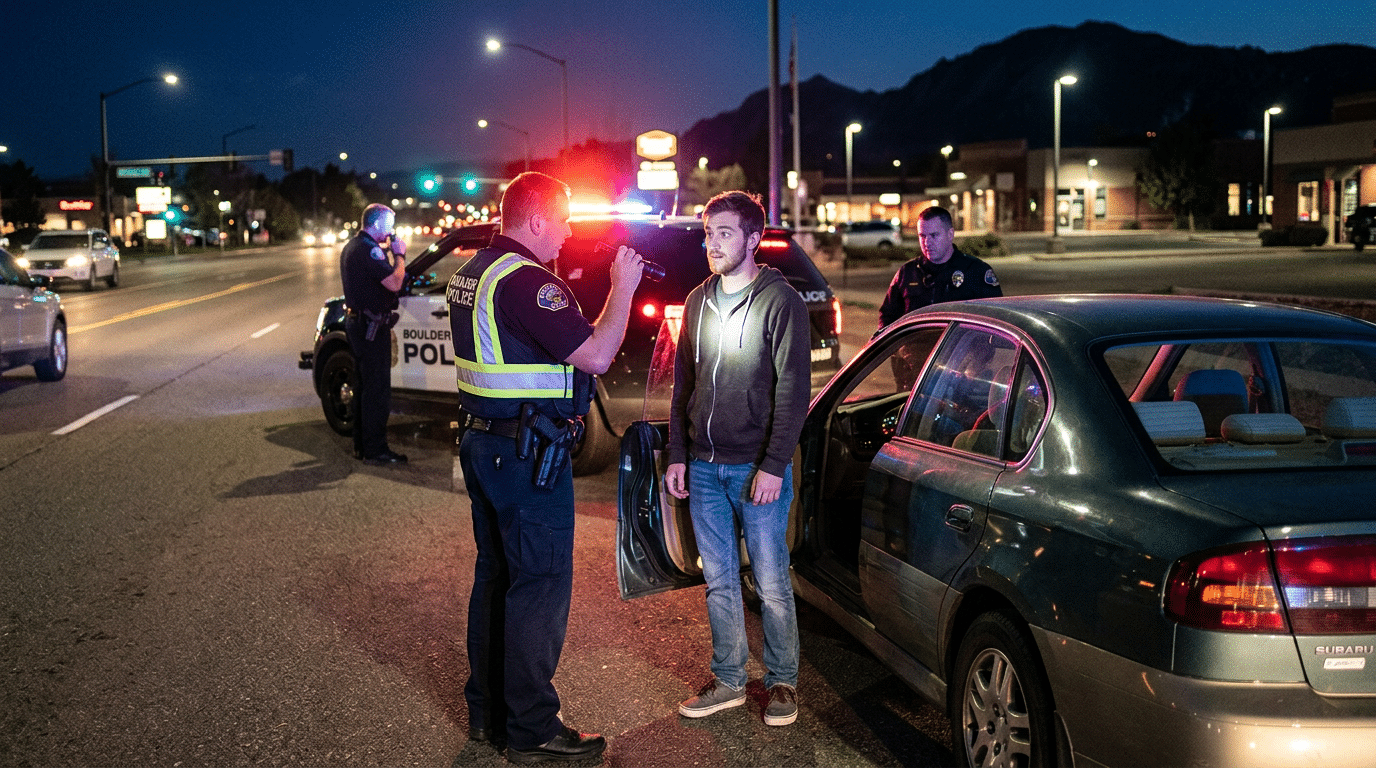
A Boulder traffic stop can become much more serious if the officer believes you are high. What starts as a lane violation, speeding stop, equipment issue, or minor driving mistake can quickly turn into a Colorado DUID investigation. The officer may begin asking about marijuana, prescription medication, edibles, dispensary purchases, or whether there are drugs in the vehicle. You may be asked to step out of the car, perform roadside tests, speak with a drug recognition officer, or submit to a blood test.
We understand how stressful this feels, especially for people who legally use marijuana, take medication as prescribed, or believe they were not impaired. At Watkins Law Firm LLC, we defend clients in Boulder and throughout the Denver area against DUI, DWAI, DUID, drug possession, and related criminal traffic charges.
Colorado Law Prohibits Driving While Impaired By Drugs
Colorado DUI law is not limited to alcohol. Under C.R.S. § 42-4-1301, a person may be charged with DUI if alcohol, one or more drugs, or a combination of alcohol and drugs makes the person substantially incapable of safely operating a vehicle. A person may be charged with DWAI if alcohol, drugs, or both affect the person to the slightest degree so that the person is less able than usual to drive safely.
That means marijuana, prescription medication, illegal drugs, and mixed substances can all become part of a Colorado impaired driving case. The state does not have to prove that alcohol was involved. It also does not have to prove that the substance was illegal. A lawful prescription or legal marijuana use can still lead to a DUID charge if the prosecution claims the substance impaired your ability to drive.
What Police Look For During A Drug DUI Stop
When police suspect drug impairment, they may look for driving behavior, physical signs, statements, drug evidence, and test results. The officer may claim you had red or watery eyes, slow speech, confusion, poor coordination, delayed responses, an odor of marijuana, nervous behavior, or unusual movements. The officer may also look for rolling papers, vape pens, edibles, prescription bottles, loose pills, dispensary packaging, or other items in the vehicle.
These observations are not always reliable. Red eyes can come from allergies, fatigue, contact lenses, smoke, dry air, or medical conditions. Poor balance can come from injury, nerves, footwear, weather, road conditions, or uneven pavement. Slow speech or confusion may result from fear or stress during the stop. We look closely at whether the officer’s conclusions are supported by objective evidence or whether the report turns innocent facts into signs of impairment.
Reasonable Suspicion And Expanding The Traffic Stop
Police need a lawful reason to stop a vehicle. Colorado’s temporary detention statute, C.R.S. § 16-3-103, requires reasonable suspicion, a reasonable purpose, and a reasonable scope for a detention. Even if the original stop is lawful, the officer may need additional facts to expand the stop into a drug DUI investigation.
For example, a speeding stop does not automatically justify questioning about marijuana or ordering a full DUID investigation. The officer may argue that odor, admissions, driving behavior, visible drug items, or physical signs justified expanding the stop. We examine the timeline carefully. We ask why the stop began, what the officer observed before extending it, whether the driver was unlawfully detained too long, and whether the evidence gathered after that point should be challenged.
Field Sobriety Tests In Drug DUI Cases
Officers often use roadside tests during DUID investigations. These may include the walk-and-turn, one-leg stand, horizontal gaze nystagmus test, modified Romberg test, finger-to-nose test, or other observations. In drug cases, officers may also call a drug recognition officer or drug recognition evaluator to conduct a more detailed exam.
These tests are not perfect. They were not designed to prove every type of drug impairment with certainty. Weather, traffic noise, anxiety, injury, age, footwear, lighting, uneven surfaces, and confusing instructions can all affect performance. We compare the officer’s report to body camera footage when available. Sometimes the video tells a different story than the written report.
THC Blood Tests And Marijuana DUID Cases
Marijuana DUID cases are often misunderstood. Colorado law allows a permissible inference of drug impairment if a driver’s blood contains five nanograms or more of delta-9 THC per milliliter of whole blood. That does not mean the case is automatic. It is an inference, not a mandatory conclusion.
THC cases can be complicated because THC does not behave like alcohol in the body. A regular marijuana user may have THC in the blood even when the person does not feel impaired. Edibles may affect people differently than smoking or vaping. Timing also matters. The blood draw may occur after the traffic stop, not at the exact moment of driving. We review the blood test, timing, lab procedures, chain of custody, officer observations, and whether the prosecution can prove impairment at the time of driving.
Prescription Medication And DUID Arrests
Prescription medication can also lead to a DUID investigation. Anti-anxiety medication, sleep medication, pain medication, muscle relaxers, ADHD medication, antidepressants, and other prescriptions may be involved in drug DUI allegations. A valid prescription is important, but it is not always a complete defense. The legal issue is whether the medication impaired driving.
Courts often consider dosage, timing, medical instructions, tolerance, side effects, other substances, and whether the officer mistook a medical issue for impairment. A person taking medication as prescribed should not assume the case is unwinnable. Police may misunderstand lawful medication use, and prosecutors still have to prove the charge.
Express Consent And Blood Testing
Colorado’s Express Consent law can create immediate license issues after a suspected DUID stop. Under C.R.S. § 42-2-126, a refusal or certain test results can lead to administrative license revocation. This DMV case is separate from the criminal case.
In many drug DUI cases, officers request a blood test. If you receive a Notice of Revocation, the deadline to request a DMV hearing is short. Missing the deadline may cause the revocation to begin. License consequences can affect work, school, parenting time, and daily life. That is why a DUID arrest should be addressed quickly, even before the first criminal court date.
Drug Possession Charges From The Same Stop
A DUID stop can also turn into a drug possession case. If officers find pills, cocaine, methamphetamine, fentanyl, mushrooms, drug paraphernalia, or marijuana-related items, the driver may face separate drug charges. Police may search the vehicle based on claimed probable cause, consent, officer safety, inventory procedures, or another legal theory.
We review whether the search was lawful. We also examine whether the substance actually belonged to the driver, whether the vehicle was shared, whether passengers had access, and whether police can prove knowing possession. A drugged driving case and a drug possession case may need to be defended together.
How We Defend Boulder DUID Cases
At Watkins Law Firm LLC, we examine the stop, detention, roadside investigation, officer observations, body camera footage, field sobriety testing, blood testing, lab work, chain of custody, and any vehicle search. We do not assume that red eyes, marijuana odor, legal medication, or a THC result proves impairment.
We look for weak evidence, unlawful police conduct, unreliable testing, medical explanations, timing problems, and gaps in the prosecution’s case. Our goal is to protect your license, record, job, and future. A Boulder DUID charge can be fought, but the defense needs to begin early.
FAQs About Boulder DUID Traffic Stops
Can Police Arrest Me For DUID If I Legally Used Marijuana?
Yes. Legal marijuana use does not prevent a Colorado DUID arrest. The legal issue is whether the prosecution can prove you were impaired at the time of driving. A person may legally possess or use marijuana under Colorado law and still be accused of driving under the influence of drugs. In marijuana cases, police often rely on driving behavior, physical observations, field sobriety tests, statements, and blood test results. We examine whether the evidence truly shows impairment or whether the officer assumed impairment because marijuana was mentioned or smelled.
Does A THC Blood Result Over 5 Nanograms Mean I Am Guilty?
No. A result of five nanograms or more of delta-9 THC per milliliter of whole blood may create a permissible inference of impairment under Colorado law, but it does not automatically prove guilt. The prosecution still has to prove the case. THC levels can be hard to interpret, especially for regular users. Timing, tolerance, testing delay, lab reliability, officer observations, and driving behavior all matter. We challenge THC evidence when the result does not match the facts or when the testing process raises questions.
Can Police Search My Car If They Think I Am High?
Police may try to search a vehicle during a DUID investigation, but the search must be legally justified. Officers may rely on consent, probable cause, visible contraband, odor, an arrest, or inventory procedures. Not every search is lawful. If police searched your car after claiming they smelled marijuana or suspected drug impairment, we review body camera footage, reports, timing, statements, and the claimed legal basis. If the search violated your rights, we may seek to suppress the evidence.
Should I Answer Questions About Marijuana Or Medication During A Traffic Stop?
You should be careful. Statements about marijuana, edibles, prescriptions, timing of use, dosage, or other substances may be used against you in court. Many people try to explain that they used marijuana earlier or took medication legally, but those statements can become part of the prosecution’s case. You should be respectful and provide required documents, but you do not have to give detailed explanations about substance use. Asking for a lawyer is not an admission of guilt.
Can Prescription Medication Lead To A DUID Charge?
Yes. A legal prescription can still lead to a DUID charge if police believe the medication impaired your ability to drive. These cases may involve anxiety medication, sleep aids, pain medication, muscle relaxers, ADHD medication, or other drugs. A prescription can help explain why the substance was in your system, but the defense must also address whether it actually impaired driving. We review dosage, timing, side effects, medical issues, and whether police misread lawful medication use as criminal impairment.
What Should I Do After A Boulder DUID Arrest?
You should act quickly. A DUID case may involve both criminal court and DMV license proceedings. There may be a short deadline to request an Express Consent hearing after a Notice of Revocation. You should save any paperwork, avoid discussing the case with others, avoid posting about it online, and contact a defense attorney. Early review of body camera footage, blood testing, police reports, and DMV issues can make a major difference.
Call Watkins Law Firm LLC For Help With A Boulder DUID Charge
If police think you were high during a Boulder traffic stop, Watkins Law Firm LLC can help. We defend clients against DUID, DWAI, DUI, marijuana DUI, prescription drug DUI, drug possession, and related criminal traffic charges in Boulder and throughout the Denver area. We understand how quickly a traffic stop can turn into a criminal case, a license problem, and a threat to your future. Contact our Boulder DUI defense attorney by calling us 24/7 at 303-507-1324 for your free consultation.
