
What Happens If Police Find You Driving a Stolen Vehicle but You Did Not Know It Was Stolen?
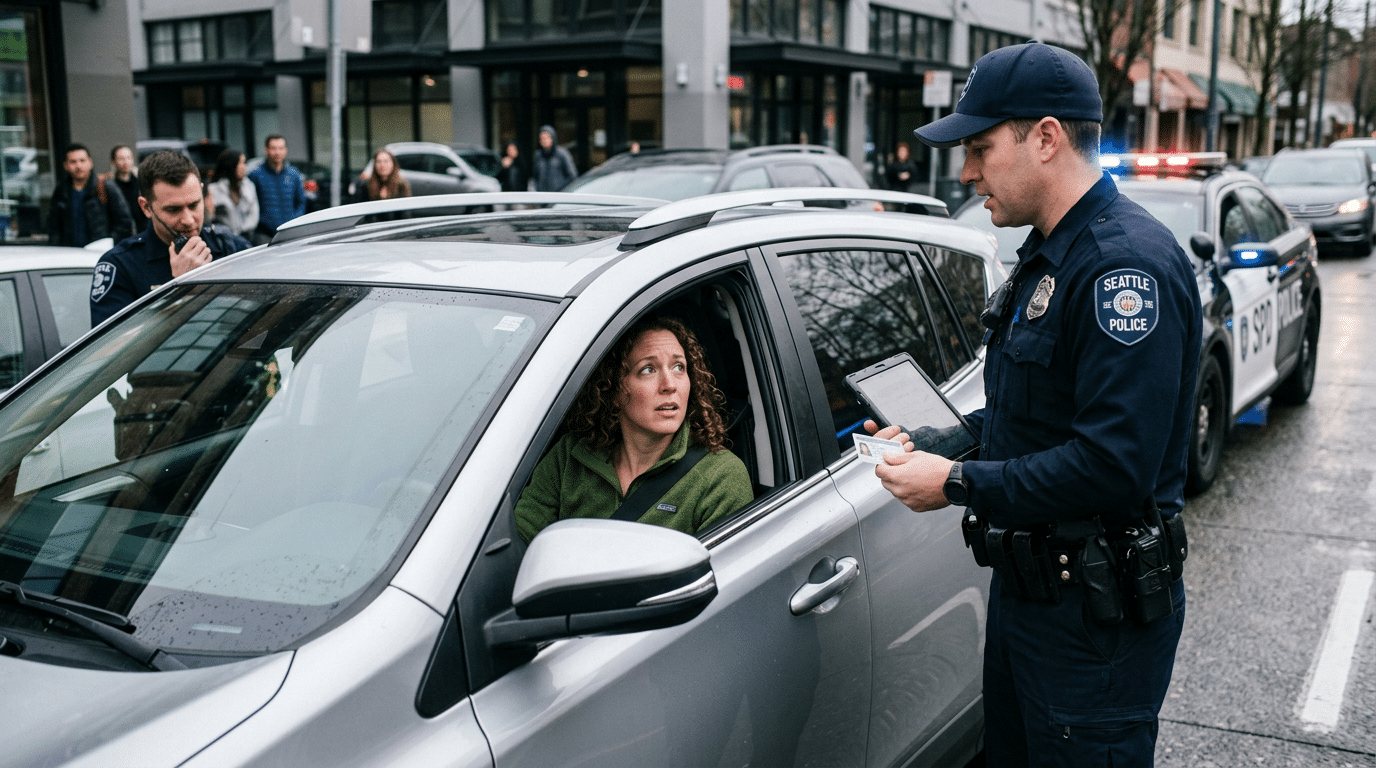
Being pulled over by police while driving a vehicle you did not know was stolen can quickly turn into a serious criminal investigation. You might have borrowed the car from a friend, purchased it from a private seller, or been driving a vehicle belonging to someone you trust. When officers discover that the vehicle has been reported stolen, they may suspect you were involved in the theft, even if you had no idea anything was wrong.
Under Colorado law, however, driving a stolen vehicle does not automatically mean you are guilty of a crime. Prosecutors must establish the elements of the offense charged, including the required mental state. At Watkins Law Firm LLC, we defend individuals facing motor vehicle theft allegations in Boulder and throughout the Denver area, including cases involving drivers who had no knowledge that a vehicle was stolen.
Colorado Law Requires Proof of Criminal Intent for Motor Vehicle Theft
Colorado’s motor vehicle theft laws are primarily established under C.R.S. § 18-4-409. The statute addresses conduct involving the unauthorized taking, exercising of control over, or obtaining of another person’s motor vehicle.
Colorado distinguishes between first-degree and second-degree motor vehicle theft. First-degree motor vehicle theft generally involves knowingly obtaining, exercising control over, or taking a motor vehicle without authorization or by threat or deception, combined with one of several additional statutory circumstances. These circumstances may include retaining possession or control for more than 24 hours or attempting to alter the vehicle’s identification number.
Second-degree motor vehicle theft addresses knowingly obtaining, exercising control over, or taking another person’s motor vehicle without authorization when the additional circumstances required for first-degree theft are not established.
The word “knowingly” is particularly important when we defend someone who had no idea a vehicle was stolen. Under C.R.S. § 18-1-501(6), a person acts knowingly when they are aware that their conduct is of a particular nature or that a relevant circumstance exists.
We examine whether prosecutors can prove that you knowingly exercised unauthorized control over the vehicle. Simply being behind the wheel does not, by itself, establish that you knew you lacked authorization to drive it.
Police May Arrest You Even If You Explain That You Did Not Know the Vehicle Was Stolen
When officers run a vehicle’s license plate and discover a stolen vehicle report, they may conduct a traffic stop and investigate further. Depending on the circumstances, officers may order you out of the vehicle, detain you, question you, and potentially arrest you.
An officer might ask where you obtained the vehicle, who gave you permission to drive it, and whether you have documentation showing that you purchased or borrowed it.
Your explanation matters, but officers are not required to accept it immediately. They may consider additional circumstances, including whether the ignition appears damaged, whether the vehicle identification number has been altered, or whether your account conflicts with other available evidence.
Under C.R.S. § 16-3-102, Colorado officers may make an arrest when the applicable statutory requirements are satisfied, including probable cause to believe an offense has been committed by the person arrested.
We remind our clients that the police only need probable cause to make an arrest, which is not the same as the proof needed for a conviction. Being arrested does not mean you knowingly committed motor vehicle theft.
Borrowing a Stolen Vehicle From Someone You Trust
It is common to borrow a car from a friend, coworker, family member, or someone you know. You might reasonably think that person owns the car or is allowed to let you use it.
For example, someone might ask you to drive their vehicle to a store without telling you that it belongs to another person who reported it stolen.
If police stop you, they may initially treat you as a suspect because you possess the vehicle. However, possession alone does not necessarily prove the mental state required for motor vehicle theft.
We investigate how you obtained the vehicle, what the person who provided it told you, and whether there were warning signs that would support the prosecution’s allegations.
Text messages, phone records, witnesses, and conversations with the person who gave you the car can help show that you honestly thought you were allowed to drive it.
Purchasing a Vehicle That Turns Out to Be Stolen
Another situation is when you buy a used car that was actually stolen before you bought it. Private sales, especially those from online marketplaces, can sometimes involve sellers who are not honest about owning the car.
You might pay the price listed, get the keys, and receive paperwork that looks real. Later, the police find out the car was reported stolen.
Under C.R.S. § 18-4-409, prosecutors must still prove the elements of motor vehicle theft. A legitimate purchase made without knowledge of the seller’s lack of authority can provide important evidence against an allegation of knowing unauthorized control.
We examine purchase agreements, payment records, advertisements, title documents, and communications with the seller.
A suspiciously low purchase price, inconsistent ownership documents, or an altered vehicle identification number may raise questions. However, those circumstances must be evaluated in context rather than treated as automatic proof of criminal conduct.
Criminal Penalties for Motor Vehicle Theft in Colorado
Colorado’s motor vehicle theft statute establishes different penalties depending on the degree of the offense and applicable circumstances.
Under C.R.S. § 18-4-409, first-degree motor vehicle theft is generally a class 3 felony, while second-degree motor vehicle theft is generally a class 4 felony. Certain qualifying circumstances, including the statutory provisions applicable to lower-value vehicles and prior convictions, may affect classification.
Under C.R.S. § 18-1.3-401, the ordinary presumptive sentencing ranges include:
- Class 3 felony: Four to 12 years in prison.
- Class 4 felony: Two to six years in prison.
These ranges are subject to statutory exceptions, including extraordinary-risk provisions and other sentencing rules. The actual sentencing exposure depends on the precise charge, the defendant’s criminal history, and the applicable statutes.
A conviction can also result in substantial fines, restitution obligations, and a felony record that may affect future employment, housing, and professional opportunities.
We review the specific allegations before explaining the potential penalties because not every motor vehicle theft case carries the same sentencing consequences.
Defending Against Allegations Involving an Unknowingly Stolen Vehicle
When we represent someone accused of driving a stolen vehicle, we focus on whether the prosecution can establish knowing unauthorized control.
Under C.R.S. § 18-1-407, the prosecution generally bears the burden of disproving a properly raised affirmative defense beyond a reasonable doubt. However, a lack-of-knowledge argument ordinarily challenges the prosecution’s proof of the offense’s required mental state rather than operating as a separate affirmative defense.
We may use communications, purchase records, witness testimony, and the circumstances surrounding your possession of the vehicle to challenge the prosecution’s allegations.
We also examine the legality of the traffic stop, detention, vehicle search, and any statements obtained during questioning. Evidence acquired through unconstitutional police conduct may be subject to suppression, depending on the circumstances.
Our objective is to identify weaknesses in the prosecution’s case and pursue dismissal, reduced charges, or an acquittal when supported by the evidence and applicable law.
Protecting Your Rights After Being Accused of Driving a Stolen Vehicle
If police accuse you of driving a stolen vehicle, your statements and actions during the investigation can affect the outcome.
You have constitutional protections under the Fifth and Sixth Amendments to the United States Constitution, as well as relevant provisions of the Colorado Constitution. You generally have the right to remain silent during custodial questioning and to request legal counsel.
We recommend preserving documents and communications that explain how you obtained the vehicle. Avoid deleting messages or contacting potential witnesses in ways that could be interpreted as attempting to influence their testimony.
Even when you believe the situation is a misunderstanding, speaking with a criminal defense attorney before providing detailed statements can help protect your legal interests.
FAQs About Driving a Stolen Vehicle Without Knowing It in Colorado
What Happens If a Friend Lets Me Borrow a Car That Turns Out to Be Stolen?
If a friend provides a vehicle and you reasonably believe they have permission to lend it to you, that belief may be important to your defense. Prosecutors must establish that you acted with the mental state required by the applicable theft statute.
We may investigate your relationship with the friend, previous occasions when you borrowed the vehicle, and any communications about permission. Text messages and witness statements can help establish that you did not knowingly exercise unauthorized control.
Can I Be Charged With Motor Vehicle Theft After Buying a Stolen Car From a Private Seller?
Yes. Police may investigate or charge you if the circumstances support probable cause, even when you claim to have purchased the vehicle legitimately. However, a charge does not mean prosecutors can prove that you knowingly exercised unauthorized control.
We review payment receipts, online advertisements, title documents, and communications with the seller. These records may establish that you believed the transaction was legitimate. We also investigate whether the seller misrepresented ownership or supplied fraudulent paperwork.
Will I Get My Money Back If I Purchased a Stolen Vehicle?
Recovering your money can be difficult because purchasing stolen property generally does not give you superior ownership rights over the lawful owner. Police may seize the vehicle as evidence or arrange for its return to the rightful owner.
We can help you understand how the criminal investigation affects your legal position. Depending on the circumstances, you may have potential civil claims against the seller or may be able to pursue restitution through proceedings against the person responsible for the fraud.
Can the Charges Be Dismissed If the Real Car Thief Is Identified?
Identifying the person responsible for stealing the vehicle can significantly strengthen your defense, but it does not automatically require dismissal. Prosecutors may still investigate whether you knowingly participated in unauthorized possession or control.
We examine whether the evidence connects you to the original theft or any later knowing criminal conduct. If the investigation establishes that you were an innocent purchaser or borrower, we may present that information to prosecutors and request dismissal of unsupported charges.
Call Watkins Law Firm LLC for a Free Consultation About Stolen Vehicle Charges
Being accused of driving a stolen vehicle can expose you to serious criminal penalties, even when you had no involvement in the original theft. At Watkins Law Firm LLC, we understand that people sometimes borrow or purchase vehicles without knowing that another person obtained them illegally. We carefully investigate these allegations, review the evidence supporting the charges, and challenge attempts to treat innocent possession as proof of criminal intent.
As Boulder criminal defense attorneys, we represent individuals accused of motor vehicle theft and other property crimes throughout Boulder County and the Denver metropolitan area. We work to protect our clients’ constitutional rights, challenge unsupported allegations, and pursue the most favorable resolution available under Colorado law.
If police arrested you for driving a stolen vehicle in Boulder, Denver, or a surrounding Colorado community, we encourage you to obtain legal advice before discussing the allegations further with investigators. Early legal representation can help preserve evidence explaining how you obtained the vehicle and why you believed you were authorized to drive it. Contact our Boulder auto theft lawyer by calling us 24/7 at 303-507-1324 for your free consultation.
