
What Happens If Police Find A Gun During A Traffic Stop?
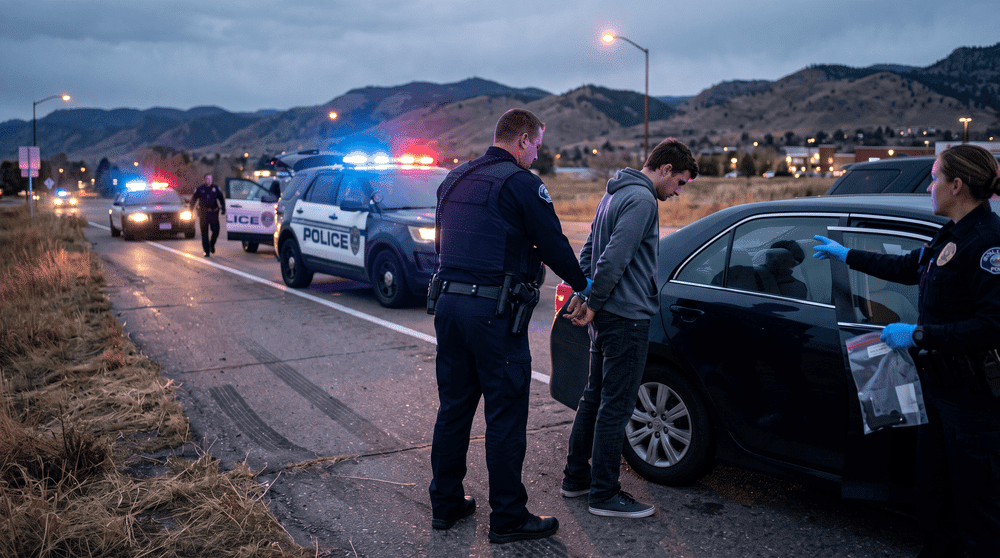
A traffic stop can become much more serious when police find a gun in the vehicle. What began as a stop for speeding, a lane change, expired tags, or a broken taillight may turn into a criminal investigation within minutes. In Colorado, not every firearm in a vehicle is illegal, but the facts matter. Police will look at where the gun was located, whether it was concealed, whether anyone had a valid concealed handgun permit, whether the driver or passenger is legally allowed to possess a firearm, and whether the stop involved drugs, alcohol, threats, prior convictions, or another alleged crime. We know how quickly these cases can escalate, and we also know that police do not always understand the facts correctly at the roadside.
A Gun In A Vehicle Does Not Automatically Mean A Crime Occurred
Colorado law does not make every firearm in a vehicle illegal. A person may lawfully possess a firearm in many situations. However, police may still investigate when they see or find a gun during a traffic stop. Officers may order people out of the vehicle, secure the firearm, ask questions, run criminal history checks, and decide whether they believe a weapons offense occurred.
The issue is often not simply whether a gun existed. The legal questions include whether the person knowingly possessed the firearm, whether the firearm was concealed on or about the person, whether the person was prohibited from possessing it, whether the person had a valid permit when one was required, and whether the police found the gun through a lawful stop or search. Those details can decide whether the case becomes a lawful possession issue or a criminal charge.
Unlawful Concealed Carry In Colorado
Colorado’s unlawful concealed carry statute is C.R.S. § 18-12-105. This law generally prohibits knowingly carrying a knife or firearm concealed on or about the person, subject to several statutory exceptions. The statute also recognizes a defense for a person in a private vehicle or other private means of conveyance who carries a weapon for lawful protection of that person’s or another person’s person or property while traveling.
This is an important point in vehicle cases. A firearm in a car is not automatically the same thing as unlawfully carrying a concealed weapon. The prosecution must look at where the firearm was located, whether it was concealed on or about the person, whether an exception applies, and whether the person had a valid concealed handgun permit if the facts require one. A gun locked in a case in the trunk may raise different issues from a handgun hidden under the driver’s seat, in a backpack, in a door pocket, or on a person’s body.
Possession Of Weapons By Previous Offenders
One of the most serious issues in a traffic-stop gun case is whether the person is legally allowed to possess a firearm. C.R.S. § 18-12-108 addresses possession of weapons by previous offenders. The statute can apply when a person knowingly possesses, uses, or carries a firearm or other covered weapon after certain felony convictions, qualifying juvenile adjudications, or certain misdemeanor domestic violence convictions.
These cases can be charged as serious felonies. A person may be arrested even when the gun was not used, displayed, fired, or connected to another crime. The prosecution may only need to prove knowing possession and the prior disqualifying conviction or adjudication. That is why we carefully examine whether the person actually possessed the firearm, whether the person knew it was there, whether the prior conviction qualifies, and whether the government can prove the required elements.
Guns, Drugs, And Traffic Stops
A gun found during a traffic stop can become more serious if police also claim they found drugs, cash, scales, baggies, or other evidence. In drug cases, prosecutors may argue that the gun was connected to distribution or protection of controlled substances. Police may also use the presence of a firearm to justify more aggressive handling of the stop, including ordering occupants out of the vehicle, placing people in handcuffs, or searching parts of the car.
Still, the presence of a gun does not prove drug trafficking. It does not prove ownership of drugs. It does not prove the driver knew about everything in the vehicle. If drugs and a gun are found in a shared car, rental vehicle, borrowed vehicle, or rideshare-type situation, the prosecution may have proof problems. We look closely at ownership, access, fingerprints, DNA, statements, body camera footage, search location, and whether the evidence connects the firearm to a specific person.
Can Police Search The Vehicle Because They Found A Gun?
Police cannot search a vehicle for any reason they choose. A lawful traffic stop must stay within constitutional limits. Under C.R.S. § 16-3-103, a temporary detention must be supported by reasonable suspicion, have a reasonable purpose, and be reasonable in scope. If the stop expands into a weapons or drug investigation, police need facts that justify that expansion.
A visible firearm may allow officers to take certain safety measures, but it does not automatically give unlimited authority to search every part of the vehicle. The legality of a search may depend on consent, probable cause, officer safety concerns, a lawful arrest, inventory procedures, or a search warrant. If police searched too broadly, detained someone too long, or used the firearm as an excuse for an unlawful search, we may challenge the evidence through a motion to suppress.
Statements During The Stop Can Hurt The Case
Many drivers and passengers try to explain the gun because they are nervous. They may say, “It’s mine,” “I forgot it was there,” “I keep it for protection,” or “I didn’t know I couldn’t have it.” Those statements can become important evidence. In some cases, the prosecution may rely more on roadside statements than on fingerprints or physical evidence.
You should be respectful during a traffic stop, but you do not have to answer detailed questions about firearm ownership, possession, drugs, travel plans, or criminal history. If police begin asking questions that sound like a criminal investigation, it is wise to ask for a lawyer. A short statement made under stress can turn a weak case into a stronger one.
Common Defenses When Police Find A Gun During A Traffic Stop
The defense depends on the charge. In an unlawful concealed carry case, we may argue that the firearm was not concealed on or about the person, that a statutory exception applies, that the person had a valid permit, or that the prosecution cannot prove knowing possession. In a possession by previous offender case, we may challenge knowledge, possession, access, the prior conviction element, or the legality of the stop and search.
In shared-vehicle cases, possession is often disputed. A passenger may not know what is under a seat. A driver may not know what another person placed in a bag. A person may borrow a car without knowing a firearm is inside. Police often make fast assumptions based on proximity. Colorado law requires proof, not assumptions. We focus on evidence showing who actually knew about the gun and who controlled it.
Why Early Legal Defense Matters
Gun cases can affect more than the immediate charge. They can threaten employment, professional licensing, immigration status, probation, bond, future gun rights, and a person’s criminal record. If the case involves a prior felony, a domestic violence history, drugs, or allegations of threats, the stakes increase quickly.
At Watkins Law Firm LLC, we review every part of the stop. We examine the reason for the traffic stop, the length of detention, the officer’s safety claims, the search, the gun’s location, body camera footage, statements, fingerprints, DNA issues, ownership evidence, and any prior conviction allegation. We work to identify weaknesses in the prosecution’s case and protect your rights from the start.
FAQs About Guns Found During Colorado Traffic Stops
Can I Have A Gun In My Car In Colorado?
In many situations, a person may lawfully have a firearm in a vehicle in Colorado. However, the law becomes more complicated if the gun is concealed on or about the person, the person is legally prohibited from possessing firearms, the gun is connected to another alleged crime, or the person is in a place where firearms are restricted. C.R.S. § 18-12-105 contains exceptions related to weapons carried in a private vehicle for lawful protection while traveling. The facts matter, including where the gun was located, who owned it, who knew about it, and whether any permit or legal restriction applies.
Can Police Arrest Me If They Find A Gun During A Traffic Stop?
Yes, police may arrest you if they believe the firearm was unlawfully possessed, unlawfully concealed, connected to drugs, connected to threats, or possessed by someone with a disqualifying criminal history. That does not mean the charge is valid. Police often make quick decisions based on limited information. The defense may challenge whether you knowingly possessed the gun, whether the search was lawful, whether an exception applies, or whether the prosecution can prove the required elements. A traffic-stop gun case should be reviewed carefully before any plea is considered.
What If The Gun Belonged To Someone Else In The Car?
If the gun belonged to someone else, that can be an important defense issue. The prosecution must usually prove knowing possession, not just presence near a firearm. In a shared car, police may assume the driver knew about the gun, but assumptions are not proof. Passengers may also be accused based on proximity. We look at where the gun was found, who had access, who made statements, whether there is ownership evidence, whether fingerprints or DNA were tested, and whether anyone else claimed the firearm.
Can Police Search My Car Just Because I Have A Gun?
Not always. A firearm may create officer safety concerns, but it does not automatically allow police to search every part of the vehicle without legal justification. Police may rely on consent, probable cause, a lawful arrest, inventory search rules, or another recognized basis for a search. If the stop was unlawfully extended, if consent was pressured, or if officers searched beyond what the law allowed, the defense may file a motion to suppress. If the judge excludes the gun or related evidence, the case may change significantly.
What If I Have A Prior Felony Or Domestic Violence Conviction?
A prior felony or qualifying misdemeanor domestic violence conviction can create serious firearm possession problems under C.R.S. § 18-12-108. These cases are often charged as serious offenses even when the gun was not used or displayed. The prosecution must still prove knowing possession and the qualifying prior conviction or adjudication. We review whether the prior offense actually qualifies, whether the person knew the firearm was present, and whether police lawfully found the gun.
Should I Tell Police The Gun Is Mine?
You should be careful. If police are asking who owns the gun or who knew it was in the vehicle, they may be building a criminal case. A statement such as “it is mine” can be used against you, even if you were trying to calm the situation. You should remain respectful and avoid sudden movements, but you do not have to give detailed statements that may incriminate you. If police begin questioning you about the firearm, criminal history, drugs, or ownership, it is wise to ask for an attorney.
Call Watkins Law Firm LLC For Help With A Colorado Weapons Charge
If police found a gun during a traffic stop and you are facing a weapons charge, drug allegation, possession by previous offender charge, unlawful concealed carry accusation, or related criminal case, Watkins Law Firm LLC can help. We defend clients in Boulder and throughout the Denver area against serious Colorado criminal charges involving traffic stops, firearms, drugs, DUI, assault, domestic violence, and other allegations. Contact our Boulder criminal defense attorney by calling us 24/7 at 303-507-1324 for your free consultation.
