
What Are The Penalties For Possessing A Firearm During A Drug Crime?
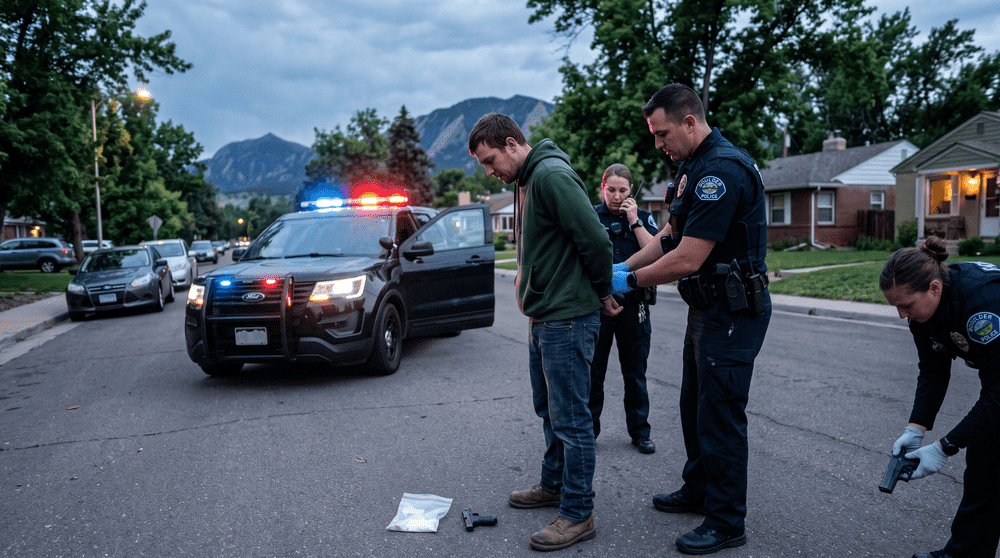
Possessing a firearm during a Colorado drug crime can turn an already serious case into a much more dangerous criminal prosecution. A drug case may start as a possession, distribution, manufacturing, or trafficking allegation, but the presence of a gun can change how police, prosecutors, and courts view the facts. Even if the firearm was not fired, pointed, or used to threaten anyone, prosecutors may argue that the gun increased the risk of violence. We understand how frightening it is when a search, traffic stop, or drug investigation leads to both drug and firearm allegations. At Watkins Law Firm LLC, we defend clients in Boulder and throughout the Denver area who are facing drug charges, firearm allegations, and other serious Colorado criminal cases.
Colorado Drug Crimes And Firearms Are A Serious Combination
Colorado law treats drug offenses differently depending on the substance, quantity, alleged conduct, and surrounding circumstances. Unlawful distribution, manufacturing, dispensing, sale, or possession with intent to distribute controlled substances is addressed under C.R.S. § 18-18-405. That statute covers conduct such as knowingly manufacturing, dispensing, selling, distributing, or possessing with intent to distribute a controlled substance.
A firearm can make the prosecution more aggressive because the state may argue that the weapon was connected to drug activity. Police may claim that a gun near drugs, cash, scales, packaging materials, or alleged distribution evidence shows protection, intimidation, or trafficking. The defense must test those assumptions. A firearm in a home, vehicle, safe, closet, or shared space does not automatically prove that the weapon was connected to a drug crime.
The Colorado Special Offender Statute
The most serious risk in many firearm-and-drug cases is Colorado’s special offender statute, C.R.S. § 18-18-407. Under that statute, a person who commits a felony drug offense under Part 4 of Article 18 may be classified as a special offender if certain aggravating circumstances apply. One listed aggravating circumstance applies when the defendant used, displayed, or possessed a deadly weapon on their person or within their immediate reach at the time of the drug offense.
This is a major issue. A special offender designation can elevate the case to a level 1 drug felony. That is far more serious than many ordinary drug possession or distribution charges. The prosecution may use the firearm allegation to increase sentencing exposure, pressure a plea, or argue that the case involves public safety concerns. We look closely at whether the firearm was actually within immediate reach, whether the person knew about it, whether the weapon met the statutory definition, and whether the state can prove the required connection to the alleged drug felony.
What Counts As A Deadly Weapon?
Colorado’s special offender statute refers to a deadly weapon as defined under C.R.S. § 18-1-901(3)(e). A firearm will usually qualify as a deadly weapon under Colorado law. The legal fight is often not whether the object was a firearm, but whether the prosecution can prove possession, knowledge, immediate reach, timing, and connection to the drug offense.
For example, a gun locked in a safe across the house may present different issues than a handgun found on a person during an alleged drug sale. A firearm in a shared vehicle may present different issues than a firearm in a backpack with drugs and cash. A firearm owned by someone else may raise factual questions about knowledge and control. The details matter because prosecutors must prove more than proximity.
Drug Felony Sentencing Exposure
Colorado drug felony sentencing is addressed under C.R.S. § 18-1.3-401.5. Drug felonies are classified by level, and the sentencing range depends on the level of the offense, aggravating facts, criminal history, and the specific statute involved.
When a firearm allegation turns a drug case into a level 1 drug felony special offender case, the sentencing risk can increase sharply. That can affect plea negotiations, bond conditions, trial strategy, and the urgency of the defense. A person may face prison exposure, mandatory parole, large fines, probation limits, and long-term felony consequences. A felony conviction can also affect employment, housing, professional licensing, immigration status, student opportunities, and firearm rights.
Separate Firearm Charges May Also Apply
A person may also face separate weapon charges depending on the facts. One common charge is possession of a weapon by a previous offender under C.R.S. § 18-12-108. That statute generally applies when a person knowingly possesses, uses, or carries a firearm or certain other weapons after a qualifying felony conviction or adjudication.
This means one investigation can create multiple layers of criminal exposure. Prosecutors may file a drug possession or distribution charge, a special offender allegation, and a separate firearm possession charge. If the accused person has a prior felony, the firearm allegation may become even more serious. We examine whether the prior conviction qualifies, whether the firearm was knowingly possessed, and whether police lawfully found the gun.
Common Situations Where Firearms And Drug Charges Overlap
These cases often begin with a traffic stop, search warrant, probation search, hotel room investigation, package investigation, or police surveillance. Officers may find drugs and a firearm in the same vehicle, bedroom, bag, safe, or apartment. They may also find cash, scales, baggies, ledgers, phones, or messages and claim those items show distribution.
However, police assumptions are not always accurate. A person may legally own a firearm for personal protection. A firearm may belong to another person. Drugs may be found in a shared space. A weapon may be unloaded, locked away, inaccessible, or unrelated to the alleged drug offense. We do not accept the prosecution’s theory without testing every fact.
Defense Issues In A Drug And Firearm Case
Several defense issues may apply. First, the search may have been unlawful. If police found drugs or a firearm through an illegal traffic stop, unlawful detention, defective search warrant, or unconstitutional search, the defense may file a motion to suppress the evidence.
Second, possession may be disputed. The prosecution must prove knowing possession, not just presence near an item. This can be a strong issue in shared cars, shared apartments, group stops, and cases involving multiple occupants.
Third, the firearm connection may be disputed. A gun found somewhere near drugs does not always prove that the firearm was used, displayed, or possessed within immediate reach at the time of the drug offense. Fourth, the drug charge itself may be weaker than prosecutors claim. If the underlying felony drug offense is reduced or dismissed, the special offender allegation may also become harder for the state to pursue.
Why Early Defense Matters
Drug-and-firearm cases can move quickly. Bond conditions may be strict. Police may seize phones, vehicles, cash, firearms, and other property. Prosecutors may use the firearm allegation to argue that the accused person is dangerous or should face harsher treatment. Waiting too long can make it harder to preserve video, witness information, location data, and other evidence.
We act quickly to review the arrest, search, warrant, lab results, police reports, firearm evidence, prior record issues, and the alleged connection between the firearm and the drugs. The earlier we can identify weaknesses, the better positioned we are to fight the charge, challenge enhancements, and work toward the best available outcome.
FAQs About Firearms And Drug Crimes In Colorado
Can A Gun Make A Colorado Drug Charge More Serious?
Yes. A firearm can make a Colorado drug charge much more serious. Under C.R.S. § 18-18-407, a person accused of a felony drug offense may be treated as a special offender if the prosecution proves that the person used, displayed, or possessed a deadly weapon on their person or within immediate reach during the offense. That can elevate the case to a level 1 drug felony. The firearm does not have to be fired for the allegation to matter. Still, the prosecution must prove the facts required by the statute.
Does The Gun Have To Be Used During The Drug Crime?
Not necessarily. The special offender statute can apply when the person used, displayed, or possessed the deadly weapon on their person or within immediate reach at the time of the drug offense. That means prosecutors may pursue the allegation even if the firearm was not fired or pointed. However, there may be strong defense arguments if the gun was not within immediate reach, was locked away, belonged to someone else, or was not connected to the alleged drug offense. The exact location and circumstances are critical.
What If The Firearm Belonged To Someone Else?
If the firearm belonged to someone else, that may be an important defense issue. Ownership and possession are not always the same thing. Prosecutors may still argue constructive possession if they believe the accused person knew about the gun and had the ability to control it. We examine where the firearm was found, who had access to the area, whether fingerprints or DNA exist, whether there are ownership records, and whether any statements connect the accused person to the weapon. Shared spaces often create real proof problems for the prosecution.
Can Police Charge Me If Drugs And A Gun Were Found In A Shared Car?
They may try, but a shared car creates defense issues. Police often charge multiple people when drugs or a firearm are found in a vehicle, but being present in a car is not the same as knowingly possessing everything inside it. The prosecution must prove knowledge and control. We look at where the items were located, who owned the vehicle, who had access to the area, whether the firearm was visible or hidden, whether the drugs were connected to one person, and whether police made assumptions without enough evidence.
Call Watkins Law Firm LLC For Help With A Colorado Drug And Firearm Charge
If you are facing a drug charge involving a firearm, Watkins Law Firm LLC can help. These cases can carry serious felony exposure, special offender allegations, prison risk, firearm consequences, and long-term damage to your record, job, housing, and future. We defend clients in Boulder and throughout the Denver area against drug crimes, firearm allegations, felony charges, search warrant cases, and other serious Colorado criminal accusations. Contact our Boulder gun crime attorney by calling us 24/7 at 303-507-1324 for your free consultation.
