
Mistakes To Avoid After An Arrest In Boulder
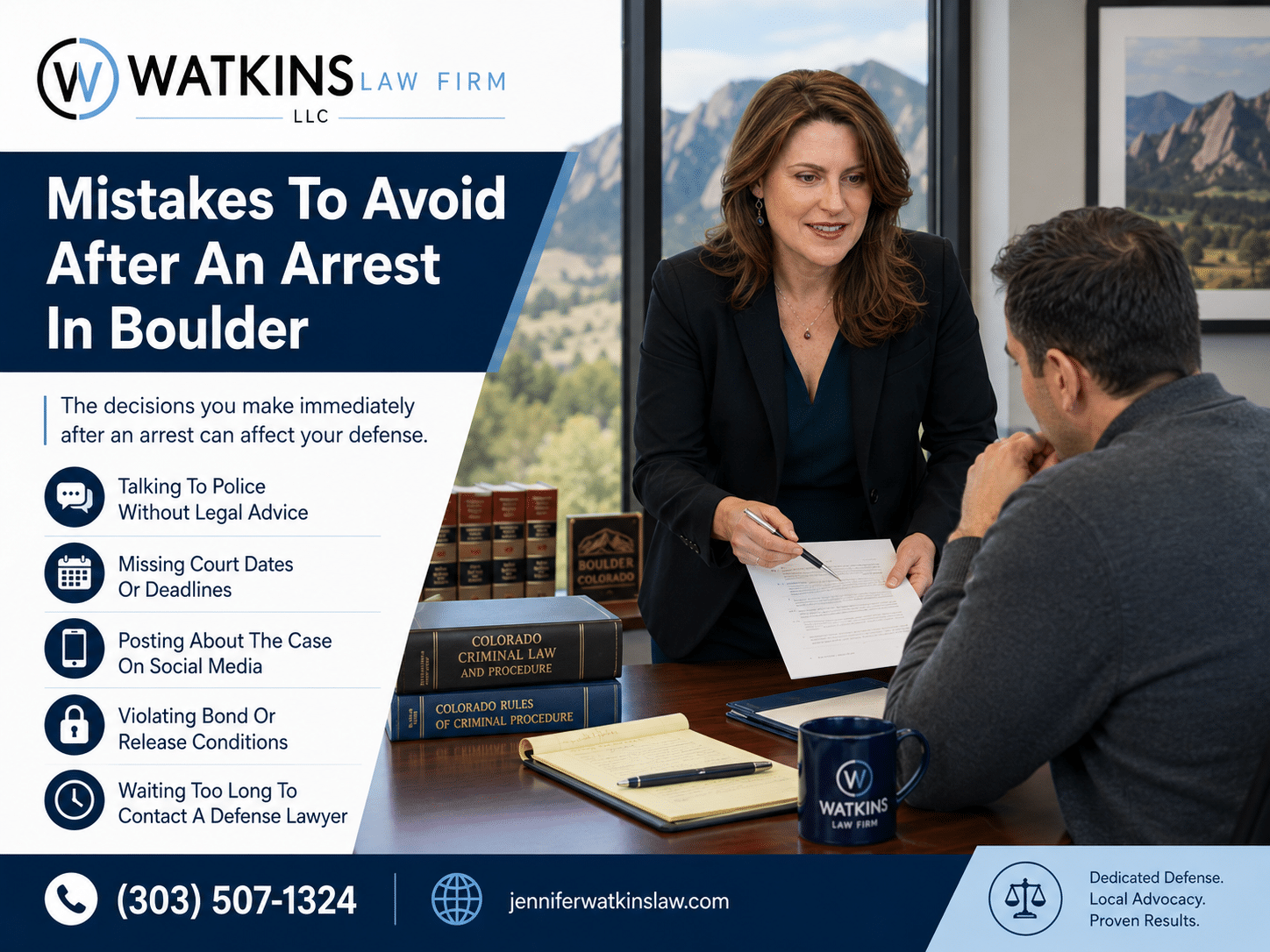
An arrest in Boulder can leave you scared, angry, embarrassed, and unsure of what to do next. The first few days after an arrest are often the most important because small decisions can affect bond, charging decisions, plea negotiations, license issues, employment, family matters, and your long-term record. We have seen good people make damaging mistakes because they wanted to explain themselves, calm someone down, or make the case go away quickly.
Colorado criminal cases move fast, and the prosecution may already be collecting police reports, body camera footage, witness statements, lab reports, phone records, or chemical test results. If you have been arrested for DUI, drug possession, assault, domestic violence, theft, reckless driving, or another criminal charge in Boulder, what you do next matters. At Watkins Law Firm LLC, we help clients protect their rights early so one bad moment does not become a permanent problem.
Mistake: Talking Too Much To Police
One of the biggest mistakes after an arrest is trying to talk your way out of the case. Many people believe that if they explain what happened, the officer will understand and drop the matter. That rarely happens. Police officers may seem casual, but their questions are usually designed to collect evidence.
Anything you say can be placed in a report and used by the prosecution. Even a partial statement can be misunderstood, taken out of context, or used to fill gaps in the government’s case. In a drug case, for example, a statement about who owned a bag, where you were going, or whether you knew what was in the vehicle may become important evidence. In a DUI case, comments about drinking, medication, marijuana use, or driving time can matter. The safer choice is to remain polite, provide basic identifying information, and ask for an attorney before answering questions about the facts.
Mistake: Ignoring Bond Conditions
After an arrest, the court may release you on bond with conditions. Under C.R.S. § 16-4-105, Colorado courts may impose bond conditions and may revoke or change release conditions if certain violations occur, including new felony conduct while on bond. Bond conditions are not suggestions. They are court orders.
Common conditions may include appearing in court, staying away from certain people or places, obeying protection orders, not using alcohol or drugs, submitting to testing, not possessing firearms, checking in with pretrial services, or complying with treatment requirements. Violating the bond can lead to arrest, higher bond, stricter conditions, or loss of release. If you do not understand a condition, get legal help before taking action. Guessing can hurt you.
Mistake: Missing Court
Missing court can turn one criminal case into two problems. Under C.R.S. § 18-8-212, failing to appear after being released on bond can result in a separate criminal charge. The level of that charge depends on the underlying case and the circumstances. A missed court date can also lead to a warrant, bond forfeiture, and a worse position with the judge.
Sometimes people miss court because they moved, lost paperwork, assumed the case was minor, or thought the court would reschedule automatically. That is risky. If you have been arrested in Boulder, keep every court notice, track every deadline, and update your attorney immediately if you receive any paperwork. If you already missed court, do not ignore it. The problem usually gets worse with time.
Mistake: Contacting The Alleged Victim
In domestic violence, assault, harassment, stalking, protection order, or child abuse cases, contacting the alleged victim can create serious trouble. Colorado law makes violation of a protection order a separate offense under C.R.S. § 18-6-803.5 when the person has been served with or has actual knowledge of the order and then violates its terms. A protection order may prohibit calls, texts, emails, social media messages, third-party messages, in-person contact, or going near a home, job, or school.
Many people violate orders because they think the other person wants contact, needs help, or has agreed to talk. That does not make it safe. The protected person cannot give you permission to violate a court order. If you need to retrieve belongings, discuss children, or handle housing issues, speak with an attorney first. One text message can lead to a new arrest.
Mistake: Posting About The Case Online
Social media can damage a criminal defense. Posts, comments, photos, location tags, direct messages, and videos may be used by police, prosecutors, witnesses, employers, or the other side in a related family case. Deleting posts after an investigation begins can create additional problems.
Do not post about the arrest, the alleged victim, police, witnesses, drugs, alcohol, weapons, driving, or court. Do not ask friends to defend you online. Do not joke about the case. A post that seems harmless may look different when shown in court. The best practice is to stay quiet online until your attorney has reviewed the situation.
Mistake: Assuming A Drug Charge Is Minor
Many people assume a drug possession case is not serious because Colorado has changed some drug laws. That assumption can be costly. Unlawful possession of a controlled substance is addressed under C.R.S. § 18-18-403.5, and certain substances or quantities can still lead to felony exposure, including cases involving fentanyl or other serious controlled substances.
A drug case can affect employment, housing, immigration status, professional licensing, school discipline, and child custody. It may also involve search and seizure defenses that can be lost if no one reviews the evidence early. If police find drugs in a car, backpack, apartment, dorm, or shared space, the prosecution still has to prove possession and knowledge. Do not assume the case is simple.
Mistake: Waiting Too Long To Get Legal Help
Waiting can make the defense harder. Video footage may disappear. Witness memories may fade. DMV deadlines may pass after a DUI arrest. Bond violations may occur because no one explained the rules. In some cases, early attorney involvement may help address charging decisions, evidence issues, treatment steps, or protection order concerns.
An attorney can review the arrest, explain the charge, identify deadlines, contact the court, request discovery, evaluate constitutional issues, and help you avoid decisions that make the case worse. Early help does not mean you are admitting guilt. It means you are protecting yourself.
Mistake: Treating The Case Like It Will Disappear
Some people hope the prosecutor will drop the case if they stay quiet and wait. Sometimes cases do get dismissed, but that usually happens because evidence is challenged, witnesses are examined, legal defects are raised, or the prosecution cannot prove its burden. A criminal case should be handled with a plan.
Colorado also has record-sealing laws, including C.R.S. § 24-72-706 for eligible conviction records and other provisions for dismissed cases, acquittals, and successful deferred judgments. Sealing eligibility depends on the charge, outcome, waiting period, and criminal history. A good result now may protect your record later. A careless result now may follow you for years.
FAQs About Mistakes To Avoid After An Arrest In Boulder
Should I Explain My Side To Police After An Arrest?
Usually, no. You may want to explain your side because you believe the arrest was unfair, exaggerated, or based on a misunderstanding. The problem is that police are not neutral listeners after an arrest. They are collecting evidence. Even true statements can be used against you if they help prove an element of the charge. A short comment about drinking, drug possession, an argument, a phone call, or where you were can become important later. The better approach is to stay respectful, avoid arguing, and ask for an attorney before answering factual questions. We can help decide when, whether, and how your side should be presented.
What Happens If I Miss Court In Boulder?
Missing court can create a warrant, bond problems, and a separate failure to appear charge. Colorado law addresses failure to appear under C.R.S. § 18-8-212. The consequences can depend on whether the underlying case is a misdemeanor or felony and the facts surrounding the missed appearance. Even if the missed date was accidental, the court may not treat it lightly. If you realize you missed court, do not wait for the police to find you. Legal help may allow the issue to be addressed more quickly and may reduce the chance of additional damage.
Can I Contact The Alleged Victim If They Contact Me First?
You should not assume it is allowed. If there is a protection order, no-contact order, bond condition, or court order restricting contact, the safest answer is no unless the court changes the order. The protected person cannot waive the order for you. Even if that person calls, texts, apologizes, asks to talk, or wants to drop the case, you may still be accused of violating the order if you respond. Under C.R.S. § 18-6-803.5, violating a protection order can be charged as a separate crime. Save the message and speak with an attorney before responding.
Is A First Drug Arrest In Colorado Really Serious?
Yes, it can be. A first drug arrest may still affect your job, school, housing, immigration status, professional license, and record. Colorado drug possession law under C.R.S. § 18-18-403.5 still allows serious charges depending on the substance, amount, facts, and history. A drug case may also involve important defenses, such as unlawful search, lack of possession, lack of knowledge, unreliable lab testing, or shared access to the area where drugs were found. Treating the case as minor can lead to missed opportunities to fight the evidence or protect your future.
Should I Post About My Arrest Online?
No. Posting about an arrest can hurt your defense. Prosecutors, police, witnesses, employers, and other parties may view public posts or receive screenshots from someone else. A sarcastic comment, angry message, photo, or joke can be taken seriously in court. It can also undermine your credibility during negotiations. Do not discuss the facts, the officer, the alleged victim, witnesses, drugs, alcohol, driving, or court online. It is also wise to avoid asking friends or family to post about the case for you.
Can A Lawyer Help Before Charges Are Filed?
Yes. Legal help before formal charges can be valuable. After an arrest, prosecutors may still be reviewing reports, evidence, witness statements, lab results, or body camera footage. An attorney may be able to identify urgent issues, protect your rights, address bond conditions, advise you about communications, and begin gathering defense evidence. In DUI cases, there may also be DMV deadlines. In domestic violence or protection order cases, there may be contact restrictions that need immediate attention. Waiting until the first court date can leave too much to chance.
Call Watkins Law Firm LLC After An Arrest In Boulder
If you have been arrested in Boulder, do not risk making the case worse by guessing your way through the process. Watkins Law Firm LLC defends clients facing drug charges, DUI, domestic violence, assault, theft, reckless driving, and other Colorado criminal allegations. We understand how one arrest can affect your freedom, job, family, license, and record. We can review what happened, explain your options, and help you avoid mistakes that can damage your defense.
Contact our Boulder criminal defense attorney by calling us 24/7 at 303-507-1324 for your free consultation. Our Boulder drug crime defense lawyer represents clients in Boulder and throughout the Denver area from our office locations in Boulder, Colorado.
