
Fentanyl Manufacturing Charges In Denver
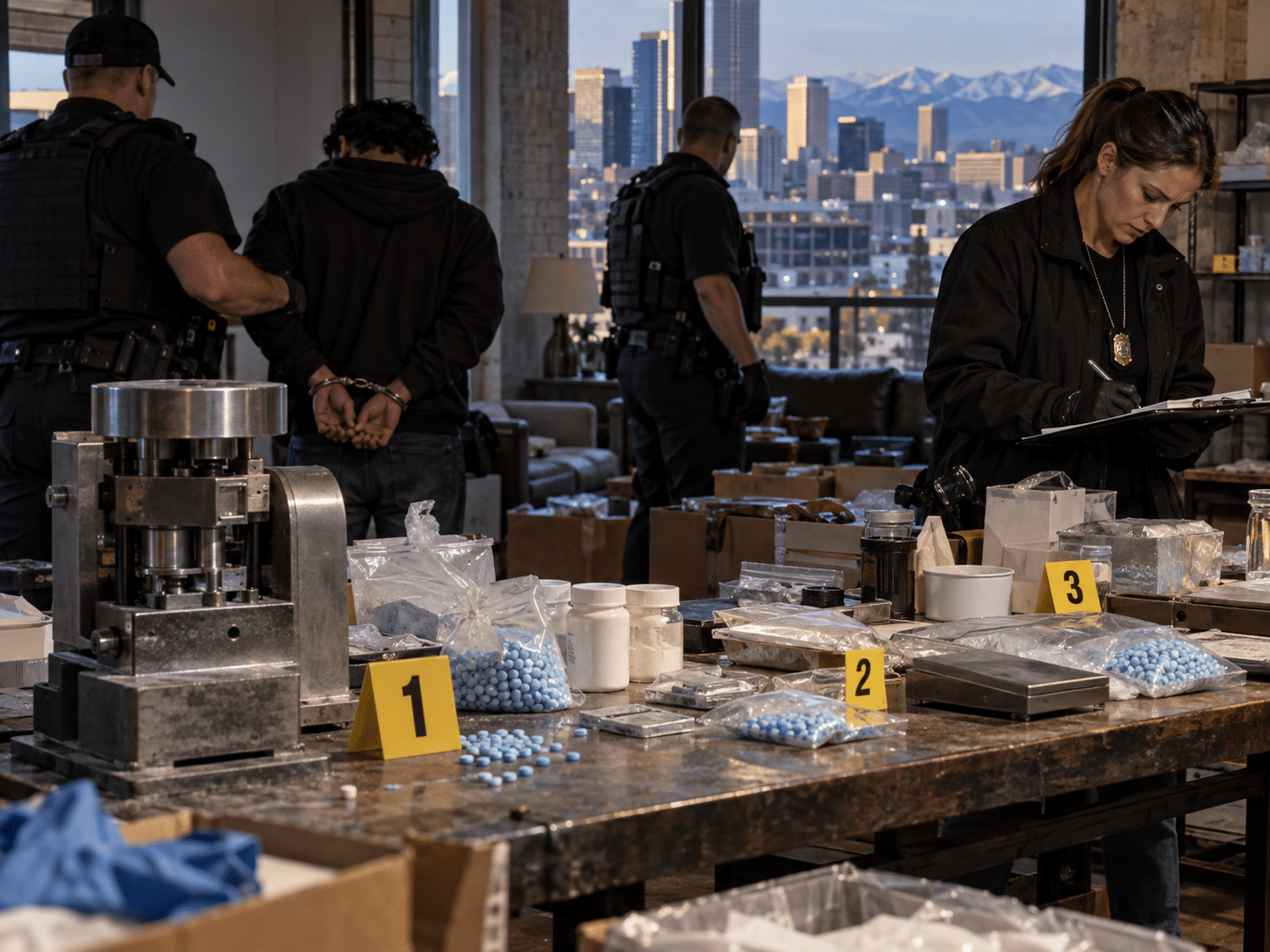
Fentanyl manufacturing charges in Denver can expose a person to some of the most serious drug penalties available under Colorado law. We often see these cases involve much more than an allegation that someone physically created fentanyl from raw chemicals. Colorado law uses a broad definition of manufacturing that can reach conduct involving preparing, compounding, processing, packaging, or repackaging controlled substances.
Prosecutors may also rely on equipment, packaging materials, communications, financial records, laboratory testing, and other evidence when trying to establish what occurred. Because fentanyl has its own quantity thresholds under Colorado law, even a relatively small amount can support a felony manufacturing charge. When we defend someone facing these allegations, we examine both the alleged drugs and the evidence prosecutors claim connects our client to manufacturing activity.
How Colorado Law Defines Fentanyl Manufacturing
Colorado Revised Statutes § 18-18-405 makes it unlawful to knowingly manufacture a controlled substance. The statute also prohibits possessing a controlled substance with the intent to manufacture it and possessing chemicals, supplies, or equipment with the intent to manufacture a controlled substance.
The meaning of “manufacture” is important. Under C.R.S. § 18-18-102(17), manufacturing includes producing, preparing, propagating, compounding, converting, or processing a controlled substance. The definition also reaches certain packaging, repackaging, labeling, and relabeling activities. As a result, prosecutors do not necessarily need to allege that someone operated a full-scale chemical laboratory before bringing a manufacturing case.
For example, allegations that someone processed a fentanyl mixture and prepared it for distribution could potentially produce a manufacturing investigation even when that person did not chemically synthesize the fentanyl.
What Must Prosecutors Prove?
Under C.R.S. § 18-18-405(1)(a), the prosecution generally must establish that the prohibited conduct was committed knowingly. That mental-state requirement can become a central issue in a case.
Finding fentanyl inside a home, apartment, vehicle, or other location does not automatically establish that every person present knowingly manufactured it. We may examine who controlled the location, who had access to the drugs, where the drugs and equipment were found, whether fingerprints or DNA were collected, and whether electronic communications actually connect our client to the alleged activity.
The prosecution may attempt to build its case through circumstantial evidence. Scales, presses, packaging materials, powders, chemicals, large quantities of pills, cash, text messages, photographs, surveillance footage, and electronic records can all become significant. We examine whether that evidence proves manufacturing or merely creates suspicion.
Fentanyl Quantity Can Determine The Felony Level
Colorado treats fentanyl differently from many other controlled substances when determining the level of an offense under C.R.S. § 18-18-405.
For manufacturing offenses involving fentanyl, carfentanil, certain benzimidazole opiates, or covered analogs, the statute generally provides the following classifications:
- More than 50 grams can constitute a Level 1 drug felony.
- More than 4 grams but not more than 50 grams can constitute a Level 2 drug felony.
- Not more than 4 grams can constitute a Level 3 drug felony.
These thresholds concern the weight of the material, compound, mixture, or preparation containing fentanyl rather than simply the weight of pure fentanyl itself. C.R.S. § 18-18-405(2) therefore makes laboratory analysis and accurate measurement particularly important.
Colorado law contains limited provisions that can reduce certain small-quantity distribution or transfer offenses to misdemeanors when specified overdose-reporting requirements are satisfied. The statute expressly excludes a prosecution for manufacturing from that particular misdemeanor provision. That distinction can make the classification of the alleged conduct especially important.
What Are The Penalties For Fentanyl Manufacturing?
The potential sentence depends heavily on the felony level and the circumstances surrounding the case.
Under C.R.S. § 18-1.3-401.5, a Level 1 drug felony carries a sentencing range of 8 to 32 years in prison and three years of mandatory parole. A Level 2 drug felony ordinarily carries a presumptive prison range of 4 to 8 years, while a Level 3 drug felony ordinarily carries 2 to 4 years. Colorado law also provides aggravated sentencing ranges under certain circumstances. Significant fines can accompany a conviction.
These ranges make the exact weight, laboratory findings, charged conduct, prior record, and alleged aggravating circumstances critical parts of our review.
Special-Offender Allegations Can Increase The Stakes
C.R.S. § 18-18-407 creates additional consequences when certain aggravating circumstances accompany a felony drug offense. A person qualifying as a special offender can face a Level 1 drug felony.
Relevant allegations can include participation in an organized pattern of drug manufacturing or distribution, certain leadership activity in a drug conspiracy, qualifying importation of controlled substances into Colorado, or access to certain weapons during the offense. For fentanyl, the statute includes an importation provision involving more than four grams of material containing fentanyl or another covered substance.
We therefore look beyond the basic manufacturing count to determine whether prosecutors are seeking additional allegations that could substantially increase sentencing exposure.
What Happens If Someone Dies After Receiving Fentanyl?
A fentanyl case becomes considerably more serious when prosecutors allege that another person died after using the substance.
C.R.S. § 18-18-405 contains a Level 1 drug felony provision when qualifying unlawful fentanyl conduct is the proximate cause of another person’s death. Proximate cause is a legal requirement, not simply an assumption that follows whenever fentanyl and a death appear in the same investigation.
The Colorado Supreme Court addressed this issue in People v. Beverly in 2025. The court explained that the statute’s proximate-cause language requires a genuine causal analysis and recognized that an independent intervening cause may affect whether the required legal connection has been established.
We would closely examine toxicology findings, autopsy evidence, other substances present, the source of the drugs, timing, communications, witness accounts, medical records, and the circumstances surrounding the death.
Search And Seizure Issues Can Affect A Denver Fentanyl Case
Manufacturing investigations frequently involve search warrants for homes, vehicles, phones, computers, storage units, or other property. We examine how police obtained the evidence and whether the search complied with constitutional requirements.
A search warrant does not automatically make every search lawful. We may question whether probable cause supported the warrant, whether statements used to obtain it were materially inaccurate, whether officers exceeded its authorized scope, or whether police conducted a warrantless search without a valid exception.
Electronic evidence deserves the same attention. Text messages, photographs, location information, internet activity, and financial transactions can become major parts of a prosecution. We evaluate how investigators obtained that information and whether the government can properly attribute it to our client.
Defending Against Fentanyl Manufacturing Charges In Denver
There is no single defense that applies to every fentanyl manufacturing prosecution. We build the defense around the evidence and circumstances of the individual case.
We may challenge whether our client knowingly participated in manufacturing, whether the drugs belonged to someone else, whether the alleged conduct legally constituted manufacturing, whether prosecutors can establish possession or control, or whether the government can connect particular equipment to illegal activity.
Laboratory evidence may also require close review. The identity and weight of the substance can determine the classification of the offense. When only a few grams separate one felony level from another, testing and measurement can have major consequences.
Our work may also include challenging searches, statements, electronic evidence, confidential-informant information, surveillance evidence, and alleged connections between multiple defendants. A serious fentanyl accusation should be evaluated from the evidence outward rather than treated as proven simply because charges were filed.
FAQs About Fentanyl Manufacturing Charges In Denver
Can I Be Charged With Manufacturing Fentanyl If I Did Not Actually Make The Fentanyl?
Yes. Colorado’s statutory definition of manufacturing is broader than ordinary use of that word. Under C.R.S. § 18-18-102(17), manufacturing can include producing, preparing, compounding, converting, processing, packaging, repackaging, labeling, or relabeling a controlled substance under circumstances covered by the statute.
We would still examine precisely what prosecutors claim our client did. Merely being present where fentanyl was found is different from knowingly participating in manufacturing activity. The government must prove the elements of the charged offense beyond a reasonable doubt.
Is Fentanyl Manufacturing Always A Felony In Colorado?
Manufacturing fentanyl under C.R.S. § 18-18-405 can constitute a drug felony even when the alleged amount is small. For fentanyl manufacturing, not more than four grams generally falls within the Level 3 drug felony classification, more than four grams through 50 grams can constitute a Level 2 drug felony, and more than 50 grams can constitute a Level 1 drug felony.
The distinction between manufacturing and other forms of low-level drug activity is important. Section 18-18-405(8) provides a potential misdemeanor classification for certain small-quantity distribution situations connected to an overdose emergency, but it expressly excludes manufacturing prosecutions from that provision.
Can Police Use Text Messages To Prove Fentanyl Manufacturing?
Potentially. Prosecutors may use text messages, social-media communications, photographs, payment records, location information, and other electronic evidence to establish knowledge, intent, relationships between alleged participants, or the purpose of drugs and equipment.
We do not assume that a message means what prosecutors say it means. Context matters. We may also examine whether investigators lawfully obtained the phone or account information and whether prosecutors can establish who actually authored or controlled the communications.
What If The Fentanyl Was Found In A House With Several People?
The presence of several people can create significant questions about possession, knowledge, and control. Prosecutors cannot simply treat everyone inside a residence as the manufacturer because drugs or equipment were discovered there.
We may examine where each item was located, whose bedroom or property was involved, who had access to particular rooms or containers, whether identification or personal property was nearby, and whether forensic or electronic evidence connects a particular person to the alleged manufacturing operation. These factual distinctions can be important when several people had access to the location.
Can Fentanyl Manufacturing Lead To A Level 1 Drug Felony?
Yes. Under C.R.S. § 18-18-405, manufacturing more than 50 grams of material, mixture, compound, or preparation containing fentanyl can constitute a Level 1 drug felony. Other statutory circumstances can also create Level 1 exposure, including qualifying special-offender allegations under C.R.S. § 18-18-407.
A Level 1 drug felony carries extremely serious consequences. C.R.S. § 18-1.3-401.5 provides for 8 to 32 years of incarceration, and specified aggravating circumstances can require a sentence of at least 12 years.
What Should We Examine First In A Fentanyl Manufacturing Case?
We generally want to identify exactly what conduct prosecutors classify as manufacturing and then trace the evidence supporting each element. We examine the alleged fentanyl, laboratory reports, weight calculations, search warrants, police reports, body-camera footage, photographs, electronic records, statements, and evidence concerning ownership or control of the location.
We also determine whether prosecutors have filed conspiracy, distribution, special-offender, weapon, or death-related allegations. Those additional allegations can dramatically alter the possible consequences and the issues that must be addressed in the defense.
Speak With Watkins Law Firm LLC About Fentanyl Manufacturing Charges
Fentanyl manufacturing allegations can carry years of potential incarceration, substantial fines, and consequences that extend far beyond the criminal case. When we represent someone accused of a serious Colorado drug offense, we examine how the investigation began, how evidence was obtained, what the laboratory testing actually establishes, and whether prosecutors can prove every element of the charge.
At Watkins Law Firm LLC, we represent clients facing criminal charges in Boulder and throughout the Denver area from our office location in Boulder, Colorado. We understand how much can be at stake when prosecutors allege fentanyl manufacturing, possession with intent, distribution, conspiracy, or another serious drug felony.
If you have been arrested, charged, or are under investigation for fentanyl manufacturing in Denver or Boulder, we encourage you to obtain legal advice before speaking further with investigators or making decisions about your case. Contact our Boulder drug crime attorney by calling us 24/7 at (303) 507-1324 for a free consultation.
