
Federal Felon-in-Possession Firearm Charges In Boulder
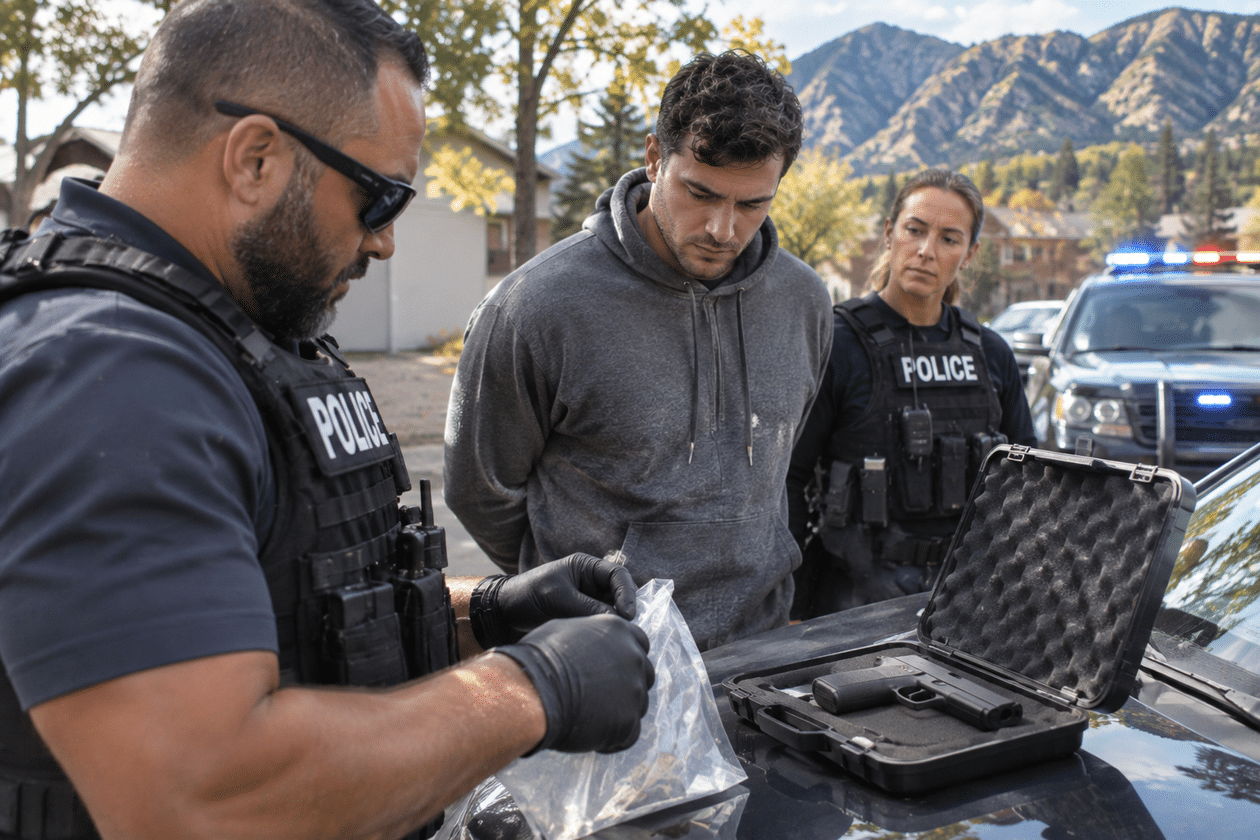
Federal firearm charges can have serious consequences for people with past felony convictions, even if the firearm was never fired, shown, or used to threaten anyone. In Boulder, federal prosecutors might bring felon-in-possession charges after traffic stops, drug investigations, home searches, or other encounters with law enforcement. Someone can face federal prosecution if investigators think the person knowingly had a firearm while being legally barred from owning one.
These cases often raise complex questions about past convictions, gun ownership, searches, and whether the accused actually controlled the weapon. At Watkins Law Firm LLC, we focus on understanding the charges and finding weaknesses in the government’s evidence when building a defense against federal firearm charges.
What Constitutes Federal Felon-in-Possession of a Firearm?
Under 18 U.S.C. § 922(g)(1), federal law generally prohibits individuals convicted of crimes punishable by imprisonment exceeding one year from possessing firearms or ammunition. Certain misdemeanor convictions are excluded under the statute’s specific definitions. The prohibition may apply even when the previous conviction occurred many years earlier or in another state.
To convict someone, federal prosecutors must show that the accused knowingly had the firearm or ammunition, knew about their prohibited status, and that the firearm or ammunition was connected to interstate or foreign commerce. We look at each of these points because the government has to prove its case beyond a reasonable doubt. Just having a previous conviction does not mean someone illegally possessed a firearm.
Under Rehaif v. United States, 588 U.S. 225 (2019), prosecutors must prove that the defendant knew of the status that made firearm possession unlawful. However, the government generally does not have to establish that the defendant knew federal law prohibited the possession.
How Does Colorado Law Address Firearm Possession by Previous Offenders?
Colorado has its own law under Colorado Revised Statutes § 18-12-108, known as possession of a weapon by a previous offender (POWPO). Unlike the broader federal law, Colorado’s rule usually applies to certain prior felony convictions, including some victim-rights offenses and others listed in the statute. This means a past felony might lead to federal charges even if it does not meet Colorado’s POWPO requirements.
Breaking C.R.S. § 18-12-108 is usually a class 5 felony. According to C.R.S. § 18-1.3-401, the typical prison sentence for a class 5 felony is one to three years, but there can be changes or alternatives in sentencing. Colorado law also requires prison time if the offender used or threatened to use the firearm during another crime, as stated in § 18-12-108(2).
We review the past conviction closely before deciding if either firearm prohibition applies. The type of previous offense, the court’s decision, and any official restoration of rights can make a big difference in our analysis.
Federal Prison Sentences for Felon-in-Possession Charges
Under 18 U.S.C. § 924(a)(8), a federal felon-in-possession conviction usually has a maximum sentence of 15 years in federal prison. The actual sentence depends on the details of the case, federal sentencing guidelines, the person’s criminal history, and the court’s decision. A conviction can also lead to supervised release, fines, and more limits on owning firearms.
We pay close attention to whether prosecutors are asking for longer sentences under the Armed Career Criminal Act. Under 18 U.S.C. § 924(e), people with three qualifying past convictions for violent felonies or serious drug crimes on different occasions must get at least 15 years in prison. Not all past felonies count, so how previous convictions are classified is very important.
Actual Possession Versus Constructive Possession
Federal prosecutors do not need to show that the accused actually held the firearm. They can claim constructive possession, which means having control over the firearm or the ability and intent to control it. This difference matters when police find a gun in a shared car, apartment, or home.
We look into who owned the firearm, where officers found it, and if others had access to that place. We also check fingerprints, DNA, statements, photos, and messages that prosecutors might use to prove possession. Just because a firearm is near someone does not mean they knowingly possessed it.
Frequently Asked Questions About Federal Felon-in-Possession Charges in Boulder
Can We Challenge a Federal Firearm Charge if the Gun Belonged to Someone Else?
Yes. We can question whether prosecutors have enough evidence to prove knowing possession, even if the firearm was legally owned by someone else. Ownership and possession are not the same in law, so just because someone else bought the weapon does not automatically end the charge.
If officers find a gun in a shared car or home, we look at who knew it was there, who could get to it, and who controlled it. We also check forensic evidence and witness statements. If the government cannot prove actual or constructive possession beyond a reasonable doubt, the case may not succeed.
What Happens if Police Find a Firearm During a Boulder Traffic Stop?
Police may investigate potential firearm violations when they discover a weapon during a lawful traffic stop. However, discovering a firearm does not automatically establish that every occupant possessed it or committed a crime. Prosecutors must still establish the legal elements of the charged offense.
We examine the justification for the traffic stop, the duration of the detention, and the legal basis for searching the vehicle. We also investigate the firearm’s location and whether the accused knew it was present. Depending on the evidence, we may challenge the search or dispute the government’s allegations of possession.
Can We Defend Against Firearm Charges Involving Drugs?
Yes. If federal prosecutors charge firearm possession along with drug offenses, we look at each charge on its own and review the evidence linking the weapon to the alleged crime. Just having a firearm near drugs does not automatically prove every part of a drug-related firearm charge.
We look into the alleged drug activity, how easy it was to get to the firearm, who owned it, and the details of the search. We also check if prosecutors can meet the extra requirements of 18 U.S.C. § 924(c), if that charge applies. These differences are important because drug-related firearm convictions can lead to much longer prison sentences.
Can Someone With an Old Felony Conviction Legally Possess a Firearm in Colorado?
A felony conviction does not lose its federal firearm restrictions just because time has passed. According to 18 U.S.C. § 921(a)(20), some convictions that have been expunged, set aside, pardoned, or followed by a qualifying restoration of civil rights may be treated differently, but there are important exceptions.
We look at the original conviction, the jurisdiction, and any court orders to see if an exception applies. Colorado’s firearm laws are separate and must be reviewed on their own. We do not recommend possessing or buying a firearm just because time has passed, probation is over, or you think your civil rights have been restored.
Can Federal Prosecutors Charge Someone Even if Colorado Does Not File Firearm Charges?
Yes. Federal and Colorado laws are separate, so each can make its own decision about charges. Federal prosecutors can still bring a prohibited-person firearm case even if Colorado authorities decide not to file charges under the POWPO statute.
We check which law applies, if the prior conviction meets the federal definition, and if prosecutors can show the required interstate-commerce link. Since federal procedures and sentencing rules are different from Colorado’s, it is especially important to get legal advice early if federal investigators are involved.
Speak With Watkins Law Firm LLC About Federal Firearm Charges
If you are under investigation or facing federal felon-in-possession firearm charges in Boulder, we encourage you to seek legal advice promptly. At Watkins Law Firm LLC, we can discuss the allegations, explain the potential legal consequences, and assess the circumstances that may affect your defense. We offer free consultations to individuals seeking assistance with criminal charges in Boulder and the surrounding Denver area. Contact our Boulder Federal criminal defense attorney by calling us 24/7 at 303-507-1324 for your free consultation.
