
Federal Charges For Smuggling Drugs Through An Airport
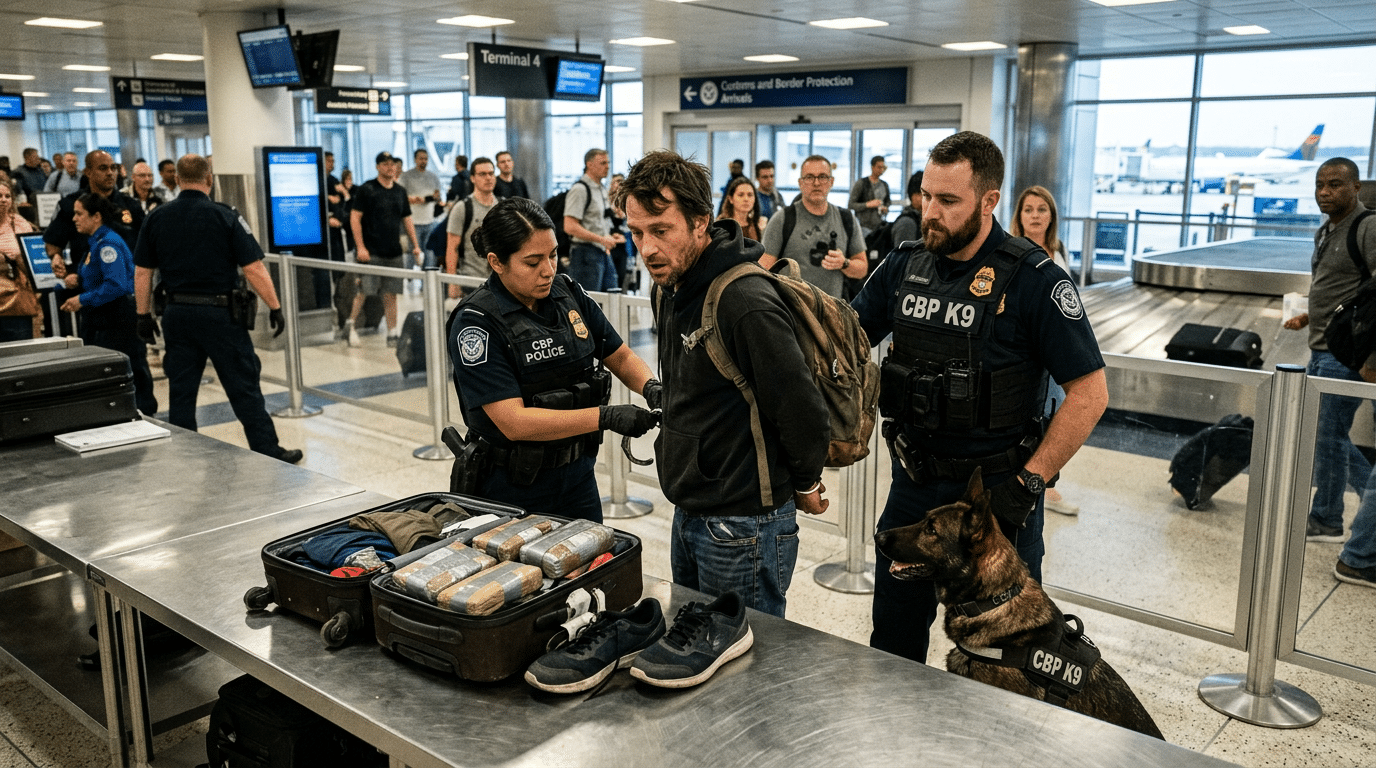
Airport drug cases can quickly become federal matters, especially if authorities think drugs crossed an international border or were meant for distribution. If someone is stopped at Denver International Airport, they might be questioned, detained, have their luggage or devices taken, and face an investigation by federal agencies instead of just local police. The government may look at where the trip started, who bought the ticket, who packed the bags, any communications with others, and whether the traveler knew about the drugs.
If a large amount of drugs is found, prosecutors may file charges for importation, possession with intent to distribute, conspiracy, or smuggling. It is important to know that what happens in the first hours of an investigation can strongly affect the evidence used by prosecutors later.
Why Airport Drug Smuggling Can Become A Federal Case
Federal jurisdiction is particularly important when drugs allegedly enter the United States on an international flight. Under 21 U.S.C. § 952, federal law generally prohibits the unlawful importation of controlled substances into the United States. A person who knowingly or intentionally imports a controlled substance contrary to federal law may be prosecuted under 21 U.S.C. § 960.
In these cases, prosecutors do not always have to prove that someone personally owned the drugs. Instead, the focus may be on whether the person knowingly transported the drugs, took part in bringing them into the country, or planned to deliver them after arriving.
Airport cases can also involve 18 U.S.C. § 545. That statute applies to certain conduct involving goods knowingly or fraudulently brought into the United States contrary to law and carries a potential prison sentence of up to 20 years.
Possession With Intent To Distribute Can Be Charged
Federal prosecutors may add possession with intent to distribute under 21 U.S.C. § 841 when they believe the drugs were intended for someone else. Section 841 prohibits knowingly or intentionally possessing controlled substances with the intent to distribute them. The potential punishment depends heavily on the substance, quantity, criminal history, and circumstances of the offense.
The amount of drugs found can be strong evidence, but it is not the only thing prosecutors use. The government may also look at packaging, travel records, cash, communications, repeated trips, financial transactions, or statements made during questioning.
Finding a large amount of drugs does not automatically mean a traveler knew drugs were hidden in their suitcase or package. We pay close attention to questions about knowledge and intent. Under 21 U.S.C. § 963, attempting or conspiring to commit an offense under the federal drug import and export laws can expose a defendant to the same penalties prescribed for the underlying offense.
This is important because federal investigations often focus on a group of people, not just one traveler. Investigators may look at text messages, encrypted chats, hotel bookings, payment and airline records, surveillance videos, and connections between people involved.
Someone accused of acting as a courier may therefore become part of a much larger federal prosecution.
Colorado Drug Laws May Also Matter
While federal law mainly covers international airport smuggling, actions that happen in Colorado can also fall under Colorado’s drug laws.§ 18-18-403.5 prohibits knowingly possessing a controlled substance except when possession is otherwise authorized by law. The classification of a Colorado possession offense depends on factors that include the substance and amount involved. Colorado also has specific provisions governing fentanyl and related substances.
C.R.S. § 18-18-405 addresses unlawful distribution, manufacturing, dispensing, sale, and possession with intent to distribute controlled substances. The statute also reaches certain attempts, inducements, and conspiratorial conduct involving controlled substances.
Whether state charges are filed depends on the facts and which agencies are involved in the investigation. Even if Colorado law applies, federal prosecutors can still bring federal charges if they have jurisdiction.
The Government Must Prove Knowledge And Intent
One of the most important questions in many airport cases is straightforward: Did the accused person know the drugs were there?
Sometimes travelers carry bags or items that someone else packed or gave them. Prosecutors might say that certain suspicious details prove knowledge, but the defense can argue whether those details really show knowledge beyond a reasonable doubt.
We look at who owned the luggage, who could access it, how the drugs were hidden, what the traveler was told, any messages before the flight, statements during questioning, and whether the government’s explanation matches the evidence.
A key part of the defense is whether someone knowingly carried drugs or unknowingly transported someone else’s hidden contraband.
Searches At Airports Require Careful Legal Review
Airport searches present different Fourth Amendment issues depending on where and how the search occurred. International border searches generally provide federal authorities considerably greater search authority than police have during an ordinary street encounter.
That does not mean every investigative action is automatically lawful. We may examine where the search occurred, whether the traveler had entered the country, what authorities searched, how electronic devices were handled, whether questioning became custodial, and whether Miranda protections applied before incriminating statements were obtained.
Statements can be especially important. Travelers who try to explain suspicious circumstances without legal advice can unintentionally provide prosecutors with evidence concerning knowledge, ownership, destination, or other alleged participants.
Federal Drug Penalties Can Be Severe
Federal drug sentences can change dramatically according to drug type and quantity. Section 960 establishes penalties for unlawful importation offenses and includes substantial mandatory minimum sentences for specified quantities of certain controlled substances.
A federal case can also create consequences beyond incarceration, including supervised release, substantial fines, forfeiture issues, and a permanent felony record. A conviction may also create serious immigration consequences for a defendant who is not a United States citizen.
Because the sentencing exposure can increase sharply based on the government’s charging decisions and alleged drug quantity, we examine both the underlying accusation and how prosecutors calculated the substance and weight attributed to our client.
Federal Airport Drug Charges In Colorado FAQs
Can I Face Federal Charges If Drugs Are Found In My Suitcase At Denver International Airport?
Yes, depending on the circumstances. Finding drugs in luggage establishes an important piece of physical evidence, but it does not by itself answer every question prosecutors must prove. Knowledge can become a major disputed issue when another person packed the luggage, gave the traveler a package, or otherwise had access to the bag.
We examine how the luggage came into our client’s possession, whether there is evidence connecting our client to the concealed drugs, what our client was told about the contents, and what communications or other evidence the government intends to use. An international flight can create federal importation issues under 21 U.S.C. §§ 952 and 960, while other circumstances may support charges under 21 U.S.C. § 841.
What If I Did Not Know Drugs Were Hidden In My Luggage?
Lack of knowledge can be a critical defense issue because federal drug crimes commonly require proof that the prohibited conduct was committed knowingly or intentionally. Prosecutors may try to establish knowledge through circumstantial evidence rather than an admission.
We look closely at the travel arrangements, luggage ownership, communications, behavior observed by agents, method of concealment, payment arrangements, and any explanation provided by the accused. We also examine whether another person had an opportunity or motive to place drugs in the luggage. The specific evidence matters far more than simply labeling someone a drug courier.
Can I Be Charged With Conspiracy Even If I Never Delivered The Drugs?
Yes. Federal conspiracy law can create serious exposure even when the intended transaction was never completed. Under 21 U.S.C. § 963, a person who conspires or attempts to commit an offense covered by the federal drug import and export provisions can face the penalties prescribed for the underlying offense.
We therefore examine what evidence supposedly connects our client to an agreement. Association with another person, travel to the same location, or communication with a suspected participant does not automatically establish every element of a criminal conspiracy. The government must still prove its case under the applicable federal standard.
Can Federal Agents Search My Phone At An Airport?
Electronic-device searches at international borders raise developing and fact-specific constitutional questions. The government’s authority at the border is broader than it ordinarily would be away from the border, but the scope and manner of a device search can still create legal issues.
We examine the type of search performed, where it occurred, whether agents conducted a basic or more intrusive forensic examination, what information was obtained, and whether subsequent warrants or investigative steps were based on that information. Phone evidence can become particularly significant when prosecutors claim messages, photographs, travel records, or contacts establish knowledge or participation in drug trafficking.
Could I Face Both Colorado And Federal Drug Charges?
Potentially. Colorado prohibits unlawful possession under C.R.S. § 18-18-403.5 and separately prohibits conduct including distribution and possession with intent to distribute under C.R.S. § 18-18-405. Federal statutes can apply independently when the alleged conduct falls within federal jurisdiction.
The actual charging decision depends on where the conduct occurred, whether drugs crossed an international border, the quantity and substance involved, which agencies investigated the case, and decisions made by state and federal prosecutors. We evaluate all potential exposure rather than assuming an airport arrest will remain exclusively a state or federal matter.
What Should I Do If Federal Agents Want To Question Me About Drugs Found At An Airport?
We generally consider it dangerous for someone facing a serious federal drug investigation to attempt to talk their way out of the situation without understanding their legal position. Statements about who packed a bag, where someone was traveling, whom they planned to meet, or whether they suspected something was wrong may later become significant evidence.
A person also should not lie to federal investigators. Instead, invoking the right to remain silent and requesting counsel can protect against making unnecessary statements while the investigation is unfolding. We can then evaluate the allegations, evidence, search issues, potential charges, and the appropriate defense strategy.
Speak With A Boulder Criminal Defense Lawyer About Federal Airport Drug Charges
Federal airport drug allegations can expose a person to lengthy imprisonment, mandatory minimum sentencing provisions in some cases, forfeiture, supervised release, and a federal felony conviction. At Watkins Law Firm LLC, we examine the government’s evidence from the beginning, including the alleged drugs, luggage searches, electronic evidence, statements, travel records, surveillance footage, and evidence concerning knowledge and intent.
We represent clients in Boulder and throughout the Denver area from our office locations in Boulder, Colorado. When federal authorities accuse someone of importing, transporting, conspiring to transport, or possessing controlled substances with intent to distribute, we work to identify weaknesses in the government’s evidence and determine which defenses may apply.
If you are under investigation or have been charged in connection with drugs discovered at an airport, we encourage you to speak with us before discussing the allegations with investigators. Watkins Law Firm LLC represents people facing serious criminal accusations in Boulder and throughout the Denver area. Contact our Boulder federal drug crime lawyer by calling us 24/7 at 303-507-1324 for your free consultation.
