
Federal Charges For Mailing Drugs Through USPS
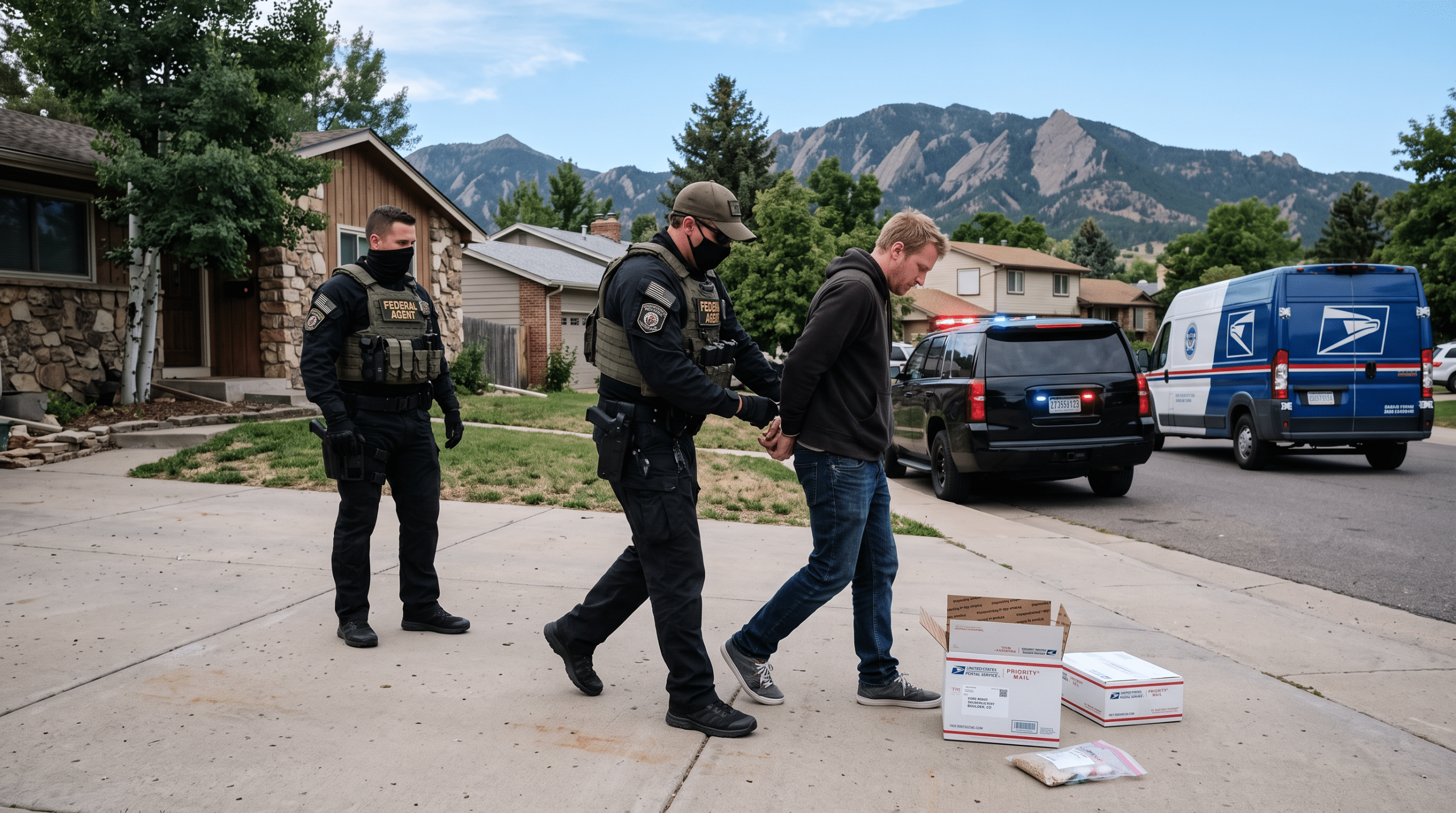
Facing federal drug charges involving the United States Postal Service can be overwhelming, especially since these cases often involve more than just local police. Packages might be flagged, intercepted, searched, tracked, or used in controlled deliveries. Federal agents, postal inspectors, local law enforcement, and prosecutors may all get involved. If the package is linked to Boulder, Denver, or another Colorado area, Colorado drug laws may also come into play.
We know how stressful it is for people suddenly accused of mailing, receiving, or helping send controlled substances through the mail. At Watkins Law Firm LLC, we defend people facing serious drug charges, including those involving federal investigations, possession, distribution, and mailed packages.
Why Mailing Drugs Through USPS Can Become A Federal Case
Mailing drugs through USPS can lead to federal charges because the postal system is run by the federal government. If controlled substances are sent through the mail, federal law enforcement often treats the case more seriously than simple possession. Investigators from the United States Postal Inspection Service may work with the DEA, Homeland Security, local police, or task force officers.
Federal investigators may look at who sent the package, who paid for postage, who received it, who knew what was inside, whether tracking was used, if text messages discussed the shipment, and if the package is part of a larger pattern. You do not have to be caught holding drugs to be investigated. The government can build a case using addresses, surveillance, fingerprints, labels, payment records, phone data, intercepted messages, and statements.
Federal Drug Distribution Charges
One of the main federal statutes in these cases is 21 U.S.C. § 841. That law makes it illegal to knowingly or intentionally manufacture, distribute, dispense, or possess with intent to manufacture, distribute, or dispense a controlled substance. In a mailed-drug case, prosecutors may argue that sending the package was distribution or attempted distribution. If the person receiving the package is accused of planning to sell or share the drugs, prosecutors may also allege possession with intent to distribute.
Federal penalties depend on the type and amount of the drug involved, such as fentanyl, methamphetamine, cocaine, heroin, marijuana, pills, or others. Penalties can also be affected by whether anyone was hurt and if the person has prior convictions. Some federal drug cases have mandatory minimum sentences. Even without a mandatory minimum, the United States Sentencing Guidelines can affect the sentence if there is a conviction.
Use Of The Mail As A Communication Facility
Federal prosecutors may also look at 21 U.S.C. § 843(b), which covers using a communication facility to commit or help with certain felony drug offenses. This law defines communication facility broadly and includes mail as one of the methods. Simply put, the government may claim that the mail was used to help commit a drug felony.
This charge can apply even if prosecutors think someone played only a small part. For example, they may check if a person used USPS tracking, talked about delivery, gave an address, received instructions, or helped organize the shipment. We look closely at whether the government can prove knowledge and intent. Just being linked to an address or package does not mean someone knowingly helped commit a drug crime.
Nonmailable Matter And 18 U.S.C. § 1716
Another federal law that may apply is 18 U.S.C. § 1716, which covers dangerous items and things that cannot be mailed. This law lists certain materials and items that are not allowed in the mail. In drug cases, prosecutors usually focus on federal drug laws, but mailability rules can still be part of the investigation, especially if the package contains substances or items that raise safety concerns.
The government may see concealment as important evidence. Prosecutors might point to packaging methods, false names, return addresses, odor masking, vacuum sealing, cash, scales, or other signs to argue the package was part of a drug distribution plan. We do not assume these facts prove guilt. Many cases depend on whether the government can link a specific person to the package and show that person knew what was inside.
Colorado Drug Charges May Also Apply
Although mailing drugs through USPS often raises federal issues, Colorado charges may also be possible. Colorado’s unlawful distribution, manufacturing, dispensing, or sale statute is C.R.S. § 18-18-405. That law covers distribution, manufacturing, dispensing, sale, and possession with intent to distribute controlled substances. If a package is mailed from Colorado, received in Colorado, or tied to conduct in Boulder or the Denver area, state prosecutors may have an interest in the case.
Colorado law also looks at the type and amount of the drug. Schedule I or II substances, fentanyl, methamphetamine, cocaine, heroin, certain pills, and larger amounts can increase the risk of charges. Someone may face a state case, a federal case, or pressure from both. One of the first things we check is which agency is leading the case and whether prosecutors will pursue federal charges, Colorado charges, or both.
Search And Seizure Issues In Mailed Drug Cases
Search and seizure questions are often central in mailed package cases. Investigators may use package profiling, canine sniffs, warrants, administrative holds, tracking data, surveillance, and controlled deliveries. The Fourth Amendment still matters. The government must follow legal rules when detaining, searching, and opening packages.
We review how the package was identified, whether there was reasonable suspicion to detain it, whether a search warrant was obtained, what the warrant said, who signed for or accepted the package, and what officers did during any controlled delivery. If police searched a home, phone, car, or person after the package was delivered, we examine whether each search was lawful. Evidence can sometimes be challenged if the government violated constitutional protections.
Controlled Deliveries And Statements To Agents
A controlled delivery happens when law enforcement allows a suspicious package to be delivered while officers watch what happens next. Agents may wait to see who accepts the package, opens it, moves it, or talks about it. They may then execute a search warrant or try to interview the person.
This is a dangerous point in the case. People often make statements because they are scared, surprised, or trying to explain themselves. A person may deny knowledge, blame someone else, or say too much before understanding the evidence. We advise clients not to speak with investigators about the facts without legal counsel. Federal agents are trained to ask questions in a way that helps build a case. Silence and legal representation can protect you from making the situation worse.
Defenses To Federal Mailing Drug Charges
The defense depends on the facts. Some cases involve lack of knowledge. A person may not have known what was in the package. Other cases involve shared addresses, roommates, family members, mistaken identity, weak surveillance, unreliable informants, unlawful searches, or lack of proof that the accused person mailed or intended to receive drugs.
In distribution cases, the government must prove more than suspicion. We look at whether prosecutors can prove knowledge, intent, possession, control, and connection to the package. We also examine whether the drug quantity is accurate, whether lab testing supports the charge, whether phone evidence is being misread, and whether any alleged confession was voluntary and reliable. A mailed package can create serious suspicion, but suspicion is not the legal standard for conviction.
FAQs About Federal Charges For Mailing Drugs Through USPS
Can Mailing Drugs Through USPS Lead To Federal Charges?
Yes. Mailing drugs through USPS can lead to federal charges because the postal system is federally regulated. Postal inspectors and federal prosecutors may become involved when a package allegedly contains controlled substances. Charges may include distribution, possession with intent to distribute, conspiracy, or use of a communication facility to facilitate a drug offense. The exact charge depends on the substance, quantity, evidence, prior history, and whether the government believes the package was part of a larger drug operation.
Can I Be Charged If I Only Received The Package?
Yes, receiving a package can still lead to charges, but the government must prove more than the fact that the package was sent to your address. Prosecutors may try to show knowledge and control through text messages, tracking searches, delivery instructions, fingerprints, statements, surveillance, or prior shipments. A person who unknowingly receives a package should not assume guilt is automatic. We carefully review whether the government can prove the person knew what was inside and intended to possess or distribute it.
What Is A Controlled Delivery?
A controlled delivery is when law enforcement allows a suspected drug package to be delivered while officers monitor the location. Agents may watch who accepts it, who opens it, who moves it, and who communicates about it. After delivery, officers may seek to question people or execute a search warrant. Controlled deliveries can lead to arrests, home searches, phone seizures, and federal charges. Anyone involved in this type of investigation should avoid making statements without legal advice.
Can Federal Agents Search A Mailed Package Without A Warrant?
The answer depends on the circumstances. Mailed packages have constitutional protections, but investigators may be able to temporarily detain a suspicious package under certain conditions. To open and search many types of sealed packages, law enforcement often seeks a search warrant. We examine whether the package detention was lawful, whether the warrant was supported by probable cause, and whether officers stayed within the limits of the warrant. If the search was unlawful, the defense may be able to seek suppression of evidence.
Can Colorado Drug Charges Also Be Filed?
Yes. If the package was mailed from Colorado, sent to Colorado, or tied to conduct in Boulder or the Denver area, Colorado prosecutors may consider state drug charges under C.R.S. § 18-18-405. The case may also remain federal if federal authorities take the lead. Sometimes state and federal agencies work together. The charging decision depends on drug type, quantity, investigation scope, criminal history, and prosecutorial priorities. We evaluate whether the client is facing a state investigation, a federal investigation, or both.
What Should I Do If Postal Inspectors Or Federal Agents Contact Me?
Do not discuss the facts of the case without speaking to a defense attorney first. Federal agents may sound polite, but their job is to gather evidence. Even a short conversation can be used later. You should not explain where the package came from, who it belongs to, whether you expected it, or what you think is inside without legal guidance. You have the right to remain silent and the right to legal counsel. Using those rights is not an admission of guilt.
Call Watkins Law Firm LLC For Help With Federal Or Colorado Drug Charges
If you are under investigation for mailing, receiving, or helping send drugs through USPS, Watkins Law Firm LLC can help. These cases can move quickly and may involve postal inspectors, federal agents, local police, search warrants, controlled deliveries, phone evidence, and serious drug charges. We defend clients facing drug possession, distribution, trafficking, conspiracy, and related criminal accusations in Boulder and throughout the Denver area.
Contact our Boulder drug crime lawyer by calling us 24/7 at 303-507-1324 for your free consultation. Our Boulder drug crime defense lawyer represents clients in Boulder and throughout the Denver area from our office locations in Boulder, Colorado.
