
Constructive Possession In Colorado Drug Cases
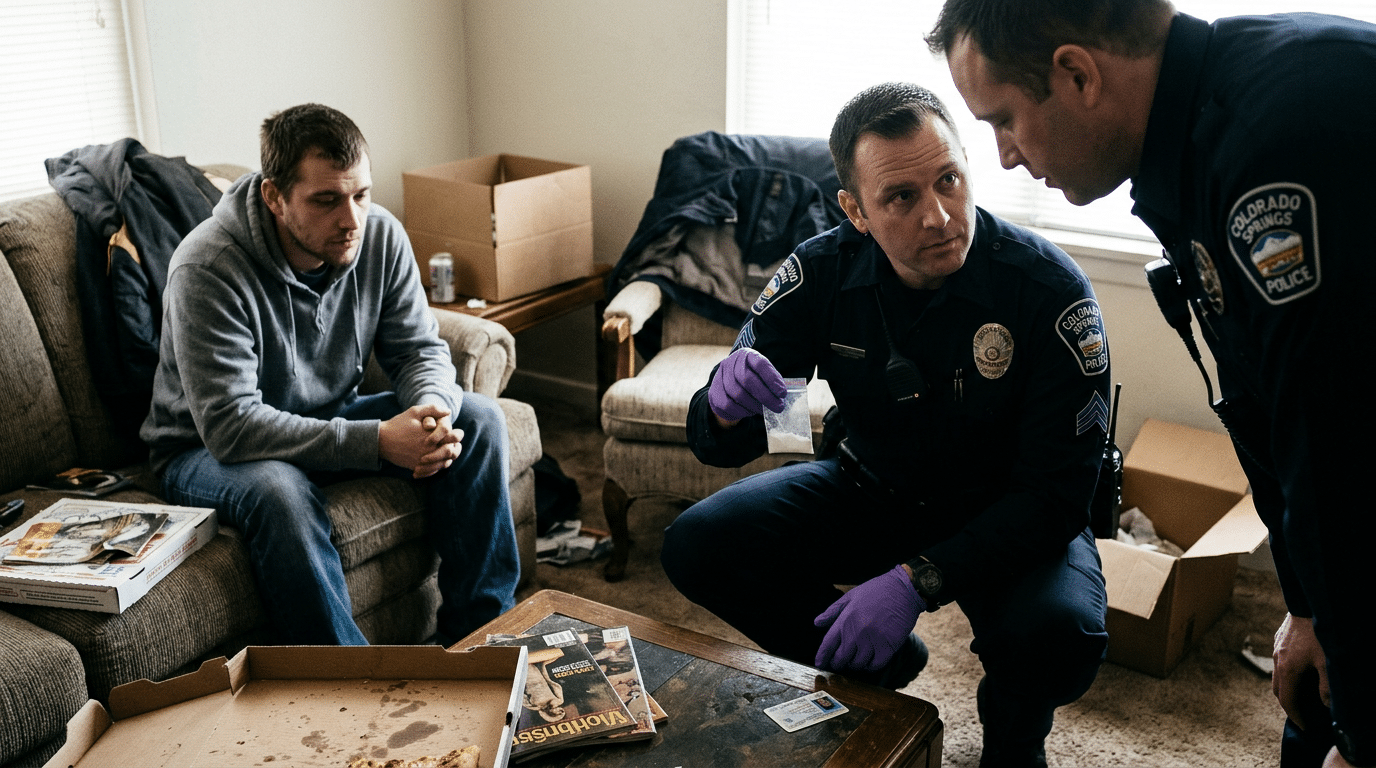
A Colorado drug case does not always begin with drugs found in someone’s pocket, hand, purse, or backpack. Many cases start when police find drugs in a shared car, bedroom, apartment, hotel room, storage area, center console, glove box, or bag that more than one person could access. When that happens, prosecutors may argue constructive possession. That means they may claim you possessed the drugs even if the drugs were not physically on you.
We understand how frightening that can be, especially when you believe the drugs belonged to someone else. At Watkins Law Firm LLC, we defend clients in Boulder and throughout the Denver area against drug possession, felony drug crimes, distribution allegations, and other Colorado criminal charges involving constructive possession.
What Constructive Possession Means In Colorado
Constructive possession is a legal theory prosecutors use when the controlled substance was not found directly on the defendant. Colorado courts have long recognized that possession is not limited to actual physical possession. In Moore v. People, the Colorado Supreme Court approved the concept that possession can include actual, physical, immediate, and knowing dominion or control over the drug. The key word is knowing. The prosecution should not be able to prove possession simply by showing that drugs were nearby.
Constructive possession usually requires evidence that the person knew the drugs were present and had the ability and intent to exercise control over them. That can become a major issue in shared spaces. If drugs are found in a car with several passengers, a bedroom used by more than one person, or an apartment where many people come and go, the prosecution may have a proof problem. Being close to drugs is not always the same as possessing them.
Colorado Drug Possession Law
Colorado’s unlawful possession of a controlled substance statute is C.R.S. § 18-18-403.5. The statute addresses possession of controlled substances and classifies offenses based on the substance, amount, prior history, and other facts. It also states that a person may be charged under other drug statutes, including unlawful distribution, manufacturing, dispensing, sale, or possession with intent under C.R.S. § 18-18-405, when the evidence supports that charge.
That matters because a constructive possession theory can appear in both simple possession and possession with intent to distribute cases. In a basic possession case, prosecutors may argue that you knew about and controlled the drugs. In a distribution case, they may add claims that the amount, packaging, cash, scales, messages, or location prove intent to sell or transfer drugs. The defense must look at each element separately. The government must prove more than suspicion.
Shared Cars And Constructive Possession
Cars create some of the most common constructive possession disputes. Police may find drugs in a center console, door pocket, glove box, trunk, floorboard, cup holder, or under a seat. If you were the driver, prosecutors may argue you had control over the vehicle and therefore control over the drugs. If you were a passenger, they may argue you had access to the area where the drugs were found.
Those arguments can be challenged. Vehicles often carry friends, relatives, coworkers, rideshare passengers, or borrowed items. A person may drive a vehicle owned by someone else. A passenger may sit near an item without knowing what it is. A driver may not know what another person placed under a seat, in a backpack, or inside a console. We look at who owned the vehicle, who had keys, who was sitting where, where the drugs were located, whether anyone made statements, whether fingerprints or DNA were collected, and whether police assumed too much.
Shared Homes, Apartments, And Hotel Rooms
Constructive possession arguments also appear in home searches. Police may find drugs in a kitchen drawer, bathroom, nightstand, closet, basement, couch, safe, backpack, or common area. If several people live in or visit the location, the defense may focus on access, ownership, control, and knowledge.
The prosecution may try to connect a person to the drugs through mail, clothing, personal items, keys, documents, rent records, phone records, or statements. In some cases, that evidence may be weak. A person can live in a home without knowing everything inside it. A person can visit a hotel room without controlling what another guest brought there. A person can share a bedroom or bathroom without possessing every item found there. We push back when police treat presence as proof.
Evidence Prosecutors Use To Claim Constructive Possession
Prosecutors may rely on many types of evidence to argue constructive possession. They may point to where the drugs were found, whether the drugs were in plain view, whether the accused person was close to them, whether personal property was nearby, whether the accused person made an admission, or whether officers claim the person acted nervous.
They may also use digital evidence. Text messages, call logs, social media messages, location data, photos, and payment apps can be used to argue knowledge or control. In more serious drug cases, prosecutors may point to cash, scales, baggies, ledgers, firearms, or alleged customer communications. But each piece of evidence must be tested. Nervousness is common during police encounters. Cash may have innocent explanations. Text messages may be misunderstood. A backpack may belong to someone else. A complete defense looks at the facts, not labels.
Defenses To Constructive Possession In Colorado Drug Cases
A strong defense may focus on lack of knowledge, lack of control, shared access, mistaken ownership, unlawful search, unreliable statements, weak forensic evidence, or failure to prove the substance was illegal. In some cases, police never test fingerprints or DNA. In others, officers fail to preserve body camera footage, search-warrant details, or evidence showing who actually controlled the area.
We may also challenge the stop, detention, search, or warrant. If police violated the Fourth Amendment or Colorado search-and-seizure protections, the defense may file a motion to suppress. If the court excludes the drugs or related evidence, the prosecution’s case may become much weaker. Constructive possession cases often depend on inferences. If those inferences are built on an unlawful search or unsupported assumptions, the defense may have room to fight.
Constructive Possession And Felony Drug Charges
Constructive possession can become especially serious when prosecutors file felony drug charges. Certain drug possession offenses may be misdemeanors, while others may be felonies depending on the type and amount of the substance, prior offenses, or other aggravating facts. Distribution, manufacturing, dispensing, sale, and possession with intent are addressed under C.R.S. § 18-18-405 and can carry serious consequences.
A felony drug case can affect employment, housing, immigration status, professional licensing, gun rights, student discipline, and family responsibilities. A person should not assume there is nothing to fight simply because drugs were found near them. Constructive possession is often one of the most contested issues in drug defense.
How We Defend Colorado Drug Possession Cases
At Watkins Law Firm LLC, we examine the case from the ground up. We review police reports, body camera footage, dash camera footage, search warrants, lab reports, witness statements, dispatch records, photographs, phone evidence, and officer testimony. We look at where the drugs were found, who had access, who had control, what was said, what was not tested, and what police assumed.
Our goal is to challenge weak possession theories before they become convictions. Whether you are accused of simple possession, felony drug possession, possession with intent, or a drug offense connected to a traffic stop or home search, the evidence must be tested.
FAQs About Constructive Possession In Colorado Drug Cases
Can I Be Charged With Drug Possession If The Drugs Were Not On Me?
Yes. Colorado prosecutors may charge drug possession even when drugs were not found on your body. They may argue constructive possession if they believe you knew the drugs were present and had dominion or control over them. That often happens when drugs are found in a shared car, apartment, hotel room, backpack, or common area. However, being near drugs is not the same as legally possessing them. The prosecution must prove more than proximity. We examine whether the evidence actually connects you to the drugs or whether police made assumptions based on where you were standing or sitting.
What Is The Difference Between Actual And Constructive Possession?
Actual possession usually means drugs were found directly on a person, such as in a pocket, hand, wallet, purse, or backpack the person was carrying. Constructive possession means the drugs were not physically on the person, but prosecutors claim the person knew about them and had the ability to control them. Constructive possession is often harder for the government to prove because it depends on surrounding facts. The location of the drugs, access to the area, ownership, statements, forensic evidence, and other circumstances may all matter.
Can Everyone In A Car Be Charged If Police Find Drugs?
Police sometimes charge more than one person when drugs are found in a vehicle, but that does not mean every charge is valid. A car may have several passengers, borrowed property, hidden compartments, or items that belong to only one person. The prosecution must connect each defendant to the drugs. Sitting near drugs does not automatically prove knowledge or control. We look at seating position, ownership of the car, location of the drugs, statements, fingerprints, DNA, body camera footage, and whether any person claimed or denied ownership.
Can Drugs Found In A Shared Apartment Lead To Charges?
Yes, but shared housing creates important defense issues. If several people live in or use the apartment, prosecutors may struggle to prove who knew about the drugs and who controlled them. Drugs found in a common area may raise different issues than drugs found in a locked bedroom or personal bag. We review lease records, mail, keys, bedroom assignments, personal property, visitor access, and whether police had a lawful basis to search. A person should not be convicted simply because they lived in or visited a place where drugs were found.
Can Constructive Possession Lead To A Felony Drug Charge?
Yes. Constructive possession can be used in misdemeanor or felony drug cases. The level of charge may depend on the substance, amount, prior history, and whether prosecutors claim intent to distribute under C.R.S. § 18-18-405. If police find larger quantities, packaging materials, cash, scales, weapons, or messages, prosecutors may try to file a more serious charge. The defense may challenge both possession and intent. The government must prove that you possessed the substance and, in distribution cases, that the facts support more than personal use.
How Can A Lawyer Defend Against Constructive Possession?
A defense lawyer can challenge constructive possession by attacking knowledge, control, access, ownership, and the legality of the police search. We may argue that the drugs belonged to someone else, that the accused person did not know the drugs were there, that the area was shared, or that the evidence does not prove control. We may also challenge the traffic stop, search warrant, vehicle search, home search, or statements. Constructive possession cases often depend on inferences, and those inferences can be tested in court.
Call Watkins Law Firm LLC For Help With A Colorado Drug Case
If you are facing a Colorado drug charge based on constructive possession, shared access, a vehicle search, or a home search, Watkins Law Firm LLC can help. We defend clients accused of drug possession, felony drug crimes, possession with intent, drug distribution, and related criminal offenses in Boulder and throughout the Denver area. We understand how prosecutors build constructive possession cases, and we know how to challenge weak assumptions. Contact our Boulder drug possession lawyer by calling us 24/7 at (303) 507-1324 for your free consultation.
