
Can You Challenge a Colorado DUI Arrest Based on Improper Field Sobriety Testing?
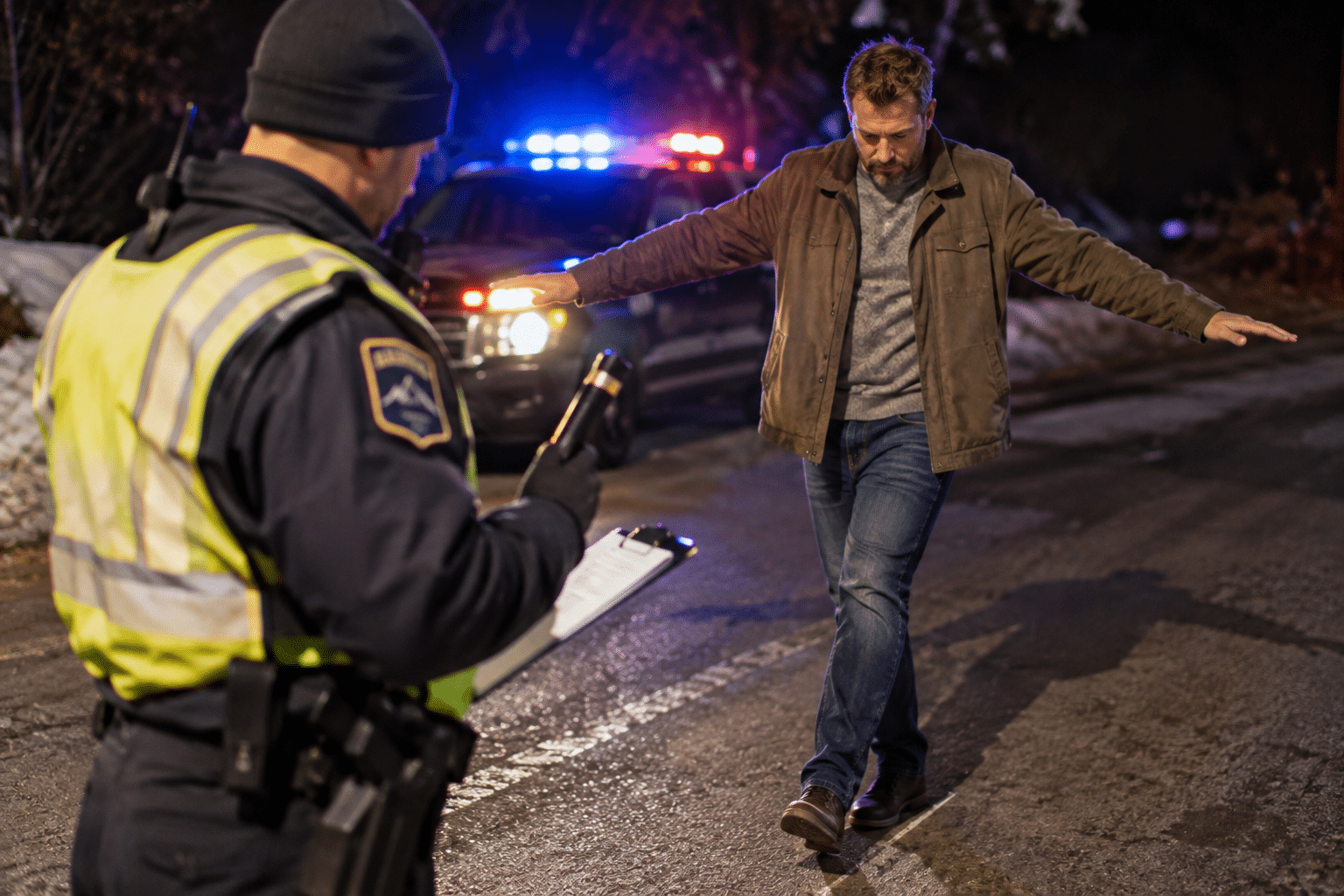
A Boulder DUI arrest often begins with an officer asking a driver to perform roadside field sobriety tests. These examinations are intended to identify signs of alcohol or drug impairment, but their reliability depends heavily on how they are administered and interpreted. Poor weather, uneven pavement, medical conditions, and improper instructions can affect a driver’s ability to perform the tests. When officers disregard testing procedures or constitutional protections, the resulting evidence may be challenged in court. At Watkins Law Firm LLC, we examine the circumstances surrounding field sobriety testing to determine whether police errors provide grounds to contest DUI charges, suppress evidence, or challenge the legality of an arrest.
What Field Sobriety Tests Do Colorado Police Use?
Colorado law enforcement officers commonly administer three standardized field sobriety tests developed by the National Highway Traffic Safety Administration (NHTSA). These examinations measure eye movements, balance, coordination, and the ability to follow instructions. Officers typically use the results alongside their observations of driving behavior, speech, appearance, and other possible indicators of impairment.
The three standardized examinations include:
- Horizontal Gaze Nystagmus (HGN). Officers observe involuntary eye movements while a driver follows a moving object.
- Walk-and-Turn Test. Drivers must walk heel-to-toe along a straight line, turn as instructed, and return while following specific directions.
- One-Leg Stand Test. Drivers must raise one foot, maintain their balance, and count aloud until instructed to stop.
These tests are not direct measurements of blood alcohol concentration. We examine whether an officer’s observations actually support impairment or whether unrelated circumstances explain the driver’s performance.
How Improper Field Sobriety Testing Can Affect a DUI Case
The accuracy of standardized field sobriety tests depends partly on following established administration procedures. Officers should provide understandable instructions, demonstrate the required movements, and consider environmental conditions. Departures from these procedures may weaken the reliability of the officer’s conclusions.
We frequently examine whether roadside conditions created difficulties unrelated to intoxication. In Boulder and surrounding communities, icy pavement, uneven roads, poor lighting, and cold weather can interfere with balance and concentration. Physical injuries, neurological conditions, vision problems, and certain medications may also affect test performance.
An officer’s failure to account for these circumstances does not automatically make the evidence inadmissible. However, we may use these factors to challenge the officer’s interpretation and the weight the prosecution asks the court to give the results.
Are Colorado Field Sobriety Tests Voluntary?
Roadside field sobriety examinations raise constitutional issues under the Fourth Amendment and Article II, Section 7 of the Colorado Constitution. In People v. Carlson, 677 P.2d 310 (Colo. 1984), the Colorado Supreme Court recognized field sobriety testing as a search requiring constitutional justification.
When officers lack probable cause for an arrest, they generally need voluntary consent to administer these examinations. The Colorado Court of Appeals reaffirmed this principle in People v. Young, 2024 COA 1. We examine whether consent was genuinely voluntary or resulted from threatening, misleading, or coercive police conduct.
Although officers may conduct testing without consent when a valid exception to the warrant requirement applies, they cannot physically compel a driver to complete these coordination exercises. The legal consequences of refusing testing depend on the circumstances, including whether officers already possessed probable cause.
Can Improper Testing Make a DUI Arrest Unlawful?
A lawful DUI arrest generally requires probable cause, meaning sufficient facts to reasonably believe the driver committed an impaired-driving offense. Under C.R.S. § 42-4-1302, officers may initiate an investigative stop based on reasonable suspicion. However, the justification for a traffic stop does not automatically establish probable cause for an arrest.
We review whether officers possessed sufficient evidence before administering the tests and making the arrest. If field sobriety testing violated constitutional protections, we may seek suppression of the resulting evidence. We also examine whether other observations independently supported probable cause, because eliminating faulty test results does not necessarily invalidate the entire prosecution.
Colorado DUI Charges and Criminal Penalties
Under C.R.S. § 42-4-1301, Colorado recognizes DUI, driving while ability impaired (DWAI), and DUI per se. DUI requires substantial impairment of driving ability, while DWAI involves impairment to even the slightest degree. DUI per se applies when a driver’s blood or breath alcohol concentration reaches 0.08 or higher within the statutory testing period.
C.R.S. § 42-4-1307 establishes the following sentencing ranges:
- First DUI. Five days to one year in jail, fines of $600 to $1,000, and 48 to 96 hours of public service.
- First DWAI. Two to 180 days in jail, fines of $200 to $500, and 24 to 48 hours of public service.
- Second offense. Ten days to one year in jail, fines of $600 to $1,500, and additional mandatory requirements.
- Third offense. Sixty days to one year in jail, fines of $600 to $1,500, and additional mandatory requirements.
Certain minimum jail sentences may be suspended when statutory treatment conditions are satisfied. A fourth qualifying impaired-driving offense is generally a class 4 felony, carrying a presumptive imprisonment range of two to six years, although sentencing alternatives may be available. We also examine whether a high blood alcohol concentration, prior convictions, or an injury-related offense creates additional exposure.
Can Challenging Field Sobriety Tests Protect Your Driver’s License?
Colorado DUI cases involve separate criminal and administrative proceedings. Under C.R.S. § 42-2-126, a driver may face license revocation following certain chemical test results or a qualifying refusal. The state’s expressed consent requirements are established under C.R.S. § 42-4-1301.1.
We carefully distinguish voluntary roadside maneuvers from legally required chemical testing. Refusing a required blood or breath test can create substantial license consequences. Drivers generally have only seven calendar days after receiving a notice of revocation to request an administrative hearing.
How We Challenge Unreliable DUI Evidence
Our defense begins with the traffic stop, not merely the arrest report. We examine body-camera recordings, dash-camera footage, officer training records, testing instructions, environmental conditions, chemical testing procedures, and witness statements. Contradictions between the video evidence and an officer’s written observations can be particularly important.
We may challenge the admissibility of unlawfully obtained evidence or demonstrate that properly admitted evidence is unreliable. Our objective is to identify weaknesses that could support dismissal, reduced charges, more favorable negotiations, or an acquittal, depending on the facts of the case.
Frequently Asked Questions About Challenging Colorado DUI Field Sobriety Tests
Can We Challenge a Colorado DUI Charge if the Officer Administered the Field Sobriety Tests Incorrectly?
Yes. We can challenge how the officer conducted the tests, whether the instructions were accurate, and whether the officer properly interpreted the results. Standardized testing procedures are designed to produce more consistent observations, and significant departures from those procedures may undermine the evidence. We compare police reports with video recordings to identify mistakes or inconsistencies. However, procedural errors do not automatically require dismissal because prosecutors may possess other admissible evidence of impairment.
Can Medical Conditions Cause Someone to Fail a Colorado Field Sobriety Test?
Yes. Inner-ear disorders, knee injuries, back problems, neurological conditions, and certain vision impairments can affect balance, coordination, or eye movements. We investigate whether an existing medical condition explains behavior the officer attributed to alcohol or drugs. Medical records and appropriate professional testimony may help establish these alternative explanations. We also examine whether officers asked about physical limitations and reasonably accounted for the driver’s responses before evaluating the results.
Can We Challenge a DUI Arrest Because the Road Was Uneven or Icy?
Yes. Roadside conditions may materially affect a driver’s ability to complete balance examinations accurately. Snow, ice, gravel, sloped pavement, and inadequate lighting are particularly relevant when officers require drivers to perform coordination exercises outside. We review available video footage, weather records, photographs, and the officer’s description of the testing location. If environmental conditions compromised the examination, we may argue that the observed difficulties provide weak evidence of impairment. The court will still consider the remaining evidence.
Can Colorado Police Arrest Someone Who Refuses Field Sobriety Testing?
Yes. Refusing roadside sobriety maneuvers does not automatically prevent an officer from making a lawful DUI arrest. We examine whether the officer already possessed probable cause based on driving behavior, physical observations, statements, or other legally obtained evidence. Depending on whether the proposed examination was legally authorized, refusal may also raise evidentiary questions. Importantly, we distinguish refusal of roadside coordination exercises from refusal of chemical testing under Colorado’s expressed consent law, which carries separate consequences.
Can a DUI Charge Be Dismissed if the Field Sobriety Test Results Are Suppressed?
Potentially. When police obtain evidence through an unconstitutional search, we may file a motion requesting that the court exclude the evidence. If the suppressed results were essential to establishing probable cause, additional evidence may also become subject to challenge. However, prosecutors may still proceed using independently obtained observations, witness testimony, or admissible chemical test results. We evaluate the complete evidentiary record before determining whether suppression could support dismissal or another favorable resolution.
Can We Challenge Field Sobriety Testing When the Driver’s BAC Was Below 0.08?
Yes. A blood alcohol concentration below 0.08 does not automatically prevent a Colorado DUI or DWAI prosecution. Under C.R.S. § 42-4-1301, prosecutors may rely on evidence of impairment even when the driver does not meet the DUI per se threshold. We examine the reliability of the field sobriety tests, the driver’s behavior, and any alternative explanations for perceived impairment. A BAC above 0.05 but below 0.08 can support a permissible inference of impairment, but the prosecution must still establish the charged offense.
Can a Colorado DUI Arrest Be Challenged if the Officer Failed to Explain That Roadside Tests Were Voluntary?
Possibly. Under People v. Young, the officer’s failure to advise a driver of the right to refuse consent is relevant but does not automatically invalidate consent. We examine the entire encounter, including the officer’s language, conduct, and whether the driver reasonably understood the request as compulsory. Threats, coercion, or deceptive statements may support an argument that consent was involuntary. Whether suppression is appropriate ultimately depends on the constitutional justification for testing and the particular facts.
Contact Watkins Law Firm LLC for a Free Colorado DUI Defense Consultation
If you were arrested for DUI after performing roadside field sobriety tests, we encourage you to have the testing procedures and arrest circumstances reviewed before making important decisions about your case. At Watkins Law Firm LLC, we defend clients accused of DUI, DWAI, and related criminal offenses throughout Boulder and the Denver metropolitan area. We examine potential constitutional violations, questionable testing procedures, and weaknesses in the prosecution’s evidence while working to protect your rights, driving privileges, and future. Contact our Boulder DUI attorney by calling us 24/7 at 303-507-1324 for a free consultation.
