
Can You Be Charged With Fentanyl Trafficking in Colorado If Someone Else Owned the Drugs?
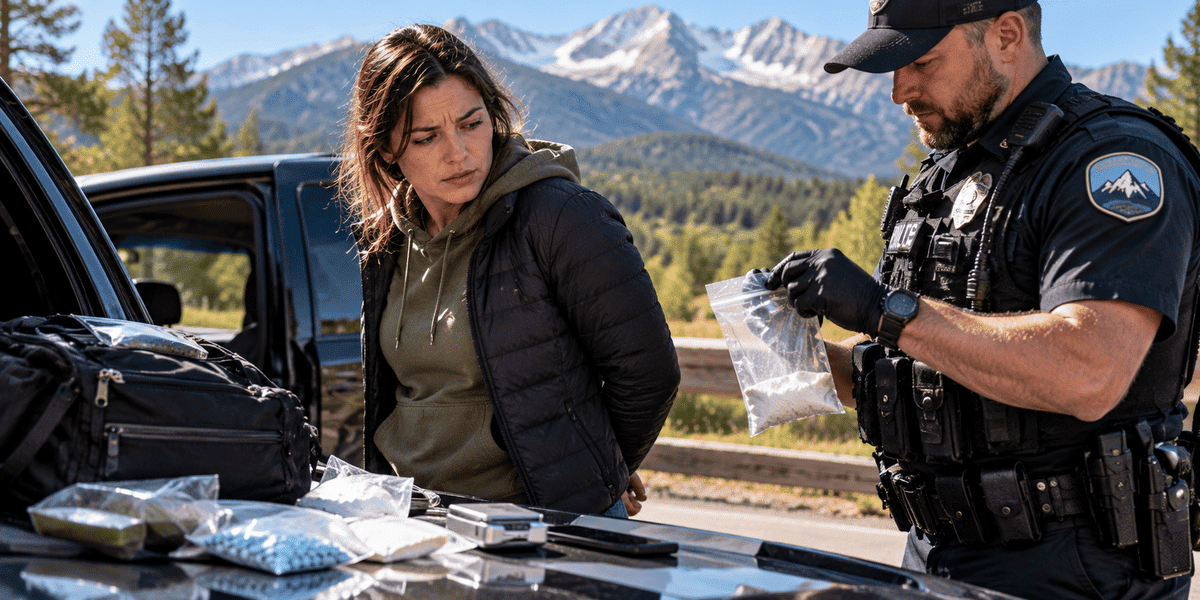
If you are arrested for fentanyl trafficking in Boulder, it does not always mean the police think you owned the drugs. You might still face serious felony charges if fentanyl was found in a car you were driving, an apartment you shared, or a package you delivered for someone else. Prosecutors can charge you with drug distribution even if someone else bought, supplied, or claimed the fentanyl. But just being near illegal drugs does not automatically make you responsible.
At Watkins Law Firm LLC, we look at whether prosecutors can prove you knowingly had, distributed, or took part in transferring fentanyl. If ownership is unclear, we focus on the evidence linking you to the drugs and whether it meets Colorado’s legal requirements.
Understanding Fentanyl Trafficking Charges Under Colorado Law
In Colorado, fentanyl trafficking is usually prosecuted under the state’s controlled substance distribution laws. According to Colorado Revised Statutes § 18-18-405, it is illegal to knowingly make, give out, sell, distribute, or have a controlled substance with the intent to do any of those things. The law also bans knowingly having controlled substances without legal permission.
Although people commonly use the term drug trafficking, Colorado law does not require prosecutors to prove that drugs crossed state lines or that a defendant operated a large distribution network. A person accused of knowingly transferring fentanyl to someone else may face distribution charges even when the transaction involves a relatively small quantity.
We explain these distinctions because clients sometimes believe they cannot be charged unless they purchased the drugs, received payment, or personally owned the fentanyl. Those circumstances can affect the evidence, but ownership is not a required element of every offense under § 18-18-405.
Colorado Law Does Not Require Ownership to Establish Drug Possession
One of the most important distinctions in a fentanyl prosecution is the difference between ownership and possession. Colorado recognizes that a person may possess controlled substances without holding legal ownership of the property or drugs involved.
Possession can be actual or constructive. Actual possession means you have direct control, like carrying fentanyl in your pocket. Constructive possession means you had control over the drugs, even if you were not physically holding them.
Colorado courts have addressed these principles in cases including People v. Atencio, 140 P.3d 73 (Colo. App. 2005). When controlled substances are discovered in a location occupied by multiple people, additional evidence may be necessary to establish a particular person’s knowing possession.
We investigate whether prosecutors can establish actual knowledge and control rather than relying on proximity, assumptions, or a client’s association with someone suspected of drug activity.
Fentanyl Found in a Vehicle Belonging to Someone Else
Vehicle searches frequently lead to disputed fentanyl possession and distribution allegations. Police may discover fentanyl inside a glove compartment, center console, backpack, or hidden compartment while several people are traveling together.
A driver can be charged even if a passenger says the drugs are theirs. Similarly, a passenger might be investigated if fentanyl is found near their seat.
Under C.R.S. § 18-18-405, the prosecution must prove the elements of the charged offense beyond a reasonable doubt. Merely being present in a vehicle containing fentanyl does not independently establish knowing possession or intent to distribute.
We examine who controlled the vehicle, where the drugs were located, whether our client knew they were present, and whether other occupants had access to them. We also investigate whether police conducted a lawful traffic stop and search under the Fourth Amendment and Article II, Section 7 of the Colorado Constitution.
Criminal Liability for Delivering or Transporting Another Person’s Fentanyl
If you knowingly transport fentanyl for someone else, you can face serious charges even if you do not own the drugs. Colorado law is more concerned with what you did, not just who bought or supplied the fentanyl.
For example, prosecutors might charge you with distribution if you knowingly deliver fentanyl to someone else. They can also claim you intended to distribute if the evidence suggests it.
However, transporting a package without knowing it contains fentanyl presents a different legal issue. We examine whether prosecutors can establish the required knowledge and whether the evidence supports distribution rather than mere possession.
The distinction matters because an allegation that someone knowingly delivered fentanyl cannot be established solely by showing that the person physically transported an unknown package.
Evidence Prosecutors Use to Establish Fentanyl Distribution
Prosecutors often rely on circumstantial evidence to establish knowing possession and intent to distribute. Evidence may include electronic communications, surveillance footage, packaging materials, scales, cash, and statements made during police questioning.
A large quantity of fentanyl may support an inference of distribution, but the weight of the drugs does not automatically prove every element of the offense. We assess the quantity, packaging, laboratory findings, and circumstances surrounding the seizure.
Text messages also require careful examination. A conversation that appears suspicious without context may have an innocent explanation or may concern another person’s activities.
We review the evidence to determine whether it establishes our client’s participation or merely demonstrates an association with someone involved in illegal drug distribution.
Penalties for Fentanyl Distribution and Possession With Intent to Distribute
Colorado imposes substantial penalties for felony drug distribution offenses. Under C.R.S. § 18-18-405, the classification of a fentanyl offense can depend on the amount involved, the alleged conduct, and applicable statutory provisions.
Colorado’s fentanyl-specific legislation, including changes enacted through House Bill 22-1326, established particularly serious consequences for certain fentanyl-related offenses. Qualifying offenses involving more than four grams of a substance containing fentanyl may carry enhanced felony classifications, depending on the amount and circumstances.
Under C.R.S. § 18-1.3-401.5, drug felony sentencing ranges generally include:
| Drug felony classification | Presumptive prison range |
| Level 1 drug felony | 8–32 years |
| Level 2 drug felony | 4–8 years |
| Level 3 drug felony | 2–4 years |
| Level 4 drug felony | 6 months–1 year |
These are general presumptive ranges. Mandatory sentencing provisions, aggravated ranges, extraordinary-risk provisions, and other statutory requirements may affect the sentence in an individual case.
We review the precise charge and alleged drug quantity before explaining the sentencing exposure. A conviction can also create employment, housing, and professional licensing consequences.
Challenging Fentanyl Trafficking Charges When Ownership Is Disputed
When someone else owned the fentanyl, our defense investigation begins with the prosecution’s theory of criminal responsibility. We examine whether our client actually possessed the substance, knew it was present, or knowingly participated in distribution.
We may challenge statements obtained during unlawful questioning, evidence recovered through unconstitutional searches, or allegations based primarily on another suspect’s accusations.
Under C.R.S. § 18-18-405, the prosecution cannot avoid proving the statutory elements merely because fentanyl was discovered near our client. We also examine laboratory testing, chain-of-custody records, and evidence identifying who controlled the drugs.
Our objective is to identify weaknesses in the prosecution’s case and determine whether dismissal, suppression of evidence, reduced charges, or another favorable resolution is legally supported.
Frequently Asked Questions About Fentanyl Trafficking Charges in Colorado
Can We Be Charged With Fentanyl Trafficking If the Actual Owner Admits the Drugs Were Theirs?
Yes. An admission of ownership by another person does not automatically prevent prosecutors from filing charges against you. Under C.R.S. § 18-18-405, prosecutors may pursue distribution or possession with intent to distribute charges against someone who knowingly participated in the prohibited conduct, regardless of ownership.
We examine whether the admission is credible, whether it is supported by other evidence, and whether our client exercised control over the fentanyl. If another person independently possessed and controlled the drugs, that evidence may significantly weaken the prosecution’s case. However, prosecutors may still attempt to establish joint possession or participation in distribution.
Can Police Charge Everyone in a Car When They Discover Fentanyl?
Police may investigate or arrest multiple occupants when circumstances establish probable cause, but the presence of fentanyl inside a vehicle does not automatically make everyone criminally responsible. Prosecutors must ultimately prove each defendant’s guilt beyond a reasonable doubt.
We examine the location of the fentanyl, each occupant’s access to the drugs, statements made during the investigation, and evidence of knowing control. If fentanyl was concealed in another passenger’s belongings, that fact may support a defense. However, additional evidence, such as messages or admissions, could influence the outcome.
Can We Face Fentanyl Distribution Charges for Delivering a Package Without Knowing What Was Inside?
A person who genuinely did not know that a package contained fentanyl may have a defense based on the absence of the knowledge required by C.R.S. § 18-18-405. Prosecutors must establish the applicable mental state and prohibited conduct, rather than relying solely on the fact that someone transported a package.
We investigate who prepared the package, what instructions our client received, whether the package was sealed, and what communications occurred before delivery. We also consider whether prosecutors can prove knowledge of the controlled substance under the particular charge. These details can be important when someone was unknowingly used to transport illegal drugs.
Can Prosecutors Use Text Messages to Prove We Were Involved in Fentanyl Trafficking?
Yes. Prosecutors frequently use text messages, social media communications, and electronic records to establish alleged drug transactions. Messages discussing quantities, deliveries, meeting locations, or payments may become evidence in a fentanyl distribution prosecution.
However, electronic messages must be evaluated in context. We examine who controlled the device, whether the communications can be reliably attributed to our client, and whether the language actually concerns fentanyl. We also consider whether investigators obtained the communications lawfully. Suspicious messages do not eliminate the prosecution’s obligation to prove the charged offense.
Speak With a Boulder Criminal Defense Lawyer About Fentanyl Trafficking Charges
At Watkins Law Firm LLC, we understand how quickly a fentanyl investigation can become a serious felony prosecution, even when the drugs belonged to someone else. We represent individuals accused of fentanyl distribution, possession with intent to distribute, and other controlled substance offenses throughout Boulder and the Denver metropolitan area.
We examine the prosecution’s evidence, investigate disputed ownership and possession, and evaluate whether police violated our clients’ constitutional rights. Our goal is to protect your rights while pursuing the strongest defense available under Colorado law.
If you have been arrested or are under investigation for fentanyl trafficking in Colorado, contact Watkins Law Firm LLC to discuss your legal options. From our office in Boulder, Colorado, we represent clients throughout Boulder and the Denver area facing serious criminal charges. Contact our Boulder federal drug defense lawyer by calling us 24/7 at 303-507-1324 for your free consultation.
