
Can You Be Charged With Drug Manufacturing in Colorado for Possessing Chemicals and Laboratory Equipment?
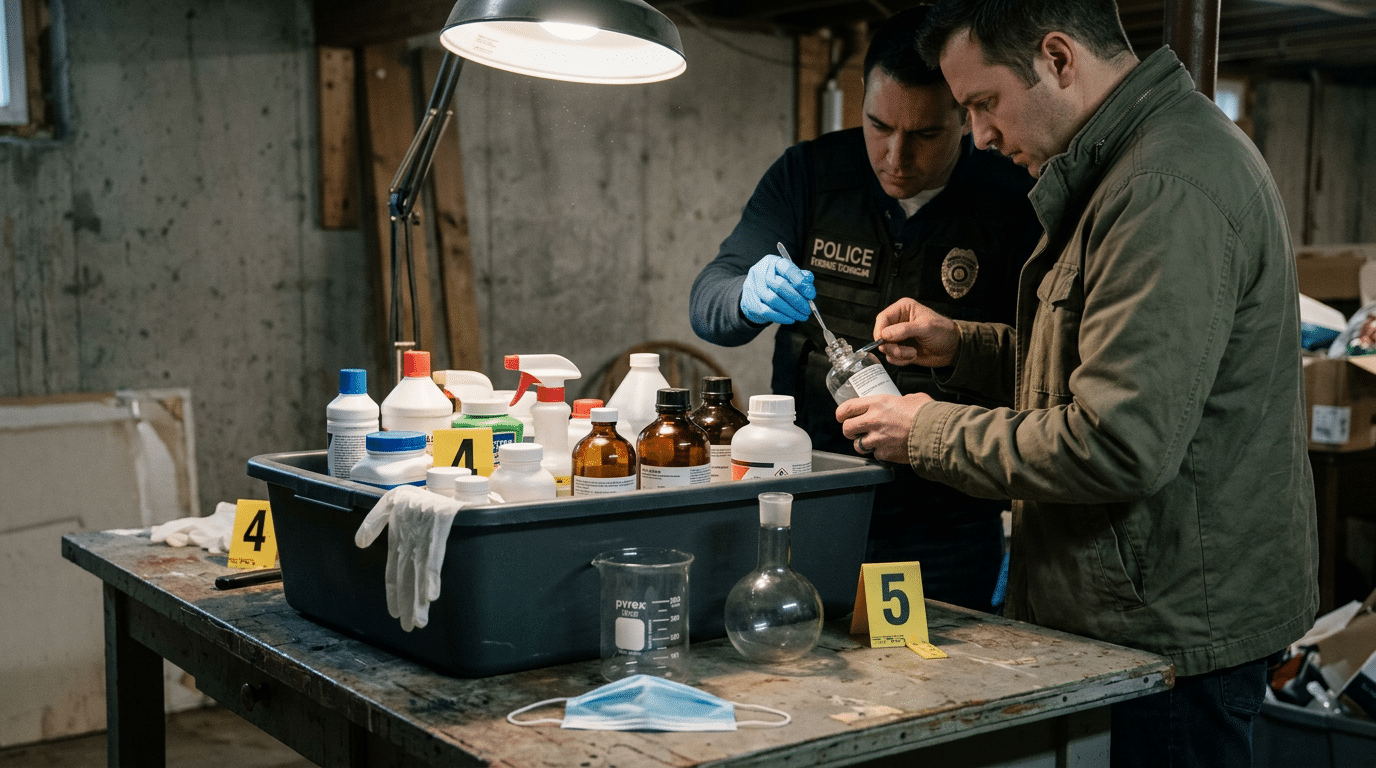
Having chemicals, glassware, or lab equipment can sometimes lead to a criminal investigation in Colorado. But just owning these items does not mean you have committed a drug manufacturing crime. Many chemicals and lab supplies are used for legitimate reasons in business, research, car repairs, farming, and home projects. If police find these materials during a search, they might suspect drug manufacturing, even if no drugs are present. At Watkins Law Firm LLC, we know how serious these accusations can be, especially when investigators mistake ordinary items for evidence of a crime. As criminal defense lawyers in Boulder, we look closely at how these items were found, what evidence the prosecution has, and whether the actions actually break Colorado law.
Colorado Law on Manufacturing Controlled Substances
Colorado Revised Statutes § 18-18-405 prohibits several activities involving controlled substances, including knowingly manufacturing, dispensing, selling, distributing, or possessing certain controlled substances with the intent to manufacture or distribute them.
Under C.R.S. § 18-18-102, manufacturing generally includes producing, preparing, propagating, compounding, converting, or processing a controlled substance. The statutory definition also covers certain packaging and labeling activities, although specific exceptions apply.
We tell our clients that prosecutors do not always have to show that finished illegal drugs were found. Evidence of processing or making drugs can still lead to manufacturing charges, even if the final product was never made.
However, we also distinguish actual manufacturing activity from preparation. The mere possession of laboratory equipment or chemicals does not automatically establish that manufacturing occurred. Prosecutors must prove the elements of the particular offense charged.
Possessing Chemicals Used in Drug Manufacturing
Colorado law separately addresses certain chemical precursors that may be used to manufacture controlled substances.
Under C.R.S. § 18-18-412.5, possessing certain precursor chemicals with the intent to manufacture a controlled substance can constitute a criminal offense. The statute identifies specific substances and requires proof of the applicable unlawful intent.
This distinction is important because many chemicals have legitimate commercial or personal applications. A person might possess cleaning products, solvents, chemical compounds, or laboratory supplies without intending to manufacture illegal drugs.
When we defend these cases, we check if the substances are actually covered by the law. We also look at whether prosecutors have enough evidence to prove intent.ly be used in drug production is not necessarily the same as possessing a legally specified precursor with criminal intent.
Laboratory Equipment and Drug Manufacturing Allegations
Police investigating suspected drug manufacturing may consider laboratory equipment as potential evidence. Glass containers, measuring instruments, heating equipment, scales, and other supplies may attract attention when investigators believe they are connected to illegal drug production.
However, these items are not inherently illegal. Many are routinely used in legitimate scientific, educational, industrial, and personal activities.
We look at whether the equipment is actually linked to controlled substances. We also check where it was found, who owned it, if it was being used, and if police found any drug residue or other physical proof.
Colorado’s drug paraphernalia statute, C.R.S. § 18-18-426, may also become relevant. That statute prohibits knowingly possessing drug paraphernalia when the person knows or reasonably should know that it could be used for purposes involving controlled substances in violation of the law.
Under C.R.S. § 18-18-427, courts may consider circumstances such as residue, statements, proximity to controlled substances, and legitimate uses when determining whether an object qualifies as drug paraphernalia.
We distinguish these allegations from felony manufacturing charges because the elements and potential penalties are substantially different.
Evidence Prosecutors May Use to Establish Manufacturing Intent
When prosecutors cannot establish that controlled substances were actually manufactured, they may attempt to prove criminal intent through circumstantial evidence.
For example, investigators may rely on communications discussing drug production, chemical purchases, equipment arrangements, witness statements, or evidence recovered from computers and mobile phones.
The prosecution may also point to combinations of materials that investigators believe are associated with illegal manufacturing operations.
We examine whether that evidence actually supports the alleged criminal purpose or whether investigators have interpreted lawful activities as suspicious.
We also investigate whether someone else owned or controlled the materials. The presence of chemicals or equipment inside a shared residence, garage, storage unit, or commercial property does not automatically establish that every person with access knowingly participated in criminal activity.
Criminal Penalties for Drug Manufacturing in Colorado
Manufacturing charges under C.R.S. § 18-18-405 can carry substantial penalties. The classification depends on factors such as the controlled substance, its quantity, the conduct involved, and any applicable aggravating circumstances.
Colorado’s drug felony sentencing provisions appear in C.R.S. § 18-1.3-401.5.
For ordinary drug felony sentencing, the classifications generally carry the following presumptive prison ranges:
| Drug felony classification | Presumptive prison range |
| Level 1 | 8–32 years |
| Level 2 | 4–8 years |
| Level 3 | 2–4 years |
| Level 4 | 6 months–1 year |
These ranges do not account for every sentencing provision, aggravating circumstance, mandatory requirement, or alternative sentence. A level 1 drug felony may also carry a mandatory minimum prison term, and certain offenses involving drug manufacturing can be subject to additional consequences.
We also explain that a conviction can affect employment opportunities, professional licensing, housing, and future background checks.
Illegal Searches and Seizures of Chemicals and Equipment
Drug manufacturing investigations frequently involve searches of homes, garages, vehicles, and storage facilities.
The Fourth Amendment to the United States Constitution and Article II, Section 7 of the Colorado Constitution protect individuals against unreasonable searches and seizures.
When police obtain chemicals or equipment through a search, we examine whether they had a valid warrant, whether a recognized exception applied, and whether the search exceeded its lawful scope.
We may also challenge the factual statements used to obtain a search warrant when the circumstances justify doing so.
If investigators violated constitutional protections, we can seek suppression of unlawfully obtained evidence. Whether suppression is available depends on the particular facts and applicable legal standards.
Defending Against Drug Manufacturing Charges in Boulder
At Watkins Law Firm LLC, we evaluate the evidence before accepting the prosecution’s interpretation of what the chemicals and equipment supposedly establish.
We review the alleged purpose of the materials, the scientific testing, the chain of custody, and whether prosecutors can establish knowing participation in criminal activity.
We also consider legitimate explanations for possessing the items, including employment, education, research, maintenance, or other lawful activities.
When the evidence does not support the charged offense, we can challenge the allegations and seek dismissal or reduction where legally appropriate. When necessary, we prepare to contest the prosecution’s evidence in court.
A drug manufacturing accusation can have serious consequences, but an accusation is not a conviction. The prosecution remains responsible for proving every required element beyond a reasonable doubt.
Frequently Asked Questions About Drug Manufacturing Charges in Colorado
Can Police Charge Us With Drug Manufacturing If No Illegal Drugs Were Found?
Yes. Under C.R.S. § 18-18-405(1)(a), possessing chemicals, supplies, or equipment with the intent to manufacture a controlled substance can support criminal charges even when police do not recover finished drugs. The law expressly includes this conduct, so prosecutors are not always required to establish that manufacturing was completed.
We examine whether the prosecution can establish the required intent rather than merely demonstrating that potentially useful materials were present. If the equipment and chemicals have legitimate purposes, we investigate evidence supporting those explanations. The absence of finished drugs may be relevant to the defense, but it does not automatically prevent prosecution.
Is It Illegal to Possess Laboratory Glassware or Chemical Equipment in Colorado?
Generally, no. Laboratory glassware, measuring instruments, scales, and similar equipment have numerous lawful uses. Their possession does not automatically constitute drug manufacturing.
However, we explain that otherwise legal equipment can become evidence of a criminal offense when prosecutors can establish the required connection to unlawful manufacturing. Under C.R.S. § 18-18-405, possessing equipment with the intent to manufacture a controlled substance is specifically prohibited. We review the equipment’s purpose, location, ownership, and surrounding circumstances to determine whether the evidence supports the allegations.
Can Buying Pseudoephedrine Lead to Drug Manufacturing Charges?
Yes, under certain circumstances. C.R.S. § 18-18-412.5 prohibits possessing ephedrine, pseudoephedrine, or phenylpropanolamine, including specified chemical forms, with the intent to use them as immediate precursors in manufacturing a controlled substance. A violation is classified as a level 2 drug felony.
We emphasize that purchasing or possessing pseudoephedrine for legitimate medical purposes is not, by itself, a violation of this statute. Prosecutors must establish the prohibited intent. We investigate purchasing records, witness statements, communications, and other evidence to determine whether the alleged criminal purpose can actually be proven.
Can Someone Be Charged If Drug Manufacturing Equipment Belongs to a Roommate?
Potentially, yes. Police may investigate multiple occupants when suspected manufacturing materials are discovered in a shared residence. However, living with someone who possesses suspicious equipment does not automatically establish criminal responsibility.
We examine whether our client knowingly possessed or controlled the materials and whether the prosecution can establish the necessary criminal intent or participation. Ownership records, access to particular rooms, communications, and witness statements may become important. We also consider whether the evidence establishes another person’s exclusive possession or control.
Can Drug Manufacturing Charges Be Dismissed If Police Conducted an Illegal Search?
Yes, dismissal may be possible, although an unlawful search does not automatically require dismissal of every charge. Courts may suppress evidence obtained through unconstitutional searches, subject to applicable exceptions and legal requirements.
We investigate how officers entered the property, whether they obtained a valid search warrant, and whether the search remained within lawful boundaries. If critical evidence is suppressed, prosecutors may have difficulty proving their case. We can seek dismissal when the remaining evidence or applicable law supports that result.
What Should We Do If Police Suspect Drug Manufacturing at Our Property?
We recommend contacting a Colorado criminal defense attorney promptly before discussing the allegations with investigators. You generally have the right to remain silent and request an attorney during custodial questioning.
We also advise against destroying, concealing, altering, or transferring potentially relevant evidence. Such conduct may create additional criminal exposure. Preserve records that establish legitimate uses for the materials and discuss them privately with your attorney. Early legal representation allows us to evaluate the allegations, protect your constitutional rights, and prepare an appropriate defense.
Speak With a Boulder Criminal Defense Lawyer About Drug Manufacturing Allegations
Being accused of manufacturing controlled substances because police discovered chemicals or laboratory equipment can place your freedom, employment, and reputation at risk. At Watkins Law Firm LLC, we understand that legitimate activities can sometimes be mistaken for criminal conduct, particularly when investigators draw conclusions from equipment or materials without fully understanding their intended use.
We represent individuals facing drug manufacturing charges, possession of precursor materials allegations, and other serious drug offenses in Boulder and throughout the Denver metropolitan area. We review the evidence, investigate the circumstances surrounding the allegations, and challenge the prosecution when the facts or applicable law do not support the charges.
Contact our Boulder drug crime lawyer by calling us 24/7 at 303-507-1324 for your free consultation. From our office in Boulder, Colorado, we represent clients throughout Boulder and the Denver area. If you are under investigation or have already been charged with a drug manufacturing offense, contact our office to discuss your circumstances and available legal defenses.
