
Can The Police Lie When They Are Questioning Someone?
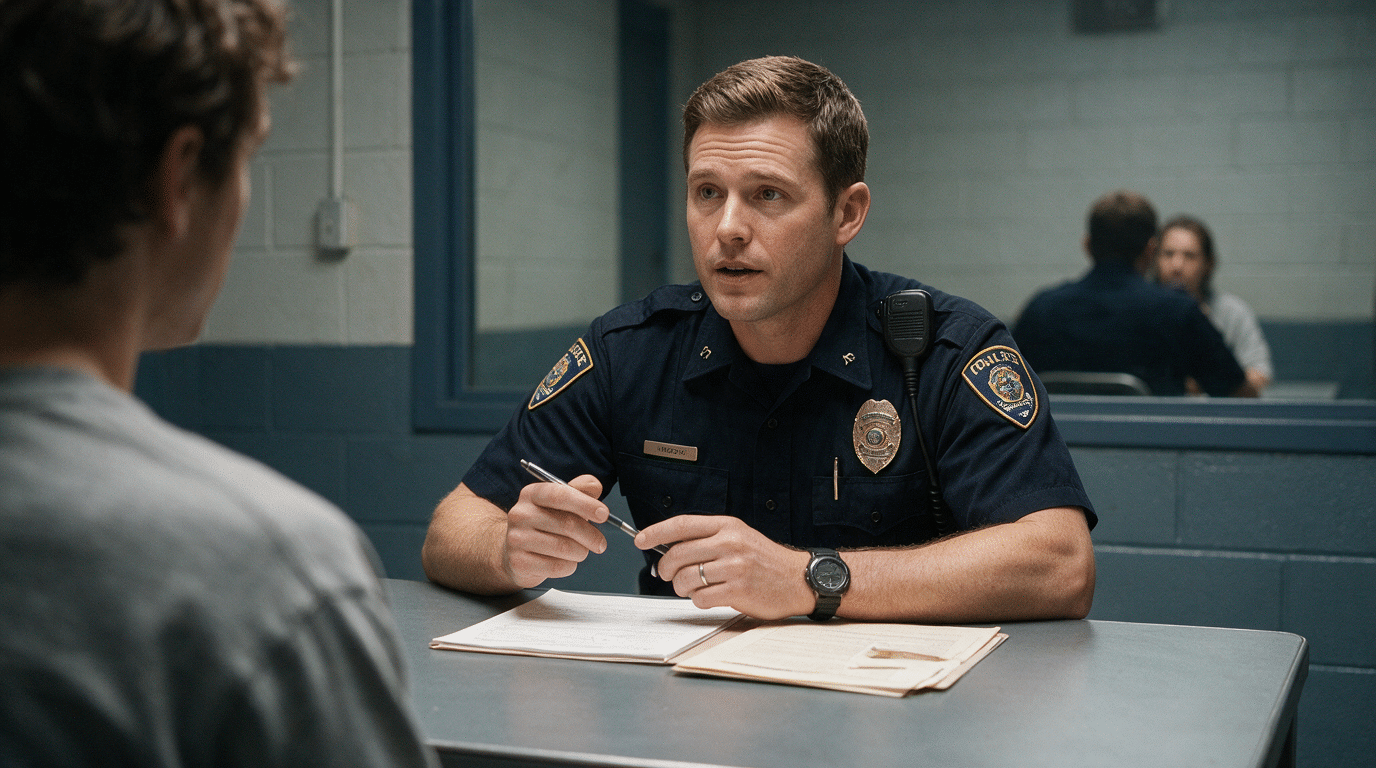
Police questioning might seem similar to a regular conversation, but it isn’t. Even before asking questions, detectives could already believe a crime has taken place and might already have a theory as to who is to blame. People often speak in order to explain themselves, to protect their reputation, or to demonstrate that they have nothing to hide. Making that choice can lead to serious difficulties. In criminal cases in Colorado, statements given during questioning can be used in cases involving DUI, drug offences, assault, domestic violence, theft, sex crimes, federal cases, and other types of criminal cases. The Watkins Law Firm LLC assists people in Boulder and in the wider Denver area in understanding the situations in which police questioning becomes risky and how a statement might be challenged.
Police Deception During Questioning
The police can employ some deceptive methods when questioning people. For example, an officer might say that there is evidence, state that someone else has already given an interview, suggest that cooperating would be advantageous, or act as if the case is already proven. The law does not automatically disregard any statement merely because the officer was not completely truthful during the questioning. This is the reason why it is wrong for people to think that they can safely outtalk, outthink, or persuade experienced investigators.
Limits do exist; an officer’s methods may amount to an unlawful action if they overwhelm a person’s will or result in an involuntary statement. A court will consider whether the officer made use of threats, promises, psychological pressure, false statements, repeated accusations, or other tactics which rendered the statement unreliable. It is not merely a question of what the officer said; it is also a matter of how the entire interrogation progressed.
Colorado Law And Custodial Interrogation
Colorado law takes into account the serious risks associated with custodial questioning. Statute C.R.S. § 16-3-601 covers the recording of such interrogations. A recording can be important because it shows exactly what happened during the questioning. It might show tone, pauses, confusion, pressure, repeated denials, threats, implied promises, or that the written report omitted important context.
Colorado law also provides for the giving of warnings before custodial statements can be used. According to C.R.S. § 16-3-402, a court will not admit a statement made as a result of custodial interrogation unless the individual was given the warnings in a manner which reasonably conveyed the necessary warnings. The warnings required include the right to remain silent, the fact that anything said can be used in court, the right to have an attorney, and the right to have counsel assigned if the person is unable to afford one.
It is important to have these rules since a great many people aren’t aware of the times at which they can leave, when the questioning has become custodial, or when they should cease speaking.
Miranda Warnings Do Not Make Every Statement Safe
It is believed by some that when the police give Miranda warnings, any statements made afterwards are thereby automatically admissible. However, that is not the case. Although Miranda warnings do carry significance, the defense is still able to question whether the individual understood their rights, whether the waiver was voluntary, and whether the statement itself was voluntary.
When considering whether a statement was voluntary, the courts in Colorado take into account all the relevant circumstances. This may involve examining whether the person was in custody, whether they were given warnings, whether they understood those warnings, whether they had access to a lawyer, whether any threats or promises were made, the duration and place of the questioning, the way in which the questioning was carried out, the person’s mental and physical condition, their level of education, their work background, and any previous experience they had with law enforcement.
A person may technically answer questions after hearing rights but still be worn down, confused, impaired, sick, exhausted, frightened, or misled in a way that affects the fairness of the statement.
Why Innocent People Still Make Damaging Statements
Many people talk to police because they are innocent. They believe silence will make them look guilty. They believe cooperation will end the investigation. They believe they can explain away suspicion. Unfortunately, police may interpret nervousness, confusion, incomplete memory, or small inconsistencies as signs of guilt.
This happens in many types of Colorado criminal cases. In drug cases, a person may admit that drugs were nearby without meaning to admit legal possession. In domestic violence cases, a person may admit to touching someone without explaining self-defense. In theft cases, a person may admit to taking property while believing they had permission. In sex crime investigations, a person may agree with a detective’s words without understanding how those words may be used later.
A statement does not have to sound like a dramatic confession to hurt the defense. A few words can be used to prove intent, knowledge, identity, presence, possession, or motive.
False Promises And Threats Can Become Defense Issues
Officers may say things that make a person feel trapped. They may suggest that “honesty” is the only way to go home. They may imply that the judge or prosecutor will be easier on someone who talks. They may suggest that refusing to answer will make things worse. They may tell a person that evidence exists when it may not.
Not every pressure tactic leads to suppression. But threats, promises of leniency, coercive pressure, and misleading statements can become serious defense issues. We look at whether the officer crossed the line from lawful questioning into coercive conduct. We also look at whether the person’s age, health, intoxication, mental condition, fear, or lack of experience made them more vulnerable.
Recording Problems Can Matter
When a custodial interrogation is recorded, the defense can compare the actual recording to the police report. That comparison can be very important. A report may summarize hours of questioning in a few paragraphs. It may highlight the most damaging statements and omit the denials, hesitation, uncertainty, or officer pressure that came before them.
If the interrogation was not recorded, we look at whether C.R.S. § 16-3-601 applied and whether law enforcement followed the statute. A missing or incomplete recording does not always mean the statement is automatically excluded, but it may give the defense a strong argument about reliability, fairness, and weight. A jury may need to know that the full context is missing.
How We Challenge Statements In Colorado Criminal Cases
When a client’s statement is part of the prosecution’s case, we review the circumstances carefully. We look at the stop, arrest, detention, interview location, timing, length of questioning, warnings, waiver, recording, officer tactics, and the client’s condition. We compare the recording, transcript, body camera video, officer notes, and police report.
If the facts support it, we may file a motion to suppress. That motion asks the judge to keep the statement out of evidence because it was obtained unlawfully or involuntarily. Even if the statement is not suppressed, we may still challenge what it means. We may show that the statement was incomplete, misunderstood, taken out of context, contradicted by other evidence, or shaped by officer pressure.
What You Should Do If Police Want To Question You
The safest step is to stop and get legal advice before answering questions. You have the right to remain silent. You have the right to ask for an attorney. Asking for a lawyer is not an admission of guilt. It is a way to protect yourself before words are used against you.
We advise people not to guess, explain, apologize, minimize, or try to bargain during questioning. Do not assume the officer has all the facts. Do not assume the officer is telling you everything. Do not assume that being innocent means talking is safe. In criminal defense, fewer statements often mean fewer problems.
FAQs About Police Lying During Questioning In Colorado
Can Police Legally Lie To Me During Questioning?
Police may use some deceptive tactics during questioning, but there are limits. A statement may be challenged if the tactics were so coercive that they overbore the person’s will or made the statement involuntary. The court will usually look at the full circumstances, not one sentence by itself. That includes the officer’s words, tone, length of questioning, threats, promises, the person’s condition, whether rights were given, and whether the person understood those rights. Because the line can be fact-specific, it is important to have the interview reviewed by a defense attorney.
Can My Statement Be Thrown Out If Police Lied?
Possibly, but not automatically. A lie by police does not always mean a statement will be suppressed. The key question is whether the deception contributed to an involuntary statement or violated constitutional or statutory protections. If officers lied about evidence, made promises, threatened harsher treatment, ignored a request for counsel, or questioned someone in custody without proper warnings, the defense may have grounds to challenge the statement. We review the recording, transcript, officer report, and timeline before deciding whether a suppression motion should be filed.
Do Police Have To Read Me My Rights Before Asking Questions?
Police must give Miranda-type warnings before custodial interrogation. That means the person must be in custody and subject to interrogation. If police ask questions during a brief noncustodial encounter, Miranda warnings may not be required. The issue can be disputed. A person may feel they were not free to leave even if police later claim it was only a voluntary conversation. We look at where the questioning happened, how many officers were present, whether weapons were visible, whether the person was restrained, and how a reasonable person would understand the situation.
What If I Already Talked To Police?
If you already talked to police, do not keep talking to fix it. Additional explanations can create more problems. The better step is to speak with a defense attorney as soon as possible. We can review what was said, whether the questioning was custodial, whether the required warnings were given, whether the interview was recorded, and whether the statement can be challenged. Sometimes a statement that sounds damaging in a police report looks very different when the full recording is reviewed.
Can Police Say They Have Evidence When They Do Not?
Police may sometimes suggest or claim they have evidence as part of an interrogation strategy. That does not mean you should respond or try to explain. Officers may mention fingerprints, DNA, video, witnesses, phone records, or statements from others. Some of those claims may be true, partly true, misunderstood, or false. A person under pressure may make admissions just to deal with what sounds like overwhelming evidence. The safer choice is to ask for a lawyer and stop answering questions.
Why Should I Stay Silent If I Did Nothing Wrong?
Innocent people can still make damaging statements. You may forget details, use the wrong words, agree with an officer’s phrasing, or make a statement that sounds inconsistent later. Police questioning is not designed to clear you. It is often designed to gather evidence. Remaining silent and asking for counsel protects you from being misunderstood or pressured into a statement that hurts your defense. We can speak for you when appropriate and help decide what, if anything, should be said.
Call Watkins Law Firm LLC For Help With A Colorado Criminal Investigation
If police, detectives, or federal agents want to question you, or if you already gave a statement that may be used against you, Watkins Law Firm LLC can help. We defend clients in Boulder and throughout the Denver area against drug crimes, DUI and DUID charges, domestic violence allegations, assault charges, theft cases, sex crime accusations, federal investigations, and other serious criminal matters. We know how damaging a statement can be when it is pressured, incomplete, misunderstood, or taken out of context.
Contact our Boulder criminal defense attorney by calling us 24/7 at 303-507-1324 for your free consultation. Our Boulder defense attorney represents clients in Boulder and throughout the Denver area from our office locations in Boulder, Colorado.
