
Can Social Media Posts Hurt Your Colorado Criminal Defense Case?
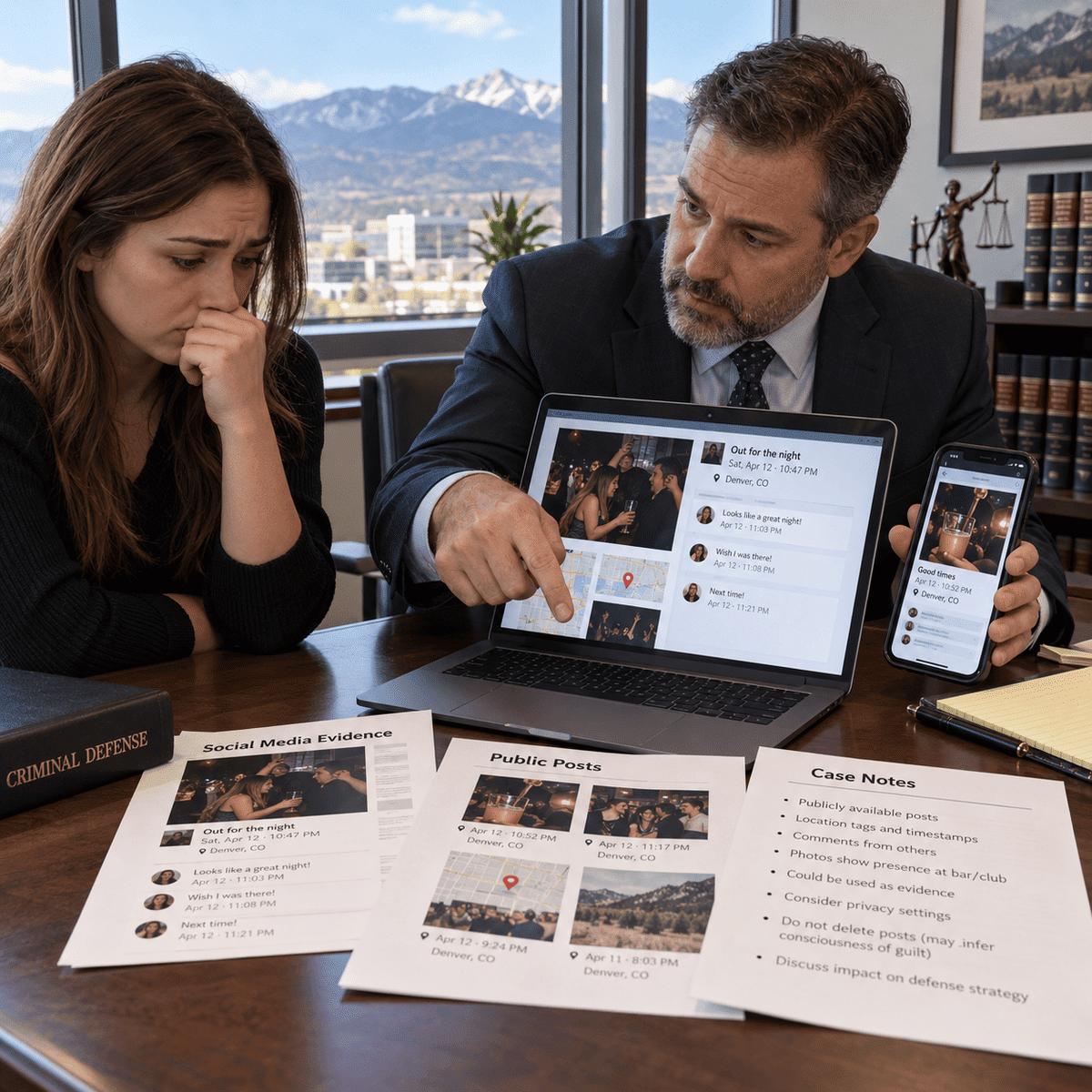
When we represent someone accused of a crime in Colorado, we want our clients to know that what happens outside the courtroom can affect what happens inside. Social media is a clear example. A photo, comment, direct message, video, location tag, or even interacting with someone else’s post can become important in a criminal investigation or prosecution.
Prosecutors may look at online activity for statements that support their version of events, contradict what the accused has said, show relationships, or place someone at a certain location. Even a post that seems harmless on its own can cause problems when investigators look at it with other evidence. That’s why we usually tell our clients to be very careful with social media while a Boulder criminal case is ongoing.
Colorado Prosecutors May Try to Use Social Media as Evidence
Social media evidence is not automatically admissible merely because prosecutors find a screenshot online. Like other evidence, it must satisfy applicable evidentiary requirements.
Colorado Rule of Evidence 901 deals with proving that evidence is genuine. In general, there must be enough information to show that the item is what the party says it is. This is especially important when the prosecution tries to link an Instagram post, Facebook message, TikTok video, Snapchat message, or other digital content to a defendant.
Authentication, however, is only part of the analysis. Other evidentiary rules may affect whether a particular post or communication can be admitted and how it can be used.
When we look at social media evidence, we check who controlled the account, who made the content, when it was created, if it was changed, how investigators got it, and whether the prosecution can prove it meets the legal requirements.
Your Own Statements Can Create Problems for the Defense
One significant danger comes from discussing the alleged incident itself.
Suppose someone charged with assault posts, “I was only defending myself.” The person may believe that statement helps establish self-defense. Prosecutors, however, might argue that the statement acknowledges participation in the physical confrontation.
The same problem can arise with DUI, domestic violence, theft, drug, weapons, and other criminal allegations. A person may post something intended to explain or defend what happened, only to have prosecutors interpret the statement differently.
We would rather evaluate the evidence and determine the defense strategy before our client publishes an explanation that prosecutors can preserve and potentially use.
Photos, Videos, And Location Information May Matter
Words are not the only concern. Photographs and videos may contain details that become relevant to the prosecution.
A photograph may show alcohol, a firearm, a vehicle, another person, or a location. A video may include statements made in the background. Location information may be used in an attempt to establish where someone was at a particular time.
Even the date of a post can be misleading. A photograph uploaded Saturday may have been taken months earlier. If prosecutors attempt to attach significance to online material, we can examine its actual context rather than simply accepting the interpretation placed on it.
Contact With An Alleged Victim Or Witness Can Be Especially Serious
We strongly caution clients about online contact with alleged victims and witnesses.
Colorado Revised Statutes § 18-1-1001 provides for criminal protection orders for people charged with Colorado criminal offenses and protects victims and witnesses against specified conduct. Depending on the order entered in a particular case, prohibited contact can include direct or indirect communication. Colorado law also criminalizes certain conduct involving intimidation, retaliation, and tampering with witnesses or victims.
Social media does not provide a loophole around these restrictions.
A direct message is an obvious form of online contact, but other conduct can create issues as well. Using another person to communicate, directing online material toward a protected person, or attempting to influence what a witness says can have consequences far beyond the original charge.
We therefore want to review the exact terms of any protection order with our client and explain what conduct should be avoided.
A Social Media Post Could Potentially Lead To Additional Allegations
Online conduct can sometimes become the basis for a separate investigation.
Colorado’s harassment statute, C.R.S. § 18-9-111, addresses specified communications through telephones, data networks, text messages, computers, and other interactive electronic media. The precise language and intent matter, and constitutional protections for speech also matter. The Colorado Supreme Court has previously addressed First Amendment limits on the electronic-communications portion of the harassment statute.
The larger point for someone facing criminal charges is simple: an angry online confrontation can create a new legal issue while we are already defending the original case.
Threats, repeated communications, communications involving an alleged victim, or posts that prosecutors interpret as witness intimidation deserve particular attention.
We Do Not Recommend Simply Deleting Everything
After learning that social media can hurt a criminal case, a defendant may immediately want to erase posts, messages, photographs, or accounts. We do not recommend making that decision without first speaking with defense counsel.
Colorado’s physical-evidence tampering statute, C.R.S. § 18-8-610, addresses destroying, mutilating, concealing, removing, or altering physical evidence under specified circumstances when a person believes an official proceeding is pending or about to be instituted and acts with the required intent. The application of evidence-preservation laws to particular digital conduct depends heavily on the facts.
Deleting material can also make it harder for us to preserve something favorable to the defense.
Instead of attempting to clean up an online history after an arrest, we prefer to evaluate what exists, determine whether anything may constitute evidence, and advise our client about preservation and future activity.
Private Accounts Are Not Necessarily Private From A Criminal Investigation
Changing an account to private can reduce public visibility, but we would never assume that doing so makes existing material inaccessible to law enforcement.
Someone else may already have screenshots. Another user may share the material. Investigators may obtain information through lawful investigative methods. Content may also exist elsewhere even after it is no longer visible on the original account.
We therefore approach social media as potentially discoverable evidence rather than assuming privacy settings will keep it outside the case.
We Can Examine Social Media Evidence In Its Full Context
Social media evidence can hurt a defense, but it can sometimes help one as well.
Messages may support an alibi. Photographs may establish a timeline. Communications from an accuser may contradict later allegations. Metadata or surrounding conversations may change the meaning of an isolated screenshot. A complete message thread may tell a very different story from one message selected from the middle of the conversation.
When prosecutors rely on digital evidence, we examine the source, authenticity, timing, context, and legal significance of that evidence. Our goal is not simply to explain away a damaging post. We look at whether the prosecution can actually prove what it claims the digital evidence proves.
FAQs About Social Media And Colorado Criminal Defense Cases
Can Colorado Prosecutors Use My Social Media Posts Against Me?
Yes, prosecutors may attempt to use relevant social media content as evidence. We may see prosecutors rely on photographs, videos, comments, direct messages, location information, or other online activity when building a case. The fact that something appears online does not automatically make it admissible, however. Colorado Rule of Evidence 901 generally requires authentication of evidence, and additional evidentiary rules may apply. We can challenge the prosecution’s interpretation, authentication, context, or admissibility when there is a legitimate legal basis for doing so. A screenshot that appears damaging at first glance may become considerably less persuasive when we examine the entire conversation, the account history, the date, or the circumstances in which it was created.
Should We Delete Social Media Posts After Being Arrested?
We generally advise against deleting potentially relevant material before obtaining legal advice. C.R.S. § 18-8-610 addresses tampering with physical evidence under specified circumstances and requires particular elements before criminal liability exists. We do not want a client making unilateral changes to potentially relevant evidence without understanding the consequences. Deleting material can also eliminate information that might ultimately help the defense. We would rather review the account and the circumstances first, preserve potentially relevant evidence when appropriate, and advise our client about what should happen next.
Can We Contact An Alleged Victim Through Facebook Or Instagram?
We strongly advise clients to follow every provision of their protection order and not assume that online communication is permitted. Under C.R.S. § 18-1-1001, criminal protection orders protect alleged victims and witnesses against specified conduct, and courts can impose restrictions applicable to contact or communication. Colorado also has separate criminal statutes covering intimidation, retaliation, and tampering involving witnesses or victims. We review the actual order entered in the case because its language matters. Sending a message, communicating through another person, or engaging in other indirect communication can create serious problems if the conduct violates an order or another criminal statute.
What If Someone Else Tagged Us In A Post?
Being tagged by another person is different from personally creating a post, but we still want to know about it if the material could relate to the criminal case. We look at who created the content, whether our client participated in it, when the photograph or video was actually made, and what the prosecution claims it proves. A tag alone does not necessarily establish that every statement or image associated with the post was created or approved by the person tagged. Authentication and context can therefore become important parts of our analysis.
Can Private Messages Be Used In A Colorado Criminal Case?
Potentially, yes. We do not assume that a direct message remains confidential merely because it was not posted publicly. The recipient may preserve or disclose it, another person may have access to it, or investigators may obtain relevant digital information through lawful investigative procedures. If prosecutors obtain private messages and attempt to introduce them as evidence, we can examine how the evidence was obtained, whether it can be properly authenticated, whether the complete conversation provides additional context, and whether other evidentiary or constitutional issues apply.
Can Social Media Actually Help Our Defense?
Yes. Digital evidence is not inherently favorable to the prosecution. Messages, photographs, timestamps, videos, account activity, and other records may support the defense. They may establish where someone was located, document communications between the parties, contradict an allegation, or provide context missing from a police report. We want clients to preserve potentially helpful material rather than assuming everything connected with social media is harmful. When appropriate, we can evaluate digital evidence as part of the overall defense investigation and determine how it fits with witness statements, physical evidence, police reports, and other information.
Speak With A Boulder Criminal Defense Lawyer About Your Criminal Charge
At Watkins Law Firm LLC, we understand that a Colorado criminal case can extend far beyond the allegations written in a police report. Social media posts, text messages, photographs, videos, and other digital information may become important evidence for either side. When we defend a criminal case, we examine the evidence in context, identify weaknesses in the prosecution’s interpretation, and advise our clients about conduct that could affect the case while charges are pending.
If you have been arrested, charged with a crime, or learned that law enforcement is investigating you, we encourage you to obtain legal advice before discussing the allegations online, contacting an alleged victim or witness, or deleting potentially relevant digital information.
Watkins Law Firm, LLC, represents clients in Boulder and throughout the Denver area from our office locations in Boulder, Colorado. Contact our Boulder criminal defense attorney by calling us 24/7 at 303-507-1324 for your free consultation.
