
Can Police Charge Everyone In The Car With Drug Possession?
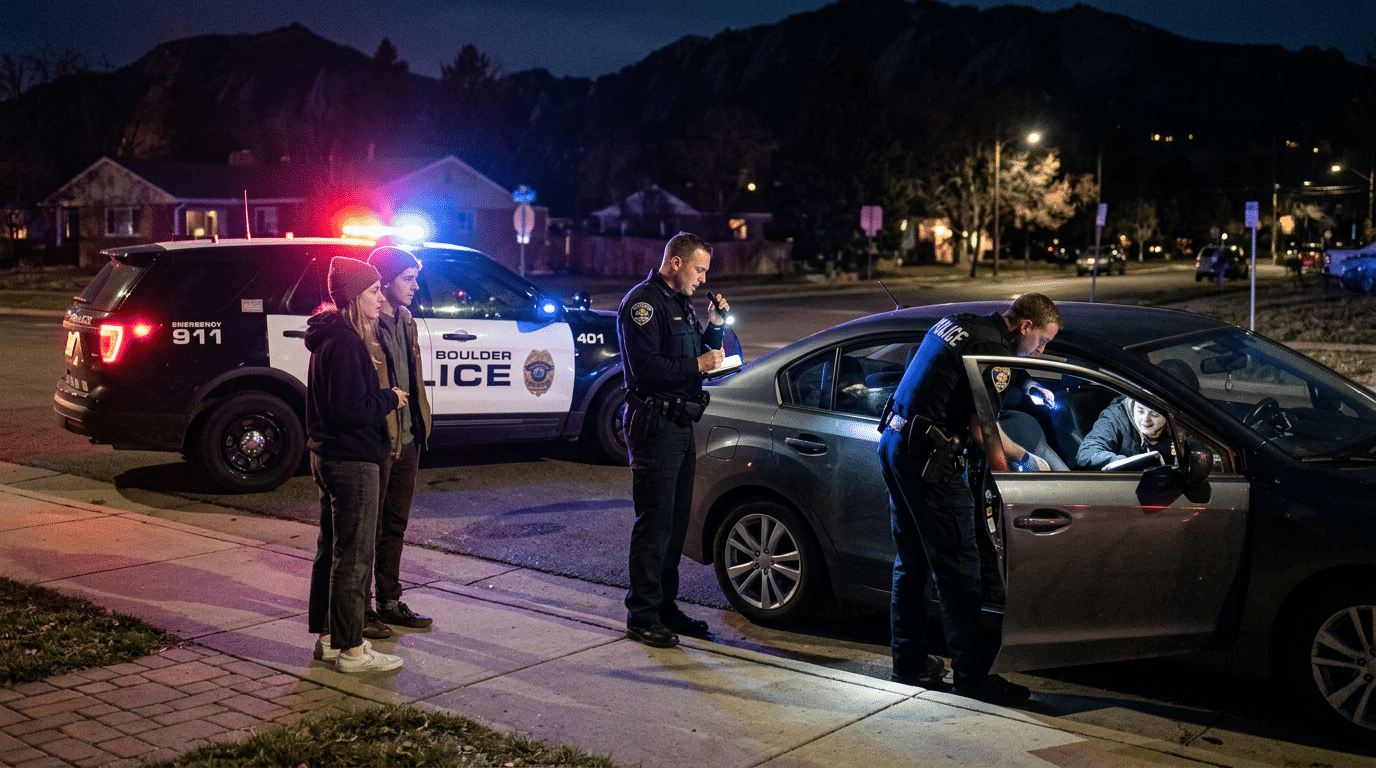
A drug arrest after a traffic stop can feel confusing and unfair, especially when several people were in the same car. Police may find drugs in the center console, under a seat, in a backpack, inside a purse, in the trunk, or somewhere else in the vehicle. Then everyone starts asking the same question: can police charge every person in the car with drug possession?
The answer is that police may arrest or charge more than one person in some cases, but prosecutors still have to prove the charge against each person. Simply being present in a vehicle where drugs were found does not automatically prove that every passenger knowingly possessed them. At Watkins Law Firm LLC, we defend people in Boulder and throughout the Denver area who are accused of Colorado drug possession after traffic stops, vehicle searches, and shared-car situations.
Colorado Drug Possession Law Requires Knowing Possession
Colorado’s unlawful possession of a controlled substance law is found at C.R.S. § 18-18-403.5. The statute makes it unlawful to knowingly possess a controlled substance unless the possession is legally authorized. That word “knowingly” matters. The prosecution must prove more than the fact that drugs were found somewhere in a vehicle. They must prove that the accused person knew the substance was there and had possession of it.
Possession can be actual or constructive. Actual possession usually means the drugs were on the person, such as in a pocket, hand, wallet, or personal bag. Constructive possession is more complicated. It can apply when prosecutors claim someone had knowledge of the drugs and control over them, even if the drugs were not physically on that person. Shared vehicles often create difficult constructive possession issues because multiple people may have access to the same space.
Mere Presence In The Car Is Not The Same As Possession
One of the most important issues in a shared-car drug case is whether the prosecution can show more than presence. Colorado courts have recognized that when a person is not in exclusive possession of the vehicle or place where drugs are found, mere presence alone is not enough to sustain a possession conviction. The prosecution usually needs an additional link between the person and the drugs.
That additional link may be an alleged admission, fingerprints, DNA, ownership of the container, nervous behavior, statements from another passenger, drug residue on personal items, cash, scales, text messages, or evidence that the drugs were in plain view. The defense may argue that these links are weak, missing, misunderstood, or not enough to prove knowing possession beyond a reasonable doubt.
Drivers And Passengers May Be Treated Differently
Police often focus on the driver because the driver may be viewed as having more control over the vehicle. In some cases, courts may allow stronger inferences when a person is the driver and sole occupant. But that does not mean the driver is automatically guilty when other people are also in the car. If several people had access to the area where drugs were found, the prosecution must still prove the driver knew about the drugs and had the ability and intent to control them.
Passengers may also be charged if police believe the drugs were close to them, found in their belongings, connected to their statements, or tied to other evidence. A passenger sitting near drugs is not enough by itself in many cases. For example, drugs under a seat, between seats, or in a shared console may create suspicion, but suspicion is not proof. We look closely at who owned the car, who had access, where each person was seated, who had control of the container, and what police actually observed.
Vehicle Searches Can Be Challenged
A shared-car drug case often rises or falls on the legality of the traffic stop and vehicle search. Police must have a lawful basis to stop the vehicle. Under C.R.S. § 16-3-103, a temporary detention requires reasonable suspicion, a reasonable purpose, and a reasonable scope. If the stop was unlawful, evidence found after the stop may be challenged.
Even if the stop was lawful, the search may still be an issue. Police may claim probable cause based on odor, plain view, statements, officer observations, a drug dog, consent, inventory search rules, or another legal theory. Each basis has limits. Consent may be disputed. A drug dog sniff may raise timing issues. An inventory search must follow proper procedures. A plain-view claim may not fit the facts. We review body camera footage, dash camera footage, dispatch records, search reports, and officer testimony to determine whether the search can be challenged.
Statements During The Stop Can Hurt The Defense
After drugs are found in a car, officers may separate the occupants and start asking questions. They may ask who owns the drugs, who owns the bag, where everyone was going, who knew what, and whether anyone wants to “be honest.” A person may deny ownership at first, then say something unclear because they are scared. Another passenger may try to shift blame. Someone may admit to knowing drugs were in the car without admitting ownership.
These statements can become major evidence. We often see cases where the police report makes a statement sound clearer than it was in real time. That is why recordings matter. A person should not guess, explain, apologize, or accept responsibility without legal advice. If police are asking questions about drugs found in a shared vehicle, the safest response is usually to remain respectful and ask for an attorney.
Drug Possession Can Become A More Serious Charge
A vehicle drug case may start as possession but become more serious if police find larger quantities, scales, packaging, cash, firearms, multiple phones, or messages suggesting sales. C.R.S. § 18-18-403.5 also recognizes that a person may be charged under other drug laws when evidence supports distribution, manufacturing, dispensing, sale, or possession with intent to distribute. Prosecutors may try to turn a possession case into a distribution case based on circumstances rather than an observed sale.
We challenge those assumptions. Cash does not always mean drug sales. A scale may have another explanation. Text messages may be misread. Packaging may not prove intent. Larger quantities may raise concerns, but the prosecution still has to prove the correct charge against the correct person.
Consequences Of A Colorado Drug Possession Charge
A drug possession charge can affect more than the criminal sentence. It can affect employment, housing, professional licensing, immigration status, child custody, financial aid, security clearances, and a person’s reputation. Even a first-time drug case can create serious stress if it appears on a background check or involves allegations connected to a car, school, job, or family situation.
Colorado drug possession penalties depend on the substance, amount, prior record, and other facts. Some possession cases are charged as misdemeanors. Others can be charged as felonies. Fentanyl-related cases, repeat offenses, and allegations involving intent to distribute can raise the stakes. The earlier we review the case, the more options may be available to challenge the evidence, negotiate a better outcome, or pursue dismissal where the facts support it.
How We Defend Shared-Car Drug Possession Cases
At Watkins Law Firm LLC, we focus on the details that separate suspicion from proof. We look at where the drugs were found, who owned the vehicle, who owned the container, whether anyone made statements, whether police had lawful grounds to stop and search, whether the drugs were tested, whether field tests were used, and whether the prosecution can prove knowledge and control.
We also look for evidence that points away from our client. That may include seating positions, fingerprints, lack of DNA, lack of admissions, inconsistent passenger statements, unclear body camera footage, weak search procedures, or evidence that someone else had access to the drugs. In a shared car, the government should not be allowed to charge everyone simply because police do not know whose drugs they were.
FAQs About Drug Possession Charges When Multiple People Are In The Car
Can Police Arrest Everyone In The Car If Drugs Are Found?
Police may arrest more than one person in a car if they believe there is probable cause, but an arrest is not the same as a conviction. Prosecutors still have to prove the charge against each person. In a shared vehicle, the key issues are knowledge, control, access, location of the drugs, ownership of the container, statements, and any other evidence connecting a person to the drugs. If the only evidence is that you were present in the car, the defense may argue that the case is based on suspicion rather than proof.
What Is Constructive Possession In A Colorado Drug Case?
Constructive possession means prosecutors claim a person had knowledge of and control over drugs even though the drugs were not physically on that person. In a car, this may involve drugs found in a console, glove box, floorboard, trunk, or bag. Constructive possession cases can be weak when several people had access to the same area. The prosecution must connect the accused person to the drugs with evidence. Mere proximity does not always prove knowing possession.
Can A Passenger Be Charged With Drug Possession?
Yes, a passenger can be charged if police and prosecutors believe the passenger knew about and possessed the drugs. The case may be stronger if the drugs were found in the passenger’s pocket, purse, backpack, or immediate area. It may be weaker if the drugs were hidden, located closer to someone else, or inside a container that did not belong to the passenger. A passenger should not assume the case is hopeless just because police filed a charge. Shared-car drug cases often have strong defense issues.
Can The Driver Be Charged If The Drugs Belonged To A Passenger?
Yes, the driver can be charged, but the prosecution still must prove knowing possession. Driving the car may give police a reason to investigate, but it does not automatically prove the driver knew about drugs brought into the vehicle by a passenger. The defense may focus on lack of knowledge, lack of control, shared access, no fingerprints, no statements, and evidence that another person owned or controlled the drugs. These details matter, especially when the drugs were hidden or found in someone else’s belongings.
Can An Illegal Search Get The Drug Evidence Thrown Out?
Yes, if police violated search-and-seizure rules, the defense may file a motion to suppress. If the judge grants the motion, the drug evidence may be excluded from the case. That can seriously weaken the prosecution’s case. We review whether the traffic stop was lawful, whether the officer had reasonable suspicion or probable cause, whether consent was valid, whether the search stayed within legal limits, and whether police followed proper procedures. Search issues are often central in vehicle drug cases.
Should I Talk To Police If Drugs Are Found In A Car?
You should be very careful. Police may act like they only want to clear things up, but your answers can be used against you. Saying “I knew they were there, but they were not mine” may still create problems because knowledge is part of possession. Blaming another person can also create risks. It is usually best to be polite, provide required identification, and ask for an attorney before answering questions about drugs, ownership, or other people in the car.
Call Watkins Law Firm LLC For Help With A Colorado Drug Possession Charge
If you were charged after police found drugs in a car, Watkins Law Firm LLC can help. We defend clients in Boulder and throughout the Denver area against drug possession, possession with intent to distribute, DUID, traffic-stop drug cases, and other Colorado criminal charges. We understand how quickly a shared-car drug case can become unfair, especially when police try to connect everyone in the vehicle to the same drugs. Contact our Boulder drug possession attorney by calling us 24/7 at (303) 507-1324 for your free consultation.
