
Can Cash, Scales, Or Packaging Be Used To Prove Intent To Distribute?
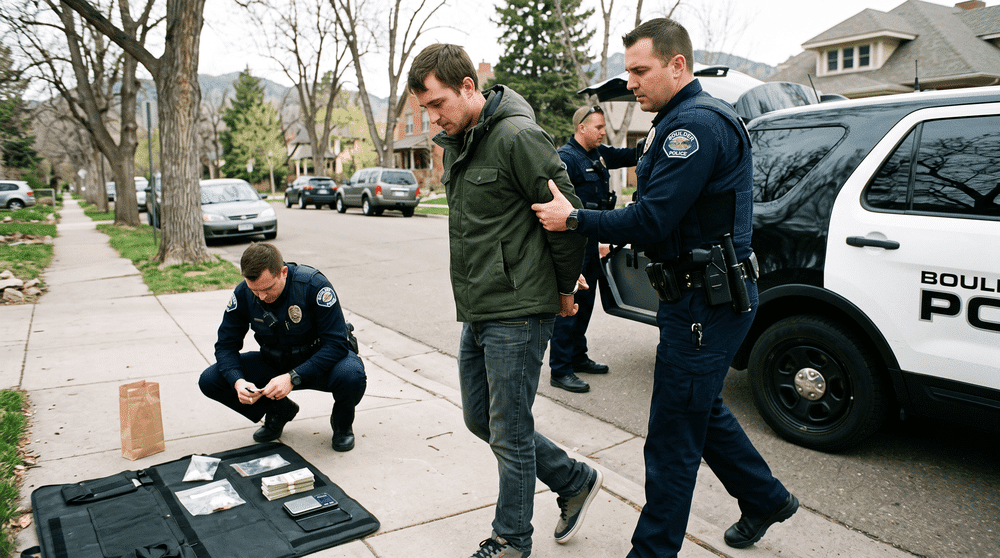
Cash, scales, and packaging can be used by Colorado prosecutors as evidence in a drug distribution case, but those items do not automatically prove intent to distribute. That distinction matters. Many people carry cash for legal reasons. Scales can be used for lawful purposes. Plastic bags, containers, and packaging materials can appear in a home, vehicle, backpack, or business for ordinary reasons.
When police find drugs with cash, scales, or packaging, they may assume the case is about distribution rather than personal possession. At Watkins Law Firm LLC, we defend clients in Boulder and throughout the Denver area when prosecutors try to turn circumstantial evidence into a serious drug distribution charge.
Colorado Law On Possession With Intent To Distribute
Colorado law separates simple possession from distribution-related conduct. Unlawful possession of a controlled substance is addressed under C.R.S. § 18-18-403.5. Distribution, manufacturing, dispensing, sale, and possession with intent to manufacture, dispense, sell, or distribute are addressed under C.R.S. § 18-18-405. The difference between these charges can be significant.
In a possession case, the prosecution usually focuses on whether the accused knowingly possessed a controlled substance. In a possession with intent to distribute case, the prosecution must go further. Prosecutors must try to prove that the person possessed the drugs with the intent to sell, distribute, dispense, or otherwise transfer them. Intent is often the central issue. Since intent is rarely proven by a direct statement, prosecutors often rely on circumstantial evidence, including cash, scales, packaging, text messages, alleged customer lists, surveillance, and the amount of drugs found.
Why Cash Can Be Used As Evidence
Cash can become evidence when police believe the money is tied to drug sales. Officers may focus on the amount of cash, the denominations, the way the cash was stored, whether the person had employment income, and whether the cash was found close to drugs or alleged paraphernalia. Prosecutors may argue that large amounts of small bills suggest street-level sales.
That argument can be challenged. Cash is not illegal. Many people work in cash-based jobs, withdraw money for rent, carry money while traveling, sell personal property, receive tips, or keep emergency funds. The presence of cash does not prove that drug sales occurred. We look for lawful explanations, banking records, pay records, receipts, business records, witness statements, and facts showing that the cash was not connected to drug distribution.
Why Scales Can Raise Suspicion
Digital scales are often used by police and prosecutors as alleged indicators of distribution. Their argument is usually that a scale can be used to weigh drugs for sale. If a scale has suspected drug residue, is found near controlled substances, or is located with baggies or cash, prosecutors may argue that the items together show intent to distribute.
That does not end the analysis. A scale may be used for cooking, fitness, jewelry, mail, supplements, collectibles, legal marijuana, or other lawful purposes. A person may also possess drugs for personal use and still have a scale for reasons that do not involve sales. If the scale was in a shared home, shared vehicle, or borrowed bag, the prosecution may have a proof problem. We examine where the scale was found, who had access to it, whether there was testing for residue, whether fingerprints or DNA were collected, and whether police made assumptions instead of proving ownership and intent.
Packaging Does Not Always Mean Distribution
Packaging evidence can include plastic baggies, containers, vials, foil, pill bottles, jars, vacuum-sealed bags, or other materials. Prosecutors may argue that separately packaged drugs show intent to sell. They may also argue that unused baggies or packaging materials show preparation for distribution.
The defense may see a different story. Packaging may be ordinary household material. Some substances may be packaged that way before the accused ever possessed them. Separate packaging may reflect personal use, storage, convenience, medical needs, shared possession, or the way the substance was purchased. The details matter. How many packages were there? Were they uniform? Were they labeled? Were they connected to cash or messages? Was the quantity consistent with personal use or distribution? Did the police preserve and test the items properly? Those questions can affect the strength of the case.
Drug Paraphernalia And Distribution Allegations
Colorado’s drug paraphernalia statute, C.R.S. § 18-18-428, addresses possession of items that a person knows or reasonably should know could be used under circumstances violating Colorado drug laws. Paraphernalia allegations may involve pipes, syringes, scales, packaging, grinders, or other objects depending on the facts. However, paraphernalia does not always prove distribution.
There is a difference between items connected to personal use and items prosecutors claim show sales. A pipe may suggest use, not distribution. A scale may have lawful uses. Bags may be ordinary household items. The prosecution may try to group several objects together and argue that the “total picture” proves intent to distribute. We break that picture apart and test each item on its own facts.
Quantity Of Drugs Often Drives The Charge
Cash, scales, and packaging usually become more important when police also claim that the drug quantity is too large for personal use. Quantity can affect the level of the charge under Colorado drug laws. Prosecutors may argue that a larger amount, combined with cash and packaging, proves intent to distribute.
Still, quantity alone does not always tell the full story. A heavy user may possess more than police expect. Some substances are purchased in bulk to reduce cost. Some people share drugs socially without acting as dealers. Some people hold drugs for someone else without knowing the full situation. None of those facts should be ignored. We review lab testing, actual weights, usable amounts, packaging weights, and whether the prosecution is overstating what was found.
Search And Seizure Issues Can Change The Case
Many possession with intent cases begin with a traffic stop, vehicle search, home search, backpack search, probation search, or search warrant. Under C.R.S. § 16-3-103, a temporary detention must be based on reasonable suspicion, have a reasonable purpose, and remain reasonable in scope. If police unlawfully detained someone, extended a stop without legal grounds, searched without valid consent, or exceeded the scope of a warrant, the defense may file a motion to suppress.
Suppression can be critical. If drugs, cash, scales, packaging, statements, or phone evidence were obtained through an unlawful search or seizure, the court may exclude that evidence. Without that evidence, the prosecution may have a weaker case or no case at all. We look closely at the beginning of the police encounter because one unlawful step can affect everything that follows.
Phone Evidence And Statements Can Add Risk
Cash, scales, and packaging are rarely the only evidence in a distribution case. Police may also look at text messages, call logs, payment apps, location data, social media, photos, and alleged admissions. A person’s own words can be used against them if they explain, joke, minimize, or try to talk their way out of trouble.
We advise clients not to discuss the facts with police, friends, codefendants, or alleged witnesses. A text message that seems innocent may be interpreted as a drug transaction. A statement that sounds like an explanation may be treated as an admission. A strong defense often begins by stopping new evidence from being created.
How We Defend Intent To Distribute Allegations
At Watkins Law Firm LLC, we focus on what the prosecution can actually prove. We examine whether the drugs belonged to our client, whether the items were found in a shared location, whether the search was lawful, whether the cash has a legitimate source, whether the scale or packaging has an innocent explanation, and whether the amount of drugs truly supports a distribution theory.
We also review police reports, body camera footage, search warrants, lab reports, photographs, phone evidence, witness statements, and chain-of-custody records. Prosecutors may try to build a distribution case from assumptions. We work to expose the gaps, challenge weak evidence, and protect your record, freedom, job, license, and future.
FAQs About Cash, Scales, Packaging, And Intent To Distribute In Colorado
Can Cash Be Used To Prove Drug Distribution In Colorado?
Yes, cash can be used as circumstantial evidence, but it does not automatically prove drug distribution. Prosecutors may argue that large amounts of cash, small denominations, or money found near drugs suggest sales. The defense may show lawful reasons for the money, such as work income, rent money, travel funds, tips, business income, or recent withdrawals. Cash becomes stronger evidence for the prosecution only when it is connected to other facts. We look at whether the police made assumptions or whether they can prove the money was tied to drug activity.
Do Scales Always Mean Someone Was Selling Drugs?
No. Scales do not automatically prove intent to distribute. Police often treat scales as suspicious, especially if they are found near drugs, cash, or baggies. However, scales can have lawful uses, and a scale in a shared space may not belong to the accused person. The defense may question whether the scale was tested for residue, whether fingerprints or DNA were collected, where it was found, who had access to it, and whether it has any proven connection to drug sales. A scale is evidence, but it is not proof by itself.
Can Packaging Turn A Possession Case Into A Distribution Case?
Packaging can be used by prosecutors to argue intent to distribute, but the details matter. A few bags or containers may have innocent explanations. Separate packaging may reflect how the drugs were purchased, stored, or transported. Prosecutors may argue that many uniform packages show sales, especially when combined with cash, scales, messages, or a larger quantity of drugs. We examine whether the packaging actually proves intent or whether police are treating ordinary materials as criminal evidence.
What Is The Difference Between Possession And Possession With Intent To Distribute?
Simple possession focuses on whether a person knowingly possessed a controlled substance under C.R.S. § 18-18-403.5. Possession with intent to distribute under C.R.S. § 18-18-405 requires proof that the person intended to sell, distribute, dispense, or otherwise transfer the controlled substance. That difference can affect the severity of the charge and the possible penalties. Intent is often proven through circumstantial evidence, such as quantity, cash, scales, packaging, messages, or alleged statements. We challenge whether that evidence truly proves distribution.
Can A Drug Distribution Case Be Dismissed Because Of An Illegal Search?
Yes, it may be possible. If police violated search-and-seizure rules, the defense may file a motion to suppress evidence. If the judge excludes the drugs, cash, scales, packaging, phone evidence, or statements, the prosecution may have difficulty proving the case. Many drug distribution cases begin with traffic stops, searches, warrants, or consent searches. We review whether the stop was lawful, whether consent was valid, whether the warrant was supported by probable cause, and whether police exceeded legal limits.
Should I Talk To Police If They Say The Cash Or Scale Makes Me Look Guilty?
No. You should not try to explain the evidence without a defense attorney. Many people make damaging statements because they think they can clear things up. Police may use those statements to strengthen a distribution case. Even an innocent explanation can be misunderstood, challenged, or taken out of context. You have the right to remain silent and the right to counsel. If police are questioning you about drugs, cash, scales, packaging, or alleged sales, it is time to get legal help before speaking further.
Call Watkins Law Firm LLC For Help With A Colorado Drug Distribution Charge
If police claim that cash, scales, packaging, or phone evidence proves intent to distribute, Watkins Law Firm LLC can help. We defend clients in Boulder and throughout the Denver area against drug possession, possession with intent to distribute, drug distribution, manufacturing, trafficking, and related Colorado criminal charges. We know how serious these allegations are and how quickly assumptions can turn into felony exposure. Contact our Boulder drug crime lawyer by calling us 24/7 at (303) 507-1324 for your free consultation.
