
Can Asking The Alleged Victim To Drop The Case Lead To New Charges?
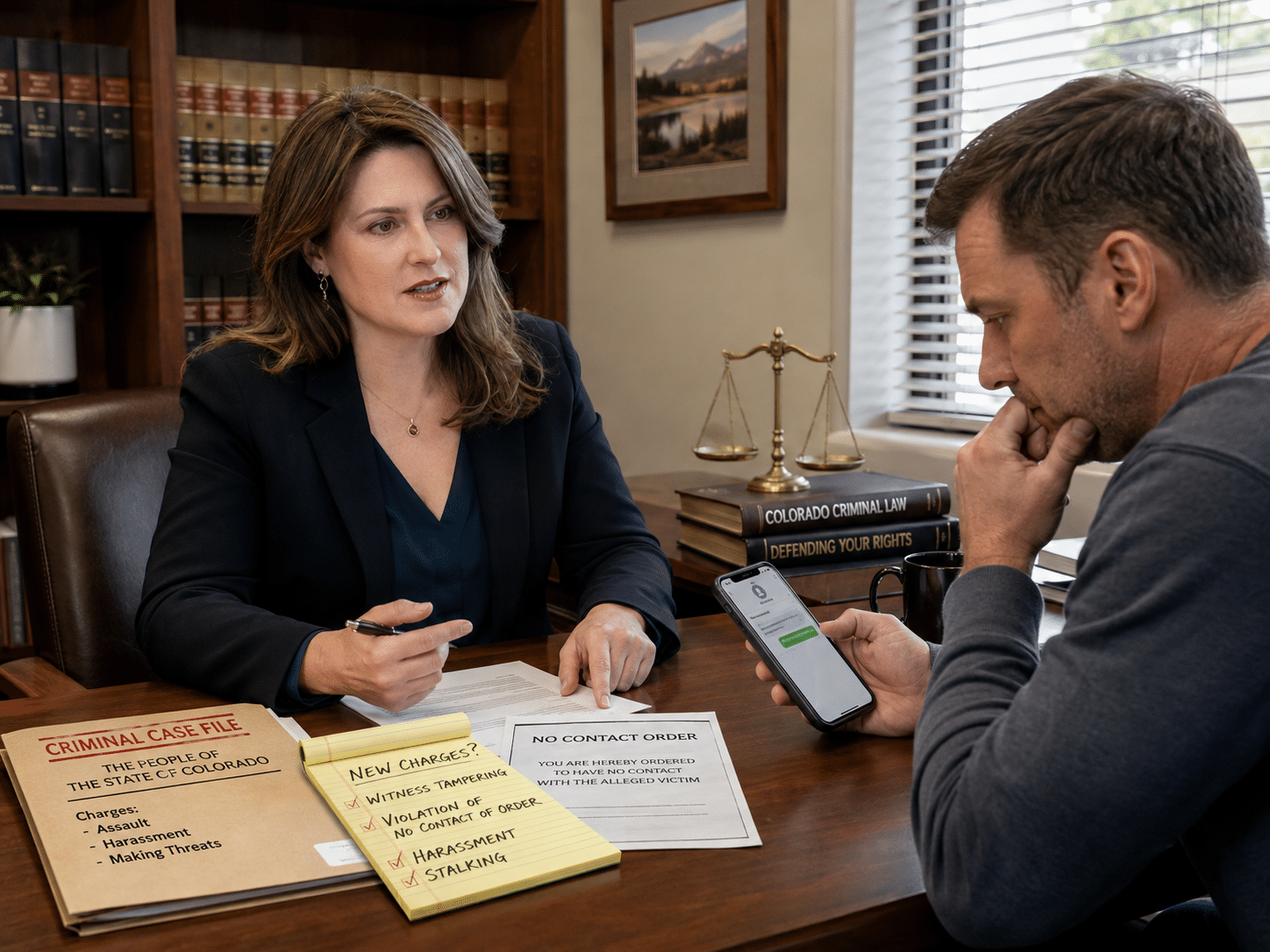
If you are charged with a crime in Boulder, you might feel desperate to resolve things quickly, especially if the case involves someone close to you. It can feel natural to reach out, apologize, or ask the alleged victim to tell the prosecutor they want to drop the case. However, this can be a serious mistake. In Colorado, asking the alleged victim to drop the case can result in new charges if prosecutors think you violated a protection order, pressured a witness, changed testimony, or interfered with the case. We know people often act out of fear, confusion, or concern for their family, not because they want to commit another crime. Still, even a single call, text, or message through someone else can make your case much harder to defend.
The Alleged Victim Does Not Control The Criminal Case
In Colorado, the State brings criminal cases, not the alleged victim. The alleged victim can call the police, give a statement, change their mind, refuse to cooperate, or ask for charges to be dropped. But after charges are filed, only the prosecutor decides whether to continue, reduce, negotiate, or dismiss the case.
This is especially important in domestic violence cases. Colorado law defines domestic violence under C.R.S. § 18-6-800.3 as an act or threat of violence against someone with whom the accused has or had an intimate relationship. It also includes certain crimes against property or animals if used for control, punishment, intimidation, or revenge. Because these cases often involve strong emotions, prosecutors watch for signs of pressure, changes in statements, or contact after an arrest. If you ask the alleged victim to “drop it,” “fix it,” “not show up,” or “tell them it did not happen,” prosecutors may see that as interference.
Witness Or Victim Tampering In Colorado
C.R.S. § 18-8-707 addresses tampering with a witness or victim. A person can be accused of witness or victim tampering if they intentionally try, without bribery or threats, to induce a witness or victim, or someone they believe may be called as a witness or victim, to testify falsely, unlawfully withhold testimony, avoid legal process, or avoid appearing at an official proceeding.
The words you use are important. There is a difference between legal communication through attorneys and direct pressure from the accused. Messages like “please tell them you lied,” “do not go to court,” “ignore the subpoena,” or “tell the DA you want this dropped” can put you at risk. Even less direct language can be risky if it seems like pressure. Prosecutors may argue that emotional appeals, repeated messages, family involvement, or comments about money, housing, children, or immigration were meant to influence the alleged victim.
Intimidation Can Be Even More Serious
Colorado also makes it a crime to intimidate a witness or victim under C.R.S. § 18-8-704. This law applies if someone uses threats, harassment, coercion, or intimidation to affect testimony, cooperation, reporting, or participation in a case. If the contact involves threats, anger, stalking, repeated calls, tracking, property damage, or threats about children, money, housing, or reputation, the situation can become much more serious.
Many people do not realize that prosecutors may see indirect pressure the same as direct pressure. Sending a message through a friend, family member, coworker, or social media can still be seen as trying to influence the alleged victim. The safest approach is clear: if there is a criminal case, bond condition, or protection order, do not contact the alleged victim unless a court order allows it and your attorney says it is okay.
Protection Orders Can Turn Contact Into A New Charge
C.R.S. § 18-1-1001 creates a mandatory protection order in Colorado criminal cases. The order generally remains in effect from the first court advisement until the case is finished unless the court changes it. In cases involving domestic violence, stalking, or unlawful sexual behavior, the court must state the terms of the order before release on bond and require the defendant to acknowledge the order.
Violating a protection order can lead to charges under C.R.S. § 18-6-803.5. If the order says no contact, it usually means no calls, texts, emails, social media messages, letters, gifts, or contact through others. The alleged victim’s consent does not automatically protect you. If the protected person contacts you first, invites you over, asks to talk, or says they want the case dropped, you can still be charged if you respond and violate the order. This may seem unfair, but courts usually hold the restrained person responsible for following the order.
How To Plead The Fifth And Why It Must Be Stated
People often say “plead the Fifth,” but during police questioning, it is better to say you are invoking your Fifth Amendment right to remain silent. The Fifth Amendment protects you from being forced to incriminate yourself. If police want to question you about contact with the alleged victim, a possible protection order violation, witness tampering, domestic violence, drug charges, or any other crime, you should clearly state your rights.
A clear statement may sound like this: “I am invoking my Fifth Amendment right to remain silent. I want an attorney. I will not answer questions without my attorney present.”
You must state your rights clearly because just staying silent can cause confusion. Sometimes, courts let prosecutors use your failure to clearly claim your rights against you. Under Miranda rules, if you are in custody and being questioned, police must tell you that you have the right to remain silent, that anything you say can be used against you, and that you have the right to an attorney. Do not rely on police to protect you. Once you invoke your rights, stop talking. Do not explain, answer more questions, or try to clear things up.
What If I Do Not Invoke The Fifth?
If you do not claim your right to remain silent, you might give police statements they can use against you. You could admit to contact, explain why you reached out, or confirm you knew about the protection order. Saying you only wanted the person to drop the case can be seen as witness tampering. Even statements meant to help can give the State more evidence.
Many people believe that being innocent will protect them if they talk to police, but that is not always true. Police questions are meant to gather evidence. A nervous, emotional, or incomplete answer can end up in a report in a way that hurts your case. If there is any chance of new charges, the safest thing to do is clearly state your rights and contact a defense attorney.
How We Defend These Allegations
We carefully review what was said, who said it, how the message was sent, whether there was a valid protection order, if our client knew about the order, and if the prosecution can prove intent. A witness tampering charge needs more than just a conversation that looks bad. The State must prove the right mental state and actions under Colorado law.
We also look at whether the contact was legal, accidental, misunderstood, started by someone else, or taken out of context. Sometimes, the message does not actually ask anyone to lie, skip court, withhold testimony, or ignore a subpoena. In other cases, the alleged victim may have contacted the accused many times, but that does not always defeat a protection order claim. Every detail matters. Getting legal help early can lower the risk of new charges and help your defense.
FAQs About Asking An Alleged Victim To Drop A Colorado Criminal Case
Can I Ask The Alleged Victim To Drop The Charges In Colorado?
You should not directly ask the alleged victim to drop the charges. The alleged victim does not control the criminal case after the State files charges. Prosecutors decide whether the case moves forward. If you ask the alleged victim to drop the case, change their story, avoid court, ignore a subpoena, or refuse to cooperate, prosecutors may view that as witness or victim tampering under C.R.S. § 18-8-707. If there is a protection order, the contact may also lead to a new charge under C.R.S. § 18-6-803.5. Even a polite message can create risk if it appears designed to influence the case.
What If The Alleged Victim Contacts Me First?
You should be very careful. If a no-contact order exists, the protected person’s decision to contact you first does not automatically allow you to respond. The order usually binds the restrained person, not the protected person. That means you may be charged even if the alleged victim called, texted, came to your home, apologized, or asked to talk. Save the message, do not respond, and contact your attorney. If contact is necessary because of children, property, or emergencies, it should be handled through lawful channels, counsel, or a court-approved method.
Can I Have A Friend Or Family Member Ask Them To Drop The Case?
That can also create risk. Contact through another person may still violate a protection order if the order prohibits indirect contact. It may also support a witness tampering allegation if the message asks the alleged victim to change testimony, avoid court, refuse cooperation, or request dismissal for improper reasons. Prosecutors often look closely at third-party contact because defendants may believe it is safer than direct contact. It is not safe unless the court order allows it and your attorney has approved the communication.
What Happens If I Already Sent The Message?
Do not delete it. Deleting messages can make the situation worse. Do not send follow-up messages trying to explain what you meant. Do not ask the alleged victim to ignore the message. Preserve everything and call an attorney. A defense lawyer can review the message, the protection order, the timing, the context, and whether prosecutors can prove intent. Some messages are damaging. Others are ambiguous, lawful, or not enough to prove a new crime. The earlier we can review the facts, the better chance we have to limit the damage.
Can The Prosecutor Use My Apology Against Me?
Yes. An apology can be used as evidence depending on the words, timing, and context. A message saying “I am sorry for what I did” may be treated as an admission. A message saying “please do not tell them what happened” may be treated as witness tampering. A message saying “I just want to see the kids” may still violate a no-contact order if the order prohibits contact. People often write apologies because they are trying to repair a relationship, not because they are admitting guilt. Still, prosecutors may read the message in the most damaging way. Do not send messages about the case without legal advice.
Call Watkins Law Firm LLC For Help With Protection Order And Witness Tampering Allegations
If you are accused of contacting an alleged victim, violating a protection order, asking someone to drop a case, or interfering with a witness, Watkins Law Firm LLC can help. These allegations can make a pending criminal case much worse and may lead to new charges, stricter bond terms, jail exposure, and deeper problems for your family, job, and future. We defend clients in Boulder and throughout the Denver area against domestic violence charges, drug crimes, protection order violations, and related criminal allegations.
Contact our Boulder criminal defense attorney by calling us 24/7 at 303-507-1324 for your free consultation. Our Boulder drug crime defense lawyer represents clients in Boulder and throughout the Denver area from our office locations in Boulder, Colorado.
