
Can An Anonymous Phone Call Give Police Reasonable Suspicion?
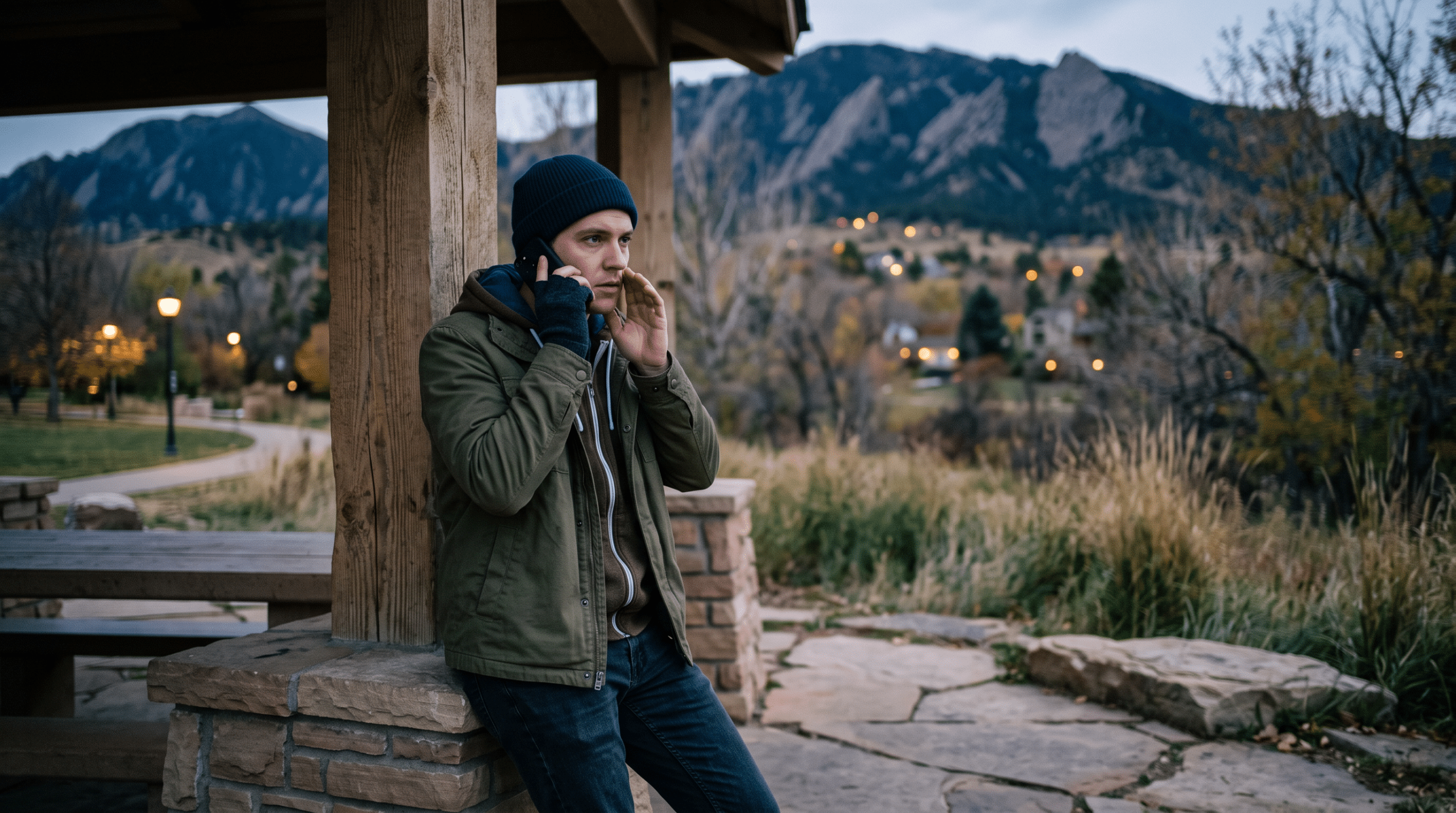
An anonymous phone call can prompt police to make a stop in Boulder, but it does not automatically give them reasonable suspicion. This difference is important. Someone might call in about a suspected drunk driver, drug activity, domestic violence, a weapon, a theft, or another crime, but police still need a legal reason to detain anyone. We often see arrests that start with a call from someone whose identity, motive, accuracy, or knowledge is unknown. In these cases, the defense needs to carefully review what the caller reported, what police confirmed, what officers saw themselves, and whether the stop stayed within legal limits.
Reasonable Suspicion Under Colorado Law
In Colorado, police can temporarily stop someone if they reasonably suspect that person has committed, is committing, or is about to commit a crime. The main law for this is C.R.S. § 16-3-103. The law also says the reason for the stop and how long it lasts must be reasonable based on the situation.
Reasonable suspicion is a lower standard than probable cause, but it is more than just a guess. An officer needs to point to specific facts and logical reasons. A simple hunch is not enough. If a stop is not backed by reasonable suspicion, any evidence found afterward can be challenged in court. This could include drugs, weapons, statements, breath or blood test results, or other evidence collected after the stop.
Anonymous Tips Are Treated Carefully
Anonymous tips can be tricky because the caller is not accountable. If a witness, victim, or informant is named, police can judge their reliability based on past experience or the risk of being held responsible for a false report. But a truly anonymous caller gives no name, no contact information, and no way for police or the defense to check if they are credible.
Colorado courts understand this issue. In People v. Garcia, the Colorado Supreme Court said that an anonymous tip alone is not reliable enough to create reasonable suspicion. This does not mean anonymous calls have no value, but police usually need more. They might need to confirm key details, see suspicious behavior, check predictions, or respond to an urgent safety threat. The main legal question is not just whether someone called 911, but whether all the facts together gave officers a real reason to make the stop.
Corroboration Can Make A Difference
Corroboration often makes the difference. In People v. Polander, the Colorado Supreme Court explained that a stop based partly on outside information can be valid if all the facts together show at least a minimal level of objective suspicion. The court also said that even a truly anonymous tip can support reasonable suspicion if it includes specific predictions that are hard to know and police confirm those details.
Basic details are often not enough. For example, if a caller reports a blue truck parked at a store and police only confirm the truck is there, that just proves the vehicle exists, not that a crime happened. Stronger corroboration might include details about where the vehicle is going, unusual behavior, a specific crime happening, direct observations from the caller, or facts police confirm before making a stop.
Anonymous Calls In DUI, DWAI, And DUID Cases
Anonymous driving reports happen often in Colorado DUI, DWAI, and DUID cases. Someone might call in about weaving, speeding, crossing lanes, almost hitting another car, driving without headlights, or leaving a bar or dispensary. Police may then find the vehicle and make a stop.
Whether the stop was legal depends on the details. Did the caller give a description of the vehicle, license plate, location, direction, and dangerous behavior? Did police see any traffic violation before stopping the car? Was the call made through 911 or another system that can be traced? Was there an urgent safety concern? Did officers act quickly because of a report of dangerous driving, or did they stop the driver based only on a vague claim?
In People v. Dacus, the Colorado Supreme Court looked at a REDDI report, which means Report Every Drunk Driver Immediately. The court considered whether the report was truly anonymous and if officers had reasonable suspicion when they stopped the vehicle. DUI tip cases depend on the facts. A defense attorney should review the call, dispatch notes, body camera and dash camera footage, and officer observations before deciding if the stop was legal.
Anonymous Drug Tips And Criminal Investigations
Anonymous tips also appear in drug cases. A caller may claim that someone is selling drugs, carrying drugs, storing drugs in a car, or using drugs in public. These tips can lead to surveillance, traffic stops, searches, arrests, or search warrants. Police may try to corroborate the information through observation, database checks, controlled buys, informants, trash pulls, phone records, or other investigative steps.
The danger is that innocent conduct can be misread. Visiting a house, sitting in a parked car, meeting another person, carrying a bag, or driving away from a location does not automatically prove drug activity. In a Colorado drug case, we look at whether police had enough specific evidence before the stop or search occurred. If officers acted too soon, or relied on unsupported accusations, the defense may have grounds to challenge the stop.
Motive, Reliability, And Basis Of Knowledge Matter
An anonymous caller may be mistaken, biased, angry, afraid, or intentionally false. The caller may be an ex-partner, neighbor, coworker, customer, rival, or person trying to shift blame. The caller may also be honest but wrong. That is why courts look at reliability and basis of knowledge.
Basis of knowledge means how the caller knew what they claimed. Did the caller personally see criminal conduct? Did they hear it from someone else? Did they guess based on appearance? Did they report specific facts or only conclusions? “He is drunk” is different from “he crossed the center line three times and almost hit a parked car.” “She has drugs” is different from “I saw a clear bag with white powder in her hand.” Specific observations are usually stronger than labels.
Challenging The Stop In Court
If a case began with an anonymous call, we may file a motion to suppress. A suppression motion asks the judge to exclude evidence obtained after an unlawful stop, search, or seizure. If the judge agrees that police lacked reasonable suspicion, important evidence may be kept out of court.
We review the 911 recording, caller information, dispatch log, CAD report, officer reports, body camera video, dash camera video, traffic camera footage, and police testimony. We compare what the caller actually said with what dispatch relayed and what the officer wrote. Errors can happen at each step. A vague call may become stronger in a report than it was in real time. We look for those gaps.
How We Defend Cases Based On Anonymous Calls
At Watkins Law Firm LLC, we do not assume a police stop was lawful simply because someone called. We test the facts. We ask whether the call was truly anonymous, whether police knew anything about the caller, whether the caller gave specific facts, whether officers confirmed criminal activity, and whether the detention stayed within lawful limits.
These issues can matter in DUI, drug crime, domestic violence, theft, assault, weapons, and federal cases. If the stop falls apart, the case may change significantly. Our goal is to protect your rights, challenge unlawful police conduct, and reduce the harm caused by unsupported accusations.
FAQs About Anonymous Calls And Reasonable Suspicion In Colorado
Can Police Stop Me In Colorado Based Only On An Anonymous Phone Call?
Sometimes, but not always. An anonymous call by itself may not be enough if it gives only a vague accusation with no reliable details. Colorado courts look at the totality of the circumstances. Police may need to corroborate key facts before making a stop. Details such as a vehicle description, location, direction of travel, specific observed conduct, and immediate danger may make the call stronger. If police stop someone based only on an unsupported claim, the defense may challenge the stop through a motion to suppress.
What Is Reasonable Suspicion In Colorado?
Reasonable suspicion is a legal standard that allows a temporary detention when an officer can point to specific facts suggesting that a person has committed, is committing, or is about to commit a crime. Under C.R.S. § 16-3-103, the stop must have a reasonable basis, a reasonable purpose, and a reasonable scope. It is not enough for police to act on curiosity or a general feeling that something is wrong. The officer must be able to explain why the facts supported the stop at the time it happened.
Does A 911 Call Give Police More Authority?
A 911 call may carry more weight than a completely untraceable report because emergency calls can sometimes be recorded, traced, or connected to a caller. Still, a 911 call does not automatically justify every stop. The content of the call matters. Police and courts may look at whether the caller described an emergency, whether the caller claimed firsthand knowledge, whether the caller gave specific details, and whether officers confirmed enough information before detaining someone. A defense attorney should review the actual recording rather than rely only on the police report.
Can An Anonymous DUI Tip Justify A Traffic Stop?
An anonymous DUI tip may justify a traffic stop if it contains reliable details and suggests an immediate public safety risk, especially if police corroborate important facts. For example, a detailed report of dangerous driving with location, direction, vehicle description, and specific driving behavior may be treated differently from a vague claim that “someone is drunk.” In Colorado DUI, DWAI, and DUID cases, we review whether the officer saw a traffic violation or whether the stop rested entirely on the caller’s report.
What Happens If Police Did Not Have Reasonable Suspicion?
If police lacked reasonable suspicion, the defense may ask the court to suppress evidence obtained after the unlawful stop. This can be critical. In a DUI case, that may include officer observations, roadside testing, breath or blood results, and statements. In a drug case, it may include drugs found during a search, alleged admissions, or other evidence. Suppression does not automatically dismiss every case, but it can seriously weaken the prosecution’s ability to move forward.
How Can A Defense Lawyer Challenge An Anonymous Tip?
A defense lawyer can challenge an anonymous tip by obtaining the 911 call, dispatch records, officer reports, body camera footage, dash camera footage, and related evidence. We look at what the caller actually said, whether the caller gave firsthand observations, whether the call was truly anonymous, whether police corroborated criminal conduct, and whether the stop exceeded what the law allowed. We also examine whether the police report made the tip sound stronger than it really was. These details can decide whether the evidence stays in or gets excluded.
Call Watkins Law Firm LLC For Help With A Colorado Criminal Case
If your case began with an anonymous phone call, traffic report, neighbor complaint, 911 call, or unverified accusation, Watkins Law Firm LLC can help. We defend clients in Boulder and throughout the Denver area in DUI, DWAI, DUID, drug crimes, domestic violence, assault, theft, and other Colorado criminal cases. We know how to challenge unlawful stops, weak tips, unreliable accusations, and evidence gathered after questionable police conduct.
Contact our Boulder criminal defense attorney by calling us 24/7 at 303-507-1324 for your free consultation. Our Boulder criminal defense lawyer represents clients in Boulder and throughout the Denver area from our office location in Boulder, Colorado.
