
5 Words To Say When Police Want To Search Your Vehicle
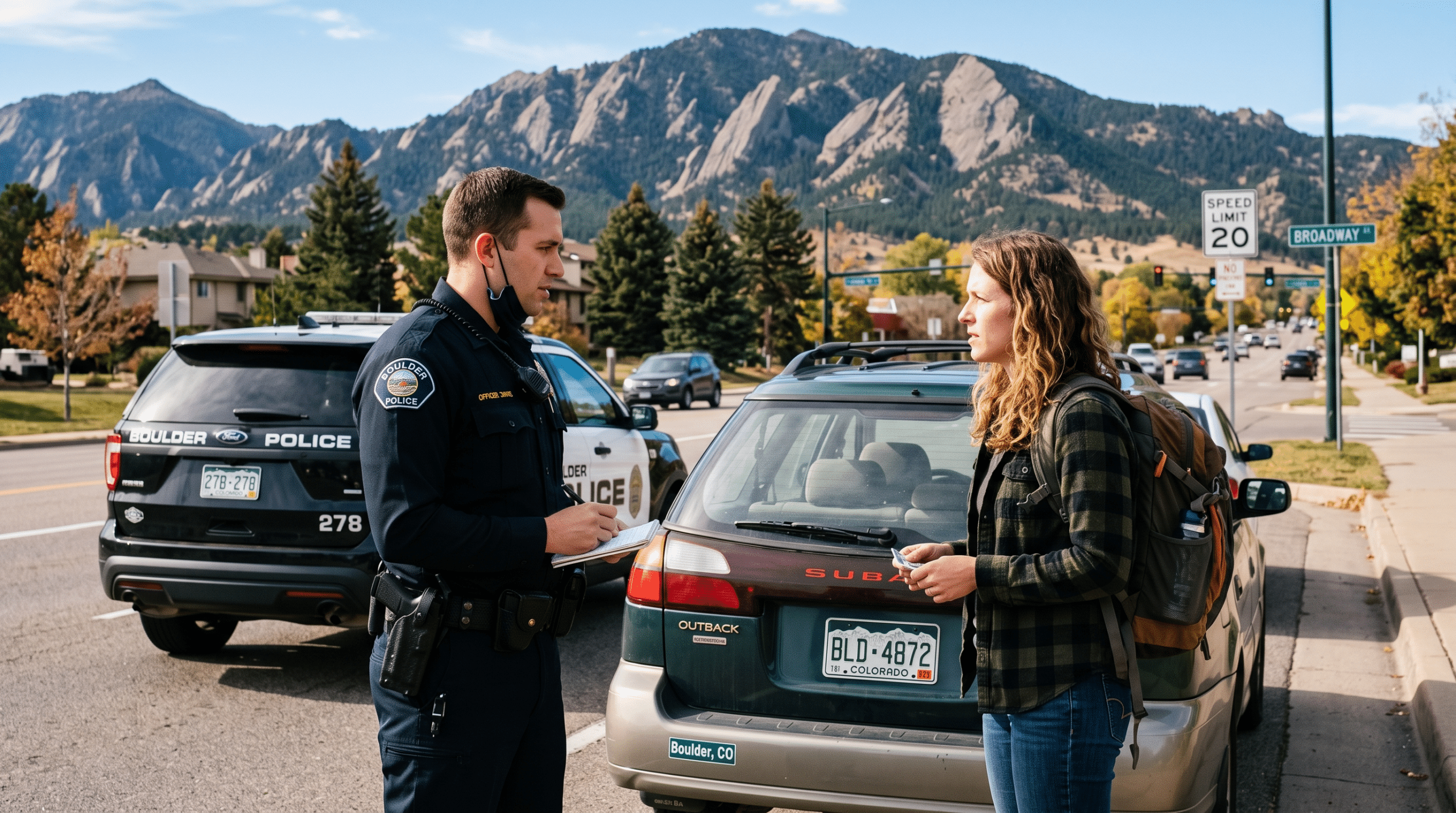
A traffic stop can quickly become serious if an officer asks to search your vehicle. Many people freeze, try to explain, or agree because they worry that saying no will make them look guilty. This is when it is important to be clear. The five words to remember are: “I don’t consent to searches.” These words do not guarantee the officer will stop, and they do not prevent police from searching if they have a legal reason, but they can help protect your rights and make your defense stronger. At Watkins Law Firm LLC, we help people in Boulder and the Denver area after vehicle searches lead to drug charges, DUI accusations, weapons charges, theft, and other criminal cases.
Say These Five Words Clearly
If an officer asks, “Can I search your car?” the safest answer is usually: “I don’t consent to searches.” Say this calmly. Do not argue or interfere. Do not try to explain your reasons. You do not have to help police build a case against you.
These five words are important because consent is one of the main ways officers search vehicles without a warrant. If you agree, the prosecution may later say the search was voluntary. If you clearly refuse, your lawyer may have a stronger case that the officer needed another legal reason to search.
Refusing consent is not the same as blocking police. You can protect your rights and still be respectful. Staying calm and saying no may be one of the most important things you do during a stop.
Why Vehicle Searches Are Different From Regular Traffic Stops
During a traffic stop, police may ask for your license, registration, and proof of insurance. They might also ask where you are coming from, where you are going, if there are drugs or weapons in the car, or if they can look inside. Some of these questions are meant to gather evidence, not just deal with the traffic matter.
Colorado law recognizes search-and-seizure protections. Article II, Section 7 of the Colorado Constitution protects people from unreasonable searches and seizures and requires warrants to be supported by probable cause. Colorado search warrant law, including C.R.S. § 16-3-303, also requires a probable cause showing before a warrant may issue. In plain terms, police usually need a lawful reason to search, and they cannot search a vehicle just because they are curious.
Vehicle searches have special rules because cars can move. Courts allow an automobile exception if police have probable cause to think a car has illegal items or evidence of a crime. This does not mean every search is allowed. The officer still needs real facts to support probable cause, not just a guess.
When Police May Search A Vehicle Without Your Consent
Police can sometimes search a vehicle without your consent. A common reason is probable cause. If officers say they saw illegal items, smelled drugs, noticed drug packaging, got reliable tips, or found facts linking the car to a crime, they may use the automobile exception.
Police may also do limited safety searches if they have a legal reason to think a weapon is present and easy to reach. If your car is lawfully impounded, it may be inventoried, but these searches must follow rules and cannot be used as an excuse to look for evidence. If police have a valid search warrant, they can search the areas listed in the warrant.
The main idea is simple: you do not have to give consent just because police might search anyway. If they have a legal reason, they can use it. If not, your refusal could help you later.
How To Invoke The Fifth Amendment During A Traffic Stop
The Fifth Amendment protects you from having to say things that could get you in trouble. In practice, you should not answer questions that might help police build a case against you. If police ask to search your car, you can say: “I don’t consent to searches.” If they ask about drugs, alcohol, weapons, passengers, ownership, where you have been, or what is in the car, you should clearly use your rights.
A helpful statement is: “I am invoking my right to remain silent, and I want an attorney.” This is longer than five words, but it is important. Courts often check if someone clearly asked for silence or a lawyer. Unclear statements can cause problems. Saying “maybe I should talk to a lawyer” may not protect you as well as a clear statement.
You do not You do not have to be rude or give a long explanation. After you use your rights, stop talking about the details. Do not keep explaining or try to talk your way out of the stop. Many cases get harder to defend because people keep talking after they have already protected themselves.
What Happens If You Do Not Say It?
If you do not clearly say you do not consent, police may say your actions showed consent. For example, if you open the door, step aside, give them the keys, unlock compartments, or say “go ahead,” the prosecution may later argue the search was voluntary. Even acting nervous or cooperating can be used against you.
If you do not clearly use your Fifth Amendment rights, what you say can be used in court. You might admit the car is yours, that you knew what was inside, where you came from, or say things that link you to drugs, weapons, stolen items, or other evidence. Even an innocent explanation can cause trouble if it does not match what others say or what is on camera or in phone records.
You also need to handle silence the right way. The safest choice is to clearly use your rights and then stop answering questions. Do not lie. Lying can cause more problems and hurt your credibility. You have the right to stay silent, but you do not have the right to make false statements.
Vehicle Searches And Colorado Drug Charges
Vehicle searches often lead to drug charges in Colorado. Police may find marijuana, cocaine, meth, fentanyl, prescription pills, drug tools, scales, baggies, cash, or other things they say show possession or selling. Whether you are charged with possession may depend on if the prosecution can prove the drugs were yours or under your control.
This issue is even more important if the car is shared. If there are several people in the car, the prosecution may try to link drugs to the driver or a passenger using statements, where the item was found, fingerprints, text messages, who owns the car, or other facts. If you say too much, you might give police the connection they are looking for.
A vehicle search can also lead to charges of selling or trafficking if police say the amount, packaging, cash, or messages show intent to sell. That is why we carefully review the stop, detention, search, statements, body camera footage, and whether the evidence was collected legally.
How We Challenge Illegal Vehicle Searches
When we defend a case involving a vehicle search, we check every step. We ask why the car was stopped. We look at whether the officer had a good reason or probable cause. We check if the stop lasted too long. We also review if consent was asked for, if it was given freely, and if the search went beyond what was allowed.
We also review whether the officer had probable cause to search the specific areas searched. A lawful basis to search one area may not always justify rummaging through every part of a vehicle. If police searched unlawfully, we may file a motion to suppress. A suppression motion asks the court to exclude evidence obtained through an illegal search or seizure. If the judge suppresses key evidence, the prosecution may have a much weaker case.
Call Watkins Law Firm LLC For A Free Legal Defense Consultation
If police searched your vehicle and found drugs, weapons, cash, stolen property, or other evidence, Watkins Law Firm LLC can help. We defend clients in Boulder and throughout the Denver area against drug crimes, DUI-related charges, criminal traffic offenses, and other Colorado criminal allegations. We review whether police had consent, probable cause, a warrant, or another lawful basis to search.
Contact our Boulder criminal defense attorney by calling us 24/7 at 303-507-1324 for your free consultation. Our Boulder drug crime defense lawyer represents clients in Boulder and throughout the Denver area from our office locations in Boulder, Colorado.
