
What Happens If You Leave the Scene of a DUI Accident in Boulder?
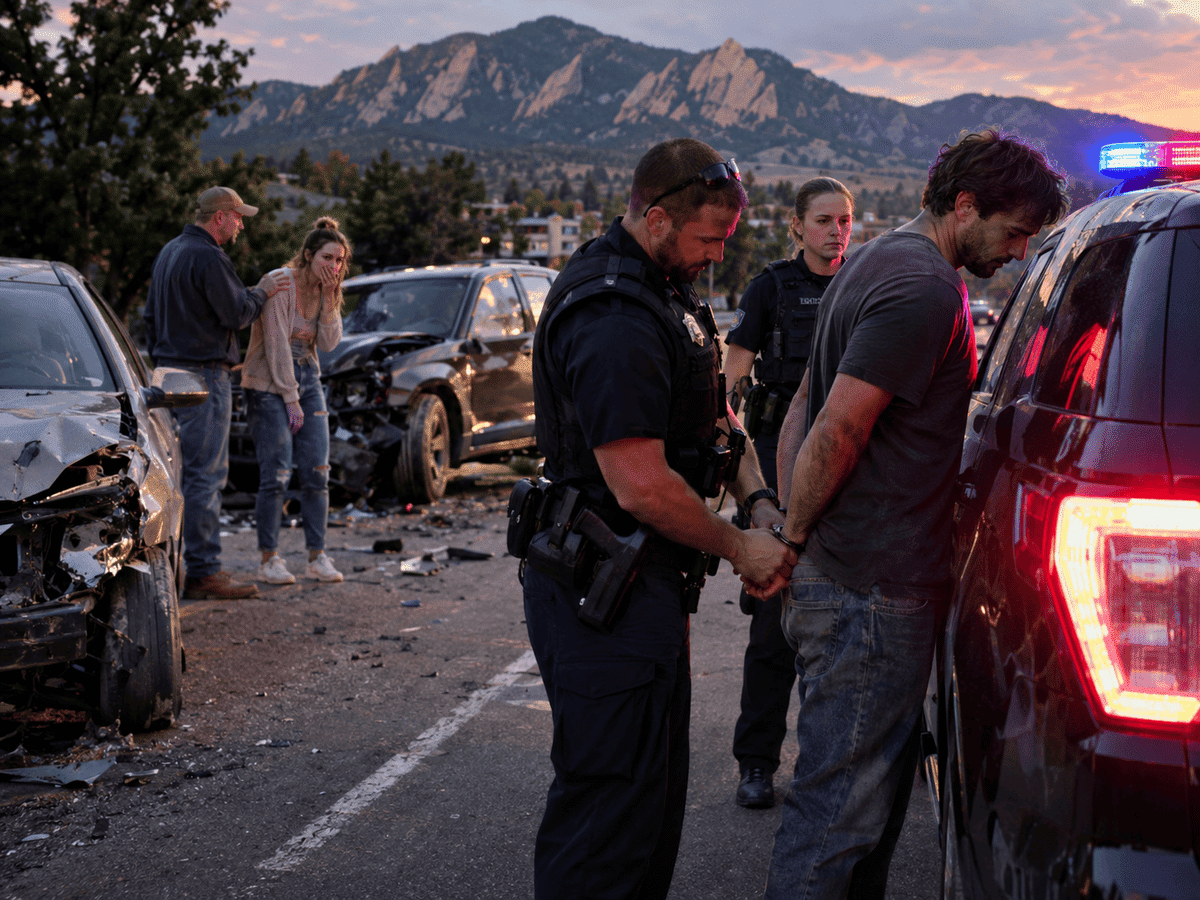
If you leave the scene of a car accident in Boulder, you could face serious criminal charges, especially if police think alcohol or drugs played a role. Colorado law says drivers must stop, exchange information, and help anyone who is hurt if needed. If someone leaves before doing these things, prosecutors may charge them with hit-and-run as well as DUI.
We know that some people leave accident scenes because they are scared, confused, hurt, or worried about being arrested for DUI. Still, leaving can lead to more criminal charges, even if prosecutors cannot prove the driver was intoxicated. At Watkins Law Firm LLC, we help people facing DUI and leaving-the-scene charges in Boulder and the Denver area, and we look closely at the evidence for each alleged offense.
Colorado Laws Requiring Drivers to Remain at Accident Scenes
Under Colorado Revised Statutes § 42-4-1601, drivers directly involved in accidents resulting in injury or death must immediately stop at the scene, stop as close as possible, or immediately return. They must remain until they have fulfilled the applicable legal duties. These requirements apply regardless of whether the driver believes they caused the collision.
Colorado Revised Statutes § 42-4-1603 establishes additional responsibilities. Drivers must provide identifying information, including their name, address, and vehicle registration number, and show their driver’s license upon request. When someone is injured, drivers must provide reasonable assistance when practical, including arranging medical transportation when necessary.
We look at whether our client followed these rules and if anything made it impossible to do so. Sometimes, the law allows drivers to leave after they have met their first duties to report an accident.
Criminal Penalties for Leaving the Scene of an Accident in Colorado
The penalties for leaving an accident scene mostly depend on the injuries caused and how the law classifies the offense.
Under C.R.S. § 42-4-1601, an accident involving an injured person can result in a class 1 misdemeanor traffic offense. When the collision causes serious bodily injury, leaving the scene is a class 4 felony. If the accident results in another person’s death, leaving the scene constitutes a class 3 felony.
A class 4 felony ordinarily carries a presumptive prison sentence of two to six years, while a class 3 felony ordinarily carries four to twelve years under C.R.S. § 18-1.3-401. These ranges may change when special sentencing provisions apply.
We also advise clients that a conviction under C.R.S. § 42-4-1601 requires driver’s license revocation. The consequences can therefore extend beyond incarceration or fines, affecting employment, transportation, and family responsibilities.
DUI Charges Following a Hit-and-Run Accident in Boulder
Under C.R.S. § 42-4-1301, Colorado prohibits operating a vehicle while under the influence of alcohol, drugs, or a combination of substances. A blood alcohol concentration of 0.08 or higher at the time of driving or within two hours afterward can support a DUI per se charge, subject to statutory defenses.
We point out that leaving an accident scene does not automatically mean someone was intoxicated. Prosecutors still have to prove DUI separately, even if they think a driver left to avoid alcohol testing.
When officers locate a driver after a collision, they may investigate witness accounts, driving behavior, statements, surveillance recordings, and chemical testing. We examine whether the evidence reliably establishes impairment at the time of driving rather than merely suggesting that alcohol was consumed at some point.
Additional Charges When a DUI Accident Causes Injuries or Death
A serious collision may expose a driver to charges beyond DUI and leaving the scene. Under C.R.S. § 18-3-205, prosecutors may pursue vehicular assault when the required elements are established, including serious bodily injury caused by qualifying intoxicated driving.
Under C.R.S. § 18-3-106, vehicular homicide charges may arise when a death results from driving under the influence and the prosecution establishes the necessary causal relationship.
We look at accident reconstruction, medical records, toxicology reports, and witness statements to see if the facts support each charge. We also check if prosecutors can prove the driver’s actions caused the injuries, instead of just assuming someone is responsible because there was an accident.
Evidence Used to Investigate Boulder DUI Hit-and-Run Cases
Police often rely on evidence gathered after the driver has left the accident scene. Things like surveillance cameras, license plate readers, vehicle damage, cellphone data collected legally, and eyewitness accounts can help investigators find out who was driving.
We make sure to separate evidence that shows who owns the vehicle from evidence that shows who was actually driving. Just because a car is registered to someone does not mean that person was driving during the accident.
We also investigate the reliability of chemical testing performed hours afterward. Alcohol absorption, elimination rates, testing procedures, and the timing of any drinking may affect the prosecution’s ability to establish impairment at the relevant time.
Legal Defenses Against DUI and Leaving-the-Scene Charges
We evaluate each alleged offense separately because the prosecution must establish the required elements of every charge. Depending on the evidence, defenses may involve mistaken driver identification, lack of awareness that a collision occurred, medical emergencies, or disputed evidence of intoxication.
We also examine whether the driver fulfilled the statutory obligations before leaving and whether any exception applies. Police reports sometimes omit facts that become important after reviewing recordings and interviewing witnesses.
Under the Fourth Amendment and Article II, Section 7 of the Colorado Constitution, we may challenge evidence obtained through unconstitutional searches or seizures. Our defense strategy depends on the actual facts, the governing law, and the strength of the prosecution’s evidence.
Protecting Your Rights After Leaving a DUI Accident Scene
We encourage anyone under investigation to obtain legal representation before making detailed statements to investigators. Statements about drinking, driving, the collision, or the reason for leaving may become significant evidence.
We also recommend preserving relevant information, including photographs, communications, vehicle records, and potential witness contact details. Evidence should never be altered or destroyed.
Early legal representation allows us to investigate the allegations, address potential arrest or court proceedings, and evaluate the available defense options before important evidence disappears.
Frequently Asked Questions About Leaving the Scene of a DUI Accident in Boulder
Can I Be Charged With DUI if Police Find Me Hours After an Accident?
Yes. We explain that police can investigate and prosecutors can file DUI charges even when officers did not observe the driver at the accident scene. However, the passage of time may create important evidentiary questions. Prosecutors must establish that the accused was driving and that the legal requirements for DUI or DUI per se were satisfied. We examine the timing of chemical tests, witness observations, and any evidence of alcohol consumption after driving. A delayed investigation does not automatically defeat a DUI prosecution, but it may provide grounds to challenge the allegations.
What Happens if I Leave a Boulder Accident Without Knowing Someone Was Injured?
We examine whether the driver knew a collision occurred and what information was reasonably available at the time. A driver may not immediately recognize that another person suffered an injury, particularly following a minor collision. However, the legal obligation to stop does not depend solely on whether injuries are visible. Under C.R.S. § 42-4-1601, the resulting injuries affect the classification of the offense. We review the circumstances, the driver’s awareness, and the applicable legal requirements before determining whether the evidence supports the charges.
Can I Be Arrested for Hit-and-Run Even if the Accident Was Not My Fault?
Yes. We advise clients that Colorado’s accident-reporting and stopping requirements generally apply regardless of who caused the collision. A driver who was struck by another motorist may still face charges for leaving without fulfilling the required duties. However, fault for the collision and criminal liability for leaving are separate legal questions. We investigate whether our client was directly involved, whether the statutory obligations applied, and whether those obligations were satisfied. Evidence establishing that another driver caused the accident may still be relevant to additional charges or disputed allegations.
Will Leaving a DUI Accident Scene Automatically Result in Felony Charges?
No. The severity of the injuries usually determines whether leaving the scene is a felony under C.R.S. § 42-4-1601. If the accident causes ordinary bodily injury, it is usually a class 1 misdemeanor traffic offense. Serious bodily injury can lead to a class 4 felony, and a fatal accident can lead to a class 3 felony. Property-damage-only accidents are covered by C.R.S. § 42-4-1602 and usually involve misdemeanor traffic charges if the law is broken. We look at medical evidence and the exact legal classification before considering possible penalties.
Can Police Prove DUI Without a Breath or Blood Test?
Yes. We explain that Colorado prosecutors may rely on evidence other than chemical testing to establish impairment. Witness testimony, driving behavior, physical observations, recorded statements, and other admissible evidence may support a DUI allegation. However, the absence of a chemical test can create important questions concerning the prosecution’s ability to establish intoxication. We investigate whether observations were reliable and whether other explanations exist for the driver’s behavior. We also distinguish an impairment-based DUI allegation from a DUI per se charge, which requires proof of the statutory blood alcohol concentration.
Should I Contact Police After Leaving the Scene of a DUI Accident?
We recommend obtaining prompt legal advice while recognizing that Colorado law imposes immediate duties to stop, provide information, assist injured people when practical, and report certain accidents. Delaying compliance can create additional legal problems, and contacting an attorney does not suspend those obligations. We can advise clients about their reporting responsibilities, constitutional protections, and communications with investigators. We also help determine whether circumstances such as an injury or medical emergency affected the driver’s ability to comply. We encourage clients to address these situations promptly rather than ignore an investigation or attempt to conceal evidence.
Boulder DUI Accident Defense Attorneys at Watkins Law Firm LLC
At Watkins Law Firm LLC, we understand that allegations involving DUI and leaving the scene of an accident can place your freedom, driver’s license, and financial security at risk. We defend individuals accused of DUI, hit-and-run offenses, and other criminal charges in Boulder and throughout the Denver area. We investigate the circumstances of the collision, challenge unreliable evidence, and work to protect our clients against unsupported criminal allegations.
When you face multiple charges arising from the same incident, we believe it is important to examine each offense individually. Our goal is to identify weaknesses in the prosecution’s case, pursue appropriate reductions or dismissals, and protect your constitutional rights throughout the criminal proceedings.
If you have been accused of leaving the scene of a DUI accident, we encourage you to speak with our attorneys as soon as possible. Our representation addresses criminal DUI allegations, chemical testing, accident investigations, and related driver’s license consequences.
Contact our Boulder DUI attorney by calling us 24/7 at 303-507-1324 for your free consultation. We can review your circumstances, explain the charges and potential penalties, and discuss the legal options available to protect your future. From our law office in Boulder, Colorado, we represent clients throughout Boulder and the Denver area.
