
Can You Claim Self-Defense After Being Arrested for Assault in Boulder?
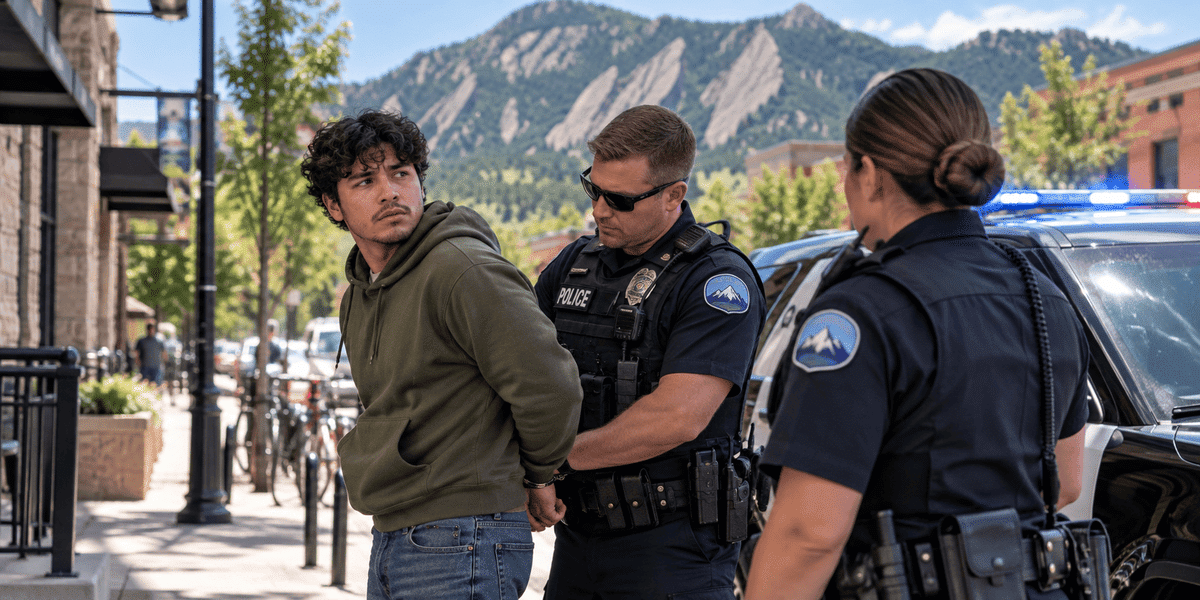
Being arrested for assault in Boulder does not necessarily mean you committed a crime. Colorado law recognizes that people have the right to protect themselves and others from unlawful physical force. However, claiming self-defense involves more than telling police that someone else started the fight. The circumstances surrounding the confrontation, the amount of force used, and whether you reasonably believed you were in danger can determine whether self-defense applies.
Even when you acted to protect yourself, prosecutors may pursue assault charges if they believe your actions were excessive or unjustified. At Watkins Law Firm LLC, we represent individuals accused of assault in Boulder and throughout the Denver area, and we examine the evidence to determine whether Colorado’s self-defense laws provide grounds to challenge the prosecution’s case.
Understanding Your Right to Self-Defense Under Colorado Law
Colorado Revised Statutes § 18-1-704 establishes when a person may use physical force to defend themselves or another person.
Under C.R.S. § 18-1-704(1), you may use physical force against another person when you reasonably believe that force is necessary to protect yourself or someone else from the other person’s use or imminent use of unlawful physical force.
The law only allows you to use as much force as you reasonably think is needed in the situation. So, how much force you use is just as important as why you used it.
For example, if someone punches you during an argument outside a Boulder restaurant, you may be allowed to use reasonable force to stop them. But if you keep hitting them after the threat is over, it could hurt your self-defense case.
We look at what happened before, during, and after the incident to see if your actions are protected by Colorado law.
Self-Defense May Apply to Different Colorado Assault Charges
Colorado recognizes several assault offenses, and the severity of the charge depends on factors such as the injuries involved, the defendant’s mental state, and whether a deadly weapon was used.
Under C.R.S. § 18-3-204, third-degree assault generally involves knowingly or recklessly causing bodily injury to another person. It can also involve criminal negligence resulting in bodily injury through the use of a deadly weapon.
Second-degree assault under C.R.S. § 18-3-203 covers several forms of assault, including certain intentional acts causing bodily injury with a deadly weapon or serious bodily injury.
First-degree assault under C.R.S. § 18-3-202 involves particularly serious conduct, including intentionally causing serious bodily injury through the use of a deadly weapon.
Self-defense may be relevant to charges at different severity levels, but the applicable legal standards depend on the conduct alleged. We examine the specific statutory elements and the circumstances surrounding the use of force before determining which defenses may be available.
The Difference Between Reasonable Force and Excessive Force
A key question in a Colorado self-defense case is whether the force you used was reasonable for the situation.
Colorado law does not require you to wait until you are injured before protecting yourself. Under C.R.S. § 18-1-704, the threatened use of unlawful physical force may justify defensive action when you reasonably believe that action is necessary.
However, the law does not automatically justify every response to a threat.
If someone pushes you during an argument, responding with deadly force would ordinarily be difficult to justify. By comparison, a person facing an imminent attack that threatens death or serious bodily injury may have grounds to use substantially greater defensive force.
We examine the severity of the threat, the actions of everyone involved, and whether the defensive response was proportionate to the danger reasonably perceived.
Colorado Places Additional Restrictions on Deadly Force
Colorado law establishes stricter requirements when a person uses deadly physical force.
Under C.R.S. § 18-1-704(2), deadly force may be justified when a person reasonably believes that a lesser degree of force is inadequate and reasonably believes that one of the statute’s specified circumstances exists.
These circumstances include situations where a person reasonably believes they or another person faces imminent danger of being killed or receiving great bodily injury.
The statute also addresses certain circumstances involving burglary and kidnapping.
A claim involving a firearm, knife, or another potentially deadly weapon requires careful examination. The presence of a weapon does not automatically establish that deadly force was legally justified.
We investigate whether the perceived danger met Colorado’s statutory requirements and whether the prosecution can establish that the defendant’s conduct was unlawful.
Colorado’s Self-Defense Law Does Not Protect Every Confrontation
There are important limitations on claiming self-defense.
Under C.R.S. § 18-1-704(3), self-defense generally is unavailable when someone intentionally provokes another person into using unlawful physical force with the intent to cause bodily injury or death.
The statute also restricts self-defense when someone is the initial aggressor, unless that person withdraws from the encounter and effectively communicates the intent to withdraw, but the other person continues or threatens unlawful physical force.
Additionally, physical force is not justified under this statute when it results from a fight entered into by agreement and not specifically authorized by law.
These restrictions make the events leading up to an assault allegation especially important. We review witness accounts, surveillance recordings, text messages, and other evidence to determine who initiated the confrontation and whether the defendant attempted to disengage.
Colorado Does Not Generally Require You to Retreat Before Defending Yourself
Colorado recognizes that a person who is lawfully present and is not the initial aggressor generally does not have a duty to retreat before using otherwise justified defensive force.
This principle is recognized in Colorado case law, including People v. Toler, 9 P.3d 341 (Colo. 2000).
However, the absence of a duty to retreat does not give someone unlimited authority to use force. The response must still satisfy the applicable self-defense requirements.
For example, choosing not to run away from an unlawful attack does not automatically make defensive conduct unreasonable. Nevertheless, the prosecution may challenge whether the threat justified the particular level of force used.
We examine the complete encounter rather than focusing on whether someone could have escaped.
Evidence That Can Support a Boulder Assault Self-Defense Claim
Self-defense cases frequently depend on evidence that contradicts the initial police report.
Surveillance footage from nearby businesses, photographs of injuries, medical records, witness statements, and communications exchanged before the incident may help establish what actually happened.
We also review body-camera recordings, emergency calls, and statements made by everyone involved. These materials may reveal inconsistencies in the accusations or establish that the person arrested was responding to an immediate threat.
Physical evidence can be particularly important when both parties suffered injuries.
A person accused of assault may have defensive injuries that support an account of being attacked first. However, injuries alone do not establish who initiated the confrontation, making the surrounding evidence essential.
The Prosecution’s Burden When Self-Defense Is Raised
When the evidence sufficiently raises self-defense as an affirmative defense under Colorado law, the prosecution generally must disprove that defense beyond a reasonable doubt.
C.R.S. § 18-1-407 addresses affirmative defenses and the prosecution’s burden when such defenses are properly presented.
This distinction is important because defendants generally do not have to prove their innocence.
Instead, when self-defense is properly submitted as an affirmative defense, the prosecution must establish that the defendant was not legally justified in using force.
The precise treatment of self-defense can depend on the charged offense and the defendant’s alleged mental state. We evaluate the appropriate jury instructions and whether the evidence supports presenting self-defense to the court.
Protecting Your Rights After an Assault Arrest in Boulder
An assault arrest can lead to criminal prosecution, restrictive bond conditions, and significant consequences for your employment and personal life.
Colorado courts may impose conditions prohibiting contact with the alleged victim. If the allegations involve domestic violence, mandatory protection-order provisions under C.R.S. § 18-1-1001 and related requirements may apply.
Even when you believe the allegations are false, violating a court order can create additional legal problems.
We recommend addressing the charges promptly, preserving relevant evidence, and avoiding discussions about the incident with potential witnesses or the accusing party without legal guidance.
An early investigation may identify evidence that becomes unavailable as time passes.
Frequently Asked Questions About Self-Defense and Assault Charges in Boulder
Can I Claim Self-Defense if I Was Arrested but the Other Person Was Not?
Yes. The fact that police arrested only one participant does not prevent that person from asserting self-defense.
Officers frequently make arrest decisions based on the information available when they arrive. They may not have reviewed surveillance recordings, spoken with every witness, or obtained complete medical documentation.
We independently examine the incident to determine whether important evidence was overlooked.
If the evidence shows that you reasonably acted to protect yourself from unlawful force, we can present that information to prosecutors and pursue the appropriate defense.
Can I Use Self-Defense if Someone Threatened Me but Never Actually Hit Me?
Potentially. Colorado law recognizes that defensive force may be justified against the imminent use of unlawful physical force.
You do not necessarily have to wait until someone physically strikes you before responding.
However, a vague threat about something that might happen in the future generally does not establish the immediate danger required to justify physical force.
We examine the person’s words, physical movements, proximity, apparent ability to carry out the threat, and other circumstances that influenced your reasonable perception of danger.
The distinction between an immediate threat and a future possibility can be decisive.
Can I Claim Self-Defense if I Used a Weapon During the Confrontation?
Possibly. The answer depends on how the weapon was used, the level of force involved, and the circumstances of the threat.
Colorado imposes additional requirements on deadly physical force under C.R.S. § 18-1-704(2).
If the conduct constitutes deadly force, you generally must reasonably believe that lesser force would be inadequate and that one of the statute’s specified circumstances exists.
We examine whether the alleged conduct involved deadly force, whether the threat was sufficiently serious, and whether the response satisfied Colorado law.
Simply possessing a weapon does not automatically eliminate a self-defense claim.
Speak With a Boulder Criminal Defense Lawyer About Your Self-Defense Claim
If you were arrested for assault after defending yourself or someone else, Watkins Law Firm LLC can evaluate the circumstances surrounding your arrest and determine whether Colorado’s self-defense laws may apply.
We represent clients accused of first-degree assault, second-degree assault, third-degree assault, and other violent offenses. We investigate the prosecution’s allegations, examine available evidence, and identify defenses supported by Colorado law.
Our attorneys understand that an assault accusation does not always reflect what actually happened. We work to protect your rights, challenge unsupported allegations, and pursue the most favorable outcome available under the circumstances.
If you have been arrested for assault in Boulder, do not assume that you have lost your right to claim self-defense simply because police decided to arrest you.
Contact our Boulder assault defense attorney by calling us 24/7 at 303-507-1324 for your free consultation. From our office in Boulder, Colorado, we represent clients throughout Boulder County and the greater Denver area. We can review your assault charges, explain how Colorado’s self-defense laws may affect your case, and discuss the legal options available to protect your future.
