
What Happens If Police Find Chemicals They Believe Are Used to Manufacture Methamphetamine in Boulder?
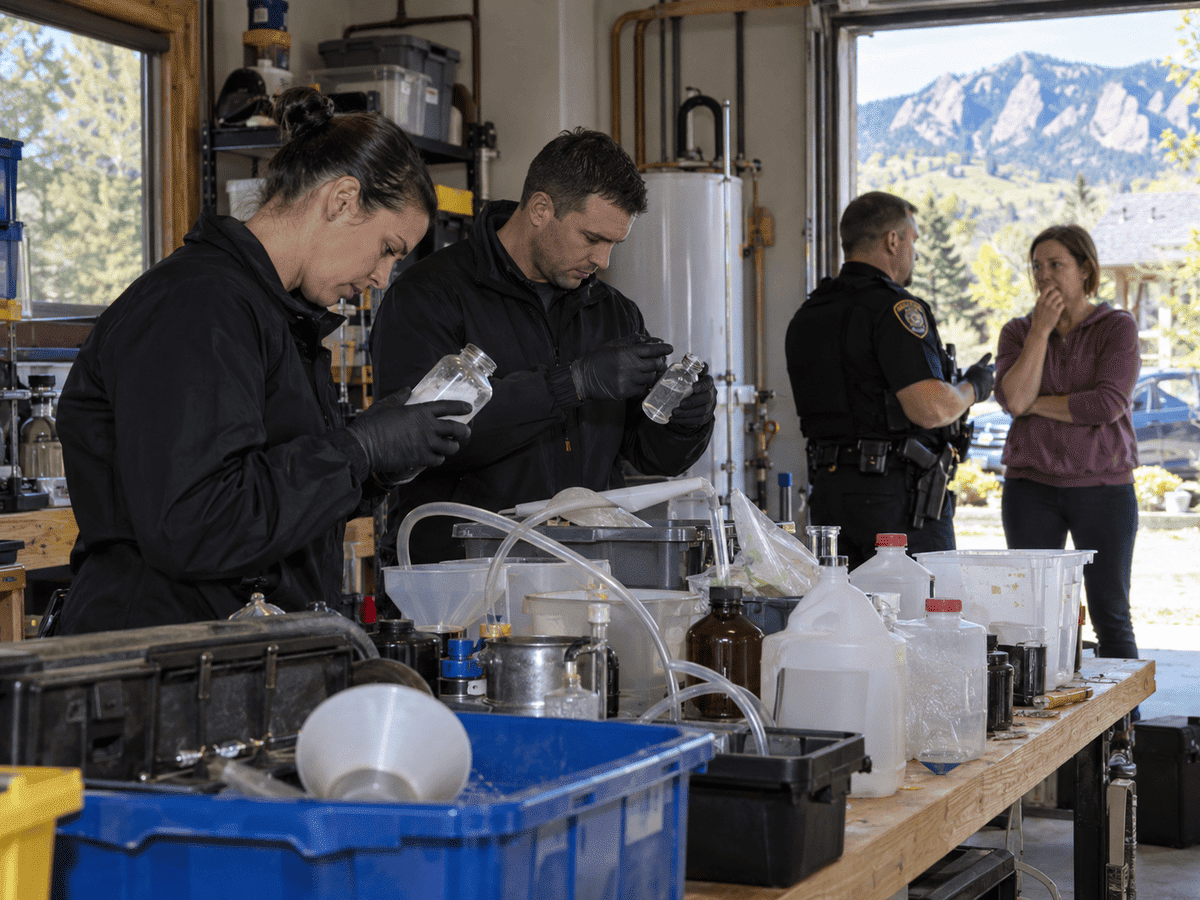
Finding chemicals, laboratory equipment, or suspicious materials inside a home, garage, vehicle, or storage unit can lead Boulder police to investigate possible methamphetamine manufacturing. However, possessing chemicals that could be used to manufacture methamphetamine does not automatically mean someone has committed a crime. Many substances and pieces of equipment associated with illegal drug production also have legitimate household, agricultural, automotive, or commercial uses.
Under Colorado law, prosecutors must establish the elements of a criminal offense rather than simply rely on an officer’s suspicions. At Watkins Law Firm LLC, we defend individuals facing serious drug allegations in Boulder and throughout the Denver metropolitan area, including cases involving alleged methamphetamine production, possession of manufacturing materials, and intent to manufacture controlled substances.
Colorado Laws Addressing Methamphetamine Manufacturing
Colorado Revised Statutes § 18-18-405 prohibits several activities involving controlled substances, including knowingly manufacturing or possessing with intent to manufacture them. Methamphetamine is classified as a Schedule II controlled substance under C.R.S. § 18-18-204.
When police discover chemicals they associate with methamphetamine production, investigators may consider whether the evidence supports a charge under § 18-18-405. However, we examine whether prosecutors can establish that our client knowingly engaged in prohibited manufacturing activity or possessed a controlled substance with the required criminal intent.
Colorado law also addresses certain chemicals and equipment associated with illegal drug production. Under C.R.S. § 18-18-412.5, possession of equipment, supplies, or chemicals with the intent to manufacture a controlled substance can constitute a separate criminal offense.
The distinction matters because prosecutors may pursue charges involving manufacturing materials even when investigators have not discovered a finished quantity of methamphetamine.
Possession of Chemicals Does Not Automatically Establish Criminal Intent
One of the most important issues in these cases is whether the prosecution can prove criminal intent.
Common chemicals may have legitimate uses in cleaning, maintenance, manufacturing, and other activities. The presence of a particular substance does not necessarily establish that someone intended to produce methamphetamine.
Under C.R.S. § 18-18-412.5, prosecutors must establish the applicable statutory elements, including the required intent to manufacture a controlled substance. We examine the circumstances surrounding the discovery, the purpose of the materials, and whether the evidence actually connects our client to illegal activity.
For example, investigators might discover chemicals and laboratory equipment in a garage shared by several people. We would examine who purchased the materials, who controlled the area, whether the items had legitimate uses, and whether our client knew about their presence.
Simply being near suspicious materials is not the same as knowingly possessing them for an unlawful purpose.
Criminal Charges and Potential Penalties
The potential penalties depend on the specific charges, the substances involved, the defendant’s conduct, and the applicable Colorado sentencing provisions.
Under C.R.S. § 18-18-405, unlawful manufacturing offenses can carry serious felony consequences. The classification may depend on the controlled substance, its quantity, and other circumstances established by the prosecution.
Colorado’s drug felony sentencing provisions appear in C.R.S. § 18-1.3-401.5. Depending on the offense level and applicable sentencing rules, a conviction can result in incarceration, fines, supervised release, and other court-ordered conditions.
A separate conviction under C.R.S. § 18-18-412.5 may also result in criminal penalties. We evaluate the precise statutory subsection and offense classification rather than assuming every chemical-possession allegation carries the same punishment.
Additional allegations may arise when investigators believe children were exposed to hazardous drug-manufacturing conditions. Colorado’s child abuse statute, C.R.S. § 18-6-401, may become relevant when the prosecution alleges conduct that endangered a child’s health or safety.
We also explain the potential consequences of a conviction for employment, professional licensing, housing, and future criminal proceedings.
Police Searches of Homes, Garages, and Storage Units
Many methamphetamine manufacturing investigations begin with searches of private property.
The Fourth Amendment to the United States Constitution and Article II, Section 7 of the Colorado Constitution protect individuals against unreasonable searches and seizures.
Police generally need a valid warrant to search a home unless a recognized exception applies. Officers may sometimes enter without a warrant when circumstances establish an immediate emergency, such as a genuine threat involving fire, explosion, or serious injury.
However, a claim that chemicals were dangerous does not automatically justify every search.
We examine whether officers had lawful grounds to enter the property, whether a warrant was properly issued, and whether investigators exceeded the authorized scope of the search.
When evidence is obtained through an unconstitutional search, we may seek suppression under applicable law. Excluding critical evidence can substantially affect the prosecution’s ability to proceed.
Establishing Who Actually Possessed the Materials
Ownership of a residence or vehicle does not automatically establish possession of everything discovered inside it.
Colorado recognizes that possession may be actual or constructive. Constructive possession generally requires proof of the defendant’s knowledge of the item and the ability and intent to exercise control over it.
We examine whether the alleged manufacturing materials were found in a common area, a locked container, another person’s room, or a location accessible to multiple individuals.
Evidence of ownership, access, communications, fingerprints, and other circumstances may become relevant.
When several people share a property, we challenge attempts to attribute suspicious materials to our client without sufficient evidence of knowing possession and criminal intent.
Laboratory Testing and the Reliability of Chemical Evidence
Police officers may initially identify suspicious substances based on their appearance, packaging, or proximity to other materials.
However, an officer’s preliminary identification does not necessarily establish the chemical composition of a substance or its intended use.
We review laboratory reports, collection procedures, evidence handling, and the chain of custody. We also examine whether investigators properly distinguished ordinary chemicals from materials associated with unlawful manufacturing.
If prosecutors claim that manufacturing was underway, we evaluate the evidence supporting that allegation. The presence of equipment alone may not establish that someone was producing methamphetamine.
We may also challenge unsupported conclusions about the purpose of materials discovered at the scene.
Statements Made During a Methamphetamine Investigation
Statements to police can become important evidence in cases involving suspected drug manufacturing.
Under the Fifth Amendment, individuals have constitutional protections against compelled self-incrimination. When officers conduct custodial interrogation, Miranda requirements may apply.
We review whether our client was in custody, whether questioning constituted interrogation, and whether officers provided required warnings.
Statements made without proper constitutional protections may be subject to suppression. However, Miranda warnings are not required for every conversation with law enforcement.
We encourage anyone under investigation to obtain legal advice before discussing suspected manufacturing activity with investigators.
Building a Defense Against Methamphetamine Manufacturing Allegations
A successful defense begins with examining what the prosecution can actually prove.
At Watkins Law Firm LLC, we evaluate whether the materials had legitimate purposes, whether our client knowingly possessed them, and whether investigators obtained evidence lawfully.
We also review the distinction between preparing to manufacture drugs, possessing materials with criminal intent, and actually manufacturing a controlled substance.
Depending on the facts, we may challenge the charges, seek suppression of evidence, negotiate a resolution, or prepare the case for trial.
Our goal is to protect our client’s constitutional rights while pursuing the most favorable outcome supported by the evidence and Colorado law.
Frequently Asked Questions About Methamphetamine Manufacturing Charges in Boulder
Can I Be Arrested in Boulder for Having Chemicals That Could Be Used to Make Methamphetamine?
Yes. Police may make an arrest when they have probable cause to believe a criminal offense occurred. However, possessing ordinary chemicals that have both legitimate and illegal applications does not automatically establish a violation of Colorado law.
Under C.R.S. § 18-18-412.5, the prosecution must establish the required elements of an offense involving equipment, supplies, or chemicals intended for manufacturing controlled substances. We examine whether investigators have evidence of unlawful intent or are relying primarily on the presence of materials that could have legitimate uses.
An arrest is not a conviction. Prosecutors must ultimately prove the charged offense beyond a reasonable doubt.
Can Police Charge Me With Manufacturing Methamphetamine If They Never Found Any Meth?
Potentially, yes. The absence of finished methamphetamine does not automatically prevent criminal charges involving manufacturing activity or possession of manufacturing materials.
Colorado law distinguishes between unlawful manufacturing conduct under C.R.S. § 18-18-405 and offenses involving manufacturing equipment, supplies, or chemicals under C.R.S. § 18-18-412.5.
We examine whether the evidence establishes actual manufacturing activity, a separate offense involving manufacturing materials, or neither. Prosecutors cannot simply assume that every collection of chemicals represents an illegal drug operation.
The particular conduct alleged determines which statutory provisions may apply.
What Happens If Police Find Suspected Methamphetamine Chemicals in a Shared Garage?
A shared garage can create important questions about ownership, knowledge, access, and control.
If several individuals use the same property, prosecutors generally cannot establish knowing possession merely by showing that our client was present or had access to the area. We examine whether the materials belonged to someone else, whether our client knew they existed, and whether the evidence supports the required intent.
Colorado’s constructive possession principles are especially important in shared-property investigations. We may review purchase records, communications, storage arrangements, and other evidence to challenge an unsupported allegation.
Each person’s potential criminal responsibility must be evaluated individually.
Can Police Search My Boulder Home Without a Warrant Because They Suspect Methamphetamine Manufacturing?
Police generally need a valid search warrant to enter and search a home unless an established exception to the warrant requirement applies.
An immediate threat involving hazardous chemicals, fire, or an explosion may create exigent circumstances permitting limited emergency action. However, officers must have an objectively reasonable basis for invoking that exception, and the scope of their conduct must remain legally justified.
We review the information officers possessed before entering, the circumstances surrounding the search, and whether they exceeded any lawful authority.
If constitutional violations occurred, we may file a motion seeking suppression of unlawfully obtained evidence.
Boulder Criminal Defense Attorney for Methamphetamine Manufacturing and Chemical Possession Charges
At Watkins Law Firm LLC, we understand how serious allegations involving methamphetamine manufacturing can affect your freedom, reputation, and future. Police may interpret the discovery of chemicals or laboratory equipment as evidence of criminal activity, but prosecutors must still establish the required elements of an offense under Colorado law.
We represent individuals facing drug manufacturing investigations, possession of manufacturing materials allegations, and other serious controlled substance charges. Our defense work includes examining search warrants, challenging questionable evidence, evaluating criminal intent, and protecting our clients’ constitutional rights.
If Boulder police have discovered chemicals they believe were intended for methamphetamine manufacturing, obtaining legal representation early can make a meaningful difference in how your case proceeds.
At Watkins Law Firm LLC, we review the allegations, explain the charges and potential penalties, and discuss available defense strategies under Colorado law. Whether you are under investigation or have already been arrested, we are prepared to evaluate your situation and protect your legal rights. Contact our Boulder drug defense lawyer by calling us 24/7 at 303-507-1324 for your free consultation.
