
Can You Be Charged With Drug Manufacturing If Police Find Chemicals in Your Home?
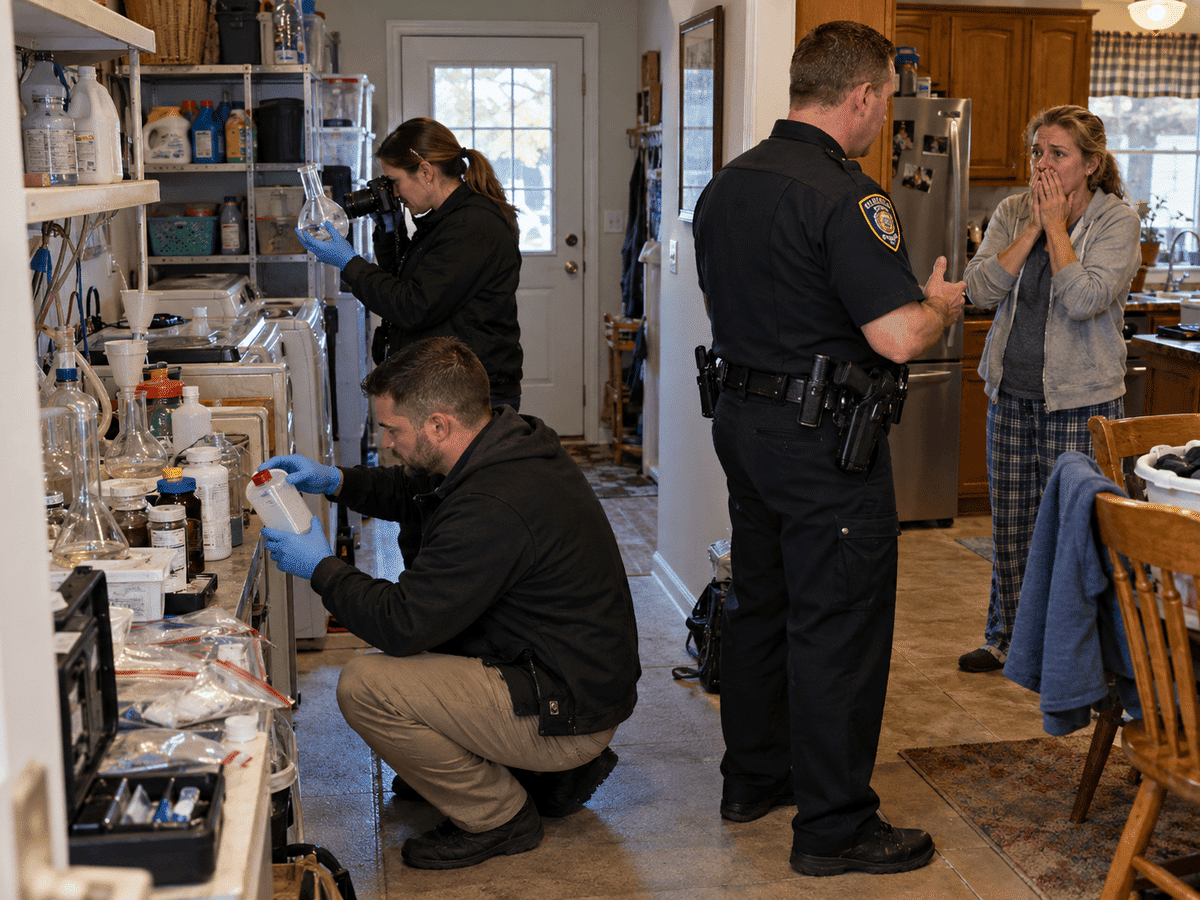
If Colorado police find chemicals, lab equipment, or unusual containers in a home, they may suspect illegal drug manufacturing. But just having these items does not mean someone has committed a crime. Many chemicals used in drug production are also common in cleaning, car repair, construction, and other everyday activities. When police find these materials, they look at how they are stored, whether other equipment is present, and if there is any sign of illegal drug making.
Colorado law requires prosecutors to prove all parts of a criminal offense, not just rely on the presence of suspicious items. At Watkins Law Firm LLC, we help people accused of drug manufacturing in Boulder and the Denver area, and we know how important it is to separate legal possession from criminal activity.
Colorado Laws Addressing Illegal Drug Manufacturing
Colorado Revised Statutes § 18-18-405 makes it unlawful to knowingly manufacture, dispense, sell, or distribute controlled substances, as well as to possess controlled substances with intent to manufacture, dispense, sell, or distribute them.
The statute covers numerous controlled substances, including methamphetamine, cocaine, heroin, and fentanyl. The severity of a manufacturing charge depends on the controlled substance involved, the quantity, and other circumstances surrounding the alleged offense.
Colorado law also addresses possession of certain materials associated with manufacturing controlled substances. Under C.R.S. § 18-18-405(1)(b), knowingly possessing one or more chemicals, supplies, or pieces of equipment with the intent to manufacture a controlled substance can constitute a separate offense.
We look at which law the prosecutors are using, because the evidence needed to show possession of manufacturing materials is different from what is needed to prove someone actually made drugs.
Possessing Chemicals Does Not Automatically Establish Criminal Intent
Many chemicals associated with illegal drug production have legitimate commercial, industrial, or household applications. Solvents, acids, cleaning products, and other materials may be present in a home for entirely lawful reasons.
Colorado prosecutors must establish the required criminal intent when pursuing charges involving chemicals or equipment allegedly intended for drug manufacturing. Under C.R.S. § 18-18-405(1)(b), the prosecution must prove knowing possession of qualifying materials with the intent to manufacture a controlled substance.
For example, someone who repairs vehicles, restores furniture, or performs home improvement work may possess chemicals that police consider suspicious. Those materials alone do not necessarily establish an intention to produce illegal drugs.
We examine the purpose of the chemicals, how they were acquired, and whether the surrounding evidence supports a legitimate explanation. Purchase records, employment information, and evidence of ordinary household use may become important when challenging allegations of criminal intent.
Evidence Police Use to Support Drug Manufacturing Allegations
When police suspect drug manufacturing inside a residence, they generally look beyond individual chemicals. Investigators may examine the surrounding environment for evidence suggesting that illegal production has occurred or was intended.
Potential evidence may include specialized laboratory equipment, chemical residue, suspected controlled substances, manufacturing-related instructions, electronic communications, or statements made by occupants.
Police may also seek forensic testing to identify substances recovered from the property. The presence of equipment or chemicals does not necessarily establish their intended use, and laboratory results must be evaluated in connection with the other evidence.
We carefully review investigative reports, photographs, forensic findings, and witness statements. We also examine whether investigators made assumptions about otherwise lawful materials without sufficient evidence connecting them to illegal manufacturing.
Criminal Liability When Chemicals Are Found in a Shared Home
Drug manufacturing investigations become particularly complicated when several people live at the same address. Police may discover chemicals in a garage, basement, storage room, or other area accessible to multiple occupants.
Colorado law recognizes that possession may be actual or constructive. Constructive possession generally requires proof that the accused knowingly exercised dominion or control over the property or substance, rather than merely being present nearby.
In People v. Atencio, 140 P.3d 73 (Colo. App. 2005), the Colorado Court of Appeals addressed constructive possession principles involving controlled substances. The decision illustrates why evidence of knowledge and control matters in possession cases.
We examine who owned the chemicals, who had access to the area, and whether our client knew the materials were present. Living in a residence where police discover suspicious substances does not automatically establish personal criminal responsibility.
Colorado Drug Manufacturing Charges and Potential Penalties
Drug manufacturing offenses can carry substantial criminal penalties under Colorado law. C.R.S. § 18-18-405 establishes different felony classifications depending on the substance, quantity, and conduct involved.
For example, manufacturing or possessing with intent to manufacture certain Schedule I or II controlled substances may constitute a level 2, level 3, or level 4 drug felony, depending on the statutory circumstances. Particularly serious offenses may qualify as level 1 drug felonies.
Under C.R.S. § 18-1.3-401.5, Colorado drug felonies have sentencing ranges that vary by classification. A level 4 drug felony generally carries a presumptive prison range of six months to one year, while higher-level drug felonies may expose defendants to substantially longer sentences.
The separate offense involving possession of chemicals, supplies, or equipment with intent to manufacture under § 18-18-405(1)(b) is generally classified as a level 3 drug felony.
We review the exact charges and applicable sentencing provisions before explaining a client’s potential exposure. Prior convictions, statutory aggravating circumstances, and eligibility for alternative sentencing may affect the outcome.
Constitutional Protections During Searches of Colorado Homes
The Fourth Amendment to the United States Constitution and Article II, Section 7 of the Colorado Constitution protect individuals against unreasonable searches and seizures.
Police generally need a valid search warrant or a recognized legal exception before searching a private residence. Exceptions may include voluntary consent, certain emergency circumstances, or other situations recognized by constitutional law.
When police find chemicals during a search, we look at how they entered the property, what the warrant covered, and if taking the evidence was legal.
If investigators violated constitutional protections, we may seek suppression of unlawfully obtained evidence under Colorado Rule of Criminal Procedure 41. Successful suppression can significantly affect the prosecution’s ability to proceed.
Defending Against Drug Manufacturing Charges in Boulder
A good defense starts with knowing what the prosecutors can really prove. Just having suspicious chemicals, lab equipment, or unusual storage does not always mean someone was making drugs illegally.
We investigate whether the materials had legitimate uses, whether our client knowingly possessed them, and whether the prosecution can establish the required intent. We also examine forensic evidence, search procedures, and statements obtained during questioning.
Every case is unique. Our job is to find weaknesses in the accusations, protect our client’s rights, and work for the best possible outcome based on the evidence and Colorado law.
Frequently Asked Questions About Drug Manufacturing Charges in Colorado
Can I Be Charged If Someone Else Was Manufacturing Drugs in My Home?
Yes, charges are possible, but living with someone involved in illegal drug manufacturing does not automatically make another resident criminally responsible. Prosecutors must establish the elements of an offense applicable to the particular defendant.
For example, prosecutors might try to show that a homeowner knew about and controlled the materials or took part in the operation. We look at whether our client actually knew about what was happening, had control over the materials, or was involved in any illegal activity. Just living with someone suspected of drug manufacturing is not enough to prove guilt.
Is It Illegal to Own Laboratory Equipment in Colorado?
Owning laboratory equipment is not inherently illegal. Individuals and businesses regularly use laboratory supplies for education, research, manufacturing, automotive work, and other lawful activities.
However, C.R.S. § 18-18-405(1)(b) makes it illegal to knowingly have certain equipment with the intent to make a controlled substance. We look at whether the equipment has legal uses and if prosecutors have proof of illegal intent. Just owning equipment is not the same as having a criminal purpose.
What Happens If Police Find Chemicals but No Finished Drugs?
The absence of finished drugs does not necessarily prevent criminal charges. Colorado law separately prohibits possessing certain chemicals, supplies, or equipment with the intent to manufacture controlled substances under C.R.S. § 18-18-405(1)(b).
However, prosecutors must still prove the required knowledge and intent. We examine whether the evidence demonstrates an actual criminal purpose or whether investigators have relied on speculation. The lack of finished drugs may be relevant to the defense, but it does not automatically require dismissal.
Should I Speak With Police If They Accuse Me of Manufacturing Drugs?
We generally recommend obtaining legal advice before answering investigative questions about suspected drug manufacturing. Statements intended to explain innocent conduct can sometimes be misunderstood or used as evidence.
The Fifth Amendment protects individuals against compelled self-incrimination, and Miranda protections may apply during custodial interrogation. We help clients understand their rights and determine how to respond appropriately to investigative requests. You can clearly state that you wish to remain silent and want an attorney before answering questions.
Speak With Our Boulder Criminal Defense Lawyer About Drug Manufacturing Charges
At Watkins Law Firm LLC, we understand the serious consequences that can follow an accusation of manufacturing controlled substances in Colorado. These cases often involve disputed evidence, questions about criminal intent, complicated forensic findings, and constitutional concerns surrounding residential searches.
We represent individuals facing drug manufacturing, possession of manufacturing materials, drug distribution, and other controlled substance charges. From our office in Boulder, Colorado, we serve clients throughout Boulder and the greater Denver area.
We carefully examine the prosecution’s allegations, investigate the circumstances surrounding the discovery of chemicals or equipment, and develop defense strategies based on the facts and applicable Colorado law.
If police discovered chemicals, laboratory equipment, or suspected drug manufacturing materials in your home, you should understand your legal rights before making statements or decisions that could affect your case.
Contact our Boulder federal drug crime lawyer by calling us 24/7 at 303-507-1324 for your free consultation. We represent clients in Boulder and throughout the Denver metropolitan area from our Boulder, Colorado office. We can review the circumstances surrounding your allegations, explain the charges and potential penalties, and discuss available defense options under Colorado law.
