
Domestic Violence Charges During Divorce Or Custody Disputes In Colorado
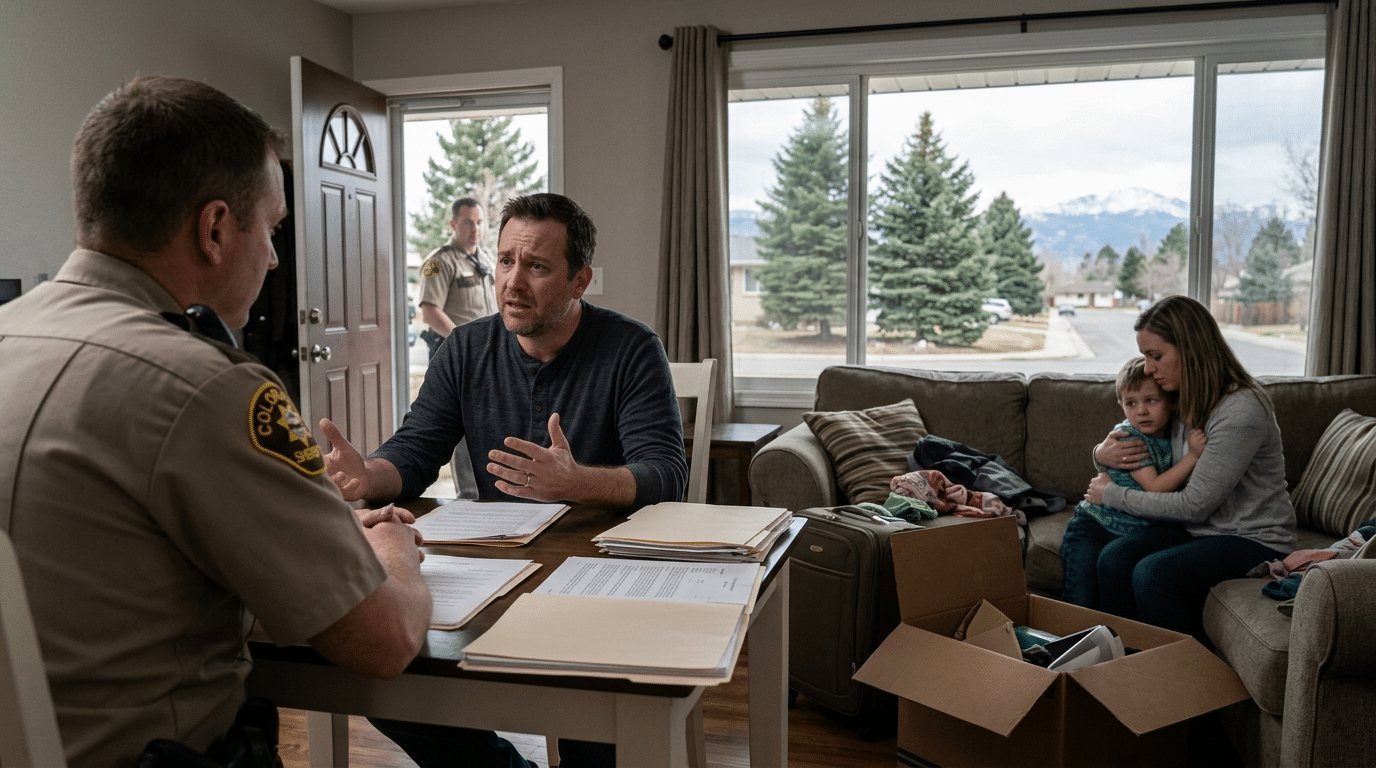
Divorce and child custody disputes can get even more complicated if one spouse or parent is accused of domestic violence. In Colorado, these accusations can result in criminal charges, protection orders, limits on family contact, and serious effects on parenting arrangements. Even if the allegation comes up during a heated divorce or custody fight, law enforcement and prosecutors still have to look at the situation under Colorado law. We know these cases often involve different stories, emotional arguments, and worries about how criminal charges might affect a parent’s relationship with their children. At Watkins Law Firm LLC, we help people facing criminal charges in Boulder and the Denver area, including those dealing with domestic violence accusations during divorce or custody disputes.
How Colorado Law Defines Domestic Violence
Under Colorado Revised Statutes § 18-6-800.3, domestic violence generally involves an act or threatened act of violence against someone with whom the accused has or previously had an intimate relationship. The definition also includes certain crimes against property, animals, or municipal ordinance violations when committed as a method of coercion, control, punishment, intimidation, or revenge against an intimate partner.
Colorado law recognizes intimate relationships involving spouses, former spouses, past or present unmarried couples, and individuals who are both parents of the same child.
Importantly, domestic violence is generally a designation attached to an underlying criminal offense rather than a separate criminal charge. We look at what happened, the relationship between the people involved, and whether the evidence supports both the criminal charge and the domestic violence label.
Why Domestic Violence Allegations Sometimes Arise During Divorce
Divorce proceedings frequently involve disagreements about finances, property division, parenting schedules, and communication between spouses. These disputes can create situations where arguments escalate, or statements and actions are interpreted differently by the people involved.
We sometimes encounter criminal cases involving allegations made during contentious separations, particularly when both parties disagree about what happened during a confrontation.
A spouse might allege that an argument involved physical intimidation, threatening language, unwanted contact, or property damage. Police responding to the incident must determine whether probable cause exists to believe a crime occurred.
Under C.R.S. § 18-6-803.6, Colorado generally requires an arrest when an officer determines that probable cause exists to believe a crime involving domestic violence occurred.
We recognize that some allegations may be exaggerated, misunderstood, or deliberately false. However, we never assume an accusation is unfounded simply because it arises during divorce proceedings. Our responsibility is to evaluate the evidence objectively and identify legally supported defenses.
Mandatory Protection Orders Can Affect Family Contact
One of the most immediate consequences of a domestic violence prosecution is the possibility of a criminal protection order.
Under C.R.S. § 18-1-1001, Colorado courts generally impose mandatory protection orders in criminal cases, including domestic violence prosecutions.
Depending on the circumstances and the order’s specific terms, restrictions may prohibit contact with the alleged victim, require the accused to leave a shared residence, or restrict communication through telephone calls, text messages, and social media.
These restrictions can create substantial difficulties when the accused and the alleged victim share children.
We advise clients to follow every provision of a protection order, even when the other parent initiates contact or requests a meeting.
Violating a protection order can result in additional criminal charges under C.R.S. § 18-6-803.5.
We can request modifications when appropriate, including provisions addressing necessary communication about children. However, only the court can authorize changes to an existing order.
How Domestic Violence Charges Affect Child Custody Decisions
Colorado family courts use the term parental responsibilities when addressing decision-making authority and parenting time.
Under C.R.S. § 14-10-124, courts determine parenting arrangements according to the child’s best interests. The statute requires courts to consider domestic violence and other relevant safety concerns.
When credible evidence establishes domestic violence, the court must apply the statutory requirements governing parenting time and decision-making responsibilities.
A domestic violence allegation does not automatically eliminate a parent’s right to see their children. However, the circumstances may support supervised parenting time, restrictions on exchanges, or other protective arrangements.
We also explain that criminal and family court proceedings operate independently. A criminal charge does not automatically establish that domestic violence occurred for purposes of a custody determination.
Family courts may evaluate relevant evidence under standards different from those governing criminal convictions.
Because our focus is criminal defense, we encourage clients involved in custody litigation to coordinate their criminal defense strategy with qualified family law counsel.
Criminal Penalties And Long-Term Consequences
The penalties associated with domestic violence cases depend primarily on the underlying criminal offense.
A misdemeanor assault charge, for example, carries different potential consequences from felony assault or stalking allegations.
Under C.R.S. § 18-6-801, a conviction involving domestic violence can also trigger additional sentencing requirements, including court-ordered domestic violence treatment.
Certain repeat domestic violence offenders may face felony habitual domestic violence offender charges when the statutory requirements are satisfied.
A conviction may also affect firearm possession rights under applicable Colorado and federal laws.
Beyond criminal penalties, defendants may encounter employment difficulties, housing concerns, and continuing restrictions involving their former partners.
We evaluate these potential consequences before advising clients about plea negotiations, contested hearings, or trial.
Defending Against Domestic Violence Allegations During Divorce
Domestic violence cases arising during divorce proceedings often require careful examination of communications, witness accounts, physical evidence, and the circumstances surrounding the alleged incident.
We may review text messages, emails, photographs, medical records, surveillance recordings, and statements made to responding officers.
In some cases, electronic communications provide important context about an argument or contradict specific allegations.
Other cases involve questions about self-defense, mistaken identity, credibility, or whether the prosecution can establish the required elements of the charged offense.
Colorado’s self-defense statute, C.R.S. § 18-1-704, may provide a defense when the evidence supports the statutory requirements for justified physical force.
We also examine whether police conducted lawful searches, obtained statements in compliance with constitutional protections, and properly preserved evidence.
Our objective is to protect our clients’ constitutional rights while developing a defense based on the actual facts rather than assumptions about the divorce or custody dispute.
Frequently Asked Questions About Domestic Violence Charges During Colorado Divorce And Custody Cases
Can My Spouse Have Domestic Violence Charges Dropped During Our Divorce?
We explain that the decision to pursue or dismiss criminal charges generally belongs to the prosecutor, not the spouse who reported the incident. Even if the alleged victim asks for the charges to be dismissed, prosecutors may continue the case when they believe sufficient evidence exists. Under C.R.S. § 18-6-801, Colorado also places restrictions on dismissing charges involving domestic violence designations. We examine whether the prosecution has adequate evidence and whether dismissal or reduction of the charges is legally appropriate. A spouse’s decision to withdraw an accusation may be relevant, but it does not automatically end the prosecution.
Can I Lose Custody Of My Children Because Of Domestic Violence Charges?
We explain that domestic violence allegations can significantly influence parenting decisions, but criminal charges alone do not automatically terminate parental rights. Under C.R.S. § 14-10-124, family courts consider domestic violence when determining arrangements that protect a child’s best interests. Depending on the evidence, a judge may impose supervised parenting time, restricted exchanges, or limitations on decision-making authority. We also recognize that the outcome of a criminal prosecution may affect related family court proceedings. We encourage clients to address both cases promptly and avoid conduct that could create additional legal problems.
What Happens If My Spouse Makes False Domestic Violence Allegations?
We investigate allegations that may be inaccurate, exaggerated, or contradicted by available evidence. Text messages, witness statements, photographs, surveillance recordings, and other documentation can sometimes establish inconsistencies in an accuser’s account. However, we caution clients against contacting the accuser to demand a retraction, particularly when a protection order prohibits communication. False allegations do not automatically result in dismissal, and prosecutors may continue pursuing charges. We focus on identifying reliable evidence, challenging unsupported allegations, and presenting legally recognized defenses.
Can I Contact My Children While A Domestic Violence Protection Order Is Active?
We advise clients that the answer depends on the specific language of the criminal protection order and any applicable family court orders. Some orders prohibit contact with a spouse but permit certain communications concerning children. Others may impose restrictions affecting parenting exchanges, visitation, or access to the family residence. Under C.R.S. § 18-1-1001, criminal protection orders remain enforceable unless properly modified or terminated. We can seek appropriate modifications when circumstances justify them. Until a court authorizes a change, clients should comply strictly with the existing restrictions.
Can Domestic Violence Charges Affect My Divorce Settlement Or Property Division?
We explain that criminal charges and divorce proceedings involve separate legal issues. Under C.R.S. § 14-10-113, Colorado courts generally divide marital property equitably without considering marital misconduct. Therefore, a domestic violence allegation does not automatically determine how marital assets will be divided. However, criminal protection orders can affect access to the marital residence and complicate property-related communications. Allegations involving financial abuse, property destruction, or other conduct may also raise separate legal questions. We encourage coordination between criminal defense and divorce counsel to prevent unnecessary conflicts between the proceedings.
What If I Acted In Self-Defense During An Argument With My Spouse?
We examine whether Colorado’s self-defense law applies to the circumstances surrounding the alleged confrontation. Under C.R.S. § 18-1-704, physical force may be justified when a person reasonably believes it is necessary to defend against another person’s use or imminent use of unlawful physical force, subject to statutory limitations. We investigate injuries, witness testimony, prior communications, and other evidence that may support a self-defense claim. We also consider whether the amount of force used was legally justified. A self-defense argument requires careful factual and legal analysis because not every physical confrontation qualifies.
Can A Domestic Violence Conviction Affect My Ability To Own Firearms?
We explain that domestic violence convictions and certain protection orders can restrict firearm possession under Colorado and federal law. Federal restrictions under 18 U.S.C. § 922(g) may apply to qualifying misdemeanor domestic violence convictions and certain protective orders. Colorado also imposes firearm-related restrictions in specified domestic violence circumstances. These consequences depend on the offense, relationship, order, and other legal requirements. We examine firearm restrictions early because violations can create additional criminal exposure. Clients should never assume that firearm possession remains lawful simply because their underlying charge is a misdemeanor.
Accused Of Domestic Violence During A Divorce Or Custody Dispute? Contact Watkins Law Firm LLC
At Watkins Law Firm LLC, we understand that domestic violence charges arising during divorce or custody proceedings can threaten your freedom, reputation, and relationship with your children. These cases require careful attention to the criminal allegations, available evidence, protection orders, and potential consequences for ongoing family court proceedings.
We represent individuals accused of domestic violence, assault, harassment, menacing, and related criminal offenses throughout Boulder and the Denver area. From our office in Boulder, Colorado, we examine the prosecution’s evidence, identify constitutional and procedural issues, and develop defense strategies based on the circumstances of each case.
If you are facing domestic violence charges during a divorce, separation, or child custody dispute in Colorado, we encourage you to obtain legal representation before making statements or decisions that could affect your case. Contact our Boulder domestic violence defense attorney by calling us 24/7 at 303-507-1324 for a free consultation.
