
You Were Only The Driver. Can The DEA Charge You With Drug Trafficking?
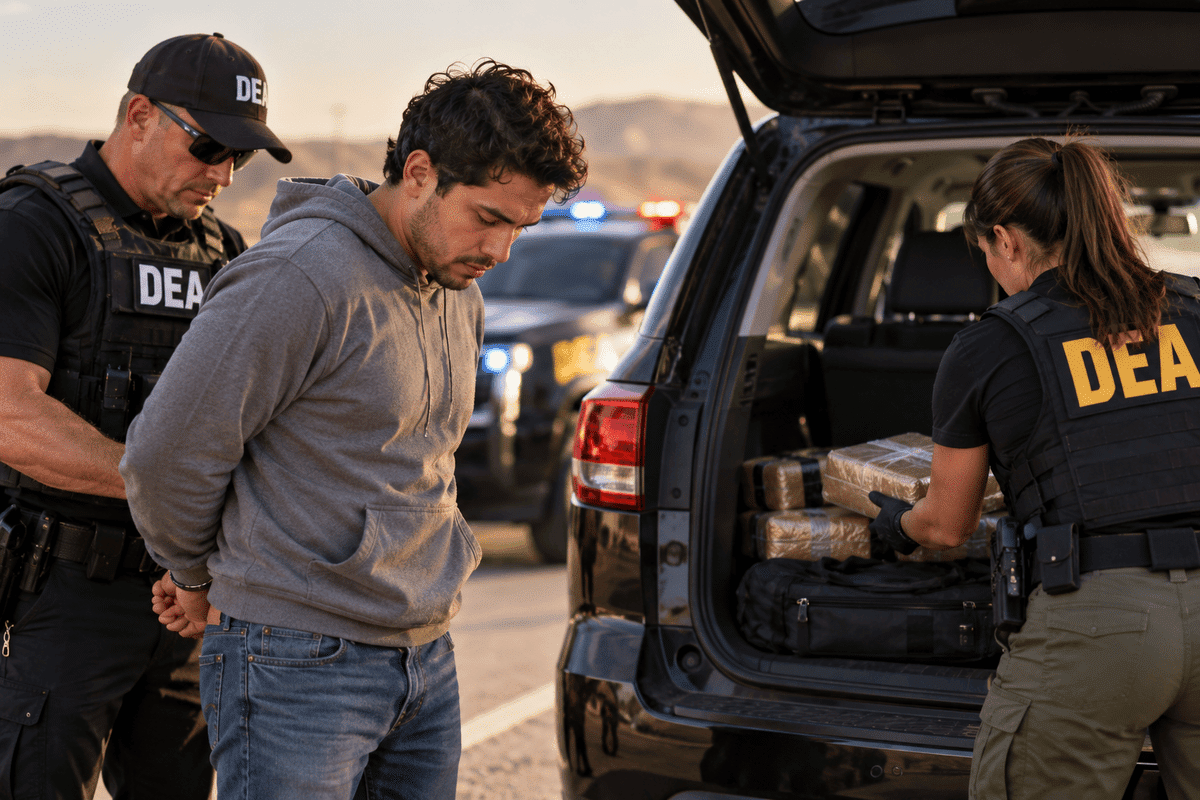
If you are driving a car that contains illegal drugs, you could find yourself at the center of a serious criminal investigation, even if the drugs are not yours. Federal agents, including the DEA, may look into the driver as well as anyone else linked to the vehicle or suspected drug activity.
However, just driving the car does not mean you are automatically guilty of drug trafficking. Prosecutors usually have to show that you knew about the drugs and took part in the crime or had the intent to possess them. When we defend these cases in Boulder, we focus on what the driver actually knew, what evidence ties the driver to the drugs, and whether the police got that evidence lawfully.
The DEA Can Investigate A Driver Even When Someone Else Owns The Drugs
Many people mistakenly believe that federal drug trafficking charges require proof that the defendant actually owned the drugs. In reality, ownership and possession are different. Federal prosecutors can bring charges based on actual possession, constructive possession, helping someone else commit the crime, or being part of a drug conspiracy.
According to 21 U.S.C. § 841(a)(1), federal law makes it illegal to knowingly or intentionally make, distribute, give out, or possess a controlled substance with the intent to do any of those things. The key word is “knowingly.” The government cannot prove guilt just because drugs were found in a car you were driving.
Things get more serious if investigators think the driver knew about the drugs and purposely helped move them from one place to another.
Driving The Vehicle Does Not Automatically Establish Knowing Possession
In drug cases with vehicles, the difference between being near drugs and actually possessing them is important. If police find drugs in the trunk, under a seat, in luggage, or in a hidden spot, prosecutors may try to link the driver to those drugs.
We look for evidence showing the driver knew about the drugs and had control over them. Just being near illegal items is not always enough to prove constructive possession.
For example, suppose someone agrees to drive a friend’s SUV from Denver to another city. If police stop the car and find drugs hidden in a passenger’s luggage, the fact that our client was driving might raise suspicion. However, suspicion is not the same as proof that our client knew what was in the luggage.
The prosecution’s case is stronger if there is more evidence showing the driver knew about the drugs. This could include text messages about the delivery, large cash payments, statements to investigators, fingerprints on the packaging, repeated similar trips, or proof that the driver helped hide the drugs.
Federal Prosecutors May Use Conspiracy Charges
A driver does not necessarily have to physically possess drugs to face federal charges. Under 21 U.S.C. § 846, attempting or conspiring to commit a federal drug offense can expose a defendant to serious criminal liability.
Federal prosecutors might claim that a driver knowingly agreed to help transport or distribute drugs. In these cases, the focus is less on who actually had the drugs and more on whether the driver knowingly took part in the illegal activity.
This difference is important. Giving someone a ride without knowing about drugs is very different from agreeing to drive because someone offered you thousands of dollars to move a shipment.
We review things like messages, financial records, GPS data, witness statements, surveillance videos, phone records, and other evidence that prosecutors might use to show knowledge and involvement.
A Driver Could Also Face Aiding And Abetting Allegations
Federal prosecutors can also use 18 U.S.C. § 2, the law about aiding and abetting. This law allows someone who intentionally helps with a federal crime to be punished as if they committed the crime themselves.
The government might say that driving was the help needed for a drug deal or shipment to happen. However, prosecutors still need proof that the driver meant to take part in the crime. Just doing something that accidentally helps someone commit a crime does not automatically mean you are guilty of aiding and abetting.
That makes the driver’s knowledge and intent central issues in many cases.
Colorado Drug Charges May Also Be Possible
Not every drug transportation investigation becomes a federal prosecution. Colorado authorities can pursue their own charges depending upon the circumstances.
Colorado Revised Statutes § 18-18-405 prohibits knowingly manufacturing, dispensing, selling, distributing, possessing, or possessing with intent to manufacture, dispense, sell, or distribute controlled substances. The offense level can depend on factors including the type and quantity of the controlled substance.
Colorado law therefore creates similar questions concerning knowledge and possession. If drugs are discovered inside a vehicle, investigators may attempt to determine whether the driver knowingly possessed them or knowingly participated in their distribution.
We do not assume that being the driver proves either point.
The Amount Of Drugs Can Dramatically Affect The Case
Federal drug penalties can become extremely severe when prosecutors allege trafficking quantities. Under 21 U.S.C. § 841(b), statutory penalties depend heavily on the substance, quantity, prior qualifying convictions, and other circumstances.
Large quantities can also influence how investigators interpret the evidence. Agents finding a substantial quantity of fentanyl, cocaine, methamphetamine, heroin, or another controlled substance may suspect an organized distribution operation rather than personal possession.
Still, the size of the shipment does not independently prove that every occupant knew drugs were present. Prosecutors must connect the individual defendant to the criminal conduct.
What You Tell DEA Agents Can Become Evidence
Drivers sometimes believe they can avoid arrest by explaining everything immediately. That decision can create significant problems.
Investigators may ask where you are going, who owns the vehicle, who packed the luggage, how you know the passengers, whether you have made the trip before, and whether you knew what was being transported. Answers that appear harmless at the time can later be compared with phone records, surveillance evidence, GPS information, or statements from other suspects.
We generally want to understand the government’s evidence before our client provides information that could become part of the prosecution’s case.
The Vehicle Search May Be A Major Defense Issue
The discovery of drugs does not automatically mean the evidence is admissible in court. The Fourth Amendment protects against unreasonable searches and seizures.
We examine why the vehicle was stopped, how long the detention lasted, whether officers claimed probable cause, whether consent was requested or given, whether a canine was used, and what areas of the vehicle were searched.
If law enforcement violated constitutional protections, we may seek suppression of illegally obtained evidence. Suppression can significantly change a prosecution when the government’s case depends heavily on drugs recovered during the vehicle search.
We Focus On What The Government Can Actually Prove
When someone tells us, “I was only the driver,” our next question is what evidence exists beyond the fact that the person was driving.
We examine whether prosecutors can establish knowledge, possession, intent, participation in a conspiracy, or intentional assistance. We also look closely at the traffic stop, search, statements, electronic evidence, and conduct of investigators. Federal drug prosecutions can carry severe consequences, which makes early examination of the government’s theory particularly important.
Frequently Asked Questions About Drivers And Federal Drug Trafficking Charges
Can The DEA Arrest Me If Drugs Belonged To My Passenger?
Yes, an arrest is possible even when you maintain that the drugs belonged to someone else. An arrest, however, does not establish guilt. The important question is whether prosecutors can prove the elements of the offense beyond a reasonable doubt. If drugs were concealed in a passenger’s belongings and there is little or no evidence that you knew about them, knowledge and possession may become significant disputed issues. We examine where the drugs were located, who controlled the container, statements from passengers, fingerprints, communications, financial evidence, and other facts that could support or undermine the government’s theory.
What If I Truly Did Not Know Drugs Were In The Vehicle?
Lack of knowledge can be central to the defense because federal drug possession and trafficking statutes generally require knowing conduct. We would investigate how you obtained the vehicle, why you were driving, your relationship with the passengers, where the drugs were concealed, and whether anything actually connects you to them. A hidden package does not automatically establish that a driver knew what it contained. The government may rely on circumstantial evidence, however, so we evaluate the entire factual record rather than one isolated fact.
Can I Be Charged With Conspiracy Even If I Never Touched The Drugs?
Potentially, yes. Under 21 U.S.C. § 846, federal prosecutors can charge conspiracy when they contend that someone knowingly joined an agreement to commit a federal drug offense. Physical possession of the drugs is not necessarily required. Prosecutors may rely on text messages, calls, payments, travel patterns, surveillance, cooperating witnesses, or other evidence to argue that a driver knowingly participated. We look closely at whether the evidence demonstrates an actual agreement and intentional participation rather than mere association with people involved in criminal activity.
Can The DEA Search My Car Without A Warrant?
There are circumstances in which law enforcement may legally search a vehicle without first obtaining a warrant, but agents do not have unlimited authority. The automobile exception may permit a search when officers have probable cause to believe the vehicle contains evidence or contraband. Other searches may involve consent, an arrest, inventory procedures, or additional legal theories. We examine the precise facts surrounding the stop and search because an unconstitutional search may support a motion to suppress evidence.
Can My Text Messages Be Used To Claim I Knew About The Drugs?
Yes. Text messages and other electronic communications can become important evidence in federal drug investigations. Prosecutors may interpret coded language, discussions about money, meeting locations, transportation arrangements, or repeated trips as evidence of knowledge or participation. Context matters. A message that appears suspicious when viewed alone may have an innocent explanation when the complete conversation is examined. We review the communications themselves, how investigators obtained them, and whether the government’s interpretation is supported by the surrounding evidence.
Could I Face Both Colorado And Federal Drug Charges?
Drug conduct may violate both Colorado and federal law. Colorado drug offenses are primarily addressed under C.R.S. § 18-18-405, while federal trafficking prosecutions commonly involve 21 U.S.C. §§ 841 and 846. Whether a particular investigation proceeds in state court, federal court, or involves coordination between agencies depends on the facts and participating authorities. Federal cases often involve larger alleged distribution networks, interstate activity, substantial quantities, or federal investigative agencies, although no single factor automatically determines where charges will be filed.
Should I Explain To DEA Agents That I Was Only The Driver?
We would urge caution before giving investigators a detailed statement without legal counsel. Agents may already possess information from surveillance, informants, other defendants, phone records, or intercepted communications. Investigators can compare your answers against that evidence, and inconsistencies may become important later. You generally have constitutional rights regarding questioning, including the right to remain silent and the right to counsel. Speaking with a criminal defense attorney before answering substantive questions can help protect those rights.
Speak With A Boulder Criminal Defense Lawyer About Drug Trafficking Allegations
Being the driver does not automatically make you a drug trafficker, but federal prosecutors may pursue serious charges if they believe you knowingly transported drugs, participated in a conspiracy, or intentionally assisted a trafficking operation. At Watkins Law Firm LLC, we examine the government’s evidence, the legality of the vehicle stop and search, alleged possession, electronic communications, witness statements, and the evidence prosecutors claim establishes knowledge or intent.
We represent clients in Boulder and throughout the Denver area from our office location in Boulder, Colorado. If you are under investigation, have been arrested, or believe federal or Colorado authorities may accuse you of transporting controlled substances, early legal representation can be important.
Contact our Boulder federal drug trafficking lawyer by calling us 24/7 at 303-507-1324 for your free consultation. We can review the allegations, explain the potential federal and Colorado charges, identify weaknesses in the government’s evidence, and discuss the defenses that may apply to your case.
