
How Police Use Surveillance To Build Drug Manufacturing Cases In Colorado
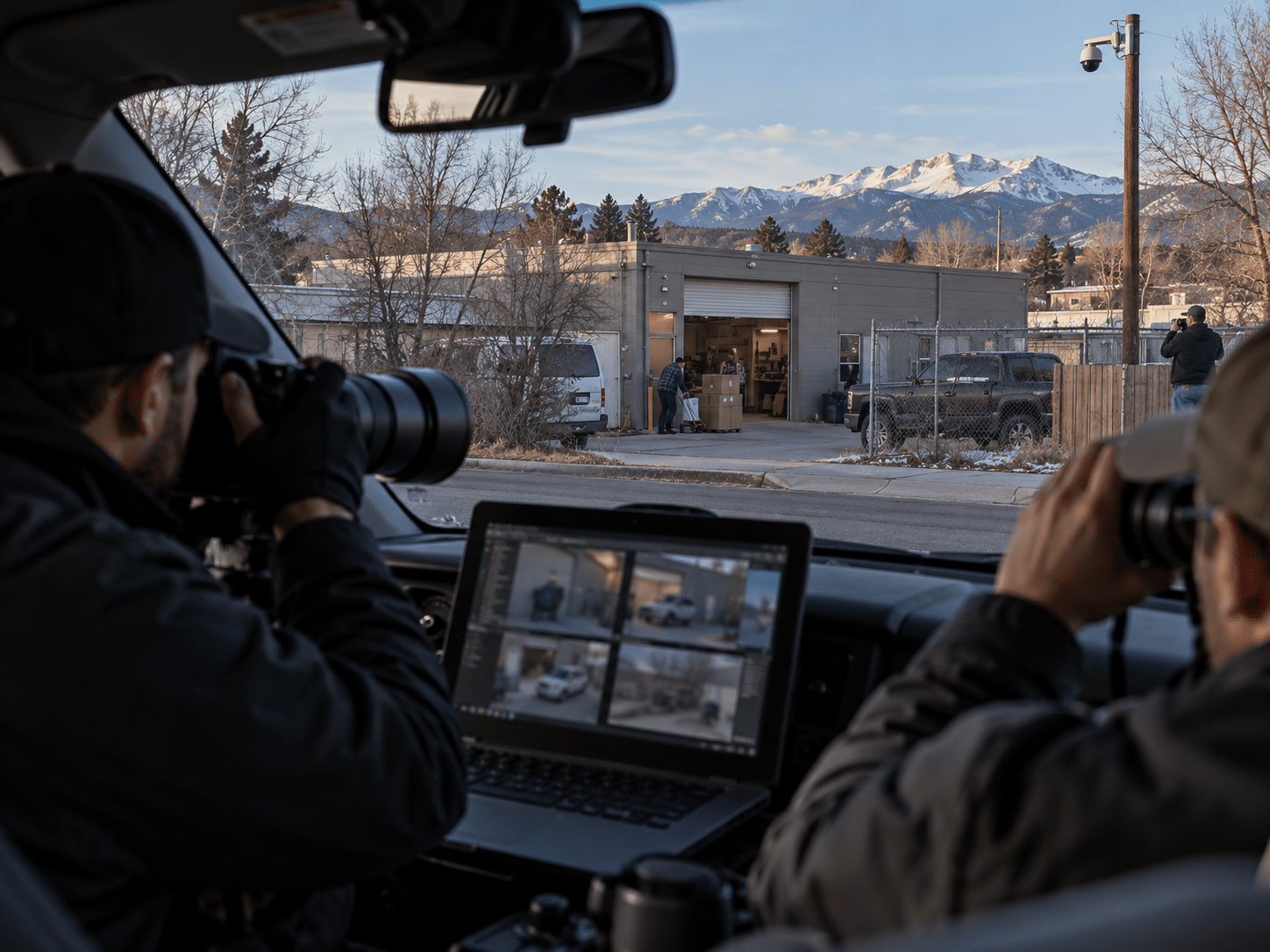
If Boulder police suspect drugs are being made at a property, they often watch the location for days or weeks before making an arrest. Surveillance helps them track who comes and goes, what gets delivered, and whether the activity looks like an illegal drug operation. Police may also use tips from informants, controlled buys, utility records, digital evidence, trash searches, or other investigative tools. They gather this information to request a search warrant. When we defend someone in a drug manufacturing case, we look closely at what police say they saw, how they did their surveillance, whether they followed the law, and if the evidence really shows our client knowingly took part in making drugs.
Colorado Law Prohibits Manufacturing Controlled Substances
Colorado Revised Statutes § 18-18-405 makes it illegal, except in certain cases, to knowingly make a controlled substance. The law also covers having chemicals, supplies, or equipment with the intent to make drugs, as well as possessing drugs with the intent to manufacture. This means prosecutors do not always need proof that someone actually finished making drugs before they can file a manufacturing charge.
Colorado law (C.R.S. § 18-18-102), “manufacture” has a broad meaning. It includes making, preparing, growing, mixing, changing, or processing a controlled substance by extraction, chemical methods, or both. It can also cover some types of packaging, repackaging, labeling, or relabeling. We therefore examine exactly what substance police claim was involved and what evidence connects our client to its alleged manufacture.
Police May Watch A Suspected Location Before Seeking A Warrant
One of the first steps investigators often take is physical surveillance. Officers may watch a property from a public place where they are allowed to be and record what they see, as long as they do not enter areas protected by law.
Investigators might write down license plates, keep track of frequent visitors, notice unusual traffic, take photos of what they can see from public areas, and sometimes follow vehicles leaving the property if the law allows. They usually look for patterns over time instead of just one event.
Just having a lot of visitors or deliveries does not prove someone is making drugs. People often have guests, get packages, or buy equipment for normal reasons, even if it looks suspicious to police. We carefully check if investigators’ conclusions are really supported by the facts.
Surveillance May Be Used To Connect Supplies To Alleged Manufacturing
In these investigations, police often pay close attention to what materials are brought into a location. They may watch for deliveries or purchases of chemicals, containers, lab equipment, packaging, ventilation gear, or other items they think are linked to making drugs.
That evidence can become important because C.R.S. § 18-18-405 addresses possessing chemicals, supplies, or equipment with the intent to manufacture a controlled substance. The critical issue is intent. Many items associated with manufacturing drugs also have legitimate commercial, household, agricultural, scientific, or industrial uses.
We may challenge the prosecution’s attempt to transform possession of ordinary objects into proof of criminal intent. The government must establish the required elements of the charged offense rather than simply show that our client possessed something that theoretically could have been used to make drugs.
Investigators May Combine Surveillance With Informants And Controlled Buys
Police frequently build drug investigations by combining different sources of evidence. An informant might tell investigators that drugs are being produced at a particular location. Officers may then conduct surveillance to determine whether observed activity appears to corroborate that information.
In some investigations, police arrange controlled purchases. Officers may search an informant before a transaction, provide money, watch the informant approach a location, and recover suspected drugs afterward. Prosecutors may later argue that repeated controlled purchases combined with surveillance support an inference that drugs were being produced or distributed from the property.
We examine each link in that chain. An informant’s credibility, ability to observe events, criminal history, compensation, cooperation agreement, and motivation can all matter. Surveillance that merely shows someone entering and leaving a building does not necessarily establish what occurred inside.
Surveillance Can Become The Basis For A Search Warrant
Often, surveillance is not the final evidence police want. Its purpose is to help investigators establish probable cause for a search warrant.
Police may present a judge with an affidavit describing observations, informant information, controlled purchases, suspected drug activity, or other evidence. If a warrant is issued, officers may search the location and seize suspected drugs, chemicals, equipment, phones, computers, records, packaging materials, or other evidence.
That search can become a central issue in the defense. Article II, Section 7 of the Colorado Constitution protects people against unreasonable searches and seizures, and Fourth Amendment protections also apply. Colorado’s criminal procedure rules provide a mechanism for seeking suppression of evidence obtained through an unlawful search.
We may examine whether probable cause actually existed, whether material information presented in support of the warrant was reliable, whether officers stayed within the warrant’s lawful scope, and whether another constitutional violation occurred.
Electronic Surveillance Can Raise Additional Legal Questions
Drug investigations increasingly involve more than officers sitting in an unmarked vehicle. Investigators may seek digital records, location information, communications, camera footage, or other electronically generated evidence.
The legality of those investigative methods can depend heavily on how the information was obtained. Different constitutional and statutory requirements may apply depending on whether police obtained information from a public location, a third-party provider, a person’s device, private communications, or another protected source.
We do not assume that evidence is admissible simply because police successfully obtained it. We identify how each piece of evidence was acquired and determine whether the government complied with the constitutional and statutory requirements that applied to that investigative technique.
Surveillance Does Not Automatically Prove Who Manufactured The Drugs
One of the most important issues is the connection between the surveillance and the accused person.
Suppose several people use the same house. Police watch visitors arrive, later execute a warrant, and find controlled substances and equipment in one portion of the property. The presence of our client at that address does not automatically establish that our client knowingly manufactured those substances.
The prosecution still has to connect the accused person to the criminal conduct. Questions concerning knowledge, intent, possession, access, control, and participation can become critical.
We examine who controlled the location, where evidence was discovered, who had access to that area, whose fingerprints or DNA were recovered, what digital evidence exists, and whether another person could have possessed or operated the equipment.
Surveillance Evidence Can Be Challenged In A Colorado Drug Manufacturing Case
A surveillance-heavy case can initially appear convincing because prosecutors may present many individual observations as one larger story. Our job is to separate those observations and determine what each one actually proves.
We may challenge unlawful searches, questionable identification evidence, unreliable informants, unsupported assumptions about ordinary activity, weak evidence of intent, or the government’s inability to connect our client to the alleged manufacturing operation. If evidence resulted from an unlawful search or seizure, suppression may substantially change the prosecution’s case. Colorado criminal procedure expressly recognizes motions seeking suppression of unlawfully obtained evidence.
Drug manufacturing allegations are serious, but surveillance itself is not proof of guilt. The government must establish the elements of the charged offense with admissible evidence.
Frequently Asked Questions About Colorado Drug Manufacturing Surveillance
Can Colorado Police Watch My House Without A Search Warrant?
Police can generally make observations from locations where they are lawfully entitled to be, although the legality of a particular surveillance technique depends on the circumstances. Constitutional concerns become more significant when officers intrude into areas where a person has protected privacy interests or employ investigative methods that constitute a search under applicable law.
We examine where officers were positioned, what they observed, what technology they used, how long surveillance occurred, and whether officers physically entered private property. Those details can affect whether the investigation complied with the Fourth Amendment and Article II, Section 7 of the Colorado Constitution.
Can Police Use Surveillance To Obtain A Search Warrant?
Yes. Police frequently use surveillance observations as part of an affidavit seeking a search warrant. Investigators might describe suspicious traffic, controlled purchases, information supplied by informants, deliveries, or other conduct that they believe establishes probable cause.
A judge’s issuance of a warrant does not necessarily prevent us from challenging the search. We can examine the information presented in support of the warrant, the reliability of the asserted facts, and the manner in which officers executed it. When there is a legally sufficient basis for suppression, Colorado procedure allows the defense to ask the court to exclude unlawfully obtained evidence.
Can Buying Chemicals Or Equipment Be Used Against Me?
Potentially. Under C.R.S. § 18-18-405, possessing chemicals, supplies, or equipment with the intent to manufacture a controlled substance can fall within Colorado’s controlled-substance laws. The important part of that allegation is not simply possession of an item. The prosecution must establish the criminal intent required by the statute.
That distinction can be significant because many chemicals, tools, containers, and pieces of equipment have legitimate uses. We examine whether the prosecution has actual evidence connecting the materials to illegal manufacturing or is relying largely on assumptions based on otherwise lawful purchases.
What If Police Found A Drug Lab In A House Where Several People Lived?
The prosecution cannot establish a person’s guilt merely by showing that illegal drugs or manufacturing equipment existed somewhere inside a shared residence. The evidence must establish the elements required for the particular offense charged.
We would examine where the materials were located, who controlled that portion of the property, who had access to it, whether personal belongings were found nearby, what forensic evidence exists, and whether communications or other records connect our client to the operation. Shared access can create substantial factual questions about knowledge, possession, control, and intent.
Can Surveillance Evidence Be Thrown Out?
It can be excluded in appropriate circumstances when evidence was obtained in violation of constitutional or other applicable legal requirements. The precise remedy depends on the facts and the legal basis for the challenge.
Colorado criminal procedure recognizes motions to suppress evidence obtained through unlawful searches and seizures. If a court suppresses critical evidence obtained during an investigation, the prosecution may lose physical evidence or other evidence necessary to prove important parts of its case.
Does Surveillance Alone Prove Drug Manufacturing?
Not necessarily. Surveillance may provide circumstantial evidence, but the prosecution still has to prove the charged crime. C.R.S. § 18-18-405 requires knowing conduct for the manufacturing offenses covered by the statute.
A person entering a property, receiving packages, purchasing equipment, or associating with someone suspected of drug activity does not automatically establish knowing participation in manufacturing. We examine whether prosecutors can connect our client to the drugs, equipment, location, and alleged production activity rather than relying on proximity or association.
Contact Our Boulder Drug Manufacturing Defense Attorneys At Watkins Law Firm LLC
A drug manufacturing investigation may be built slowly, with police collecting surveillance footage, photographs, informant statements, purchase records, digital evidence, and other information before an arrest ever occurs. Once a search warrant is executed, prosecutors may try to combine all of those pieces into a single theory of knowing participation.
At Watkins Law Firm LLC, we examine that evidence piece by piece. We look at how the investigation began, how surveillance was conducted, whether the search was lawful, whether evidence can be suppressed, and whether prosecutors can actually establish knowledge, possession, intent, and participation. A strong defense requires more than responding to the prosecution’s version of events. It requires testing the evidence supporting that version.
If you are under investigation or have been arrested for drug manufacturing or another controlled-substance offense in Colorado, early legal representation can give us more time to evaluate the surveillance, preserve evidence, examine search warrants, and identify potential constitutional issues.
Watkins Law Firm LLC represents clients in Boulder and throughout the Denver area from our office locations in Boulder, Colorado. Contact our Boulder drug crime lawyer by calling us 24/7 at (303) 507-1324 for your free consultation.
