Driving Without a License Charge In Boulder
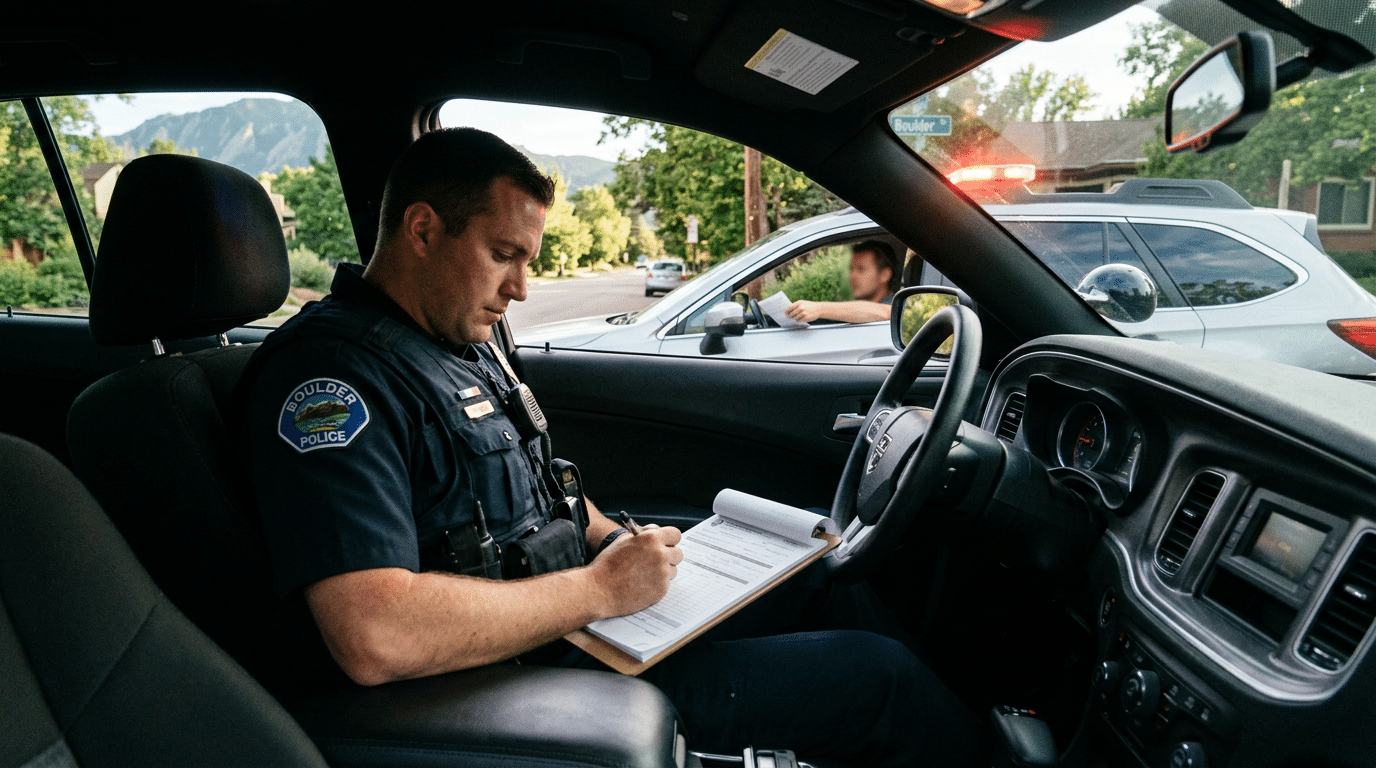
Being cited for driving without a license in
Boulder can raise questions about what the charge actually means and what happens next. Colorado law distinguishes between never having a valid license, driving with an expired license, failing to have a license physically available, and driving while a person’s driving privilege is suspended or revoked.
Those distinctions matter because the legal consequences are not the same. We frequently look first at the driver’s actual licensing status, the reason for the traffic stop, and the specific statute listed on the citation. We also examine whether the driver can correct the licensing problem before appearing in court and whether another charge was filed during the same traffic stop.
Colorado Law Requires Drivers To Have a Valid License
Colorado Revised Statutes § 42-2-101 establishes the state’s basic driver’s license requirement. With certain statutory exceptions, C.R.S. § 42-2-101(1) prohibits a person from driving a motor vehicle on a Colorado highway without having been issued a currently valid driver’s license, minor driver’s license, or instruction permit. Under subsection (10), violating subsection (1) is currently classified as a Class A traffic infraction.
This distinction is important because Colorado changed the classification of this offense. For offenses committed on or after March 1, 2022, driving without a valid license under subsection (1) is a Class A traffic infraction rather than the Class 2 misdemeanor traffic offense that applied under the earlier version of the statute.
A traffic infraction should still be taken seriously. We want to determine precisely why the driver allegedly lacked a valid license and whether the citation correctly reflects what happened.
An Expired License Is Treated Differently
Not every driver’s license problem falls under the same subsection of C.R.S. § 42-2-101. Subsection (2) addresses driving when a driver’s license has been expired for one year or less, and the person has not obtained another license. Under C.R.S. § 42-2-101(10), violations of subsections (2), (3), and (5) are Class B traffic infractions rather than Class A traffic infractions.
Colorado law also provides an important opportunity for certain drivers with recently expired licenses. Under C.R.S. § 42-2-101(6), a charge under subsection (2) must be dismissed if the driver elects not to pay the penalty assessment and presents a currently valid driver’s or minor driver’s license to the court at or before the scheduled court appearance.
When that provision applies, promptly correcting the licensing problem may make a substantial difference in how the case is resolved.
What If We Have a Valid License but Do Not Have It With Us?
A driver who has a valid license but does not have it in his or her immediate possession presents a different situation from someone who was never properly licensed.
C.R.S. § 42-2-101(5) addresses operating a vehicle without having the valid license or permit in the driver’s immediate possession. The statute provides another potential route to dismissal. Under subsection (7), a charge under subsection (5) must be dismissed when the driver elects not to pay the penalty assessment and, at or before the scheduled court appearance, presents a valid license or permit issued to that driver, or an officially issued duplicate when the original was lost, stolen, or destroyed. We therefore examine whether the accusation involves an actual lack of driving privileges or simply an inability to produce the proper document.
Driving Without a License Is Different From Driving Under Restraint
One of the most important questions we ask is whether the driver’s privilege was suspended, revoked, or otherwise restrained. Driving under restraint is governed separately by C.R.S. § 42-2-138.
Under that statute, a person who drives with knowledge that his or her driving privilege is restrained for a reason other than certain alcohol-related driving offenses generally commits a Class A traffic infraction. A second or subsequent qualifying conviction within five years can also create a three-year period during which the person is not eligible to receive a driver’s license or driving privilege, subject to statutory exceptions.
The statute defines “restraint” to include a denial, revocation, or suspension of the privilege to drive. It also defines knowledge broadly enough to include actual knowledge or circumstances sufficient to make a reasonable person aware of the restraint. Alcohol-related restraints can involve substantially different consequences, so we do not treat every driver’s license case as an ordinary no-license citation.
Penalties for Driving Without a Valid License
Under Colorado’s traffic penalty schedule,
C.R.S. § 42-2-101 is included among driver’s license violations. The statutory schedule identifies a $35 penalty and $10 surcharge for the applicable § 42-2-101 violation, while certain violations under subsections (2), (3), or (5) carry a different scheduled amount. Court costs or other consequences may also apply depending upon the case.
Repeat violations deserve particular attention. C.R.S. § 42-2-101(11) provides that a second or subsequent conviction under subsection (1) or (4), when the person has not subsequently obtained the proper Colorado driver’s license or class of license, results in six points being assessed against that person’s driving privilege.
This is one reason we advise against assuming that a citation is insignificant simply because the immediate monetary penalty appears limited.
Defenses to a Driving Without a License Charge in Boulder
Our defense strategy depends on the facts. We may examine whether the driver actually possessed a valid license, whether the license had expired, whether an applicable statutory exemption existed, whether the person was operating the vehicle on a “highway” as required by the statute, and whether the government can establish each element of the alleged violation.
C.R.S. § 42-2-101 also expressly recognizes justification in certain emergencies and exemptions provided by C.R.S. § 42-2-102. When an affirmative defense under § 42-2-101 is properly raised through credible evidence, the government retains the burden of establishing liability beyond a reasonable doubt as to that issue and the other elements of the traffic infraction.
We also review the circumstances of the traffic stop itself. A driver’s license citation may arise during an investigation involving speeding, careless driving, DUI, an accident, insurance issues, or another alleged violation. Those surrounding facts can affect how we approach the case.
Why We Review the Driver’s DMV Status
The wording on a ticket does not always tell the entire story. Before deciding how to respond, we want to understand whether the driver never obtained a license, possessed a license issued elsewhere, allowed a license to expire, failed to carry it, or was subject to a suspension or revocation.
That distinction can determine which statute applies, whether a statutory dismissal provision is available, and whether there are separate DMV consequences. It may also reveal a licensing problem that can be corrected before the case reaches a critical stage.
FAQs About Driving Without a License in Boulder
Is driving without a license a crime in Colorado?
Under current Colorado law, simply driving without having been issued a currently valid driver’s license or instruction permit in violation of C.R.S. § 42-2-101(1) is classified as a Class A traffic infraction. Colorado changed the classification effective March 1, 2022. We still recommend taking the allegation seriously, particularly when there are prior violations, questions about the driver’s DMV status, or additional charges arising from the same stop.
What happens if our driver’s license simply expired?
The answer can depend on how long the license has been expired. C.R.S. § 42-2-101(2) specifically addresses driving with a license that has been expired for one year or less. A violation of that subsection is classified as a Class B traffic infraction. More importantly, subsection (6) provides for dismissal when its requirements are satisfied, including presenting a currently valid license to the court at or before the scheduled appearance after electing not to pay the penalty assessment. We therefore recommend reviewing the citation before simply paying it.
What if we have a valid license but left it at home?
That situation is materially different from never having a valid driver’s license. C.R.S. § 42-2-101 addresses the requirement that a driver have the valid license or permit in his or her immediate possession. The statute also provides a mechanism for dismissal of a qualifying charge when the driver presents the valid license or an officially issued duplicate to the court at or before the scheduled appearance and otherwise complies with subsection (7). We can review the citation to determine whether this provision applies.
Is driving on a suspended license the same as driving without a license?
No. Colorado generally addresses driving with a suspended, revoked, or otherwise restrained driving privilege under C.R.S. § 42-2-138. The statute defines a restraint to include a denial, revocation, or suspension. It also requires knowledge of the restraint, although the statutory definition of knowledge includes circumstances sufficient to cause a reasonable person to be aware that the driving privilege was restrained. Cases involving an alcohol-related restraint can carry different and more serious consequences than an ordinary driving-without-a-license citation.
Can a second driving-without-a-license case affect our driving record?
Potentially. C.R.S. § 42-2-101(11) states that a second or subsequent conviction under subsection (1) or (4), when the person has not subsequently obtained a valid Colorado driver’s license or the correct class of license, results in six points being assessed against that person’s driving privilege. Prior history therefore matters. We review earlier citations and the driver’s licensing record rather than treating each ticket in isolation.
Can a driving-without-a-license charge be dismissed?
Some charges have express statutory dismissal provisions. For example, C.R.S. § 42-2-101 contains dismissal provisions for qualifying cases involving a recently expired license and for certain cases in which a valid license existed but was not in the driver’s possession. Other cases may involve factual or legal defenses. Whether dismissal is available depends on the subsection charged and the evidence, so we review the citation, licensing record, and circumstances of the traffic stop before determining how the case should be handled.
Speak With Our Boulder Defense Lawyer About Your Driving Without a License Charge
A driver’s license citation can appear straightforward, but the correct response depends on why the license was allegedly invalid and which provision of Colorado law applies. At Watkins Law Firm LLC, we can review the citation, examine your licensing status, identify any applicable statutory defenses or dismissal provisions, and address related charges that may have resulted from the same traffic stop.
We represent clients in Boulder and throughout the Denver area from our office locations in Boulder, Colorado. If you have been cited or charged with driving without a license, driving with an expired license, or a related driver’s license offense, we can evaluate the circumstances and explain your legal options.
If you are facing a driving without a license charge in Boulder, contact Watkins Law Firm LLC to discuss your case with a Boulder criminal defense lawyer. We can review what happened, determine the specific Colorado statute involved, and discuss possible defenses and ways to resolve the charge.

