
How Colorado Police Use Blood Tests in DUI and DUID Cases
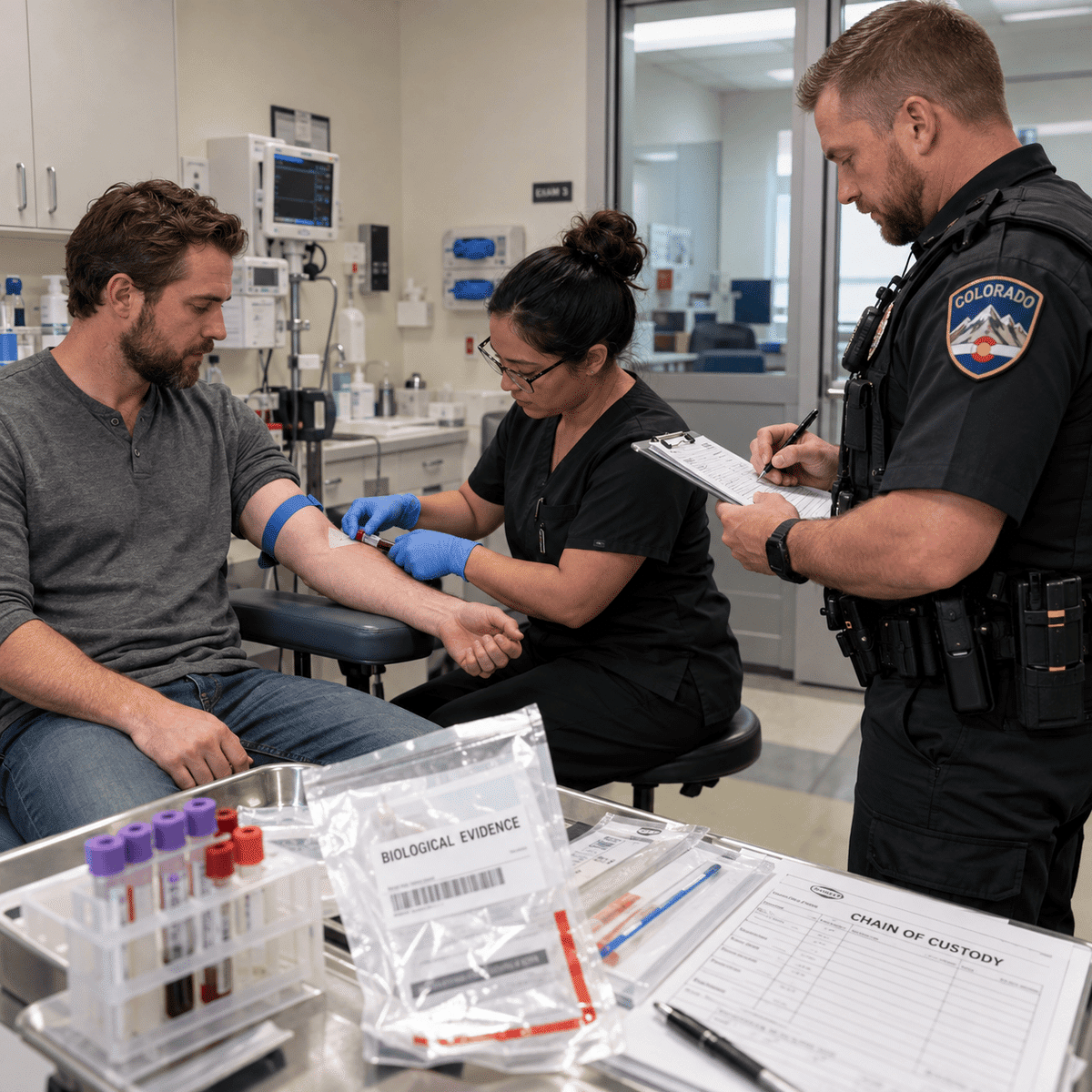
Blood tests are often a key part of evidence in Boulder DUI or drugged-driving cases. Police usually ask for a blood test if they think marijuana, prescription drugs, illegal drugs, or a mix of drugs and alcohol may have caused a driver’s impairment. Unlike breath tests, blood tests can show both alcohol and specific drugs or their byproducts.
However, a positive blood test does not automatically mean someone was legally impaired while driving. When we handle these cases, we look at why the blood test was requested, how and when it was taken, how the sample was handled, what the lab found, and whether the prosecution can link those results to impairment at the time of driving.
Colorado’s DUI and DUID Laws
Colorado Revised Statutes § 42-4-1301 prohibits driving under the influence of alcohol, drugs, or a combination of alcohol and drugs. Colorado law also recognizes DWAI, or driving while ability impaired, which involves impairment to a lesser degree than DUI.
For alcohol cases, a blood alcohol concentration of 0.08 or higher can support DUI per se and gives rise to a permissible inference that the driver was under the influence. A BAC above 0.05 but below 0.08 may be considered along with other evidence when determining impairment.
Drug cases are different. Police and prosecutors might use toxicology results to find out what substances are in a driver’s system, but just having a drug present does not answer the main question: Was the driver actually impaired?
Why Colorado Police Request Blood Tests
Colorado’s expressed-consent law is found in C.R.S. § 42-4-1301.1. By driving in Colorado, motorists are deemed to have expressed consent to chemical testing under circumstances specified by the statute.
When an officer has probable cause to believe a person committed an alcohol-related DUI, DUI per se, DWAI, or another covered offense, the statute provides for breath or blood testing. For suspected drug impairment, Colorado law authorizes testing of blood, saliva, or urine when an officer has probable cause and drug testing is reasonably required to determine whether drugs or a combination of alcohol and drugs contributed to impairment.
This difference is important because a breath test usually cannot show if THC, prescription drugs, cocaine, methamphetamine, or other drugs are present. A blood sample can give police much more detailed information about what substances are in a person’s system.
What Happens During a DUI Blood Draw?
Blood testing must follow statutory and regulatory requirements. Under C.R.S. § 42-4-1301.1, blood used to determine alcohol or drug content must be withdrawn by an authorized medical professional or another person legally qualified under the statute. Testing is also subject to Colorado Department of Public Health and Environment rules concerning testing accuracy and the health of the person being tested.
We look at the whole process instead of just accepting the number on the lab report. The training of the person who drew the blood, how it was collected, labeled, stored, transported, tested, and documented can all be important.
A blood test result is scientific evidence, but its reliability depends on how carefully the process was followed.
Blood Alcohol Results in Colorado DUI Cases
C.R.S. § 42-4-1301 establishes important evidentiary rules concerning blood alcohol concentration. A BAC of 0.08 or greater gives rise to a permissible inference that the defendant was under the influence of alcohol. Colorado also defines DUI per se based on a BAC of 0.08 or more at the time of driving or within two hours after driving.
Timing is very important. We might compare the reported BAC to when the person was driving, when the traffic stop happened, when the arrest took place, and when the blood was drawn. Alcohol levels change as the body absorbs and gets rid of alcohol, so the timing can affect how the evidence should be understood.
How THC Blood Tests Are Used in Colorado DUID Cases
Marijuana cases need special attention because finding THC in the blood is not the same as proving someone was impaired.
Under C.R.S. § 42-4-1301, if a driver’s whole blood contains five nanograms or more of delta-9 THC per milliliter, that fact creates a permissible inference that the driver was under the influence of one or more drugs. It is not an automatic finding of guilt.
We can question how the prosecution interprets the evidence by looking at the toxicology results together with driving behavior, what officers saw at the scene, body-camera video, statements, field sobriety tests, and other evidence. All of these details matter.
Prescription Drugs Can Also Lead to DUID Charges
A driver does not necessarily avoid a DUID investigation simply because a medication was legally prescribed. Colorado’s DUI statute addresses impairment caused by drugs, and the prosecution may rely on blood toxicology when prescription or other drugs are suspected.
Finding medication in someone’s system does not automatically show how much it affected the driver. We look at the dose, timing, normal levels for treatment, interactions with other substances, observed behavior, and whether something else could explain what the officer saw as impairment.
Can Police Force a Blood Test?
Colorado law places limits on physically forced chemical testing. C.R.S. § 42-4-1301.1 addresses circumstances involving refusal and circumstances in which law enforcement may require an involuntary blood test. The statute includes special provisions involving serious offenses such as vehicular homicide and vehicular assault. Colorado law also addresses testing involving unconscious, hospitalized, or medically treated individuals.
Because constitutional rules about search and seizure can apply to forced blood draws, we look closely at the legal reasons police used. Consent, probable cause, legal authority, warrants, and the situation around the blood draw can all be important issues.
Challenging Blood Evidence in a Colorado DUI or DUID Case
A laboratory result should never be viewed in isolation. We may investigate whether police had the required legal basis for testing, whether the sample was collected correctly, whether laboratory procedures were reliable, and whether the result actually supports impairment.
We also compare toxicology evidence with video, witness testimony, driving behavior, medical information when relevant, police reports, and the timeline of events. A blood test may be powerful prosecution evidence, but its significance depends upon the facts surrounding the test and the government’s ability to prove every required element of the charge.
FAQs About Blood Tests in Colorado DUI and DUID Cases
Can I Be Convicted of a Colorado DUI Because My Blood Alcohol Level Was 0.08?
A blood alcohol concentration of 0.08 or higher is highly significant, but we still examine the entire case. Colorado law provides that a BAC of 0.08 or more gives rise to a permissible inference that the defendant was under the influence, and DUI per se applies when the statutory BAC requirement is established at the relevant time. We may still investigate the legality of the police encounter, testing procedures, timing, sample integrity, laboratory evidence, and other issues affecting the prosecution’s case.
Does Five Nanograms of THC Automatically Mean I Am Guilty of DUID?
No. Under C.R.S. § 42-4-1301, five nanograms or more of delta-9 THC per milliliter of whole blood creates a permissible inference that the driver was under the influence of one or more drugs. We consider that result together with the other evidence. Driving behavior, physical observations, video evidence, statements, field sobriety testing, the timing of marijuana use, and toxicology evidence may all be important when evaluating whether the prosecution can prove impairment beyond a reasonable doubt.
What Happens If I Refuse a Blood Test in Colorado?
Refusal can create consequences separate from the criminal DUI case. Colorado’s expressed-consent statutes require motorists to cooperate with qualifying chemical-testing requests, and refusal can lead to driver’s-license consequences under C.R.S. § 42-2-126. Colorado law also treats certain refusals as relevant to persistent-drunk-driver provisions. We examine exactly what test was requested, why it was requested, what the officer told the driver, and what occurred during the alleged refusal.
Can Prescription Medication Cause a Colorado DUID Charge?
Yes. A driver may face a drug-related DUI or DWAI allegation even when the substance was lawfully obtained. The critical issue is generally whether the drug affected the person’s ability to operate a vehicle as required by Colorado law. We therefore examine much more than whether a toxicology report identifies medication. The amount detected, timing of the dose, other substances, officer observations, driving behavior, and medical or toxicological evidence can affect how the prosecution’s claim should be evaluated.
How Can We Challenge a DUI Blood Test?
We start by examining how the evidence was obtained. We may review probable cause, the chemical-test request, blood-draw records, chain-of-custody documentation, laboratory reports, testing methodology, calibration and quality-control information when applicable, body-camera footage, police reports, and the timing between driving and the blood draw. Colorado law requires testing to be performed under specified procedures, although not every technical deviation automatically makes a result inadmissible. Some disputes affect admissibility, while others affect the weight and reliability a judge or jury should give the evidence.
Call Watkins Law Firm LLC for a Free Consultation
When blood evidence becomes part of a DUI or DUID prosecution, we believe the laboratory number should be investigated rather than simply accepted. At Watkins Law Firm LLC, we examine the traffic stop, probable cause, chemical-testing request, collection procedure, toxicology results, laboratory evidence, police observations, and other circumstances surrounding the accusation.
We represent people facing DUI, DUID, DWAI, and other criminal charges in Boulder and throughout the Denver area from our office locations in Boulder, Colorado. Our goal is to identify weaknesses in the government’s evidence and determine which defenses are supported by the facts and Colorado law.
If you have been arrested or accused of DUI or DUID and police obtained a blood sample, we can review what happened and discuss the legal issues that may affect your case. Early review can also give us an opportunity to identify evidence that should be preserved and determine whether separate driver’s-license proceedings require attention.
Contact our Boulder DUI defense attorney by calling us 24/7 at 303-507-1324 for your free consultation. We represent clients in Boulder and throughout the Denver area from our office location in Boulder, Colorado.
