
Can You Be Charged With DUID In Colorado Without A Failed Breath Test?
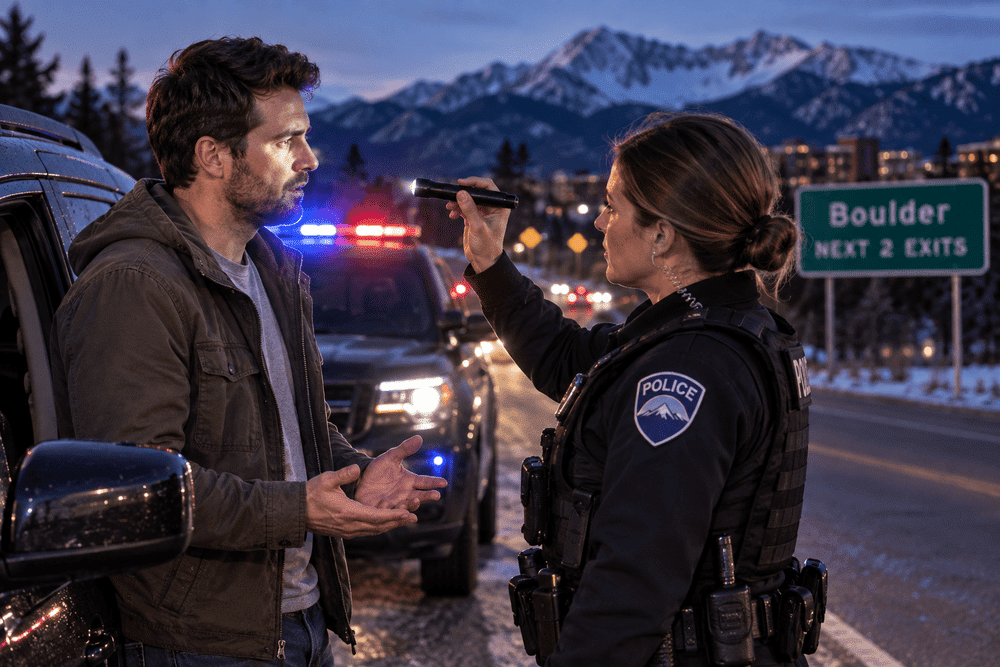
Yes, you can be charged with DUID in Colorado even if you did not fail a breath test. That surprises many drivers because most people associate DUI cases with alcohol and breath testing. A breath test usually measures alcohol, not marijuana, prescription medication, illegal drugs, or other controlled substances. If an officer believes you were impaired by drugs, the case may move in a different direction. We often see DUID cases where the breath result is low, zero, or not the main evidence. At Watkins Law Firm LLC, we defend drivers in Boulder and throughout the Denver area who are accused of drug-related DUI, DWAI, and DUID offenses based on officer observations, blood testing, roadside exercises, statements, or alleged drug evidence found during a traffic stop.
Colorado DUID Law Covers Drugs, Not Just Alcohol
Colorado’s impaired driving statute, C.R.S. § 42-4-1301, covers alcohol, drugs, and combinations of alcohol and drugs. Under Colorado law, a person may be charged with DUI if alcohol, drugs, or both make that person substantially incapable of exercising clear judgment, sufficient physical control, or due care in the safe operation of a vehicle. DWAI is a lower impairment standard. A person may be charged with DWAI if alcohol, drugs, or both affected the person to the slightest degree so that the person was less able than usual to drive safely.
That means a DUID case does not depend on a failed alcohol breath test. A driver can blow 0.000 and still be arrested if the officer claims the driver showed signs of drug impairment. The real question becomes whether the prosecution can prove impairment beyond a reasonable doubt. A chemical test may matter, but the state still must connect any drug evidence to impairment at the time of driving.
A Breath Test Does Not Usually Prove Or Disprove Drug Impairment
A breath test may be helpful in ruling out alcohol impairment, but it does not usually answer whether a driver was impaired by marijuana, prescription medication, or other drugs. If a driver gives a low or zero breath result, the officer may suspect drug use instead of alcohol use. The officer may then request a blood test or involve a drug recognition evaluator.
Colorado’s Express Consent law, C.R.S. § 42-4-1301.1, allows officers to request testing for drug content when they have probable cause to believe a person drove under the influence of drugs, while impaired by drugs, or under the influence of alcohol and drugs combined. The statute specifically refers to blood, saliva, and urine testing for drug-related investigations. A roadside preliminary breath test is not the same as the required chemical test under the Express Consent statute.
Marijuana DUID Cases And THC Blood Evidence
Marijuana DUID cases are common in Colorado because marijuana is legal for many adults, but driving while impaired by marijuana is still illegal. Colorado law treats THC differently from alcohol. There is no simple marijuana breath test equivalent to an alcohol breath test used in every case. Instead, officers may request a blood test to measure active delta-9 THC.
Colorado recognizes a permissible inference of impairment when a driver’s blood contains five nanograms or more of delta-9 THC per milliliter in whole blood. That does not mean five nanograms is the same as a strict alcohol limit. The Colorado Department of Transportation explains that drivers may still be arrested and cited for impaired driving if law enforcement observes and documents impairment to any degree, even when the THC blood level is below five nanograms.
This is one reason marijuana DUID cases can be heavily disputed. THC may remain detectable after use, and frequent users may have different tolerance levels. The presence of THC does not always tell the full story. We examine the test result, timing of the blood draw, driving observations, roadside testing, officer conclusions, and whether the state can prove impairment at the actual time of driving.
Prescription Medication Can Also Lead To DUID Charges
A valid prescription does not automatically prevent a Colorado DUID charge. A driver may be accused of drugged driving after taking anxiety medication, sleep medication, pain medication, muscle relaxers, ADHD medication, or other prescribed drugs. The prosecution may argue that the medication affected the driver’s judgment, coordination, reaction time, balance, speech, or ability to operate a vehicle safely.
These cases can be unfair when the officer misunderstands a medical condition, fatigue, anxiety, disability, injury, or medication side effect. A driver may look tired or nervous during a traffic stop for reasons unrelated to impairment. We review whether the medication was taken as prescribed, whether the officer had proper grounds to expand the stop, whether the observations were reliable, and whether any chemical test actually supports impairment.
How Police Try To Prove DUID Without A Failed Breath Test
Police may rely on several types of evidence in a DUID case. This can include driving behavior, statements made by the driver, odor of marijuana, visible drug paraphernalia, pill bottles, bloodshot eyes, eyelid tremors, pupil size, balance issues, speech patterns, field sobriety exercises, body camera video, and drug recognition evaluator findings.
The problem is that many of these signs can have innocent explanations. Bloodshot eyes may result from allergies, lack of sleep, contacts, smoke, or irritation. Poor balance may result from footwear, medical issues, uneven pavement, nerves, or old injuries. Slow speech may be natural. Confusion may come from stress. We do not accept police conclusions without testing the evidence. An officer’s suspicion is not proof.
Refusing Drug Testing Can Create Separate Consequences
A driver accused of DUID may face consequences for refusing a requested chemical test. Colorado’s Express Consent law requires drivers to cooperate with chemical testing when the legal requirements are met. The Colorado Department of Transportation states that drivers are required to provide a blood or breath toxicology test at the time of arrest, and refusal may carry increased consequences.
Colorado DMV proceedings are separate from the criminal case. The Colorado Department of Revenue explains that a person may have up to seven days to request an Express Consent hearing after receiving a Notice of Revocation, depending on the testing situation. Missing that deadline can allow the revocation to take effect.
Defending A Colorado DUID Case Without A Failed Breath Test
A DUID defense starts with the stop. We look at whether the officer had a lawful reason to stop the vehicle and a valid basis to expand the stop into a drug investigation. We review body camera footage, dash camera footage, roadside exercises, DRE reports, chemical testing records, lab results, chain of custody, officer training, and whether the prosecution can connect any substance to impairment.
We also examine timing. A blood test taken after driving may not prove impairment at the moment of driving. A positive drug result may show prior use, but prior use is not always the same as impaired driving. In some cases, the defense may focus on medical explanations, lack of bad driving, unreliable roadside tests, weak officer observations, testing errors, or an unlawful search.
FAQs About DUID Charges Without A Failed Breath Test In Colorado
Can I Be Charged With DUID If My Breath Test Was 0.000?
Yes. A 0.000 breath test may rule out alcohol, but it does not rule out drug impairment. If the officer believes you were impaired by marijuana, prescription medication, illegal drugs, or a combination of substances, you may still be arrested or charged. The prosecution must prove that drugs affected your ability to drive safely under Colorado law. A zero breath test can help the defense in some cases because it removes alcohol from the case, but it does not automatically end a drug-related DUI investigation.
Does A Positive THC Blood Test Automatically Prove DUID?
No. A positive THC blood test does not automatically prove DUID. Colorado law allows a permissible inference of impairment at five nanograms or more of delta-9 THC per milliliter in whole blood, but an inference is not the same as automatic guilt. The defense can challenge the meaning of the result, the timing of the blood draw, the driver’s tolerance, the officer’s observations, and whether the prosecution can prove impairment at the time of driving. A THC result must be considered with all other evidence.
Can I Be Charged With DUID For Taking Prescription Medication?
Yes. A person can be charged with DUID after taking lawfully prescribed medication if the prosecution claims the medication impaired safe driving. This can include anxiety medication, sleep aids, pain medication, muscle relaxers, ADHD medication, or other drugs. A prescription can be important evidence, but it is not a complete defense by itself. We look at dosage, timing, side effects, medical history, officer observations, and whether the state can actually prove impairment beyond a reasonable doubt.
What Evidence Do Police Use In A Drug DUI Case?
Police may use driving behavior, roadside exercises, body camera footage, statements, drug evidence in the vehicle, pill bottles, marijuana odor, blood testing, saliva or urine testing, and drug recognition evaluator opinions. Some of this evidence can be weak or misleading. Many physical signs of impairment can be caused by fatigue, nerves, allergies, medical problems, injuries, or lawful medication use. We compare the officer’s claims against the video, lab records, medical facts, and the actual driving evidence.
Can Refusing A Blood Test Hurt My Colorado DUID Case?
Yes. Refusing a chemical test can create license consequences and may be used as evidence in the criminal case under Colorado law. Refusal can also affect the DMV Express Consent process. However, officers still must follow the law, and the request for testing must be supported by the required legal grounds. If there are issues with the stop, arrest, advisement, request, or testing procedure, the defense may still have arguments to raise in court or at the DMV hearing.
Should I Fight A DUID Charge If There Was No Failed Breath Test?
Yes. A DUID charge without a failed breath test may depend heavily on subjective officer observations, roadside testing, timing, and lab interpretation. Those areas can be challenged. The absence of a failed alcohol breath test may help show that the officer’s first theory was wrong or incomplete. We review whether the state can prove drug impairment, not just drug presence. A DUID conviction can affect your license, job, insurance, record, and future, so it should be taken seriously.
Call Watkins Law Firm LLC For Help With A Colorado DUID Charge
If you were accused of DUID after a low, clean, or disputed breath test, Watkins Law Firm LLC can help. We defend clients in Boulder and throughout the Denver area against DUID, DUI, DWAI, marijuana DUI, prescription drug DUI, and related criminal traffic charges. We know how to challenge officer observations, blood testing, drug recognition evidence, and unlawful traffic stops. Contact our Boulder DUI defense attorney by calling us 24/7 at 303-507-1324 for your free consultation.
