
Can Police Search Your Vehicle Because They See A Firearm?
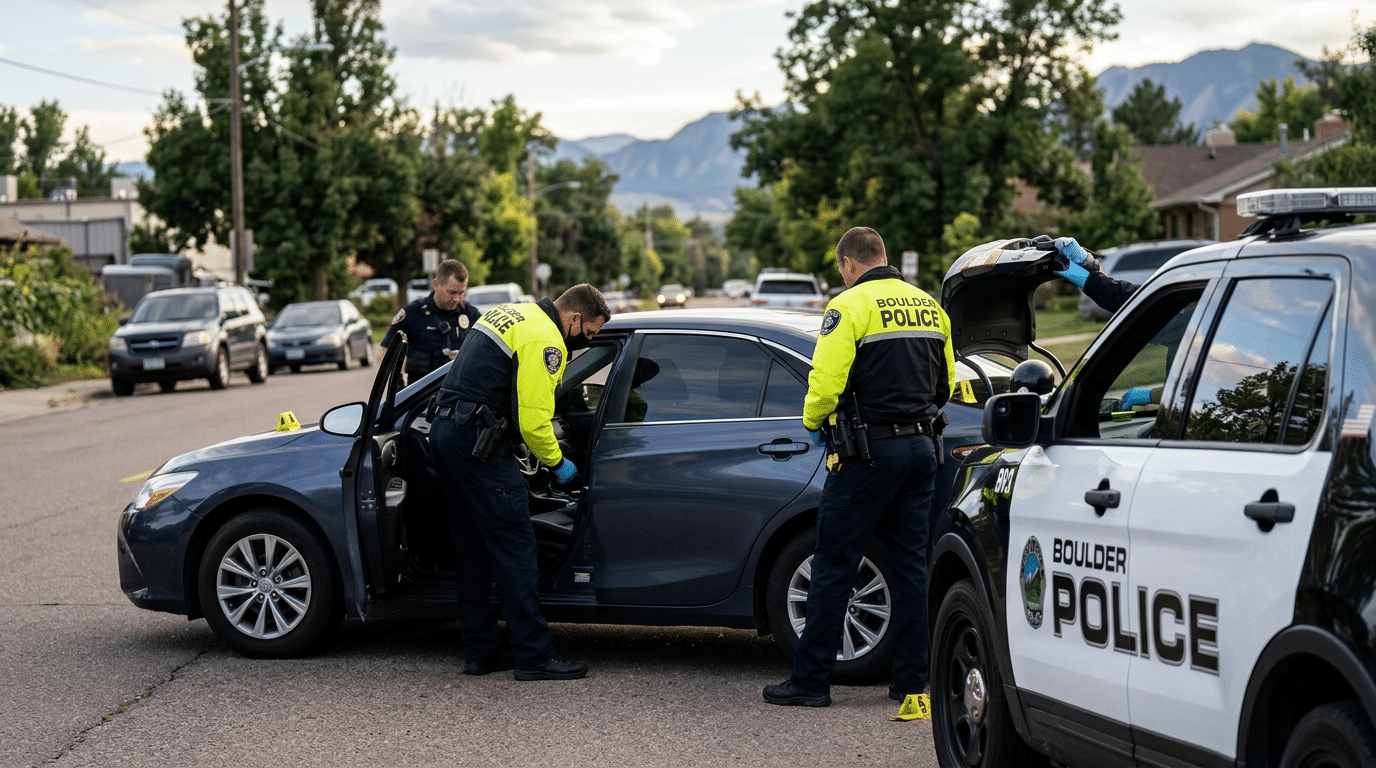
Seeing a firearm in a vehicle does not always give police the right to search the entire vehicle in Colorado. The answer depends on where the firearm was located, whether the stop was lawful, whether the officer had a safety concern, whether the firearm appeared illegal, and whether other facts suggested criminal activity. A firearm in a vehicle can turn an ordinary traffic stop into a much more serious encounter. We understand that many responsible gun owners are shocked when a lawful firearm becomes the reason for questioning, removal from the vehicle, a pat-down, or a search. At Watkins Law Firm LLC, we defend people in Boulder and throughout the Denver area when police searches lead to weapons charges, drug charges, DUI allegations, or other criminal accusations.
A Visible Firearm Does Not Automatically Make You Guilty Of A Crime
Colorado law does not make every firearm in a vehicle illegal. Under C.R.S. § 18-12-105, Colorado’s unlawfully carrying a concealed weapon statute, there are important exceptions. One exception applies when a person is in a private automobile or other private means of transportation and carries a weapon for lawful protection of that person or another person’s property while traveling. That means the mere presence of a firearm in a vehicle does not automatically prove unlawful possession, unlawful concealment, or criminal intent.
That said, the facts matter. A firearm may raise more serious concerns if it is stolen, possessed by a prohibited person, connected to another alleged crime, located in a restricted place, or found with drugs, alcohol, threats, or other suspicious circumstances. Police often treat firearms as safety risks during traffic stops, but officer safety and a full criminal search are not always the same thing.
Police Need A Lawful Basis For The Stop First
Before police can search a vehicle, we first ask whether the traffic stop itself was lawful. Under Colorado law, a temporary detention must be supported by a proper legal basis. C.R.S. § 16-3-103 allows an officer to stop a person when the officer reasonably suspects that the person has committed, is committing, or is about to commit a crime. The purpose and scope of the stop must also be reasonable.
In a traffic case, the stop may be based on speeding, expired registration, a lane violation, equipment issues, suspected DUI, or another alleged traffic offense. If police had no lawful reason to stop the vehicle, evidence found after the stop may be challenged. That can include the firearm, drugs, statements, ammunition, magazines, or other evidence found later. A case may look serious on paper, but if it began with an unlawful stop, the defense may have a strong suppression issue.
Protective Searches Are Limited
Colorado law allows an officer to take reasonable safety steps during a lawful stop. C.R.S. § 16-3-103 allows a pat-down search for weapons when an officer reasonably suspects personal safety requires it. Colorado courts have also addressed protective searches of vehicle passenger compartments when officers have specific facts supporting a reasonable belief that a person may be armed and dangerous and may gain access to a weapon.
That authority is limited. A protective search is not a general search for drugs, evidence, or anything else police may want to find. The search should be tied to officer safety and limited to places where a weapon could be located or accessed. If officers use a visible firearm as an excuse to search bags, containers, locked compartments, the trunk, or areas unrelated to safety, the defense may challenge the search.
Plain View Does Not Always Allow A Full Vehicle Search
Police may rely on the plain view doctrine when they see an item from a lawful position and its incriminating nature is immediately apparent. But a firearm is not always incriminating just because it is visible. A handgun on a seat, in a door pocket, or in a case may be lawfully possessed depending on the person, location, and circumstances.
For plain view to matter, police generally need more than the fact that an item can be seen. They must be lawfully present where they saw it, and they must have probable cause to connect the item to criminal activity. If a firearm appears lawful and there are no additional facts suggesting a crime, the plain view doctrine may not justify a broader search. If police claim the firearm was connected to drugs, threats, stolen property, a protection order, or prohibited possession, we examine the evidence closely.
Firearms On School, College, Or University Grounds
Colorado has special rules for weapons on school, college, and university grounds. C.R.S. § 18-12-105.5 addresses unlawful possession of weapons on school, college, or university property. The statute also includes exceptions, including situations involving an unloaded weapon that remains inside a motor vehicle on certain college, university, or seminary grounds, and other listed exceptions.
This issue can come up in Boulder because of schools, CU Boulder, university property, and student-related cases. A person may not realize that location changes the legal analysis. A firearm that may be lawful in one place can raise different issues on school grounds, in public buildings, or in other restricted areas. If a case involves a firearm in a vehicle near a school or campus, we review the exact location, statute, exception, ownership, access, and police basis for the search.
When A Vehicle Firearm Search Leads To Other Charges
Many vehicle firearm cases do not end with a weapons issue. Once police begin searching, they may find drugs, pills, cash, scales, open containers, stolen property, or other evidence. A traffic stop involving a visible firearm can turn into a drug possession case, possession with intent case, DUI investigation, violation of a protection order case, or felony weapons case.
That is why the legality of the search matters so much. If police exceeded the lawful scope of a protective search, searched without probable cause, or relied on consent that was not freely given, the defense may ask the court to suppress the evidence. Suppression can keep unlawfully obtained evidence out of court. In some cases, that can weaken or even end the prosecution’s case.
Consent Searches Can Create Problems
Police may ask for permission to search the vehicle after seeing a firearm. Many people agree because they feel they have no choice or because they believe refusing will make them look guilty. You have the right to refuse consent to a vehicle search. Refusing consent is not the same as resisting, obstructing, or admitting guilt.
If police claim you consented, we examine the body camera footage, tone of the conversation, officer commands, number of officers present, whether you were blocked from leaving, whether weapons were displayed, and whether the search stayed within any consent that was given. A person may consent to retrieve a firearm for safety, but that does not always mean police may search the entire vehicle.
How We Challenge Vehicle Searches In Colorado
At Watkins Law Firm LLC, we review every stage of the stop and search. We look at why police stopped the vehicle, what they saw, what they claimed to fear, where the firearm was located, whether it was loaded, whether the driver or passenger could access it, and whether police had probable cause to believe a crime had occurred. We also review body camera video, dash camera video, dispatch records, search reports, photographs, and officer testimony.
We may challenge the stop, detention, search, seizure of the firearm, statements made during questioning, or evidence found after the search. In firearm cases, small details matter. A lawful gun owner should not face criminal consequences because an officer treated lawful possession as automatic criminal conduct.
FAQs About Police Searching A Vehicle After Seeing A Firearm In Colorado
Can Police Search My Whole Car Just Because They See A Gun?
Not automatically. Police may be allowed to take limited safety steps if they lawfully stop the vehicle and have specific reasons to believe a weapon creates a safety risk. But seeing a firearm does not always justify a full search of the entire vehicle. A protective search must be tied to officer safety and limited in scope. If police search areas unrelated to safety or search for evidence without probable cause, the defense may challenge the search in court.
Is It Illegal To Have A Gun In A Vehicle In Colorado?
Not always. Colorado law includes protections and exceptions for weapons in private vehicles, including carrying a weapon for lawful protection while traveling under C.R.S. § 18-12-105. The law can change depending on the type of weapon, whether the person may lawfully possess it, where the vehicle is located, whether the firearm is concealed, whether the person has a permit when required, and whether other criminal allegations are involved. A firearm in a vehicle should not be treated as automatically illegal without reviewing the facts.
What If The Gun Was In Plain View?
Plain view does not always mean police can search everything. If an officer lawfully sees a firearm, that may justify safety-related steps depending on the situation. But a firearm is not always contraband. Police generally need probable cause to believe the firearm is evidence of a crime before using plain view as a basis for seizure or a broader search. We look at whether the officer had facts beyond the visible gun, such as prohibited possession, threats, drugs, stolen property, a protection order, or a restricted location.
Can Police Remove Me From The Vehicle If They See A Firearm?
Police may order occupants out of a vehicle during a lawful traffic stop for officer safety. If a firearm is visible or reported, officers may take additional safety precautions. That does not mean every later search is lawful. There is a difference between controlling the scene for safety and searching the vehicle for evidence. We review whether police actions were reasonable at each stage and whether they went beyond what the law allowed.
What If Police Found Drugs After Seeing A Firearm?
If police found drugs after seeing a firearm, the key question is whether the search that led to the drugs was lawful. If police only had grounds for a limited weapons-related safety search, they may not have been allowed to search containers or areas where no weapon-related concern existed. If the search was unlawful, drug evidence may be challenged through a motion to suppress. This can be a major issue in cases where a firearm stop turns into a drug possession or distribution charge.
Call Watkins Law Firm LLC For Help With A Colorado Vehicle Search Case
If police searched your vehicle after seeing a firearm, Watkins Law Firm LLC can help. We defend clients in Boulder and throughout the Denver area in weapons cases, drug charges, DUI and DUID cases, assault allegations, theft cases, and other Colorado criminal matters. We know how to challenge unlawful stops, vehicle searches, firearm seizures, and evidence found after questionable police conduct. Contact our Boulder criminal defense attorney by calling us 24/7 at 303-507-1324 for your free consultation.
