
Can Federal Agents Search Your Cell Phone Without A Warrant?
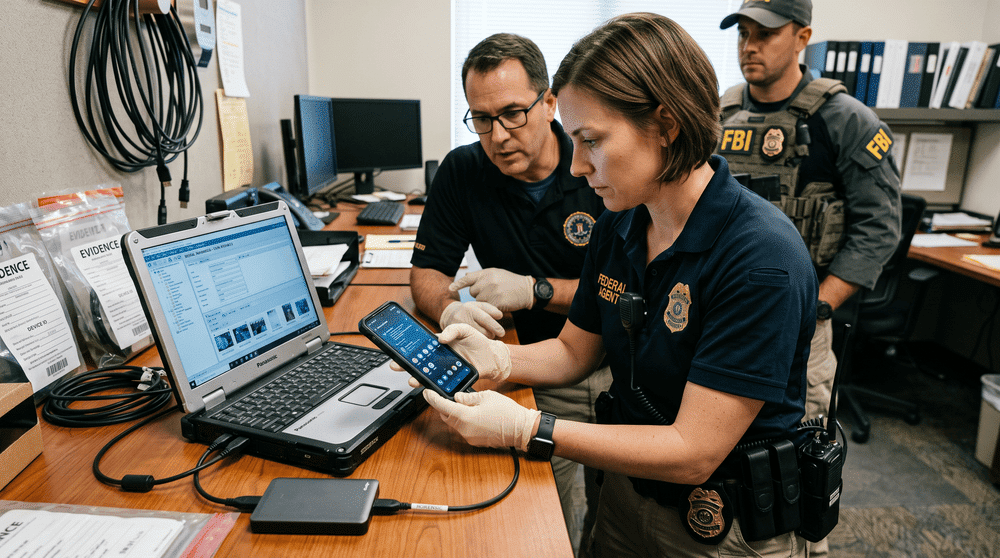
A cell phone can hold years of private information. It may contain text messages, emails, photographs, videos, banking records, location data, internet searches, passwords, notes, call logs, app data, and private conversations. When federal agents take a phone during an investigation, the search can feel more invasive than a search of a home, car, or bag. We understand why people panic when FBI, DEA, ATF, Homeland Security, or other federal agents ask to look through a phone. In most criminal investigations, federal agents generally need a warrant to search the digital contents of your cell phone, but there are exceptions and pressure points that can make these cases complicated.
The General Rule: Police Usually Need A Warrant To Search Phone Data
The leading U.S. Supreme Court case is Riley v. California. In that case, the Court held that officers generally may not search digital information on a cell phone seized from someone who has been arrested without first getting a warrant. The Court recognized that modern cell phones are not like wallets, purses, or containers found in someone’s pocket. A phone can reveal the private details of a person’s life.
This rule applies in federal and state criminal cases. Federal agents may seize a phone in some situations, but searching the phone’s contents is a different legal issue. Taking possession of a device does not automatically give agents permission to search messages, photos, apps, cloud accounts, location history, or other stored data. If agents want to examine the contents of the phone, they usually need a warrant supported by probable cause.
Colorado Search And Seizure Protections Also Matter
Colorado criminal cases are protected by both the Fourth Amendment and Article II, Section 7 of the Colorado Constitution. Article II, Section 7 protects people from unreasonable searches and seizures and requires warrants to describe the place to be searched or the person or thing to be seized, supported by probable cause.
Colorado search warrant law is also important. C.R.S. § 16-3-303 addresses search warrant applications and probable cause requirements. A warrant is not supposed to be a blank check. It should identify what agents are allowed to search for and what evidence they expect to find. In a phone case, that can matter because a device may contain huge amounts of unrelated private information. A warrant that is too broad, unsupported, or poorly limited may create a defense issue.
Federal Agents May Ask For Consent
One of the biggest risks is consent. Agents may ask, “Can we take a quick look?” or “Can you unlock the phone?” or “Do you mind showing us your messages?” A person may feel like they have no choice, especially if agents are standing at the door, serving a subpoena, executing a search warrant, or making an arrest. But consent is often one of the government’s strongest arguments for a warrantless search.
If you voluntarily consent to a phone search, the government may argue that no warrant was needed. The scope of consent then becomes important. Did you agree to let agents see one text message, or did you agree to a full forensic download? Did you unlock the phone only to show an insurance card, contact, or call log? Did agents exceed what you allowed? We examine exactly what was said, what was written, and what agents did after gaining access.
Can Agents Force You To Unlock Your Phone?
This is a complex issue. Agents may try to obtain access through a passcode, biometric unlock, forensic tools, or data from cloud providers. Courts have treated compelled passcodes and biometric access differently depending on the facts and the jurisdiction. The Fifth Amendment may protect a person from being forced to reveal testimonial information, while physical access methods may raise different questions.
The safest practical rule is simple: do not guess your way through a federal encounter. If agents ask you to unlock a phone, provide a passcode, or explain what is on the device, you should ask to speak with an attorney. Do not lie. Do not delete anything. Do not destroy evidence. Do not try to outsmart investigators. Simply assert your rights calmly and clearly.
Exceptions The Government May Try To Use
Riley says officers generally need a warrant to search cell phone data, but the Supreme Court also recognized that case-specific exceptions may exist. Examples may include exigent circumstances, such as an immediate threat to safety, imminent destruction of evidence, or an urgent need to prevent serious harm.
The government may also argue consent, abandonment, plain view, border search authority, probation or supervised release conditions, or search authority tied to another valid warrant. Each exception has limits. Federal agents cannot simply label a case urgent to avoid the warrant requirement. The facts matter. We look at whether there was a real emergency, whether the search went too far, whether the warrant was valid, and whether the phone evidence should be suppressed.
Border Searches Are Different
Cell phone searches at international borders and airports can involve different rules than ordinary searches after an arrest in Boulder or Denver. Federal border authorities often claim broader search power at the border than agents would have during a normal criminal investigation. Even so, phone searches at the border are legally contested, and the rules can vary depending on the type of search, the level of suspicion, and the court involved.
If your phone was searched by federal agents at an airport, port of entry, or border checkpoint, do not assume the search was automatically valid. The legal analysis is different from a standard arrest case, but there may still be arguments about scope, suspicion, forensic searching, retained data, and use of the evidence in a later prosecution.
Phone Searches Can Affect Many Types Of Criminal Cases
Federal agents may seek phone evidence in drug trafficking cases, conspiracy investigations, fraud cases, firearms cases, sex crime investigations, internet crime cases, child exploitation investigations, domestic violence cases involving interstate communications, and white-collar matters. Phone data may be used to build timelines, identify contacts, trace location history, prove intent, connect co-defendants, or challenge a person’s statements.
That does not mean the data tells the full story. Text messages can be misunderstood. Location data can be imprecise. A phone may be shared. Apps may store old information. Cloud backups may include deleted or unrelated material. A contact in a phone does not prove a conspiracy. A message does not always prove intent. We analyze both the legality of the search and the meaning of the evidence.
Challenging A Federal Cell Phone Search
If agents searched your phone without a valid warrant or exceeded the warrant’s scope, we may be able to file a motion to suppress. Suppression asks the court to exclude unlawfully obtained evidence. In some cases, losing phone evidence can seriously weaken the prosecution.
We review the warrant application, affidavit, warrant scope, return, forensic extraction report, chain of custody, consent forms, body camera footage, agent reports, and any communications about the search. We also review whether the warrant was supported by probable cause, whether it was too broad, whether agents searched areas beyond the warrant, and whether they used phone evidence to obtain more evidence.
What To Do If Federal Agents Want Your Phone
If federal agents ask for your phone, try to stay calm. Do not argue, resist, lie, delete data, warn others, or destroy evidence. Ask whether you are free to leave. Ask whether they have a warrant. Ask for a copy of any warrant or paperwork. State clearly that you want to speak with a lawyer before answering questions or consenting to any search.
You do not have to explain your phone, your messages, your apps, your contacts, or your location history on the spot. Federal investigations move fast, and statements made during the first encounter can shape the case. Legal advice before speaking can prevent mistakes that are difficult to fix later.
FAQs About Federal Agents Searching Cell Phones
Can Federal Agents Search My Cell Phone After Arresting Me?
Usually, federal agents need a warrant to search the digital contents of your cell phone after an arrest. Riley v. California makes clear that a search incident to arrest does not automatically allow officers to search phone data. Agents may be able to seize the phone, secure it, and seek a warrant, but searching messages, photos, apps, emails, and other data usually requires judicial approval. The government may still argue exceptions, such as consent or exigent circumstances, but those claims should be examined carefully.
What If I Gave Agents My Passcode?
If you gave agents your passcode, the government may argue that you consented to the search. That does not end the analysis. We would look at whether the consent was voluntary, whether agents pressured or misled you, what you actually agreed to, and whether the search exceeded the scope of your consent. Giving a passcode during a stressful federal encounter does not always mean agents had unlimited permission to search every part of the phone. The details matter.
Can Agents Take My Phone Even If They Cannot Search It Right Away?
Yes, agents may sometimes seize a phone while they apply for a warrant, especially if they claim the phone may contain evidence of a crime. Seizing the phone and searching its contents are separate legal issues. A lawful seizure does not automatically make the later search lawful. We review whether agents had legal authority to take the phone, whether they obtained a valid warrant, how long they held it, and whether they stayed within the warrant’s limits.
Can A Search Warrant Let Agents Look Through Everything On My Phone?
Not always. A warrant should be tied to probable cause and should describe what agents are allowed to search for with enough detail. Phones contain large amounts of private and unrelated data. A warrant that gives agents unlimited access without proper limits may be challenged. Even when the warrant is valid, agents may exceed the scope by searching categories of data not authorized by the warrant. We review the warrant language and forensic search process closely.
Can Phone Evidence Be Thrown Out In Federal Court?
Yes, phone evidence may be suppressed if it was obtained through an unconstitutional search, invalid warrant, unlawful consent, or search that exceeded the warrant’s scope. Suppression can affect text messages, photos, location data, app data, call logs, and other evidence taken from the phone. A suppression motion does not automatically win the case, but it can remove key evidence and change the government’s leverage.
Should I Talk To Federal Agents If I Have Nothing To Hide?
No one should speak with federal agents about a criminal investigation without legal advice. Innocent people can make mistakes, misremember dates, misunderstand questions, or create statements that agents later view as inconsistent. Federal cases can involve false statement allegations, conspiracy claims, and complex evidence. Asking for a lawyer is not an admission of guilt. It is a way to protect yourself before a serious situation gets worse.
Call Watkins Law Firm LLC For Help With A Federal Criminal Case
If federal agents searched your phone, took your device, asked for your passcode, or used phone evidence against you, Watkins Law Firm LLC can help. We defend clients in Boulder and throughout the Denver area in federal investigations, drug cases, sex crime allegations, internet crime cases, DUI and DUID cases, assault cases, theft cases, and other serious criminal matters. We know how to challenge unlawful searches, overbroad warrants, improper consent claims, and unreliable phone evidence. Contact our Boulder federal crime lawyer by calling us 24/7 at 303-507-1324 for your free consultation.
