
What Should I Do If I Am Charged With Both DUID And Drug Possession?
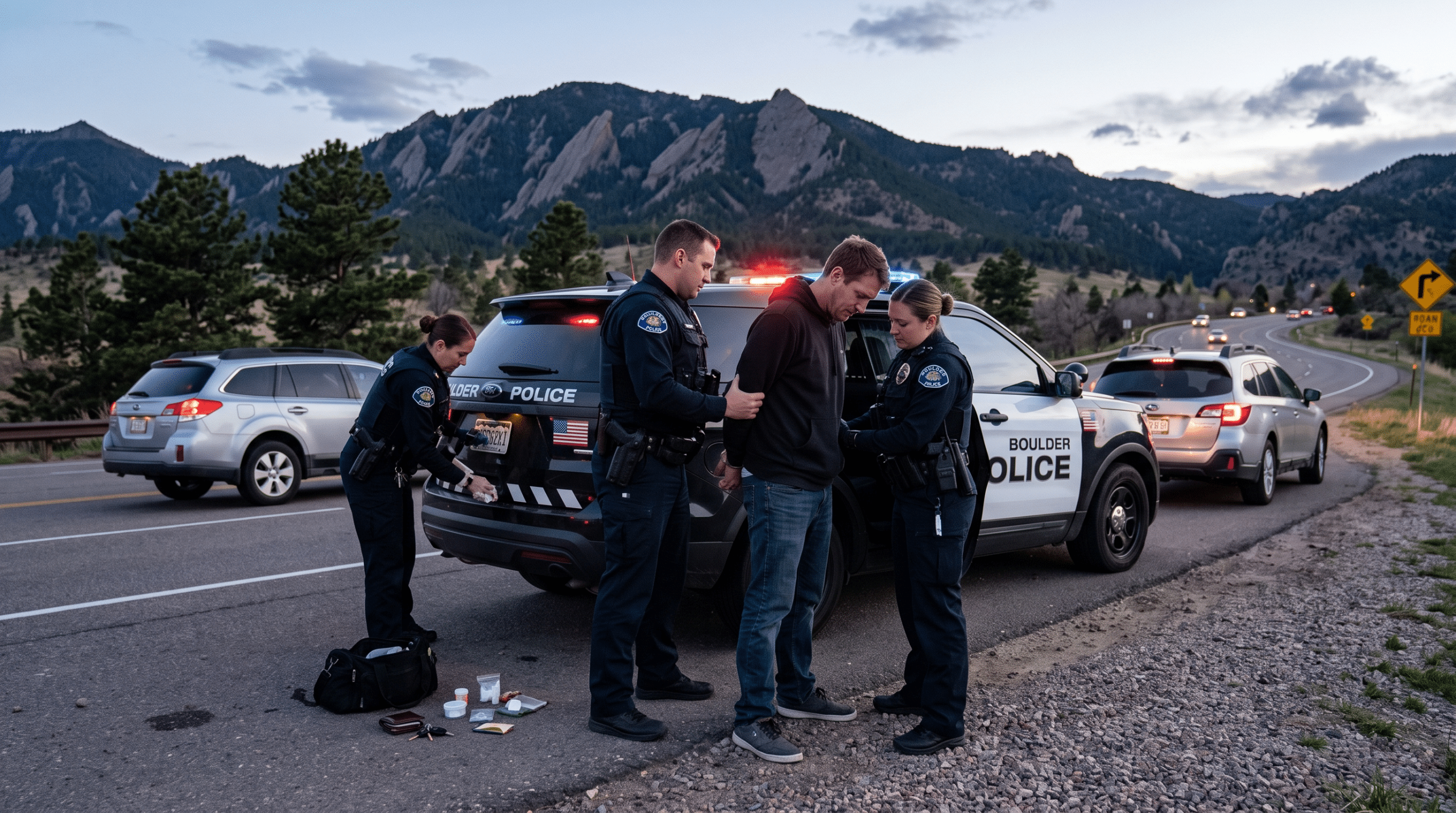
Facing both DUID and drug possession charges in Colorado can feel overwhelming, as it often means dealing with two separate cases at once. One charge is about whether drugs affected your ability to drive, while the other is about whether you knowingly had a controlled substance. These charges usually start with the same traffic stop, but each brings its own legal challenges, evidence issues, and risks. What begins as a roadside stop in Boulder can quickly become a criminal case, a DMV license issue, and a problem that impacts your job, school, family, and future. At Watkins Law Firm LLC, we take these cases seriously from the very beginning and defend clients throughout Boulder and the Denver area.
Why DUID And Drug Possession Are Separate Charges
In Colorado, DUID and drug possession are separate crimes. According to C.R.S. § 42-4-1301, you can be charged with DUI or DWAI if alcohol, drugs, or both are said to affect your ability to drive safely. A drug-related DUI does not have to involve alcohol. Prosecutors may claim you were impaired by marijuana, prescription drugs, illegal drugs, or a mix of substances.
Drug possession is different. Under C.R.S. § 18-18-403.5, prosecutors must prove unlawful possession of a controlled substance. That usually means they must prove the substance was a controlled substance and that the accused person knowingly possessed it. The DUID charge is about driving and impairment. The possession charge is about control over the substance. Police may try to connect both charges, but the prosecution still has to prove each one.
Do Not Assume The Charges Prove Each Other
One of the biggest mistakes people make is assuming that a drug possession charge automatically proves DUID. It does not. Drugs found in a vehicle do not prove impairment at the time of driving. A positive blood test does not always prove unsafe driving. A prescription bottle does not always prove misuse. Marijuana odor does not prove that the driver was impaired at that moment.
The reverse is also true. A DUID investigation does not automatically prove possession. If drugs were found in a shared vehicle, backpack, purse, console, hotel room, or borrowed car, the government still has to prove knowledge and control. If more than one person had access to the area where drugs were found, possession may be disputed. We look carefully at whether police are making assumptions instead of relying on solid evidence.
Protect Yourself After The Arrest
After being charged, the most important step is to stop making statements about the facts. Do not explain drug use to police, prosecutors, probation, the other driver, passengers, friends, or social media. Do not text people about who owned the drugs, when they were used, or what happened during the stop. Statements can be used in both the DUID case and the possession case.
You should also keep every document you received, including the summons, bond paperwork, DMV notice, chemical test paperwork, and any property receipt. Court dates and DMV deadlines matter. A missed deadline can create avoidable damage. If you received a Notice of Revocation after a chemical test issue or refusal, the DMV side of the case may move faster than the criminal court case.
DMV License Consequences Can Move Quickly
A drug-related DUI arrest can trigger driver’s license consequences through the Colorado Division of Motor Vehicles. C.R.S. § 42-2-126 governs administrative license revocation for certain alcohol and drug-related driving issues, including refusal. Colorado’s Express Consent law requires cooperation with chemical testing when an officer has reasonable grounds to believe a person drove under the influence or while impaired by alcohol, drugs, or both.
The DMV case is separate from the criminal court case. That means you could be fighting the criminal charges while also dealing with a license revocation. License loss can affect work, parenting, school, medical care, and basic transportation. When DUID and possession are charged together, we review the stop, the officer’s grounds for requesting a chemical test, the timing of the test, and whether the DMV evidence can be challenged.
The Traffic Stop And Search May Be Key
Many combined DUID and drug possession cases depend on the legality of the stop and search. Police may begin with a claim of speeding, weaving, expired tags, equipment violations, or suspicious driving. From there, officers may claim they smelled marijuana, saw drug paraphernalia, observed signs of impairment, or received consent to search. Each step matters.
We examine whether the officer had a lawful basis for the stop. We review whether the officer had legal grounds to expand the investigation from a traffic matter into a drug investigation. We also look at whether any search of the vehicle, containers, phone, or person was lawful. If police violated constitutional protections, evidence may be challenged through a motion to suppress. If key evidence is excluded, the prosecution’s case may change significantly.
Blood Tests And Drug Impairment Evidence
Drug DUID cases are often more complicated than alcohol DUI cases. With alcohol, prosecutors may rely on a blood alcohol number. With drugs, the relationship between test results and impairment can be disputed. THC, prescription medication, and controlled substances can remain in the body after the strongest effects have passed. A person may test positive without being impaired while driving.
Police may also rely on field sobriety tests, officer observations, statements, driving pattern, Drug Recognition Evaluator findings, and lab reports. We review whether testing was performed correctly, whether the blood draw followed proper procedures, whether the lab records are reliable, and whether the officer’s observations match the video evidence. The presence of a drug is not the same as proof that the driver was unsafe.
Possession Defenses In A Shared Vehicle
Drug possession charges often involve shared spaces. A vehicle may have several passengers. A backpack may not belong to the driver. A center console may be accessible to everyone. A prescription bottle may belong to someone else. Police may assume the driver possessed everything in the car, but assumptions are not proof.
In a possession case, we may challenge knowledge, control, ownership, identification, lab testing, chain of custody, and the legality of the search. We may also question whether the substance was usable, whether it was actually a controlled substance, whether the amount supports the charge, and whether prosecutors are overcharging the case. If police found drugs in a shared car, we do not accept the idea that the driver must be responsible.
Why The Combined Case Can Increase Pressure
When DUID and possession are charged together, prosecutors may use one accusation to strengthen the other. They may argue that drugs found in the vehicle explain alleged impairment. They may argue that alleged impairment shows drug use and supports possession. This can create pressure to plead quickly, especially when the client is worried about a license, job, family, or professional record.
We slow the case down and test the evidence. The prosecution must prove the DUID charge and the possession charge separately. A weak possession case should not be used to cover up weak impairment evidence. Weak impairment evidence should not be used to prove possession. Each charge deserves a careful defense.
How We Defend DUID And Drug Possession Charges
At Watkins Law Firm LLC, we review police reports, body camera footage, dash camera footage, blood test records, lab reports, witness statements, search reports, DMV documents, and court filings. We look for illegal stops, unlawful searches, unreliable test results, weak impairment evidence, shared possession problems, and officer assumptions.
Our goal is to protect your license, record, freedom, job, and future. Depending on the facts, we may fight for dismissal, suppression of evidence, reduction of charges, protection of driving privileges, or a resolution that limits long-term harm. These cases are too serious to treat as a routine traffic matter or a simple possession charge.
FAQs About DUID And Drug Possession Charges In Colorado
Can I Be Charged With Both DUID And Drug Possession From One Traffic Stop?
Yes. A single Colorado traffic stop can lead to both DUID and drug possession charges. Police may claim that you were impaired by drugs while driving and that you unlawfully possessed drugs found in the vehicle or on your person. The charges are separate. DUID focuses on driving ability and impairment. Possession focuses on knowledge and control over a controlled substance. The prosecution must prove both charges with admissible evidence. We review whether police had a lawful reason for the stop, whether the search was legal, and whether the evidence actually supports both charges.
Does A Drug Possession Charge Prove I Was Driving Under The Influence Of Drugs?
No. Drug possession does not automatically prove DUID. Drugs found in a vehicle may raise suspicion, but suspicion is not proof beyond a reasonable doubt. The prosecution must prove impairment or that drugs affected your ability to drive as required by Colorado law. A person can possess a drug without being impaired while driving. A person can also test positive for a substance without being unsafe at the time of driving. We look at the driving pattern, officer observations, field tests, blood test timing, lab records, and video evidence before accepting any impairment claim.
What If The Drugs Were Found In A Shared Car?
A shared vehicle can create serious proof problems for the prosecution. If passengers, friends, family members, or other drivers had access to the area where drugs were found, the government still has to prove that you knowingly possessed the substance. Being near drugs is not always enough. Police may assume the driver controlled everything inside the vehicle, but that assumption can be challenged. We review where the drugs were found, who owned the vehicle, who had access, whether fingerprints or admissions exist, and whether police ignored evidence pointing to someone else.
Can A Prescription Medication Lead To Both DUID And Possession Charges?
Yes, but the facts matter. A legal prescription can still lead to a DUID charge if police claim the medication impaired your driving. However, having a valid prescription may matter when responding to a possession allegation. Problems can arise when pills are outside the prescription bottle, mixed with other substances, held in someone else’s name, or not properly documented. We examine the medication, prescription records, dosage, timing, officer observations, and whether the prosecution can prove unlawful possession or impairment at the time of driving.
Should I Explain To Police That The Drugs Were Not Mine?
You should be very careful. Many people want to explain themselves during a traffic stop or after an arrest, but statements can cause more harm. Saying “those are not mine” may lead to more questions. Saying who used drugs, when drugs were used, or where drugs came from may create evidence for DUID, possession, or even distribution allegations. You have the right to remain silent, and you have the right to legal counsel. We recommend speaking with a defense attorney before making any statement about the facts.
Can The Police Search My Car During A DUID Investigation?
Sometimes police may search a vehicle during a DUID or drug investigation, but they must have a lawful basis. A search may be challenged if it was based on weak suspicion, improper consent, an unlawful stop, or an unlawful expansion of the traffic investigation. Officers may claim they smelled marijuana, saw paraphernalia, observed impairment, or had probable cause. We review body camera footage, officer reports, witness statements, and the timeline of the stop to see whether the search violated your rights. If evidence was obtained unlawfully, we may ask the court to suppress it.
Can I Lose My License If I Am Charged With DUID And Possession?
The possession charge does not usually drive the DMV case by itself, but the DUID charge can create license consequences. A chemical test issue or refusal may lead to administrative license revocation under Colorado law. The DMV process can move quickly and is separate from the criminal court case. Losing a license can affect work, school, parenting, and daily responsibilities. We review the DMV paperwork, deadlines, test request, officer’s grounds, and hearing issues so the license side of the case is not ignored.
Call Watkins Law Firm LLC For Help With DUID And Drug Possession Charges
If you are facing both DUID and drug possession charges in Colorado, Watkins Law Firm LLC can help. These cases can threaten your license, record, job, school, family responsibilities, and future. We defend clients accused of drug-related driving, unlawful possession, felony drug crimes, and related Colorado criminal charges in Boulder and throughout the Denver area.
Contact our Boulder drug possession defense attorney by calling us 24/7 at 303-507-1324 for your free consultation. Our Boulder criminal defense lawyer represents clients in Boulder and throughout the Denver area from our office location in Boulder, Colorado.
