
Can A DUID Arrest Turn Into A Drug Possession Case In Colorado?
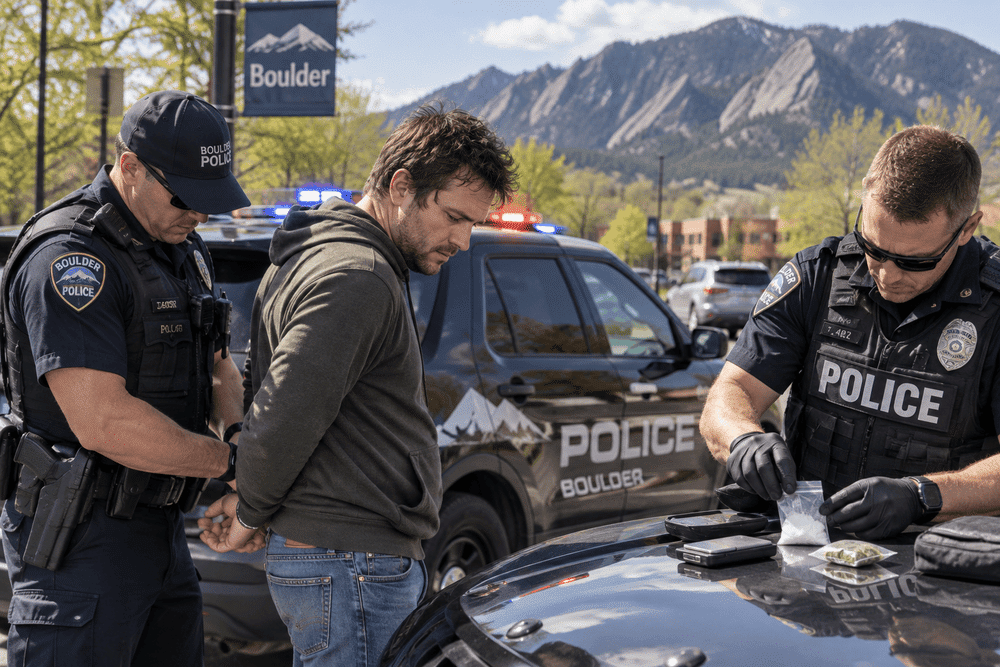
A Colorado DUID arrest can very quickly turn into more than just a case involving driving while impaired. Although many drivers think they are only going to face a traffic stop, a roadside test, and possibly a blood test, the police then search the vehicle and discover pills, marijuana products, powders, paraphernalia, or containers, which causes the case to develop into accusations of drug possession. The fact that this happens is important since the person will now have to defend themselves against both impaired driving and controlled substance possession.
We realize how stressful that can be, particularly when a client is concerned about their driver’s license, criminal record, job, professional license, immigration status, or the effects on their family. At the Watkins Law Firm LLC, we represent people in Boulder and in the rest of the Denver area who are accused of DUID, DWAI, DUI, drug possession, and other Colorado criminal charges.
How A Colorado DUID Investigation Starts
Colorado’s impaired driving statute, C.R.S. § 42-4-1301, covers DUI, DUI per se, DWAI, and driving under the influence of drugs. A person may face DUI or DWAI allegations when police claim alcohol, drugs, or a combination of both affected the person’s ability to drive safely. A drug-related driving case may involve marijuana, prescription medication, methamphetamine, cocaine, fentanyl, opioids, benzodiazepines, sleep medication, or other substances.
A DUID investigation can start because of a speeding stop, a lane violation, an accident, an expired registration, a vehicle equipment problem, or a call from another driver. If an officer suspects that a driver is impaired by drugs, the officer can question the person about any medication they are taking, their use of marijuana, any drug use they have had recently, any medical conditions they have, and where they are coming from. The answers to those questions can then be used as evidence. Words given by the driver themselves might cause the police to take the investigation beyond just the driving and consider the possibility of drug possession.
Why A Traffic Stop Can Lead To A Vehicle Search
A DUID stop may become a possession case if the police think they have a legal reason to search the vehicle. According to Colorado’s search-and-seizure law, officers usually have to have a valid basis for carrying out a search, for example, consent, probable cause, a proper warrant, or some other accepted exception. When it comes to older and more recent cases, Colorado courts have looked into whether factors such as the presence of visible contraband, drug paraphernalia, statements, a smell, or an alert from a drug-dog provided the police with sufficient grounds for searching the vehicle.
It is here that the defense usually starts. The suspicion of a DUID does not immediately grant the police the right to search every part of the car. The reason for the search has to be examined. Has the driver given consent? Was that consent given voluntarily? Did the officer say that he smelt marijuana? Was there a pipe, a pill bottle, a baggie, a syringe, or a container visible to view? Has the officer kept the vehicle under observation for a period longer than was legally permitted? Has the officer used a drug-detection dog? Was there probable cause before the officer opened any compartments, bags, or containers? Each of these answers can influence whether the drug evidence can be admitted.
Drug Possession Charges After A DUID Arrest
Wherever the police discover a controlled substance, the prosecutors have the option of bringing a separate charge of possession under C.R.S. § 18-18-403.5. The seriousness of the charge will vary according to the type and quantity of the substance, whether the prosecutors assert that the person knew that they were possessing it, and whether there are any facts indicating that another drug offence has been committed. Moreover, the Colorado law makes it clear that a person can be accused of other drug offences, such as distribution, manufacturing, sale, or possession with intent, if there is evidence to support such allegations.
The prosecution have to show that the defendant actually possessed the substance, and that is not always easy. When there are several people in a car, the police might not know who owned the drugs. The drugs could be discovered in the center console, in the passenger area, in the boot, in a backpack, in a purse, in a pocket or in a shared container. The defense can question whether the person accused knew the substance was there, whether they had control over it, or whether they had the kind of possession that is legally required for a conviction. Since a vehicle is often a shared space, shared space does not necessarily mean that criminal possession has taken place.
Drug Paraphernalia Can Also Become A Separate Issue
A DUID arrest can also result in a paraphernalia charge under C.R.S. § 18-18-428. According to Colorado law, possession of drug paraphernalia occurs when a person has an item and either knows or should reasonably know that it could be used in a way which breaches Colorado drug laws. The paraphernalia charges may cover pipes, syringes, baggies, scales, burnt foil, grinders, or other items which the police link with drug use or distribution.
Evidence relating to paraphernalia can influence both the prosecution and the defense. The prosecutors can use it to show that drugs were used, that the person was recently impaired, or that they possessed drugs. The defense, on the other hand, might say that the item was not illegal, that it did not belong to the accused, that it had no connection with the substance in question, or that it does not prove the driver was impaired. Since paraphernalia is generally considered circumstantial evidence, circumstantial evidence still has to be tested.
Blood Tests Do Not Prove Possession
Colorado’s Express Consent law, C.R.S. § 42-4-1301.1, allows chemical testing when an officer has probable cause to believe a person drove under the influence or while impaired. In a drug-related driving case, police may request a blood test. That test may show the presence of a substance, but a blood test is not the same as proof that drugs were found in the car or knowingly possessed by the driver.
That distinction matters. A DUID case focuses on impairment or being under the influence while driving. A possession case focuses on knowing possession of a controlled substance. A person could test positive for a substance without having drugs in the vehicle. A person could have old drug metabolites in their system without current possession. A person could also be charged with possession even if the DUID evidence is weak. We analyze the charges separately while also looking at how the prosecution may try to connect them.
Marijuana DUID Cases Require Careful Review
Marijuana cases can be especially complicated in Colorado because adult possession of certain amounts of marijuana may be lawful, while impaired driving remains illegal. Colorado courts have recognized that marijuana-related searches can raise special constitutional questions because marijuana odor or drug-dog evidence may detect lawful activity as well as illegal activity. In Colorado v. McKnight, the Colorado Supreme Court held that a sniff from a drug-detection dog trained to alert to marijuana was a search under the Colorado Constitution because it could detect lawful possession by adults.
This does not mean marijuana-related searches are always illegal. It means the facts matter. The officer’s observations, timing, quantity, packaging, statements, visible items, driver age, vehicle occupants, and other evidence may all affect probable cause. In a Boulder marijuana DUID case, we examine whether the officer crossed the line from lawful investigation into an unlawful search.
Defenses When DUID And Possession Are Charged Together
When a DUID arrest turns into a possession case, we often look at several defense issues at once. We may challenge the stop, the length of detention, field sobriety testing, drug recognition evidence, chemical testing, vehicle search, consent, probable cause, ownership, knowledge, chain of custody, lab testing, and whether the alleged substance was properly identified.
We also look at whether the prosecution is using one weak charge to support another. For example, the government may claim that drugs found in the car prove impairment, or that alleged impairment proves possession. Those are not the same legal questions. We work to keep the issues separate, expose weak assumptions, and protect clients from being pushed into an unfair result.
FAQs About DUID Arrests And Drug Possession Charges In Colorado
Can A Colorado DUID Arrest Lead To Drug Possession Charges?
Yes. A DUID arrest can lead to drug possession charges if police find a controlled substance during the stop, arrest, vehicle search, or booking process. The possession charge may be filed separately from the impaired driving charge. This can happen when officers find pills, powders, marijuana products, suspected narcotics, or other substances in the car or on the person. However, the prosecution still must prove the possession charge. The defense may challenge the legality of the search, whether the accused person knew about the substance, whether the person had control over it, and whether the substance was accurately identified.
Does A Positive Drug Test Mean I Possessed Drugs?
No. A positive blood or urine test may be used in a DUID case, but it does not automatically prove drug possession. DUID and possession are different accusations. DUID focuses on whether a person drove under the influence of drugs or while impaired. Possession focuses on whether the person knowingly possessed a controlled substance. A person may test positive for a substance consumed earlier without having drugs in the vehicle. Likewise, drugs found in a vehicle do not automatically prove the driver was impaired. Each charge must be reviewed separately.
Can Police Search My Car During A DUID Stop?
Police may search a car during a DUID stop only if they have a lawful basis to do so. A search may be based on consent, probable cause, a warrant, or another exception to the warrant requirement. A driver’s consent must be voluntary. Probable cause must be based on specific facts, not just a hunch. If officers extend the stop too long, pressure the driver into consent, or search without enough legal justification, the defense may file a motion to suppress the evidence. If the judge suppresses the drugs, the possession case may weaken significantly.
What If The Drugs Were Found In A Shared Vehicle?
Shared vehicle cases can create strong defense issues. If drugs are found in a car with multiple people, prosecutors may try to prove constructive possession. That usually means they claim the accused person knew about the drugs and had the ability to control them. But proximity alone may not be enough. A passenger’s bag, a borrowed car, a rental car, a shared center console, or drugs hidden from view may create reasonable doubt. We look at fingerprints, statements, ownership, location of the item, vehicle control, and whether anyone else had equal or greater access.
Can Marijuana Lead To Both DUID And Possession Charges In Colorado?
It can, depending on the facts. Marijuana is legal for many adult uses in Colorado, but impaired driving is still illegal. Possession allegations may depend on the person’s age, amount of marijuana, location, packaging, open container issues, and other facts. Marijuana DUID cases often require careful review because THC may remain in the body after the impairing effects have passed. Also, marijuana-related searches can raise special legal concerns under Colorado law. A lawful marijuana product does not automatically prove impairment or unlawful possession.
What Should I Do If I Am Charged With Both DUID And Drug Possession?
You should avoid explaining the facts to police, prosecutors, passengers, employers, or anyone else before speaking with a defense attorney. These cases often turn on statements, search issues, test results, and whether the prosecution can connect the substance to the accused person. You should also save paperwork, citations, DMV notices, bond documents, tow records, medical information, prescription records, and any details about passengers or vehicle ownership. Acting quickly matters because DMV deadlines, evidence preservation, and witness memories can all affect the defense.
Call Watkins Law Firm LLC For Help With DUID And Drug Possession Charges
If a DUID arrest has turned into a drug possession case, Watkins Law Firm LLC can help. We defend clients in Boulder and throughout the Denver area against DUID, DWAI, DUI, drug possession, drug paraphernalia, felony drug allegations, and related Colorado criminal charges. We understand how one traffic stop can threaten your license, record, job, immigration status, professional license, and future.
Contact our Boulder drug possession defense attorney by calling us 24/7 at 303-507-1324 for your free consultation. Our Boulder criminal defense lawyer represents clients in Boulder and throughout the Denver area from our office location in Boulder, Colorado.
