
Why You Should Not Explain Your Marijuana Or Medication Use During A Boulder Traffic Stop
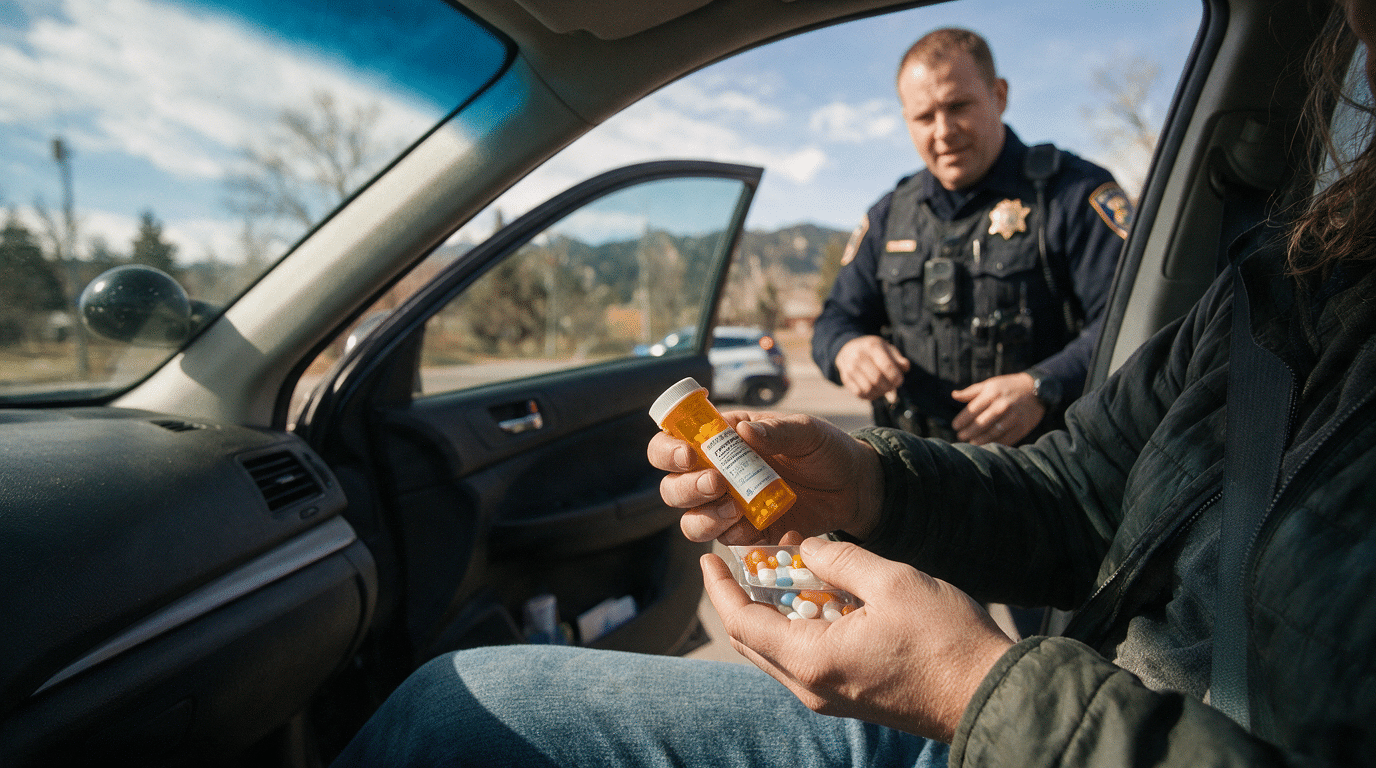
A traffic stop in Boulder can very rapidly develop into a DUID investigation if the officer detects the smell of marijuana, sees bottles of medication, notices the driver has red eyes, listens to slow speech, or thinks that the driver appears to be impaired. Since many drivers believe that being honest will help, they often say that they had marijuana the night before, that they took anxiety medication, that they have a medical marijuana card, that they used a prescribed sleep aid, or that they only used a small amount.
Although these statements may seem harmless at the time, they can provide police with evidence upon which to build a drug-related DUI case. We provide defense for people in Boulder and in the Denver area who are accused of DUI, DWAI, DUID, and other drug-related driving offences in Colorado, and we are aware of how frequently a person’s own words end up forming part of the prosecution’s case.
Colorado DUID And DWAI Law
DUI and DWAI offenses in Colorado are set out in C.R.S. § 42-4-1301. A person can be charged with DUI if the prosecutor states that alcohol, drugs, or a combination of both left the person substantially unable to exercise clear judgment, adequate physical control, or the level of care necessary for the safe operation of a vehicle. A person can be charged with DWAI if the prosecutor says that alcohol, drugs, or both had some effect on the person so as to make them less capable than normal to drive safely.
That “slightest degree” language matters. A driver does not have to be falling asleep, swerving across lanes, or unable to speak before an officer considers a DWAI or DUID arrest. If the officer believes the driver’s ability was affected even slightly, the investigation may continue. Any explanation about marijuana, prescription medication, or drug use can be written into the police report and later used to argue that the officer had reasonable grounds to expand the stop, request testing, or make an arrest.
Legal Marijuana Is Not A Complete Defense
Colorado law allows adult marijuana use in many circumstances, but legal use does not mean legal driving after use. C.R.S. § 42-4-1301 states that being entitled to use one or more drugs under Colorado law, including medical marijuana, does not by itself create a defense to DUI or DWAI. In plain English, a medical marijuana card or lawful dispensary purchase does not stop prosecutors from charging a drug-related DUI if they claim you were impaired while driving.
This is where roadside statements can cause serious damage. A driver may say, “I have a medical card,” “I smoked earlier,” or “I only had an edible last night.” The driver may mean to explain why marijuana odor exists or why THC might appear in a test. The officer may hear something different: an admission of drug use close enough in time to driving to support further investigation. Even if the timing is innocent, the statement may be repeated in court without the full context.
Colorado’s THC Rule And The Problem With Explaining Too Much
Under C.R.S. § 42-4-1301, if a driver’s blood contains five nanograms or more of delta-9 THC per milliliter in whole blood, that fact gives rise to a permissible inference that the driver was under the influence of one or more drugs. That is not an automatic conviction. It is an evidentiary rule the prosecution may use, and the defense can still challenge impairment, timing, testing, tolerance, driving observations, and officer conclusions.
The risk is that roadside statements may be used to connect a THC result to driving. THC can remain detectable after the feeling of impairment has passed, especially for frequent marijuana users. If a driver says too much about when they used marijuana, how much they used, or how often they use it, prosecutors may try to combine that statement with blood test results and officer observations. What began as an effort to be cooperative can become a key part of the case.
Prescription Medication Can Also Lead To A DUID Charge
A valid prescription does not always prevent a drug-related DUI charge. Colorado law focuses on whether alcohol, drugs, or a combination of substances impaired the person’s ability to drive safely. Prescription medications such as anxiety medication, sleep aids, pain medication, muscle relaxers, ADHD medication, antidepressants, and other medications may become part of a DUID investigation if the officer believes the driver is affected.
Drivers often try to explain medical conditions or prescriptions during the stop. They may say they took Ambien the night before, used Xanax for anxiety, took pain pills after surgery, or take Adderall as prescribed. Those explanations may be medically reasonable, but police may write them down as admissions. The better course is usually to provide required documents, remain respectful, avoid making detailed statements, and request legal counsel before answering questions about drug or medication use.
What You Must Provide During A Traffic Stop
A driver should not confuse silence with noncompliance. During a lawful traffic stop, you generally must provide your license, registration, and proof of insurance when requested. You should remain calm, keep your hands visible, and avoid arguments. You do not help yourself by being rude, evasive, or confrontational.
At the same time, you do not have to give a detailed medical history or explain marijuana use on the roadside. You do not have to guess when you last used cannabis, estimate dosage, describe prescriptions, or agree with an officer’s description of your condition. Short, respectful answers are safer than long explanations. A simple statement that you want to speak with an attorney before answering questions can protect you from creating evidence against yourself.
Express Consent And Chemical Testing Issues
Colorado’s Express Consent law can create license consequences after a DUI or DUID arrest. Under C.R.S. § 42-2-126, a driver may face administrative revocation for refusal or for test results that trigger revocation. The DMV process is separate from the criminal case. A person may have to fight both the court case and the license case.
Statements made during the stop may affect both. If an officer claims you admitted recent marijuana use or medication use, that statement may be used to justify further testing or explain why the officer believed impairment was present. Refusing a required chemical test after arrest can also create serious license consequences. Because these rules are strict and the deadlines are short, it is important to contact a defense attorney quickly after a Boulder DUID arrest.
How Roadside Statements Are Used In Court
Police reports often include selected statements from the driver. The report may not include tone, confusion, stress, fear, medical context, or the exact wording of the officer’s questions. A statement such as “I smoked earlier” can be vague. Earlier that day? The night before? The prior weekend? Without context, prosecutors may use the statement in the most damaging way they can.
Body camera footage may help show what really happened. It may show that the officer asked leading questions, interrupted the driver, misunderstood the answer, or wrote the report in a way that made the statement sound stronger than it was. We review roadside video, audio, officer notes, chemical test records, dispatch logs, and all available evidence to determine whether the statement was accurate, voluntary, and fairly presented.
Defense Issues In Marijuana And Medication DUI Cases
Drug-related DUI cases often involve weaknesses that need careful review. The defense may challenge the reason for the stop, the officer’s observations, field sobriety testing, drug recognition evidence, blood testing, chain of custody, timing of use, medical explanations, and whether the facts actually prove impairment at the time of driving. In marijuana cases, the defense may address THC tolerance, delayed testing, lawful use, and the difference between a blood result and actual driving impairment.
In prescription medication cases, we may examine dosage, timing, doctor instructions, side effects, medical records, and whether the officer mistook a medical condition for impairment. We may also challenge whether the prosecution can prove the required mental and physical impairment under Colorado law. A person’s admission that they took legal medication does not prove they were unsafe to drive.
FAQs About Marijuana, Medication, And Boulder Traffic Stops
Should I Tell A Boulder Police Officer That I Used Marijuana?
You should be very careful before making any statement about marijuana use during a traffic stop. Many drivers think honesty will make the officer less suspicious, but the statement may do the opposite. If you say you smoked, ate an edible, used a vape, or visited a dispensary, the officer may use that information to expand the investigation, ask more questions, request roadside tests, or develop probable cause for arrest. Legal marijuana use is not a complete defense to DUI or DWAI under C.R.S. § 42-4-1301. You should provide required documents, remain respectful, and avoid detailed answers about drug use without legal advice.
Does A Medical Marijuana Card Protect Me From A DUID Charge In Colorado?
No. A medical marijuana card does not protect a driver from a DUID charge if prosecutors claim the driver was impaired. Colorado law specifically provides that being legally entitled to use drugs, including medical marijuana, does not by itself create a defense to DUI or DWAI. The issue is not only whether the marijuana was lawful. The issue is whether the prosecution can prove impairment while driving. A medical card may explain lawful possession or use, but it does not prevent police from investigating impairment or prosecutors from filing charges.
What If I Took Medication Exactly As Prescribed?
Taking medication exactly as prescribed may be important, but it does not automatically prevent a DUID charge. Colorado law focuses on whether alcohol, drugs, or both affected your ability to drive safely. Some prescribed medications can cause drowsiness, slower reaction time, confusion, balance issues, or other effects that police may treat as signs of impairment. That does not mean the prosecution can prove the case. We may look at the medication, dosage, timing, doctor’s instructions, medical history, officer observations, and chemical testing. A prescription can be part of the defense, but it should be handled carefully.
Can Police Arrest Me For DUID If My THC Level Is Below Five Nanograms?
Yes, an arrest is still possible. Colorado’s five-nanogram THC rule creates a permissible inference at or above that level, but a lower THC result does not automatically prevent a drug-related DUI or DWAI case. Police and prosecutors may rely on driving behavior, officer observations, field sobriety tests, statements, body camera footage, drug recognition evidence, and other facts. A lower result may help the defense, but it does not always end the case. We look at whether the total evidence actually proves impairment at the time of driving.
Can My Own Words Really Hurt My DUID Case?
Yes. Your own words can become some of the most damaging evidence in a DUID case. A statement about marijuana, pills, dosage, timing, drinking, lack of sleep, or medical history may be used to support the officer’s decisions during the stop. Even a vague statement can be written in a way that sounds worse later. Police reports may not capture the full context. That is why body camera footage, audio, and exact wording matter. We review whether the statement was accurate, complete, and legally obtained.
What Should I Do After A Boulder DUID Arrest?
After a Boulder DUID arrest, you should protect your license, your record, and your defense immediately. Do not keep explaining the facts to police, prosecutors, friends, employers, or the other driver. Save paperwork from the arrest, including any DMV notice, bond paperwork, citation, or court date. The DMV deadline may be short, and the criminal case may move quickly. A defense attorney can review the stop, statements, testing, body camera footage, and whether the evidence supports DUI, DWAI, or DUID under Colorado law.
Call Watkins Law Firm LLC For Help With A Boulder DUID Or Drug DUI Charge
If you were stopped in Boulder and questioned about marijuana, medication, or drug use, Watkins Law Firm LLC can help. We defend clients against DUI, DUID, DWAI, marijuana DUI, prescription drug DUI, drug possession, and related criminal charges in Boulder and throughout the Denver area. We understand how quickly a roadside conversation can turn into criminal evidence, and we work to protect your license, record, job, and future.
You can get a free consultation by contact our Boulder DUI defense attorney by calling us 24/7 at 303-507-1324. Our DUI defense lawyer serves clients in Boulder and the greater Denver area from our office sites in Boulder, Colorado.
