
Can You Fight A DUI Based On An Illegal Traffic Stop In Colorado?
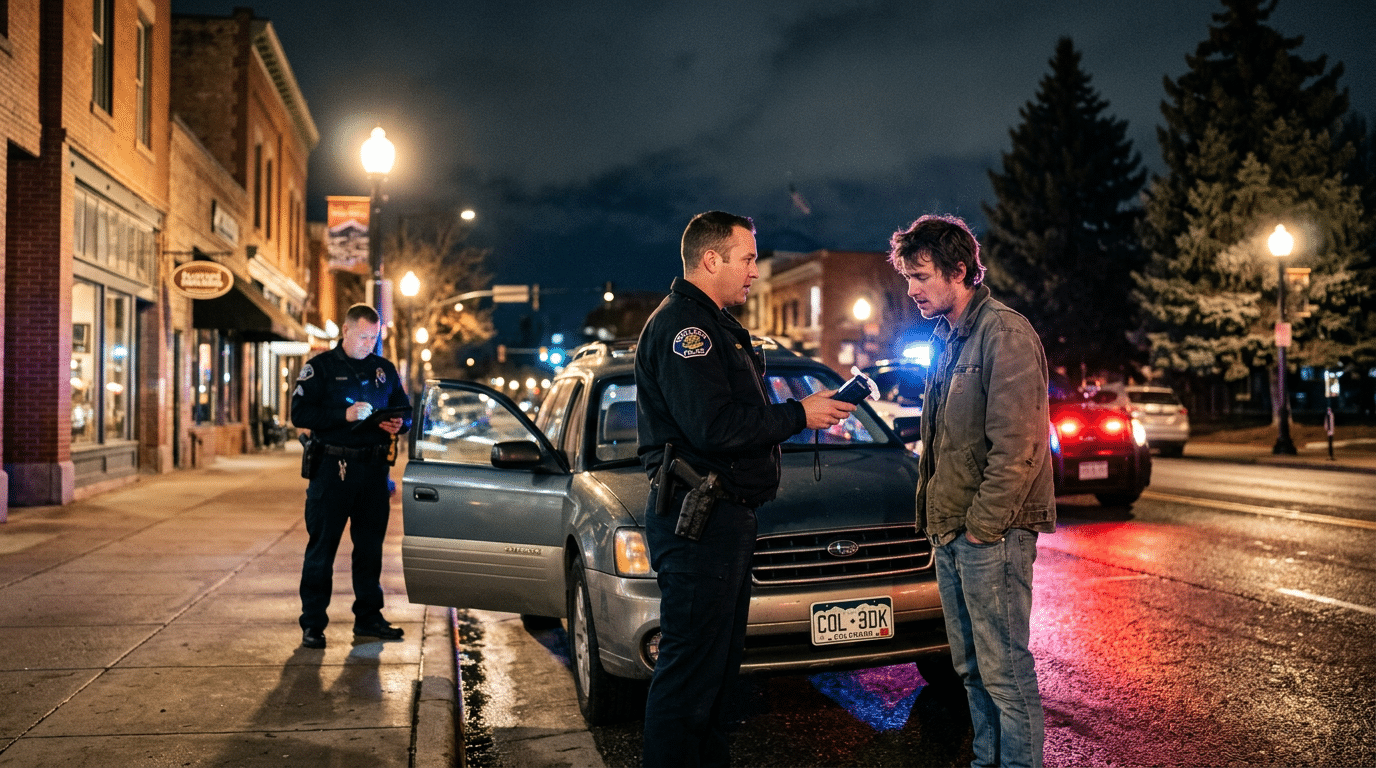
A DUI case usually begins before any breath or blood tests, roadside checks, or even an arrest. It starts with the traffic stop itself. If the police did not have a legal reason to pull you over, that could become a key part of your defense. In Boulder, a DUI arrest can put your license, job, record, insurance, and freedom at risk. However, the government must still follow the law when stopping you.
Many people feel that once they are arrested, their case is already lost. That is not true. At Watkins Law Firm LLC, we look closely at whether the stop was legal, if the officer had enough evidence to continue the investigation, and whether important evidence should be challenged before trial.
Why The Traffic Stop Matters In A Colorado DUI Case
The Fourth Amendment protects people against unreasonable searches and seizures. A traffic stop is a seizure, even if it seems routine. Colorado law also addresses investigatory stops under C.R.S. § 16-3-103, which allows a peace officer to stop a person when the officer reasonably suspects that the person is committing, has committed, or is about to commit a crime. In a DUI case, the officer usually claims there was a traffic violation, unsafe driving, equipment issue, accident, citizen report, or some other reason for the stop.
The traffic stop is important because much of a DUI case depends on what happens during that first contact. The officer’s observations, questions, field tests, breath tests, arrest, chemical tests, and later reports all rely on whether the initial stop was legal. If the stop was not legal, we can ask the court to exclude evidence gathered afterward. This can weaken the prosecution’s case and may lead to a better outcome or even a dismissal.
What Counts As A Legal Stop In Colorado?
Police do not need proof beyond a reasonable doubt to stop a vehicle. They also do not need enough evidence to convict you at that point. However, they must have a legal reason. In many DUI cases, officers say they saw weaving, speeding, not signaling, crossing a lane line, expired registration, broken lights, running a stop sign, or another traffic violation.
A stop can also be based on reasonable suspicion of impaired driving. For example, an officer might say a driver was drifting in their lane, braking strangely, driving too slowly, stopping too long at a green light, or reacting slowly to traffic. These facts do not always mean someone is impaired. They need to be looked at in context. Road conditions, weather, construction, car problems, fatigue, unfamiliar streets, and normal driving can all affect what the officer thought they saw.
When A DUI Stop Can Be Illegal
A DUI stop may be illegal if the officer did not have reasonable suspicion or probable cause to pull you over. A vague feeling is not enough. The officer must point to specific facts that support the stop. If the police report only says there was a “suspicious vehicle” or “possible intoxicated driver” without solid details, the stop can be challenged.
Some stops are based on mistakes. An officer may claim a driver crossed a lane line when video shows the vehicle stayed in the lane. An officer may claim the driver failed to signal when the law did not require a signal under the exact circumstances. A stop may also be challenged when it is based on an unreliable anonymous tip, weak dispatch information, or facts that do not connect the driver to illegal conduct. We compare the police report against body camera footage, dash camera footage, dispatch recordings, CAD notes, witness statements, and roadway evidence.
Challenging The Expansion Of The Stop
Even when the initial stop is lawful, the DUI investigation may still be challenged. A police officer may stop a vehicle for speeding or a broken taillight, but that does not automatically give the officer the right to conduct a full DUI investigation. The officer needs additional facts to extend the stop into an impaired driving investigation.
Those facts may include odor of alcohol, slurred speech, bloodshot eyes, an admission to drinking, open containers, poor coordination, drug indicators, or unsafe driving. We do not accept those claims at face value. Officers often use repeated language in DUI reports. We look for whether the video supports the report. We also evaluate whether innocent facts were treated as signs of impairment. Nervousness, tiredness, allergies, dry eyes, speech patterns, or confusion during a stressful stop may be misinterpreted.
Suppression Motions In Colorado DUI Cases
If the stop or expanded detention was unlawful, the defense may file a motion asking the court to suppress evidence. Suppression means the prosecution may be prevented from using certain evidence because it was obtained through unlawful police conduct. In a DUI case, that evidence may include officer observations, statements, field sobriety exercises, portable breath test results, breath or blood test evidence, or other evidence gathered after the stop.
A suppression motion can be a turning point in a DUI case. The prosecution may still try to proceed, but losing key evidence can make the case much harder to prove. The court will usually consider testimony, video evidence, reports, and legal arguments. Our job is to show where the officer’s actions failed to meet the required legal standard and why the evidence should not be used against you.
Colorado DUI, DWAI, And DUID Charges
Colorado DUI and DWAI charges are governed by C.R.S. § 42-4-1301. DUI generally means the prosecution claims alcohol, drugs, or both made the person substantially incapable of safely operating a vehicle. DWAI generally means the prosecution claims alcohol, drugs, or both affected the person to the slightest degree so that the person was less able than usual to drive safely. Colorado also recognizes DUI per se when a person drives with a blood alcohol content of 0.08 or higher at the time of driving or within two hours after driving.
DUID cases may involve marijuana, prescription medications, controlled substances, or a combination of substances. The same stop issues apply. If the officer did not lawfully stop the vehicle or did not have a lawful basis to expand the stop into a drug impairment investigation, the defense may challenge the evidence that followed. A valid medical marijuana card alone does not prove impaired driving.
DMV License Consequences After A DUI Stop
A Colorado DUI arrest can trigger both a criminal case and a DMV license case. C.R.S. § 42-2-126 governs administrative license revocation based on alcohol-related driving allegations, including excess BAC and refusal. The Colorado Department of Revenue explains that the criminal DUI case and DMV revocation case are separate, and a dismissal in criminal court does not automatically end the DMV revocation. The DMV also states that a driver generally has up to seven days to request an Express Consent hearing after receiving a Notice of Revocation.
The legality of the initial contact can matter in the DMV case as well. Colorado law allows a driver to challenge the validity of the officer’s initial contact and later arrest in the administrative process. That makes it important to act quickly. Waiting too long can cost you the chance to contest the license revocation, even if there are strong issues with the stop.
How We Review An Illegal Stop Defense
We start by building the timeline. We look at why the officer claimed the stop was made, what the officer saw, what the video shows, what dispatch reported, and whether the alleged traffic violation actually happened. We review whether the officer had a legal basis to ask DUI-related questions, request roadside exercises, ask for a preliminary breath test, arrest the driver, and request a chemical test.
We also look for gaps. Was the video missing? Did the report describe facts not shown on camera? Did the officer claim poor driving that was never recorded? Did the stop occur near bars, restaurants, campus areas, or late-night locations where officers may be looking for DUI arrests? These facts do not automatically make a stop unlawful, but they may help us test whether the stop was based on real evidence or assumptions.
FAQs About Illegal Traffic Stops And Colorado DUI Charges
Can A DUI Be Dismissed If The Traffic Stop Was Illegal?
Yes, it is possible. If the court finds that the officer did not have a lawful basis to stop your vehicle, evidence obtained after the stop may be suppressed. In some cases, that can leave the prosecution without enough evidence to continue. A dismissal is not automatic, and the result depends on what evidence remains, how the court rules, and how the case was charged. Still, the legality of the stop is one of the first issues we review because it can affect the entire DUI case.
What Does Reasonable Suspicion Mean In A Colorado DUI Stop?
Reasonable suspicion means the officer must have specific, articulable facts suggesting that a crime or traffic violation occurred, was occurring, or was about to occur. Under C.R.S. § 16-3-103, Colorado law allows an officer to stop a person when that legal standard is met. In DUI cases, reasonable suspicion may be based on alleged traffic violations, driving behavior, equipment issues, or reports from other people. A hunch is not enough. We compare the officer’s stated reason for the stop with video, dispatch records, and the traffic law involved.
Can Police Stop Me Just Because I Left A Bar?
Leaving a bar, restaurant, concert, or event late at night does not by itself prove impaired driving. Police may pay closer attention to areas where DUI arrests are common, but they still need a lawful basis to stop a vehicle. If the officer saw a traffic violation or specific driving behavior that suggested impairment, the stop may be lawful. If the stop was based only on location, time of night, or an assumption that the driver had been drinking, the stop may be challenged. The facts must be reviewed carefully.
What If The Officer Was Wrong About The Traffic Violation?
An officer’s mistake can matter. Some mistakes may support a legal challenge if the law did not actually justify the stop or if the facts do not match the officer’s report. For example, video may show that the driver did not cross a lane line, did signal properly, or did not commit the alleged violation. Some legal mistakes are more complicated, and courts may evaluate whether the officer’s interpretation was reasonable. We do not assume the officer was right just because a citation was issued. We check the statute, the video, and the facts.
Can I Challenge The Stop At The DMV Hearing Too?
Yes, the legality of the initial contact can matter in the Colorado Express Consent hearing. C.R.S. § 42-2-126 allows issues related to the validity of the officer’s initial contact and arrest to be raised in the administrative process. The DMV case is separate from the criminal case, and deadlines are short. The Colorado DMV states that a driver usually has up to seven days to request a hearing after receiving a Notice of Revocation. If you miss the deadline, your license may be revoked even while the criminal case is still pending.
Does An Illegal Stop Automatically Exclude The Breath Or Blood Test?
Not always, but it can. If the breath or blood test was obtained as a result of an unlawful stop or unlawful detention, we may argue that the test evidence should be suppressed. The court will look at the connection between the illegal police conduct and the evidence obtained. Breath and blood evidence can also be challenged for other reasons, including testing procedure, timing, calibration, lab handling, chain of custody, and whether the test result reliably proves impairment or BAC at the relevant time.
Call Watkins Law Firm LLC For Help With A Colorado DUI Arrest
If you were arrested for DUI, DWAI, or DUID after a traffic stop in Colorado, Watkins Law Firm LLC can review whether the officer had a lawful reason to stop your vehicle. An illegal stop can change the direction of the case and may affect the evidence prosecutors can use against you. We defend clients in Boulder and throughout the Denver area against DUI, drug-related driving charges, and other serious criminal allegations.
Contact our Boulder DUI attorney by calling us 24/7 at 303-507-1324 for your free consultation.. Our Boulder drug crime defense lawyer represents clients in Boulder and throughout the Denver area from our office locations in Boulder, Colorado.
