
Can Criminal Charges Be Dismissed Before Trial
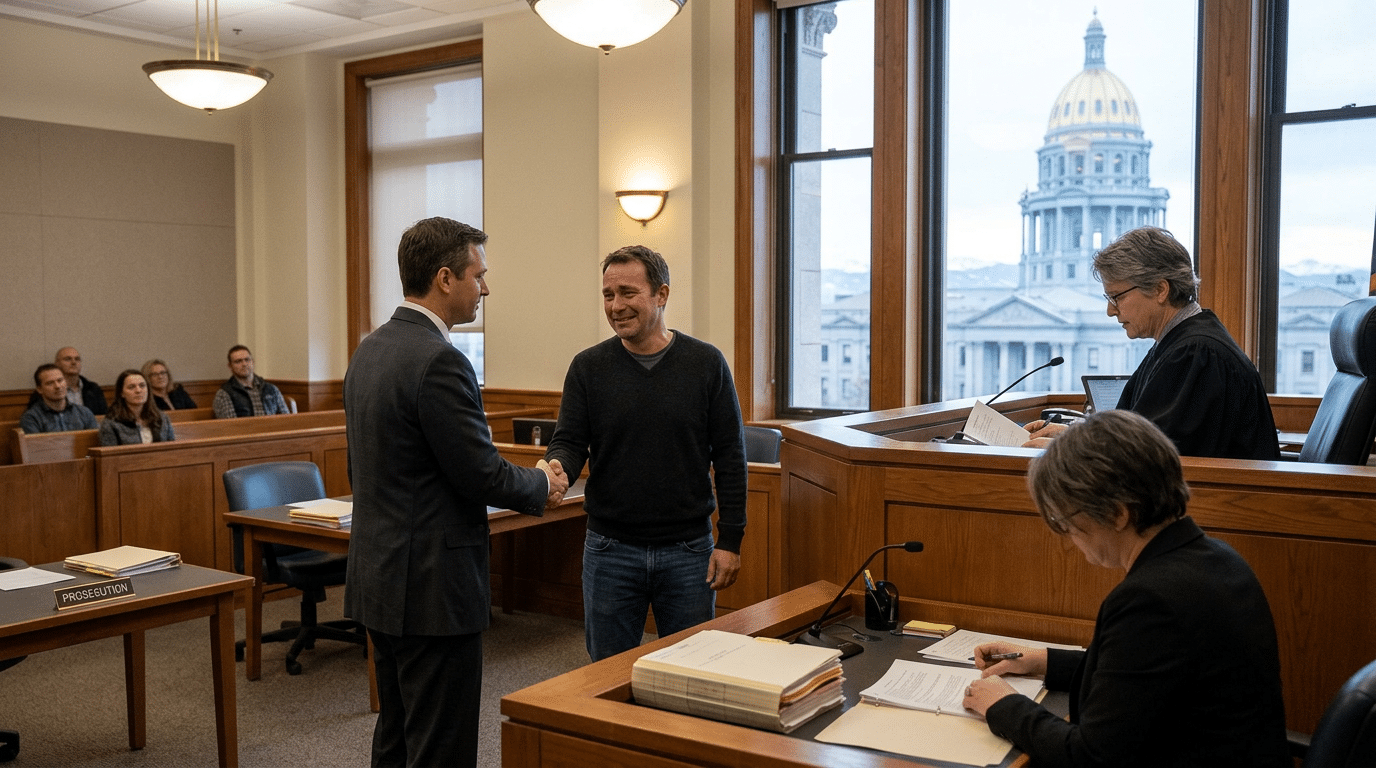
In Boulder, criminal charges can be dismissed before trial, but this does not happen just because someone claims innocence or feels the case is unfair. The defense needs to show a legal, factual, constitutional, or evidentiary reason for dismissal. Charges might be dropped if the prosecution cannot prove probable cause, or if evidence is thrown out because police violated constitutional rights.
Sometimes, the prosecutor will dismiss or reduce charges after the defense points out problems with the evidence. We know how stressful a criminal charge can be for your job, family, license, reputation, and future. That’s why we start looking for ways to get charges dismissed as soon as possible.
Criminal Charges Can End Before A Jury Trial
Not every criminal case in Colorado ends up in trial. Some cases are dismissed by the court or the prosecution, while others are resolved through deferred judgment, diversion, charge reduction, or plea deals. Dismissal before trial can happen at many points, such as after an investigation, before charges are formally filed, after a preliminary hearing, after motions, or before the trial date.
The main question is whether the prosecution can prove the case and if the police acted within the law. Colorado criminal cases can include DUI, drug charges, theft, assault, domestic violence, reckless driving, sex crimes, federal cases, and more. Each type of case has its own challenges. For example, a DUI case might depend on whether the traffic stop was legal or if the blood test was accurate. In drug cases, the focus could be on the search, possession, lab results, or whether the drugs were actually linked to the accused. Domestic violence cases often depend on witness credibility, body camera footage, 911 calls, injuries, or conflicting stories.
Dismissal Based On Lack Of Probable Cause
In some Colorado felony cases, a defendant may have the right to a preliminary hearing. C.R.S. § 16-5-301 addresses preliminary hearings and related procedures. At a preliminary hearing, the judge does not decide whether the defendant is guilty. The judge decides whether there is probable cause to believe a crime was committed and that the accused person committed it.
If the prosecution cannot show probable cause for a charge at this stage, the court may dismiss it. This is especially important in cases like drug charges, assault, sex crimes, and other felonies where the evidence is weak or based on assumptions. A preliminary hearing also lets the defense see the prosecution’s case early. Even if the charge is not dismissed, the testimony from this hearing can help guide later motions, negotiations, and trial strategy.
Dismissal After Evidence Is Suppressed
Many dismissals start with a motion to suppress evidence. If police break the Fourth Amendment, the Colorado Constitution, or state search and seizure rules, important evidence can be thrown out. Simply put, the prosecution might lose the evidence it needs to prove the case.
This can happen in many types of cases. A DUI case may involve an unlawful traffic stop, improper detention, or issues with chemical testing. A drug case may involve an illegal vehicle search, home search, search warrant, or pat-down. A weapon case may turn on whether officers had lawful grounds to search the person or car. A sex crime or internet crime case may involve phone searches, computer searches, statements, warrants, or digital evidence.
When evidence is thrown out, the prosecution might not have enough to continue. This can lead to dismissal, reduced charges, or a better outcome for the defendant. Suppression does not happen automatically. The defense has to spot the legal issue, file the right motion, and explain why the evidence should not be used.
Dismissal Based On Statements Or Miranda Issues
Statements are often strong evidence in Colorado criminal cases. Police might say a defendant admitted to driving, having drugs, touching someone, taking property, breaking a protection order, or being involved in an incident. However, not every statement can be used in court.
If police question someone in custody without giving proper Miranda warnings, or if a statement was not given voluntarily, the defense can ask the court to throw it out. This is important because some cases rely more on what the accused said than on physical evidence. If the statement is excluded, the prosecution’s case may be much weaker.
We often tell clients that talking to police can be risky. You might think you are helping your case, but officers can use nervous answers, small mistakes, or partial admissions as evidence against you. Getting a lawyer early can help protect you before the prosecution uses your own words to build a case.
Because The Prosecution Cannot Prove The Elements
Every Colorado crime has legal elements the prosecution must prove. If one required element is missing, the case may be vulnerable. In a theft case under C.R.S. § 18-4-401, prosecutors must prove issues such as control over something of value, lack of authorization, and the required mental state. In a DUI case under C.R.S. § 42-4-1301, prosecutors must prove driving and impairment, excessive alcohol content, or another legally recognized impaired driving theory. In a controlled substance case, prosecutors must prove the substance, possession, distribution, manufacturing, or another charged theory under Colorado’s drug laws.
A case might seem strong in a police report but fall apart under closer review. Sometimes, a witness did not actually see what they said. A video might not match the written report. Drugs could be found in a shared car or home. A theft accusation might not show intent. Domestic violence cases can have conflicting stories or missing details. The defense can use these weaknesses to push for dismissal, reduced charges, or a better outcome.
Speedy Trial Dismissals In Colorado
Colorado has a statutory speedy trial rule under C.R.S. § 18-1-405. In many criminal cases, once a defendant enters a not guilty plea, the defendant must be brought to trial within the statutory time period, often six months, unless an exclusion, waiver, continuance, or other rule applies. If the prosecution fails to bring the case to trial within the required time, the defense may seek dismissal.
Speedy trial rules can be tricky. Not every delay is the prosecution’s fault. Some delays are caused by the defense, by legal motions, by questions about a defendant’s competency, or by court-approved reasons. Still, speedy trial rights are important because no one should have criminal charges hanging over them forever. We keep a close eye on deadlines, since missing them can affect the whole case.
Deferred Judgment, Diversion, And Dismissal
Some Colorado cases may end in dismissal through deferred judgment, diversion, or other negotiated outcomes. C.R.S. § 18-1.3-102 addresses deferred judgment and sentence. In a deferred judgment, the defendant may agree to certain conditions for a set period. If the person completes the required terms, the case may be dismissed. If the person violates the terms, the court may enter judgment and impose sentence.
Diversion might also be an option, depending on the charge, the facts, your history, and the prosecutor’s policy. While diversion is not the same as getting a case dismissed through a legal challenge, it can help you avoid a conviction. For people concerned about jobs, school, licenses, immigration, custody, housing, or background checks, avoiding a conviction can be very important.
What Happens To The Record After Dismissal?
A dismissal is a major event, but it does not always mean the record disappears from every database immediately. Colorado record-sealing laws can be very important after dismissal, acquittal, diversion completion, or successful deferred judgment. C.R.S. § 24-72-705 addresses sealing criminal justice records other than convictions in certain dismissed or acquitted cases.
Sealing your record can limit who can see your case, which is important for jobs, housing, licenses, and your reputation. Some records are sealed automatically or through a simple process, depending on the situation. Others need more action. We consider sealing because most clients want not just a dismissal, but also to reduce the long-term impact of an arrest or court case.
How We Fight For Dismissal Before Trial
We start defending your case right away, not just at trial. We go through police reports, body camera videos, witness statements, lab results, search warrants, phone records, dispatch logs, photos, videos, and court documents. We look for things like illegal stops, bad searches, weak evidence, unreliable witnesses, missing proof, testing mistakes, Miranda problems, speedy trial issues, and gaps in the case.
A dismissal is never guaranteed. But early defense work can change the path of a case. Sometimes it leads to a dismissal. Sometimes it leads to suppression of evidence. Sometimes it creates leverage for a reduction or non-conviction outcome. What matters is that the defense begins before the case gains momentum.
FAQs About Dismissal Before Trial In Colorado
Can A Colorado Criminal Case Be Dismissed Before Trial?
Yes. A Colorado criminal case can be dismissed before trial in several ways. The court may dismiss a charge if the prosecution fails to establish probable cause at a preliminary hearing. The prosecutor may dismiss a charge after reviewing weak evidence, witness problems, legal defects, or defense information. A case may also be dismissed after evidence is suppressed, after speedy trial violations, after successful completion of diversion, or after completion of a deferred judgment. The reason for dismissal matters because it can affect record sealing, future background checks, and whether the prosecution can refile charges in some situations.
Does The Alleged Victim Have The Power To Drop Charges?
No. In Colorado, the prosecutor controls the criminal case once charges are filed. The alleged victim can express their wishes, refuse to cooperate, or give updated information, but they do not decide whether the case is dismissed. This is especially important in domestic violence, assault, theft, harassment, and protection order cases. Prosecutors may continue even when the alleged victim does not want the case to move forward. That said, witness cooperation and credibility can affect the strength of the prosecution’s case. We examine whether the state can still prove the charge without reliable testimony.
Can Charges Be Dismissed If Police Violated My Rights?
Yes, but it depends on the violation and the evidence affected by it. If police conducted an unlawful stop, illegal search, improper interrogation, or unconstitutional seizure, the defense may ask the court to suppress the evidence. If the suppressed evidence is central to the case, the prosecution may no longer be able to prove the charge. For example, a drug case may collapse if the controlled substance is excluded from evidence. A DUI case may weaken if the stop, arrest, or chemical test is successfully challenged. Rights violations must be raised through proper motions and legal argument.
Can A Felony Be Dismissed At A Preliminary Hearing?
Yes, some felony charges may be dismissed at or after a preliminary hearing if the prosecution fails to establish probable cause. The judge does not decide guilt at that hearing. The judge decides whether there is enough evidence for the case to continue. Preliminary hearings can be valuable because they force the prosecution to present evidence early and allow the defense to test parts of the case. Even when a charge survives the hearing, the testimony may reveal weaknesses that can support later motions or negotiations. Whether a defendant has a right to a preliminary hearing depends on the charge and Colorado law.
Will A Dismissed Case Still Show Up On My Record?
A dismissed case may still appear in some records unless it is sealed or otherwise removed from public access under Colorado law. C.R.S. § 24-72-705 provides a process for sealing certain non-conviction criminal justice records, including cases that are completely dismissed, cases ending in acquittal, completed diversion cases, and successful deferred judgments where all counts are dismissed. Sealing can be extremely important for employment, housing, professional licensing, and personal reputation. If your case is dismissed, the next question should be whether the record can be sealed and how quickly that can happen.
Is A Deferred Judgment The Same As A Dismissal?
Not at the beginning. A deferred judgment usually requires a person to comply with court-ordered terms for a specific period. Those terms may include probation, treatment, testing, classes, restitution, community service, or no new criminal charges. If the person successfully completes the deferred judgment, the case may be dismissed. If the person violates the terms, the court may enter judgment and sentence the person. A deferred judgment can be valuable because it may help avoid a conviction, but it must be handled carefully. Violating the terms can create serious consequences.
Call Our Criminal Defense Firm For Help With Colorado Criminal Charges
If you are facing criminal charges in Colorado, you should not assume the case has to go to trial or end in a conviction. There may be legal, factual, constitutional, or procedural issues that can be used to seek dismissal, suppression, reduction, or another favorable outcome. Watkins Law Firm LLC defends clients in Boulder and throughout the Denver area against drug charges, DUI, theft, assault, domestic violence, protection order violations, and other criminal allegations.
Contact our Boulder criminal defense attorney by calling us 24/7 at 303-507-1324 for your free consultation. Our Boulder drug crime defense lawyer represents clients in Boulder and throughout the Denver area from our office locations in Boulder, Colorado.
