
Can Police Make You Wait For A Drug Dog?
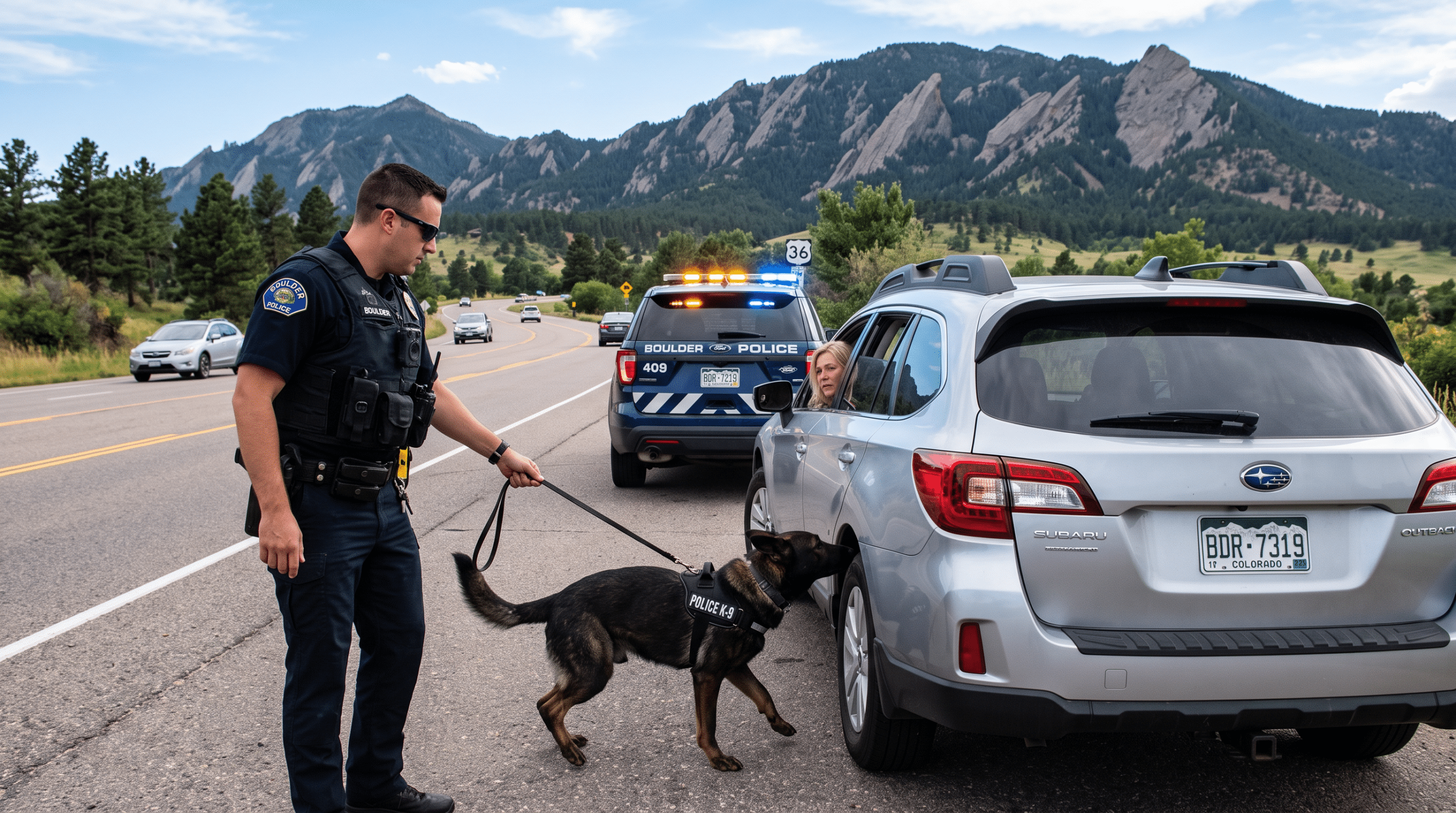
A routine traffic stop can quickly become stressful if an officer says a drug dog is coming. Many drivers are unsure if they must wait, if they can leave, if police can search their car, or if they should answer questions. In Colorado, what happens next depends on the reason for the stop, how long it lasts, whether police have reasonable suspicion or probable cause, and if the dog sniff is allowed under state law.
These situations can lead to charges for drug possession, distribution, felonies, DUI, probation violations, or even federal cases. At Watkins Law Firm LLC, we help people in Boulder and the Denver area when police use traffic stops, searches, and drug dog alerts to build criminal cases.
Police Cannot Extend A Traffic Stop Without Legal Justification
A traffic stop counts as a seizure. Police can stop a car if they have a legal reason, like a traffic violation or reasonable suspicion of a crime. During the stop, the officer can take reasonable steps related to the traffic issue, such as checking your license, registration, insurance, looking for warrants, and writing a ticket or warning.
The U.S. Supreme Court discussed drug dogs at traffic stops in Rodriguez v. United States. The Court decided that a traffic stop is illegal if police make it last longer than needed to handle the traffic issue, unless they have a separate reasonable suspicion for the delay. Simply put, an officer cannot finish the ticket and then keep you waiting just for a drug dog to show up.
When Police May Make You Wait For A Drug Dog
Police might try to keep a driver waiting for a drug dog if they say they have reasonable suspicion of drug activity beyond the original traffic violation. This suspicion must be based on specific facts, not just a guess. Officers may mention things like nervousness, inconsistent answers, visible drugs, the smell of drugs, signs of impairment, travel details, criminal history, cash, packaging, or other things they notice.
The issue is that police reports can make normal behavior sound suspicious. Most people feel nervous during traffic stops. Many give short answers because they are scared, and it is common not to remember every travel detail while standing by the road. We check if the suspicion was real, specific, and based on facts, or if police delayed the stop without enough legal reason.
Colorado Law Gives Extra Protection In Some Drug Dog Cases
Colorado has its own search-and-seizure protections under Article II, Section 7 of the Colorado Constitution. That section protects people against unreasonable searches and seizures and requires warrants to be supported by probable cause.
Colorado law matters here because marijuana is legal for adults in some cases, but many drug dogs are trained to alert to marijuana as well as illegal drugs. In People v. McKnight, the Colorado Supreme Court said that police must have probable cause to believe something contains illegal drugs before using a drug dog trained to alert to marijuana for a search. This rule is important when police use a dog around a car after a traffic stop.
A Dog Alert Does Not End The Defense
Police might say that a dog alert gave them probable cause to search your car. But that does not end the case. The defense can still challenge whether the stop was legal, if the detention lasted too long, if the dog sniff followed Colorado law, if the dog was trained correctly, if the handler influenced the dog, and if the search stayed within legal limits.
We also pay attention to timing. Did the officer wait to write the ticket while waiting for the dog? Did the officer ask questions that were not related to the traffic stop and made it last longer? Was the dog already there, or did police call for one after the traffic part was done? Did the officer have real facts before the delay, or was the dog search just a fishing expedition? These details can decide if evidence is allowed or thrown out.
How Drug Dog Stops Lead To Colorado Drug Charges
A vehicle search after a drug dog alert can lead to serious charges. Colorado possession of controlled substances is addressed under C.R.S. § 18-18-403.5. Depending on the substance and amount, possession may be charged as a drug misdemeanor or drug felony. Colorado law also recognizes that other charges, including distribution, manufacturing, dispensing, sale, or possession with intent to distribute under C.R.S. § 18-18-405, may be filed when prosecutors believe the evidence supports those accusations.
In real cases, police may find pills, fentanyl, methamphetamine, cocaine, heroin, marijuana, paraphernalia, cash, scales, bags, firearms, or phones. Prosecutors may argue that quantity, packaging, messages, or money shows intent to distribute. We examine whether the drugs were actually connected to our client, whether the car was shared, whether passengers had access, whether the search was lawful, and whether police made assumptions that cannot be proven.
How To Plead The Fifth During A Traffic Stop
You have the right to stay silent. If police ask questions about drugs, your travel, what is in your car, who owns something, or if they can search, be careful. You can use your Fifth Amendment right by saying so clearly and calmly.
You can say: “I am invoking my right to remain silent. I want to speak with an attorney. I do not consent to any searches.”
Making your statement clear is important because silence works best when it is direct. Do not argue, lie, explain, or guess. Do not try to talk your way out of the stop. Many drug cases get worse when drivers make statements that police later use to link them to drugs, bags, cash, a phone, or someone else in the car.
What If You Do Not Plead The Fifth?
If you do not invoke your right to remain silent, police may keep asking questions. They may use your answers in the criminal case. A statement such as “That is not mine,” “I only had a little,” “I was just giving someone a ride,” or “I did not know what was in the bag” may seem helpful in the moment, but it can later be used as evidence that you knew about the item, saw the bag, knew the passenger, or had some connection to the alleged drugs.
Lying can also make the case worse. If police believe you gave false information, prosecutors may use that as evidence of consciousness of guilt. The safer choice is to clearly invoke your right to remain silent and ask for an attorney. You should still provide required identification, registration, and insurance information during a traffic stop, but you do not have to answer investigative questions about drugs or criminal activity.
When A Motion To Suppress May Help
If police unlawfully extend a traffic stop, conduct an unlawful dog sniff, or search a vehicle without lawful authority, we may file a motion to suppress evidence. Colorado search warrant laws, including C.R.S. § 16-3-303 and C.R.S. § 16-3-304, require warrants to be supported by probable cause and to describe the place or thing to be searched. Although many vehicle searches do not begin with a warrant, the same constitutional principle applies: police need lawful authority before intruding on protected rights.
If a judge suppresses the drugs, paraphernalia, cash, statements, or other evidence, the prosecution may have a much weaker case. In some cases, suppression can lead to reduced charges or dismissal. Every case depends on the facts, the video, the timing, the officer’s stated reasons, and the search sequence.
Call Watkins Law Firm LLC For Help After A Drug Dog Search In Colorado
If police made you wait for a drug dog, searched your vehicle, found drugs, or used roadside statements against you, Watkins Law Firm LLC can help. We defend clients against drug possession, felony drug crimes, distribution allegations, trafficking accusations, and related criminal charges in Boulder and throughout the Denver area. These cases often turn on whether police lawfully stopped, detained, questioned, and searched you.
Call Watkins Law Firm LLC at (303) 507-1324 to receive a free consultation. Our Boulder drug crime defense lawyer represents clients in Boulder and throughout the Denver area from our office locations in Boulder, Colorado.
