
How To Plead The Fifth In Colorado
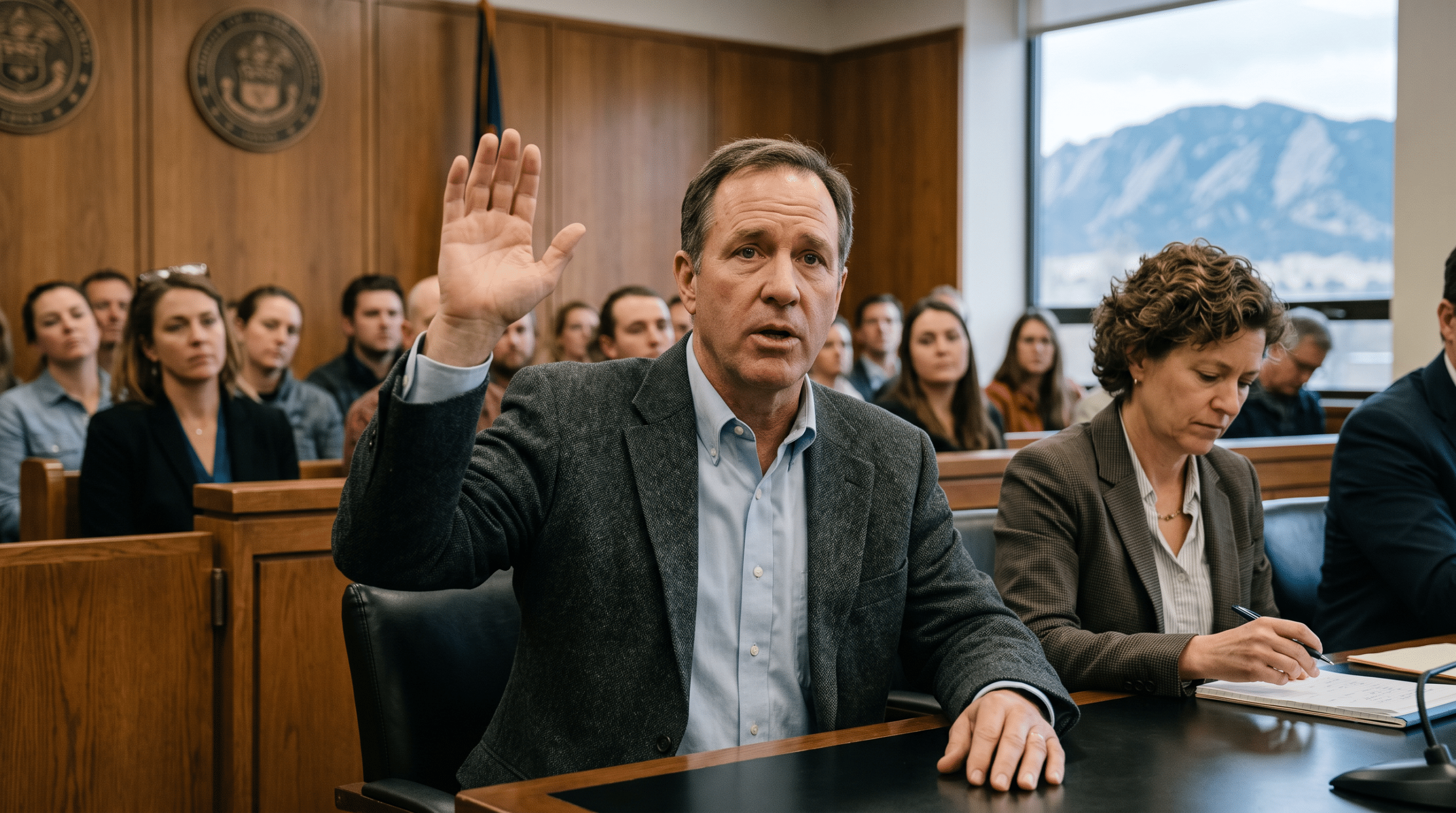
Knowing how to plead the Fifth can help protect you during a very stressful time. Many people believe staying quiet is enough, but that is not always the case. If police question you, you should clearly say you are using your right to remain silent and that you want a lawyer. Giving a vague answer, trying to explain, or talking your way out of trouble can give the government evidence it did not have before. We help people in Boulder and the Denver area when police questioning and interrogation become important issues in a Colorado criminal case.
What It Means To Plead The Fifth
When people say they want to “plead the Fifth,” they usually mean the right not to incriminate themselves. The Fifth Amendment to the United States Constitution protects you from being forced to be a witness against yourself in a criminal case. Colorado also protects this right under Article II, Section 18 of the Colorado Constitution, which says no one can be forced to testify against themselves in a criminal case.
Simply put, the government cannot make you say things that might help prove a criminal charge against you. This right is important in DUI, drug, domestic violence, theft, assault, sex crime, federal cases, and many other criminal matters. Even a short answer can be misunderstood, taken out of context, or used to build a case against you.
You Must Clearly State That You Are Invoking The Right
The safest way to use the Fifth is to say it clearly. We suggest saying: “I am invoking my right to remain silent. I want to speak with an attorney. I do not consent to questioning.” After that, stop talking about the case.
Do not say things like, “Maybe I should talk to a lawyer,” “I think I should be quiet,” or “I don’t know if I should answer that.” These statements can cause confusion about whether you clearly used your rights. Police may keep asking questions if they think you were not clear. It is better to use direct language.
You should not explain why you are using your right. You do not have to justify your choice, prove you are innocent, or correct every accusation the officer makes. Once you use your right, staying silent is usually the best way to protect yourself.
When You Should Plead The Fifth
You should think about using your right to remain silent any time police, detectives, federal agents, or investigators want to question you about possible criminal activity. This includes roadside stops, interviews at the station, calls from detectives, home visits, workplace interviews, school investigations with police, and contact with federal agents.
People often say things that hurt their case because they think they are just witnesses. That can change fast. Someone may start as a witness and become a suspect in the same talk. Police may already have evidence or may be trying to get you to admit something. If an officer says they want to “hear your side,” it does not mean the conversation is safe. What you say can be written in a report and used against you later.
Miranda Rights And Colorado Custodial Interrogation Law
Miranda warnings are often misunderstood. Police do not have to read Miranda rights every time they speak with someone. Miranda is generally required when a person is both in custody and being interrogated. Colorado has also codified custodial interrogation protections in C.R.S. § 16-3-406.
Under C.R.S. § 16-3-406, a court shall not admit a statement made by a defendant as a result of custodial interrogation in a criminal trial unless the defendant was first advised of required rights. Those advisements include that the person has the right to remain silent, anything said can be used in court, the person has the right to consult a lawyer before questioning, the lawyer may be present during questioning, and a lawyer may be appointed if the person cannot afford one.
This law is important because what you say during police questioning can become a big part of the prosecution’s case. If police did not give the required warnings before questioning you in custody, we may be able to challenge whether your statement can be used.
What If You Talk Before Invoking The Fifth?
Many people talk before they realize they should stop. If this happened to you, do not keep talking because you think it is too late. You can use your right at any time. Say, “I am invoking my right to remain silent. I want an attorney.” Then stop answering questions about the case.
Earlier statements can still cause legal problems. Police may say you admitted facts, changed your story, downplayed your role, blamed someone else, or confirmed details they needed. Even things that seem harmless can help the prosecution. For example, saying you were at a place, knew someone, drove a car, handled something, sent a text, or drank alcohol can become evidence.
We look at the whole situation. We check if you were in custody, if you were questioned, if you got the right warnings, if your statements were voluntary, if officers used pressure or threats, and if your rights were violated.
What Happens If You Do Not Clearly Invoke Your Rights?
If you do not clearly use your rights, police may keep questioning you. Just staying silent may not always stop the interview. If you nod, shrug, answer some questions, refuse others, or say “I don’t want to talk about that,” police may still keep asking questions.
That is why it is important to use clear words. You are not being rude by using your rights. You are protecting yourself. Police are trained to ask questions in ways that get useful evidence. They may say that cooperating will help you, that silence makes you look guilty, or that they already know what happened. Do not let pressure make you talk without legal advice.
Pleading The Fifth In Court Or Under Oath
Pleading the Fifth can also happen in court, depositions, hearings, or other situations where you are under oath. This is different from talking to police. If you are subpoenaed or under oath, do not refuse every question without legal advice. The privilege applies when a truthful answer could expose you to criminal charges.
Sometimes, a judge may need to decide if the privilege applies. In other cases, a lawyer can help you use the privilege the right way. This is important when there are related cases, like a criminal charge and a family court case, civil lawsuit, school discipline issue, or professional licensing investigation. What you say in one setting can cause problems in another.
How Pleading The Fifth Can Affect A Colorado Criminal Defense
Using the Fifth does not mean you are guilty. It means you are using your constitutional right. In a criminal case, the prosecution has to prove the charge. You do not have to help them.
From a defense point of view, staying silent can protect you. It can stop the government from getting admissions, mixed-up statements, location details, phone passcodes, claims of ownership, explanations, or emotional comments that could be used against you. It also gives us time to look at the evidence before you respond.
We can then examine whether the stop, search, seizure, arrest, interrogation, and evidence collection were lawful. In many cases, the strongest defense begins with what the client did not say.
Call Watkins Law Firm LLC Before Speaking With Police
If police, detectives, federal agents, or investigators want to question you about a criminal case, Watkins Law Firm LLC can help. We defend clients in Boulder and throughout the Denver area in drug cases, DUI cases, domestic violence cases, theft cases, assault allegations, sex crime accusations, and federal investigations. We review statements, Miranda issues, custodial interrogation, search issues, and whether evidence can be challenged.
Contact our Boulder criminal law attorney by calling us 24/7 at 303-507-1324 for your free consultation. Our Boulder drug crime defense lawyer represents clients in Boulder and throughout the Denver area from our office locations in Boulder, Colorado.
