
Can Prescription Drugs Lead To A DUID Charge In Colorado?
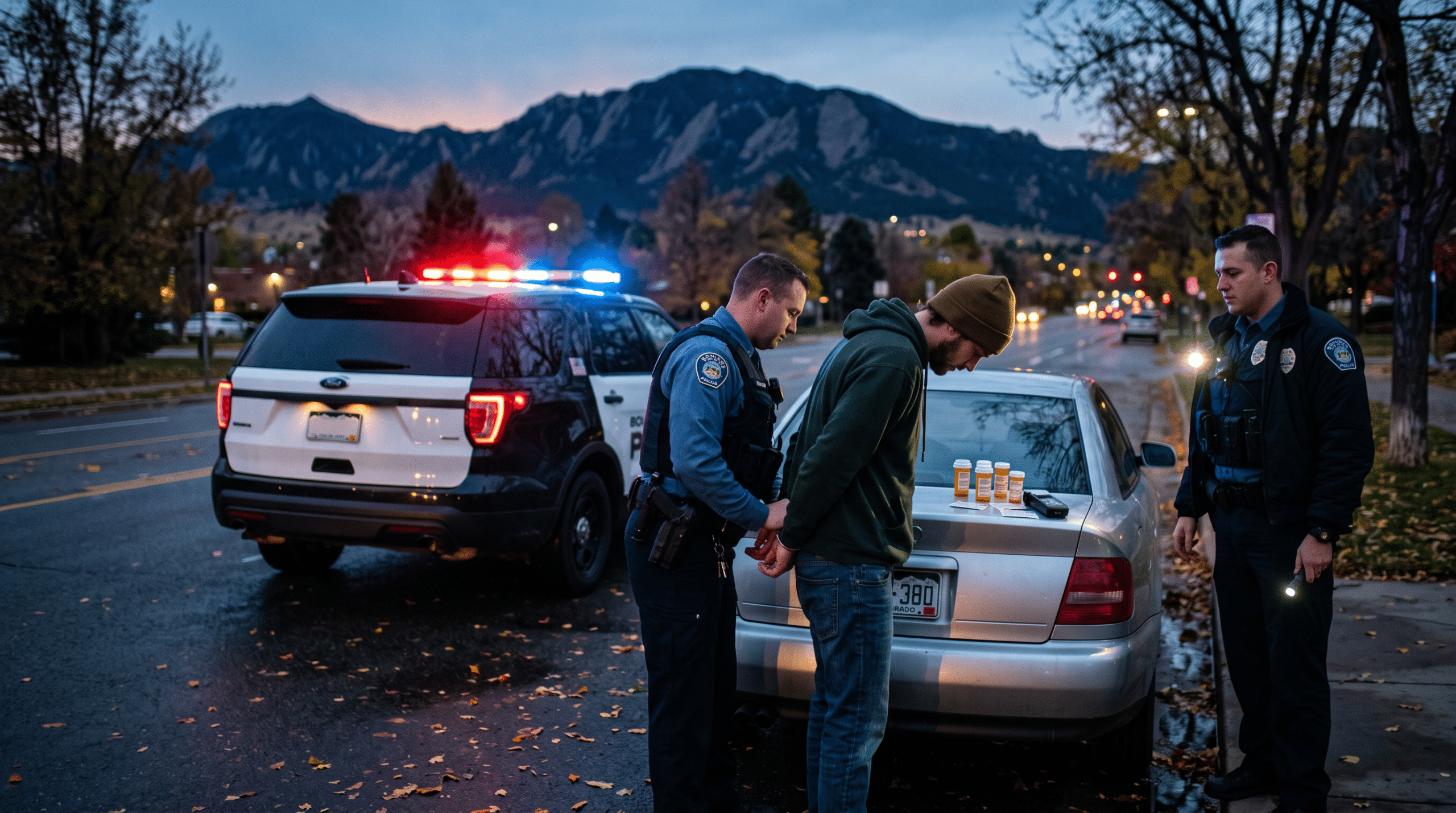
Yes, you can be charged with DUID in Boulder for driving under the influence of prescription drugs. Many people are surprised by this, especially if they took their medication as prescribed and never meant to break the law. In Colorado, impaired driving charges are not limited to alcohol, marijuana, or illegal drugs. If police think a prescription drug made you less able to drive safely, you could be arrested for DUI, DWAI, or DUID. These cases often involve painkillers, anxiety medication, sleep aids, muscle relaxers, antidepressants, ADHD medication, seizure medication, or a mix of prescriptions and alcohol. At Watkins Law Firm LLC, we help people in Boulder and the Denver area who are facing drug-related driving charges, including those involving legal prescriptions.
Colorado Law Covers Prescription Drug Impairment
Colorado’s impaired driving law, C.R.S. § 42-4-1301, covers alcohol, drugs, or both. This means you can be charged even if your medication was legally prescribed. The main question is not just whether you were allowed to have the medication, but whether it affected your ability to drive safely.
Under Colorado law, DUI generally means the person was substantially incapable of exercising clear judgment, sufficient physical control, or due care in the safe operation of a vehicle. DWAI generally means the person was affected to the slightest degree so that they were less able than usual to drive safely. In prescription drug cases, prosecutors may use driving observations, officer testimony, field sobriety tests, drug recognition evidence, blood test results, pill bottles, admissions, and medical records to argue impairment.
A Valid Prescription Is Not An Automatic Defense
A valid prescription matters, but it does not automatically defeat a DUID charge. A person may have a legal right to possess and take medication, but Colorado law can still punish driving while impaired by that medication. This is a hard reality for people who take medication every day for legitimate medical conditions.
The defense may still use the prescription in several ways. It may show that the medication was lawfully possessed. It may help explain why a drug appeared in a blood test. It may also help challenge assumptions by police or prosecutors. For example, a therapeutic level of medication is not the same as proof of impairment. Some people take the same medication for years and function normally. Others may appear tired, anxious, unsteady, or confused because of a medical condition rather than drug impairment. We look closely at those facts.
Common Prescription Drugs In Colorado DUID Cases
Prescription drug DUID cases often involve medications that may affect alertness, reaction time, balance, coordination, perception, or judgment. These may include opioid pain medications, benzodiazepines, sleep medications, muscle relaxers, antidepressants, antipsychotics, seizure medications, stimulants, and certain allergy or nausea medications. Sometimes the case involves one prescription. Other times, police claim impairment came from a combination of medications or from mixing medication with alcohol.
Combination cases can be especially serious. A person may not realize that a prescribed medication can interact with alcohol, marijuana, or another prescription. Police may treat the driver as impaired even when the driver believed they were safe to drive. The question is still whether the prosecution can prove impairment beyond a reasonable doubt, not whether a medication simply existed in the driver’s system.
How Police Investigate Prescription Drug DUID Cases
Police may start with a traffic stop based on speeding, weaving, lane movement, an accident, expired registration, or another alleged traffic violation. After contact, officers may claim they noticed signs such as slow speech, confusion, poor coordination, droopy eyelids, constricted or dilated pupils, unusual behavior, or trouble answering questions. In drug cases, officers may request field sobriety tests and may involve a Drug Recognition Evaluator.
Field sobriety tests can be unreliable in prescription drug cases. Fatigue, age, injury, anxiety, poor footwear, weather, road conditions, medical issues, and nervousness can all affect performance. A person with back pain, knee problems, vertigo, neurological symptoms, or balance issues may struggle on roadside exercises even when not impaired. We review the officer’s observations against the full record, including body camera footage, medical history, and test conditions.
Blood Testing Does Not Always Prove Impairment
Prescription drug cases often depend on blood testing. Blood testing may show that a drug or metabolite was present, but presence alone does not always prove impairment at the time of driving. Some medications remain detectable after their impairing effects have faded. Some people have tolerance because they take a medication regularly. Other drugs may be detected at levels that do not match the officer’s claims.
We review whether the blood draw was lawful, whether the sample was collected and stored properly, whether the lab followed required procedures, whether the chain of custody is reliable, and whether the reported result actually supports impairment. We also examine whether the state’s interpretation of the toxicology report is too broad. A lab number without context can mislead a jury if it is treated as automatic proof of unsafe driving.
License Consequences And Express Consent
A prescription drug DUID arrest can also create driver’s license consequences. Colorado’s Express Consent law requires drivers to cooperate with chemical testing when an officer has reasonable grounds to believe the person was driving under the influence or impaired by alcohol, drugs, or both. The Colorado DMV explains that refusal to cooperate with the chemical testing process can lead to revocation under C.R.S. § 42-2-126.
The DMV case is separate from the criminal case. The Colorado Department of Revenue notes that a criminal case dismissal does not automatically undo a DMV revocation because the two processes are independent under C.R.S. § 42-2-126(6)(a). Drivers may also have only a short time to request an Express Consent hearing after receiving a Notice of Revocation. Colorado’s DMV states that drivers may have up to seven days to request a hearing depending on how the notice is issued.
How A Prescription Drug DUID Can Affect Your Future
A prescription drug DUID can affect your license, job, insurance, professional license, immigration status, education, and reputation. Licensed professionals, commercial drivers, healthcare workers, teachers, government employees, pilots, and people with security clearances may face consequences beyond court. Even if the medication was prescribed, employers and licensing boards may still ask whether the charge involved impaired driving, public safety, or substance use concerns.
For parents, a DUID allegation can also create family stress. If children were in the car, the case may become more serious and may raise parenting-time concerns. If there was an accident or injury, prosecutors may consider additional charges. The earlier we can review the case, the better positioned we are to protect the client’s record and future.
Defense Strategies In Prescription Drug DUID Cases
We begin by asking what the state can actually prove. Did the officer have a lawful reason for the stop? Were the officer’s observations accurate? Did the roadside tests account for medical conditions? Was the blood draw lawful? Did the lab follow proper procedures? Does the toxicology result prove impairment, or only presence? Did the driver take the medication as prescribed? Were there alternative explanations for the alleged signs of impairment?
These cases often turn on details. A prescription drug label warning may be used by the prosecution, but a warning is not proof that a specific person was impaired at a specific time. A blood result may show medication, but it may not show unsafe driving. A poor field sobriety test may look bad on paper, but body camera footage may tell a different story. We focus on the evidence and work to expose assumptions, gaps, and overstatements in the prosecution’s case.
FAQs About Prescription Drug DUID Charges In Colorado
Can I Be Charged With DUID If My Medication Was Prescribed?
Yes. Colorado law allows impaired driving charges based on alcohol, drugs, or a combination of both. A valid prescription may show that you were legally allowed to possess and use the medication, but it does not automatically allow you to drive if the medication impaired your ability to operate a vehicle safely. The prosecution still has to prove impairment. That proof may involve driving behavior, officer observations, field sobriety testing, Drug Recognition Evaluator testimony, blood testing, and statements made during the stop. We often challenge whether the evidence proves impairment or only proves that a medication was present.
What Prescription Drugs Can Lead To A Colorado DUID Charge?
Many types of prescription medication can lead to a DUID arrest if police believe the medication affected driving. Common examples include opioid pain medications, benzodiazepines, sleep aids, muscle relaxers, seizure medications, stimulants, antidepressants, antipsychotics, and certain medications for allergies or nausea. A person may also be accused of impairment after mixing prescriptions with alcohol, marijuana, or another medication. The exact drug matters, but the key legal question is whether the substance made the person less able to drive safely at the time of driving.
Does A Blood Test Prove I Was Impaired By Prescription Drugs?
Not always. A blood test may show that a prescription drug was present, but that does not always prove impairment. Some medications remain detectable after the impairing effects are gone. Some people take medication long-term and have a tolerance. Lab results can also raise questions about collection, storage, testing methods, reporting, and interpretation. In many prescription drug cases, the state must connect the toxicology result to actual driving impairment. We review whether the blood evidence is reliable and whether it supports the charge beyond a reasonable doubt.
Can I Lose My License For A Prescription Drug DUID?
Yes. A prescription drug DUID can create license consequences through the Colorado DMV. The DMV process is separate from the criminal case. Under Colorado’s Express Consent rules, drivers must cooperate with chemical testing when an officer has reasonable grounds to believe the person was impaired by alcohol, drugs, or both. A refusal can lead to revocation. Depending on the facts, a driver may need to request a DMV hearing quickly to challenge the revocation. Missing the deadline can make the license consequences worse.
What If My Medical Condition Made Me Look Impaired?
A medical condition can be an important defense issue. Many medical problems can affect speech, balance, eye appearance, coordination, walking, memory, or alertness. Anxiety during a traffic stop can also make a person appear confused or nervous. In prescription drug cases, officers may misread symptoms or assume medication caused impairment without understanding the medical background. We review medical records, medication history, body camera footage, field sobriety testing, and officer testimony to determine whether there are innocent explanations for what police reported.
Should I Tell The Officer What Medication I Take?
You should be careful about making statements during a traffic stop. Many people try to be honest and explain that they take prescription medication, but that statement may give police a reason to expand the investigation. You should provide required identifying information and comply with lawful orders, but you do not have to answer every question about your medical history or medication use without legal guidance. If you have already made statements about prescription medication, we can review how those statements were obtained and whether they are being used fairly.
Call Watkins Law Firm LLC For Help With A Prescription Drug DUID Charge
If you are facing a DUID, DUI, or DWAI charge involving prescription medication, Watkins Law Firm LLC can help. These cases are often based on assumptions about medication, driving behavior, field sobriety tests, and blood results. We defend clients accused of drug-related driving offenses in Boulder and throughout the Denver area, and we understand how much a prescription drug DUID can threaten your license, job, record, and future.
Contact our Boulder DUID attorney by calling us 24/7 at 303-507-1324 for your free consultation. Our Boulder drug crime defense lawyer represents clients in Boulder and throughout the Denver area from our office locations in Boulder, Colorado.
