
What Happens If Police Search Your Phone After An Arrest In Colorado?
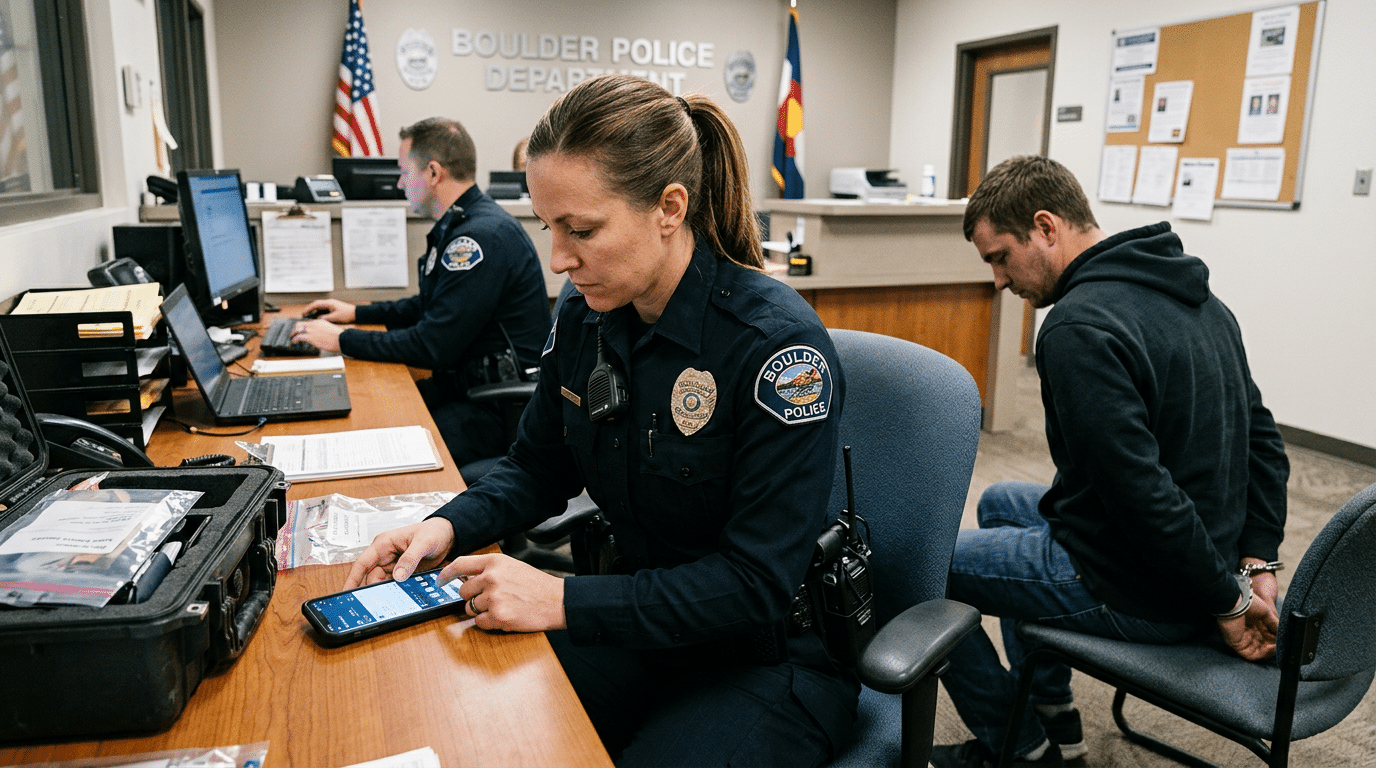
Your phone can store years of personal information, including texts, photos, videos, location data, banking details, social media, search history, contacts, emails, and app activity. In Colorado, police may take your phone after an arrest as part of booking or evidence collection, but that does not always give them the right to search everything on it. We know it is stressful when officers take your phone, especially in cases involving drug charges, theft, domestic violence, sex crimes, or federal investigations. At Watkins Law Firm LLC, we help clients in Boulder and the Denver area when phone evidence becomes a key part of a criminal case.
Police Can Seize A Phone, But Searching It Is Different
Taking your phone and searching what is on it are two different things. Police can hold onto your phone after an arrest to protect evidence, keep officers safe, or list your belongings. But looking through your phone’s contents is a separate legal matter.
The U.S. Supreme Court decided in Riley v. California that police usually need a warrant to search digital information on a cell phone taken during an arrest. This rule is important because a phone holds much more personal information than a wallet, pocket, or backpack.
In Colorado, search warrants follow C.R.S. § 16-3-301 and Colorado Rule of Criminal Procedure 41. A warrant must be based on probable cause and should clearly state what is being searched and what evidence is being sought. If the property is a phone, the warrant should not allow police to search every part of your life.
How Police Use Phone Evidence In Colorado Criminal Cases
Phone evidence shows up in many types of Colorado criminal cases. In drug cases, prosecutors might search for texts, payment app records, contacts, photos, maps, deleted messages, or location data. In domestic violence cases, they may check texts, call logs, voicemails, social media messages, or photos. In sex crime cases, they might look for messages, dating app chats, images, search history, or files stored in the cloud. In theft and fraud cases, they may review transactions, emails, screenshots, or messages with alleged victims.
Colorado drug possession charges can be filed under C.R.S. § 18-18-403.5. More serious drug charges, like distribution, manufacturing, sale, or possession with intent to distribute, fall under C.R.S. § 18-18-405. Phone evidence is often important in these cases because prosecutors may use messages or photos to claim the case is about sales, not personal use. We challenge those claims. A text message can be misunderstood, taken out of context, or linked to someone else.
Consent Can Change The Case
Police might ask you to let them search your phone or ask for your passcode. They could also ask you to unlock your phone with your face, fingerprint, or password. Sometimes, they say they only want to see one message or photo. The problem is, if you give consent, police may be allowed to look at much more, and it can make it harder to argue later that the search was not legal.
You have the right to stay silent and to say no if police ask to search your phone. Refusing consent does not mean you are destroying evidence or blocking the case. It just means you are not giving police access to your private information. If police have a legal reason to search your phone, they can get a warrant. If not, saying no can help protect your rights.
Search Warrants For Phones Must Still Have Limits
Even if police have a warrant, you can still challenge the search. A phone warrant should be based on probable cause and should clearly state what evidence police are looking for and what crime they suspect. If a warrant lets officers search everything on your phone without limits, it could be a serious constitutional issue.
We look carefully at the warrant, affidavit, dates, categories of data, search terms, the alleged crime, and whether the phone search went beyond what the judge authorized. In some cases, police seize a phone during one investigation and uncover something unrelated. In other cases, officers search too broadly or rely on weak probable cause. Those details can support a motion to suppress evidence.
Do Not Delete Messages Or Destroy Evidence
If you believe police may search your phone, do not delete messages, wipe the device, destroy the phone, factory reset it, or ask someone else to remove evidence. Colorado’s evidence-tampering law, C.R.S. § 18-8-610, can apply when a person destroys, mutilates, conceals, removes, or alters physical evidence with the intent to impair its availability in an official proceeding or investigation.
Deleting information may feel like damage control, but it can create a new criminal accusation. It may also make prosecutors argue that you acted with consciousness of guilt. The safer course is to stop discussing the case, avoid creating new messages about the accusation, and contact a criminal defense attorney as soon as possible.
Phone Evidence Is Not Always Reliable
Phone evidence can look strong at first, but it is not always as clear as the police claim. Phones can be shared. Accounts can be accessed by more than one person. Texts can be incomplete. Screenshots can be altered. Contacts may be mislabeled. Messages may use slang, jokes, exaggeration, or coded language that police misunderstand. Location data may be less precise than prosecutors suggest. A photo on a phone does not always prove when, where, why, or by whom it was taken.
We examine the forensic report, extraction method, warrant scope, chain of custody, device ownership, account access, timestamps, metadata, and context. If the government wants to use phone evidence, it must prove that the evidence is lawful, reliable, and connected to the accused person.
How Phone Searches Can Affect Drug Crime Cases
Phone searches are common in Colorado drug investigations. Police may claim that messages, photos, cash app payments, or contacts prove possession with intent to distribute. In a Boulder drug crime case, this can be the difference between a lower-level possession allegation and a much more serious distribution or trafficking accusation.
We challenge assumptions. A person may have messages that look suspicious but do not prove a sale. A payment may relate to something lawful. A contact name may not identify the real person involved. A photo may be old, downloaded, or unrelated. The prosecution must prove the charge beyond a reasonable doubt. Phone evidence should not be treated as automatic proof.
How We Defend Cases Involving Phone Searches
When police search a phone after an arrest, we start by asking direct questions. Did the police have a warrant? Did the person consent? Was the consent voluntary? Did officers pressure the person to unlock the device? What did the warrant allow? Did the search exceed the warrant? Was the phone evidence properly collected and preserved? Does the evidence actually prove the charge?
If the search violated constitutional protections, we may seek to suppress the evidence. If the phone evidence is weak, incomplete, or misleading, we work to expose those problems. A phone search can shape the entire case, so it should be reviewed with care from the beginning.
FAQs About Police Searching Phones After An Arrest In Colorado
Can Police Search My Phone Just Because I Was Arrested In Colorado?
Usually, no. Police may be able to take your phone after an arrest, but searching the digital contents is different. Under Riley v. California, police generally need a warrant before searching information stored on a cell phone seized during an arrest. There may be limited exceptions in rare emergency situations, but officers cannot treat a phone like a pocket or wallet. If police searched your phone without a warrant or consent, the search may be challenged in court. We review whether the search was lawful and whether any evidence should be suppressed.
Should I Give Police My Phone Passcode?
You should be very careful before giving the police your passcode or unlocking your phone. Police may present the request casually, but giving access can affect the entire case. Once officers get into the phone, they may review messages, photos, apps, emails, contacts, location data, and other private information. You have the right to remain silent and the right to refuse consent to a search. If police have probable cause, they can seek a warrant. Before answering questions or unlocking a device, it is wise to speak with a defense attorney.
What If Police Have A Search Warrant For My Phone?
A search warrant does not end the legal analysis. We still need to review the warrant, affidavit, scope, dates, categories of data, and the way the search was performed. A valid warrant should be based on probable cause and should describe what police are allowed to search for. If the warrant is too broad, lacks probable cause, or officers search beyond what was authorized, there may be grounds to challenge the evidence. In phone cases, overbroad searches are a serious concern because one device can hold an enormous amount of private information.
Can Text Messages Be Used Against Me In A Drug Case?
Yes. Prosecutors may try to use text messages in a Colorado drug case to prove possession, distribution, intent to sell, conspiracy, or knowledge. However, text messages can be misleading. They may lack context, use slang, involve other people, or refer to lawful activity. Police may assume a message means drugs when there is another explanation. We examine whether the government can prove who sent the message, what it meant, when it was sent, and how it connects to the charge. Texts are evidence, but they are not automatic proof of guilt.
Can I Delete Messages Before Police Search My Phone?
No. You should not delete messages, wipe your phone, destroy the device, or ask anyone else to remove evidence. Colorado’s evidence-tampering statute, C.R.S. § 18-8-610, can create a separate criminal charge if prosecutors believe someone destroyed or altered evidence to impair an investigation or court case. Deleting information can make the situation worse, even if the original charge is defensible. The better approach is to stop discussing the case, avoid new communications about the accusation, and contact a defense lawyer quickly.
Can Phone Evidence Be Thrown Out In Colorado?
Yes, phone evidence may be excluded if police violated constitutional rules, exceeded the warrant, relied on an invalid warrant, obtained involuntary consent, or failed to preserve or authenticate the evidence properly. Suppression depends on the facts. Courts look closely at how the phone was seized, whether a warrant was obtained, what the warrant allowed, and how officers searched the device. If key phone evidence is suppressed, the prosecution’s case may become much weaker. We review every step of the search process to determine whether a challenge is available.
Call Watkins Law Firm LLC For Help With A Criminal Investigation And Phone Search
If police searched your phone after an arrest, or if phone evidence is being used against you in a drug case, sex crime case, domestic violence case, theft case, or other Colorado criminal matter, Watkins Law Firm LLC can help. These cases often turn on text messages, photos, location data, app records, and digital evidence that may be incomplete, unlawful, or misunderstood.
Contact our Boulder criminal defense lawyer by calling us 24/7 at 303-507-1324 for your free consultation.
