
How Field Sobriety Tests Are Used in Boulder DUI Cases
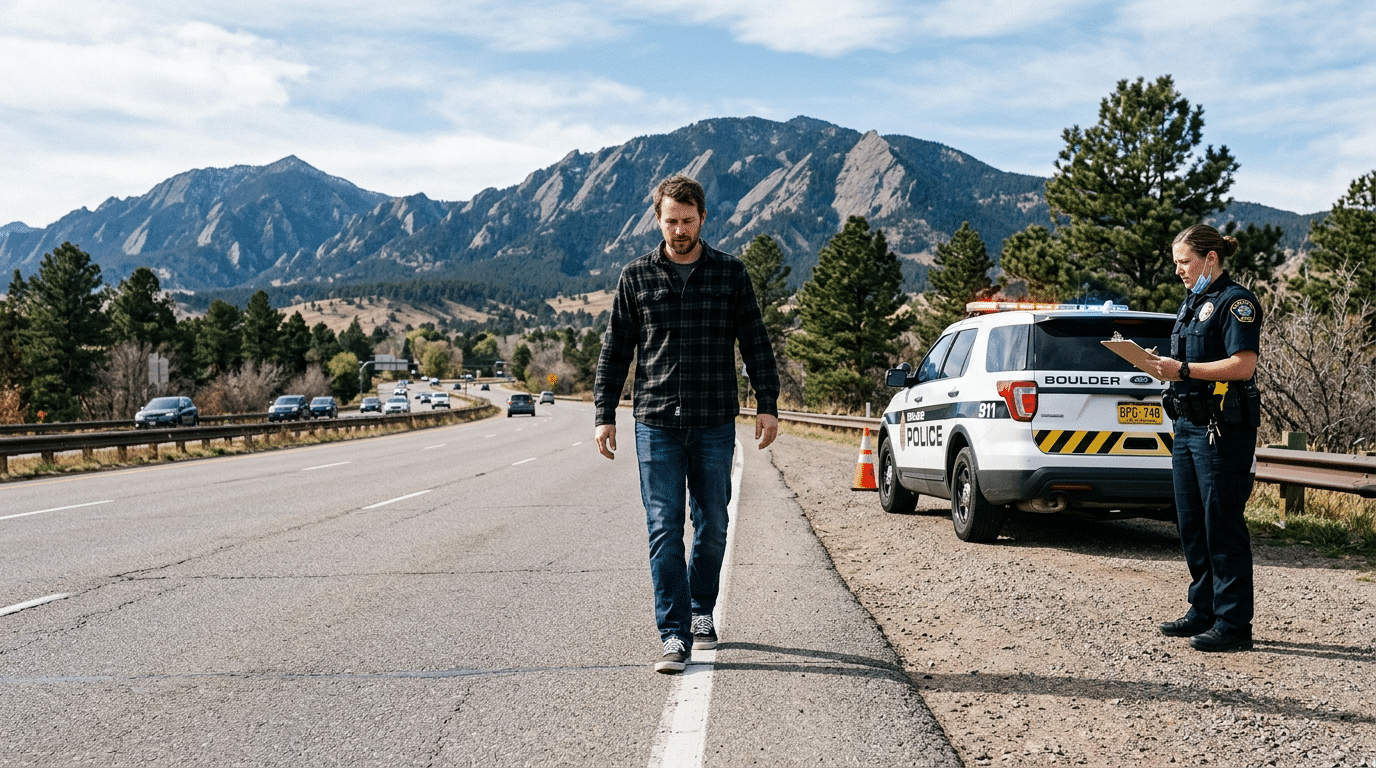
A Colorado DUI arrest often begins with a police officer asking a driver to step out of the vehicle and perform roadside tests. These tests can feel informal, but they may become some of the most important evidence in the case. Many people do not realize that field sobriety tests are designed to help officers build probable cause for an arrest, not to give drivers a fair chance to “pass” and go home. Weather, lighting, footwear, nerves, medical issues, road surface, fatigue, age, weight, and instructions from the officer can all affect performance. We defend DUI, DWAI, and drug-related driving cases in Boulder County and throughout the Denver area, and we know how closely these tests must be reviewed before anyone accepts the officer’s version of events.
Colorado DUI And DWAI Law
Colorado DUI and DWAI charges are governed by C.R.S. § 42-4-1301. Under that statute, a person may be accused of DUI when alcohol, drugs, or a combination of substances allegedly make the person substantially incapable of exercising clear judgment, sufficient physical control, or due care in the safe operation of a vehicle. DWAI is different. A driver may be accused of DWAI when alcohol, drugs, or both affect the person to the slightest degree so that the person is less able than usual to drive safely.
Colorado also recognizes DUI per se when the prosecution claims a driver had a blood alcohol content of 0.08 or more at the time of driving or within two hours after driving. Field sobriety tests do not prove a blood alcohol number. Instead, prosecutors may use them as part of the broader impairment argument, especially when the chemical test is disputed, delayed, refused, or based on drugs rather than alcohol.
What Are Field Sobriety Tests?
Field sobriety tests are roadside exercises used by law enforcement to look for signs of impairment. Officers often use three standardized field sobriety tests: the horizontal gaze nystagmus test, the walk-and-turn test, and the one-leg stand test. Officers may also use non-standard tests, such as asking a driver to recite part of the alphabet, count backward, touch a finger to the nose, or answer questions.
The horizontal gaze nystagmus test involves watching the driver’s eyes as they follow a stimulus. The walk-and-turn and one-leg stand tests require balance, coordination, instruction-following, and divided attention. Police may claim that missed steps, use of arms for balance, starting too soon, putting a foot down, swaying, or misunderstanding instructions are signs of impairment. We look carefully at whether the tests were explained correctly, demonstrated correctly, performed on a fair surface, and recorded accurately.
Field Sobriety Tests Are Not Perfect Evidence
Roadside testing is not the same as a scientific lab test. A sober person can struggle with balance. A nervous person can misunderstand instructions. A person with back pain, knee problems, ankle injuries, vision issues, inner ear problems, diabetes, fatigue, or anxiety may perform poorly for reasons unrelated to alcohol or drugs. Boulder weather can also matter. Cold temperatures, uneven pavement, snow, ice, gravel, flashing lights, traffic noise, and poor lighting can affect performance.
We do not accept the police report at face value. Many reports use standard language that makes the driver sound impaired, even when the video tells a different story. Body camera and dash camera footage may show that the driver was polite, steady, responsive, and able to follow instructions. In other cases, the video may show that the officer gave confusing instructions or counted clues that were not clear. These details can affect whether the prosecution can prove DUI or DWAI beyond a reasonable doubt.
Field Sobriety Tests And Probable Cause
Field sobriety tests are often used to support probable cause for a DUI arrest. Probable cause is the legal threshold an officer needs before making an arrest. The officer may combine several facts, such as driving behavior, odor of alcohol, speech, eyes, admissions, roadside test performance, and a preliminary breath test, if one was used.
If the officer lacked a lawful basis for the stop or did not have probable cause for the arrest, the defense may challenge the evidence. That can include challenging statements, chemical test results, and observations made after the stop. In Colorado DUI cases, the details leading up to field sobriety testing matter. The officer must have a lawful basis to stop the vehicle, extend the stop, investigate impairment, and make the arrest. A weak roadside investigation may create leverage in the criminal case and the DMV case.
Do You Have To Perform Field Sobriety Tests In Colorado?
Drivers are often confused about whether field sobriety tests are mandatory. Roadside maneuvers are different from Colorado’s Express Consent chemical testing process. Colorado’s Express Consent Law requires a driver to submit to a chemical test when an officer has reasonable grounds to believe the person drove under the influence or while impaired by alcohol, drugs, or both. The DMV explains that Express Consent applies to chemical testing when an officer has reasonable grounds to believe a person drove under the influence or while impaired.
Field sobriety tests are not the same as a breath or blood test under Express Consent. Refusing roadside tests may still affect how the officer views the encounter, and the prosecution may try to comment on the refusal in some circumstances. However, the major license consequences usually involve chemical test refusal or an excessive alcohol result, not refusing roadside coordination exercises. Because every case depends on the facts, we review the stop, officer instructions, and arrest decision carefully.
Field Sobriety Tests In Drug DUI Cases
Field sobriety tests are especially important in DUI drug cases because there may not be a simple breath alcohol number. Colorado DUI law applies to alcohol, drugs, or a combination of alcohol and drugs under C.R.S. § 42-4-1301. Prosecutors may rely on driving observations, field sobriety tests, officer testimony, drug recognition evidence, blood testing, admissions, or alleged possession of controlled substances.
Drug cases require careful defense work. The presence of a substance in a blood test does not always prove impairment at the time of driving. Prescription medications, marijuana, and other substances may remain detectable after the period of impairment has passed. If police also claim drug possession, distribution, or manufacturing, separate Colorado controlled substance statutes may become relevant. For example, C.R.S. § 18-18-405 addresses unlawful distribution, manufacturing, dispensing, sale, or possession with intent to distribute controlled substances.
DMV Consequences And Field Sobriety Evidence
A DUI arrest can create two separate cases: the criminal case in court and the administrative license case with the Colorado DMV. C.R.S. § 42-2-126 addresses alcohol-related license revocations, including excessive BAC and refusal issues. The purpose of the statute includes quickly revoking the license of a person who has driven with an excessive amount of alcohol or refused testing, while also providing an opportunity for a hearing.
Colorado DMV procedures state that a person who receives an Express Consent Affidavit and Notice of Revocation, or a Notice of Revocation by mail after a blood test, generally has up to seven days to request a hearing. Missing that deadline can cause the revocation to take effect. Field sobriety evidence may come up at the DMV hearing because the officer may use those observations to support reasonable grounds for the stop, arrest, and chemical test request.
How We Challenge Field Sobriety Tests
We challenge field sobriety evidence by looking at both the law and the facts. We review the traffic stop, body camera footage, dash camera footage, officer training, instructions, weather, surface conditions, footwear, medical issues, lighting, and whether the report matches the video. We also look at whether the officer overstated normal behavior as impairment.
A field sobriety test is only one part of the case. The prosecution still has to prove the charge. A driver may have performed poorly because of fear, injury, fatigue, or confusing instructions. A driver may have performed better than the police report suggests. In some cases, the officer may have made the arrest decision too quickly and then used the report to justify it later. Our job is to test every assumption and protect the client’s record, license, and future.
FAQs About Field Sobriety Tests In Colorado DUI Cases
Can I Fail Field Sobriety Tests Even If I Am Not Drunk?
Yes. A person can perform poorly on field sobriety tests for reasons unrelated to alcohol or drug impairment. Balance problems, injuries, age, fatigue, anxiety, medical conditions, bad footwear, uneven pavement, weather, traffic noise, and confusing instructions can all affect performance. We often compare the officer’s report to video footage because the written report may make the test sound worse than it looked. Field sobriety tests are not perfect proof. They are observations that the prosecution may use, and those observations can be challenged.
Are Field Sobriety Tests Required In Colorado?
Field sobriety tests are different from Colorado’s Express Consent chemical testing laws. Roadside coordination tests are not the same as a required breath or blood test under Express Consent. The Express Consent process concerns chemical testing after an officer has reasonable grounds to believe a person drove under the influence or while impaired. A driver’s decision about roadside tests can still affect the officer’s investigation, but the legal consequences are different from refusing a chemical test. Because the facts matter, it is important to have the entire stop reviewed.
Can Field Sobriety Tests Be Used Against Me In Court?
Yes. Prosecutors may use field sobriety test performance to argue that a driver was impaired. The officer may testify about balance, coordination, divided attention, instructions, eye movements, and other claimed clues. However, the defense can challenge how the tests were given, whether the officer followed proper procedures, whether the conditions were fair, and whether medical or physical issues affected the results. Video can be very important. If the recording does not match the officer’s report, that may help the defense.
Do Field Sobriety Tests Prove DUI In Colorado?
No. Field sobriety tests alone do not automatically prove DUI. Colorado prosecutors still have to prove the charge beyond a reasonable doubt. For DUI, the prosecution must prove impairment under C.R.S. § 42-4-1301. For DWAI, the prosecution must prove that the driver was affected to the slightest degree so that the driver was less able than usual to drive safely. Field sobriety tests may be part of the evidence, but they are not the whole case. Chemical testing, driving behavior, officer observations, and defense evidence may all matter.
How Are Field Sobriety Tests Used In Drug DUI Cases?
In drug DUI cases, field sobriety tests may be used to argue impairment because there may not be a breath alcohol number. Officers may look for balance problems, divided attention issues, pupil observations, speech, coordination, and driving behavior. The prosecution may also use blood test results or drug recognition testimony. The defense may argue that the presence of a substance does not prove impairment at the time of driving. Prescription medications, marijuana, and some drugs can remain detectable after active impairment has ended.
Can A Lawyer Challenge The Officer’s Field Sobriety Test Report?
Yes. We can challenge the report by comparing it to video, reviewing officer training, examining the test location, identifying medical or physical issues, and questioning whether the officer gave proper instructions. We also look for missing facts. For example, the report may list “clues” but omit that the driver stood calmly, answered questions clearly, produced documents, and followed instructions. A strong defense often comes from showing the full picture rather than accepting selected police observations.
Call Watkins Law Firm LLC For Help With A Colorado DUI Or DUID Case
If you are facing DUI, DWAI, DUID, or drug-related driving allegations after field sobriety testing, Watkins Law Firm LLC can help. We defend clients in Boulder and throughout the Denver area against serious Colorado criminal charges, including drug-related DUI cases and related traffic offenses. We know how to examine roadside testing, police video, chemical testing, and the officer’s decision to arrest.
Contact our Boulder DUI lawyer by calling us 24/7 at 303-507-1324 for your free consultation. Our Boulder drug crime defense lawyer represents clients in Boulder and throughout the Denver area from our office locations in Boulder, Colorado.
